
Rice Blossoms
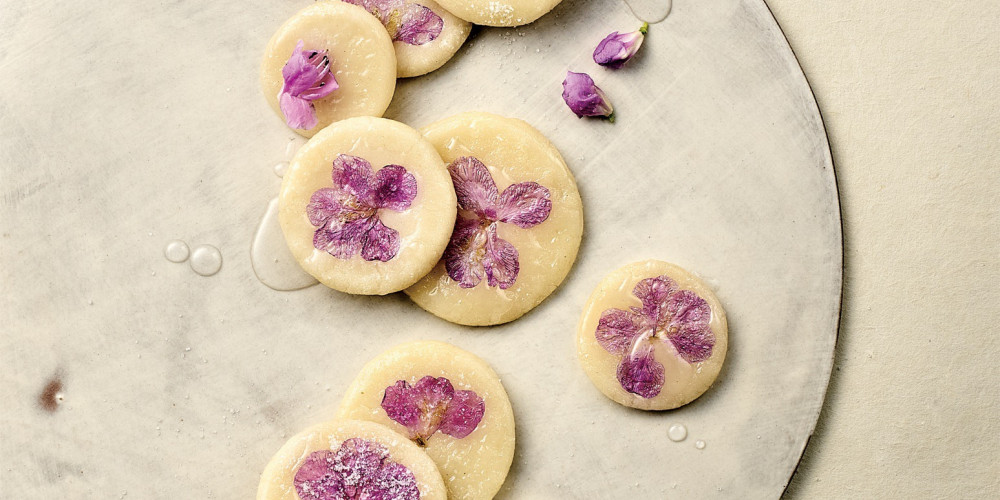
Since ancient times, Koreans have welcomed new seasons and important occasions by making ‘tteok ’ (rice cake) and praying for well-being and health. Hwajeon nori, where azalea flowers are picked and enjoyed as a pan-fried rice cake, is a quintessential Korean tradition.
Embracing the Korean Way of Life
On Seollal, the Lunar New Year marking the passage from old to new, families gather to bless the year ahead with bowls of tteokguk (rice cake soup). During the Chuseok harvest festival held in the eighth lunar month, oryeo songpyeon (earlyharvest half-moon rice cakes) are shaped, fostering harmony within families and communities. In October, gosatteok (steamed rice cakes symbolizing peace) are shared among neighbors. Mothers traditionally prepared specific tteok to mark milestones in their children’s lives: baekseolgi (pure white steamed rice cakes) for the samchilil (21st day after birth), osaek songpyeon (five-colored half-moon rice cakes) for the first birthday or dol, and susupattteok (red sorghum and red bean cakes) for birthdays — all embodying wishes for good health and longevity.
Weddings and longevity celebrations (suyeon) are graced by elaborate, ornate tteok, signifying honor and festivity. Even ancestral rites known as jesa are incomplete without the offering of tteok. As an indispensable element of holidays, seasonal celebrations and life’s most pivotal moments, tteok transcends its culinary role, deeply interwoven into the fabric of Korean life. Its enduring legacy is captured in the words of the late Goryeo Dynasty (918-1392) scholar Yi Saek:
“Who has partaken in the fragrance of tteok? Imbued with a golden glow and stuffed with red beans, it is easy to eat, thus pleasant in hunger.”
The chalsusujeonbyeong (glutinous sorghum tteok) described in his poem remains remarkably unchanged in form and flavor. Customs like steaming yakbap (sweet glutinous rice with nuts and jujubes) for the Jeongwol Daeboreum (Great Full Moon Festival) and preparing patjuk (red bean porridge) for the Dongji (winter solstice) took root over a millennium ago and are still practiced today.
Joseon Dynasty (1392 – 1910) records reveal a staggering variety of tteok, numbering over 250 types. Crafted from glutinous rice (chapssal) or non-glutinous rice (mepssal), tteok achieves its delightful textures — fluffy, chewy, springy — through diverse methods like steaming in a siru (earthenware steamer), pounding with a mortar or boiling hand-shaped dough. It also captures the essence of the seasons, incorporating the fragrance of flowers and fruits, the nuttiness of ripened grains and the distinct flavors of leaves. The ingenuity of traditional culinary practices is evident even in the summer practice of adding makgeolli (rice wine) to the dough to prevent spoilage.


Contemporary Tteok
The boundaries of tteok blurred with the rise of newtro (portmanteau of the words “new” and “retro”) culture, a major trend in Korea in the late 2010s. Tteok began appearing in Korean dessert shops, presented as both familiar and refreshingly new. Chef Shin Yongil, whose culinary journey includes serving as a chef at overseas embassy residences and heading a fine-dining Korean restaurant, opened Haap in 2017, showcasing modern interpretations of traditional Korean byeonggwa (confections). His gaeseong juak — a fried doughnut-like dessert made by kneading tteok dough in a bread mixer to incorporate air, reducing stickiness and achieving a lighter texture — spearheaded a new trend with its delightful taste and elegant, refined appearance.
The trend evolved further with gaeseong juak topped with fruits and creams, and innovations like mint-chocolate injeolmi (steamed glutinous rice flour tteok coated with soybean powder) and cream cheese chapssaltteok (soft, chewy tteok made with glutinous rice filled with sweet red bean paste) targeting younger consumers. The emergence of Golden Piece, featuring modern yakgwa (deep-fried confection soaked in syrup) infused with chocolate and fruit creams, marked a peak in the popularity of Korean-style desserts.
Kim Hyejoon, branding director of Mingles, a restaurant that earned its third star in the Michelin Guide Seoul & Busan 2025, observes the evolution of tteok culture:
“Compared to the past when tteok was primarily enjoyed as a meal substitute or snack, it has expanded into the realm of byeonggwa, a genre characterized by diverse preparation methods and refined aesthetics, enjoyed as a confectionery with tea.”
Notably, this past winter, Camel Coffee collaborated not with a bakery or dessert brand, but with Jerahun, a tteok brand from Jeju Island, for a pop-up event. Park Kanghyun, CEO of Camel Coffee, known for its trendsetting collaborations with brands like Louis Vuitton and its expansion to Manhattan, explained that the collaboration stemmed from the shifting perception among younger generations, who now view traditional tteok as a “trendy dessert.” Thus, tteok, encompassing both traditional local flavors and modern iterations of glutinous rice cakes filled with fresh fruit, diverse creams and even ice cream, is captivating the adventurous palates of the MZ generation. These unexpected combinations and Instagram-worthy visuals resonate strongly with their desire for unique taste experiences.


Captivating Global Palates
Hansik (Korean cuisine), harmoniously blending tradition and modernity alongside K-Culture, is making a powerful statement in the global market. Joo Ok, a two-Michelinstarred Korean restaurant that relocated to New York City, considered the epicenter of the culinary world, earned a Michelin star in the same year of its opening in the Big Apple.
At Joo Ok, a dedicated pastry chef, trained at the Institute of Royal Korean Dessert, crafts byeonggwa daily for the dessert course. “The byeonggwa course, which concludes the Joo Ok tasting menu, presents a mix of tteok and hangwa (traditional Korean sweets),” explains Shin Changho, head chef of Joo Ok. Shin chose to make Korean byeonggwa the star of the dessert menu to ensure that the hansik experience leaves a subtle but lasting impression. Meanwhile, Rice Blossoms, located on Manhattan’s Lower East Side, specializes in modern interpretations of tteok cakes and is so popular that reservations must be made at least two weeks in advance. The perception of tteok as a vegan and gluten-free dessert resonates strongly with health-conscious New Yorkers.
In 2023, America’s NBC News published an article titled Tteokbokki Takeover: America’s Next Food Obsession Is the Ultimate Korean Comfort Food. Made with chewy garaetteok (long, cylindrical rice cakes), tteokbokki stir-fried in a spicy gochujang sauce or a savory soy sauce, is a quintessential Korean street food and beloved national snack. BTS member Jimin’s proclaimed love for tteokbokki, famously declaring “It’s tteokbokki for Christmas,” piqued the curiosity of international fans. Doechii, a rising name buzzing at the Grammys and Fashion Week, even shared a video of herself making tteokbokki on social media.
While social media has amplified tteokbokki ’s global reach, it has also facilitated a reverse cultural import: “kkultteok cereal.” Created by international influencers, this unconventional pairing of chewy kkultteok (honey-filled rice cakes) and milk has become a huge hit, with the sweetness of the honey complementing the milk and creating a delightful textural contrast. According to the Ministry of Agriculture, Food and Rural Affairs and the Korea Agro-Fisheries & Food Trade Corporation, tteok exports reached an all-time high in 2024, where the increase in tteok exports is reportedly driven largely by the popularity of tteokbokki and kkultteok. Once an indispensable part of Korean life, tteok is now enjoying its moment on the world stage.

- Written by Yang Yeonju
- Photography by Park Dabin
- Food Styling by Moon Inyoung


