A New Landmark for Ancient Arles, LUMA Arles
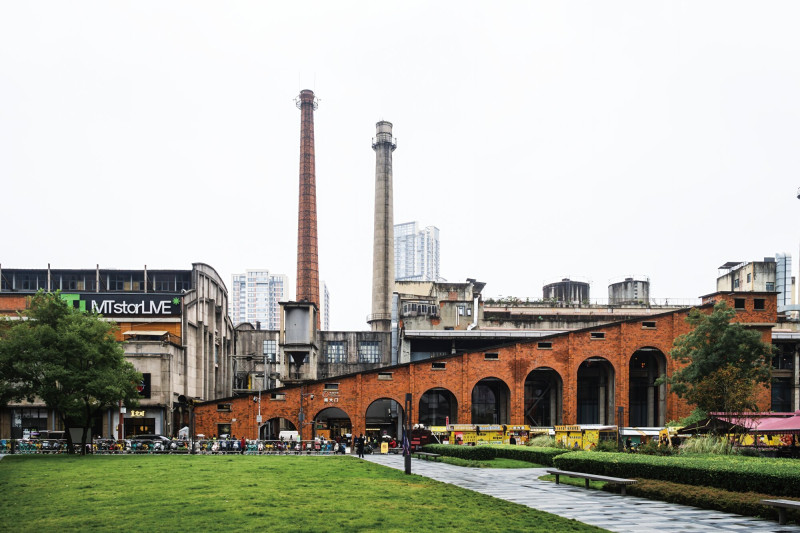
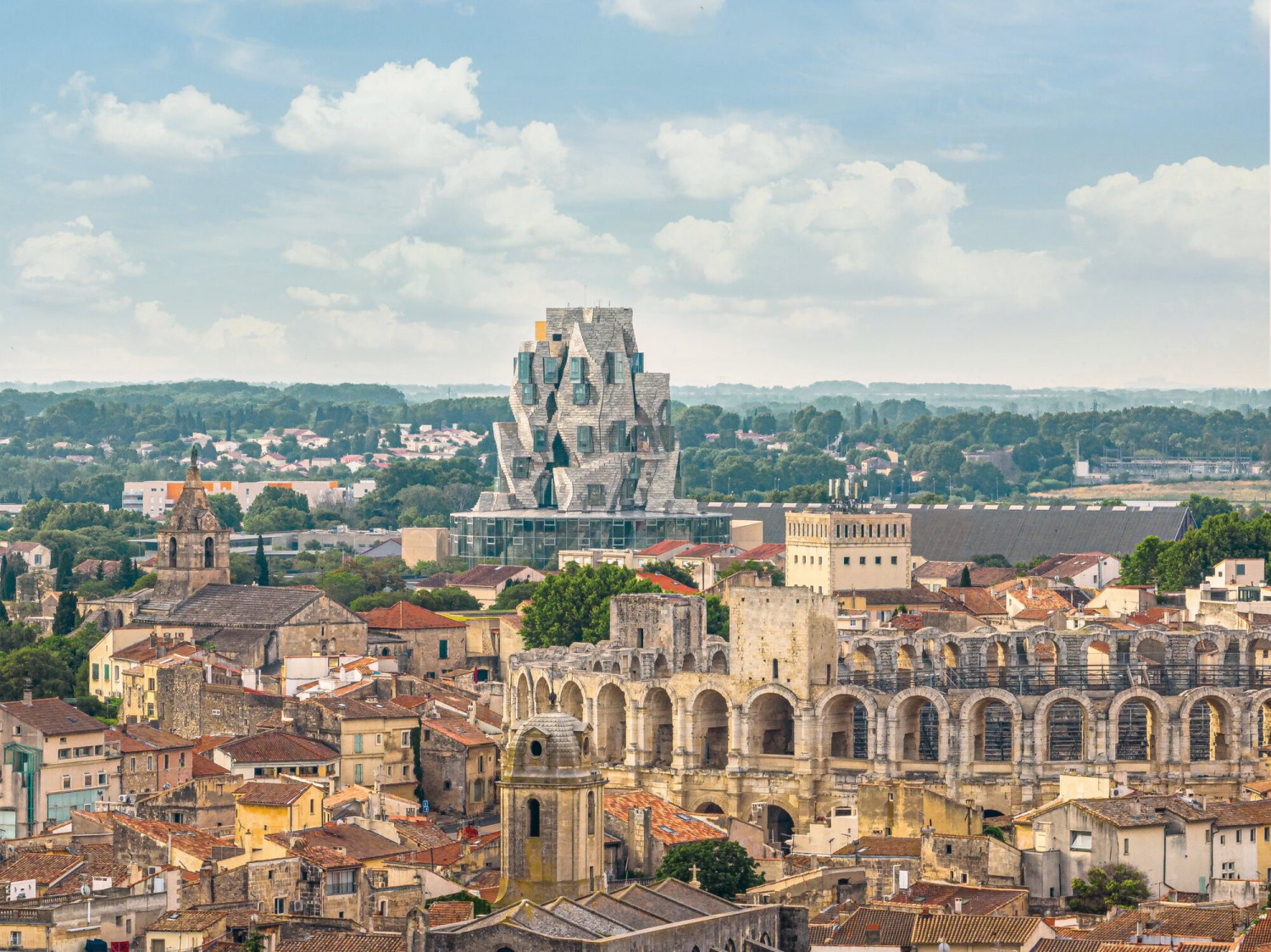
Once a vast industrial site where locomotives and railway carriages were built, this corner of Arles has been reborn as a cultural district where art, architecture and nature come together. Anchored by Frank Gehry’s tower and Bas Smets’ park, LUMA Arles gives the city’s industrial heritage a new sense of time and place.
© Photography by Adrian Deweerdt

© Iwan Baan
© Adrian Deweerdt
An Abandoned Railroad Workshop Transformed
The name “Arles” conjures images of bullfights, Roman ruins, Van Gogh and the international photo festival. It’s far less likely to evoke a Provençal railroad hub. Yet, for much of Arles’s recent history, the town’s principal employer was the ateliers ferroviaires (railroad workshops), which built locomotives and rolling stock. Developed between 1844 and 1856 and expanded in the late 19th century, the workshops reached their peak in the 1920s with over 1,800 workers. Decline set in after World War II, and the site closed in 1984. Long abandoned, this industrial site is now home to the LUMA Foundation.
Founded by Maja Hoffmann, LUMA was installed in the Parc des Ateliers — as the former railroad site is now known — between 2014 and 2021. The foundation hosts modern and contemporary art exhibitions, researches sustainable design materials and runs events, workshops and residencies, while expanding into a cultural destination featuring cafés and restaurants on site.
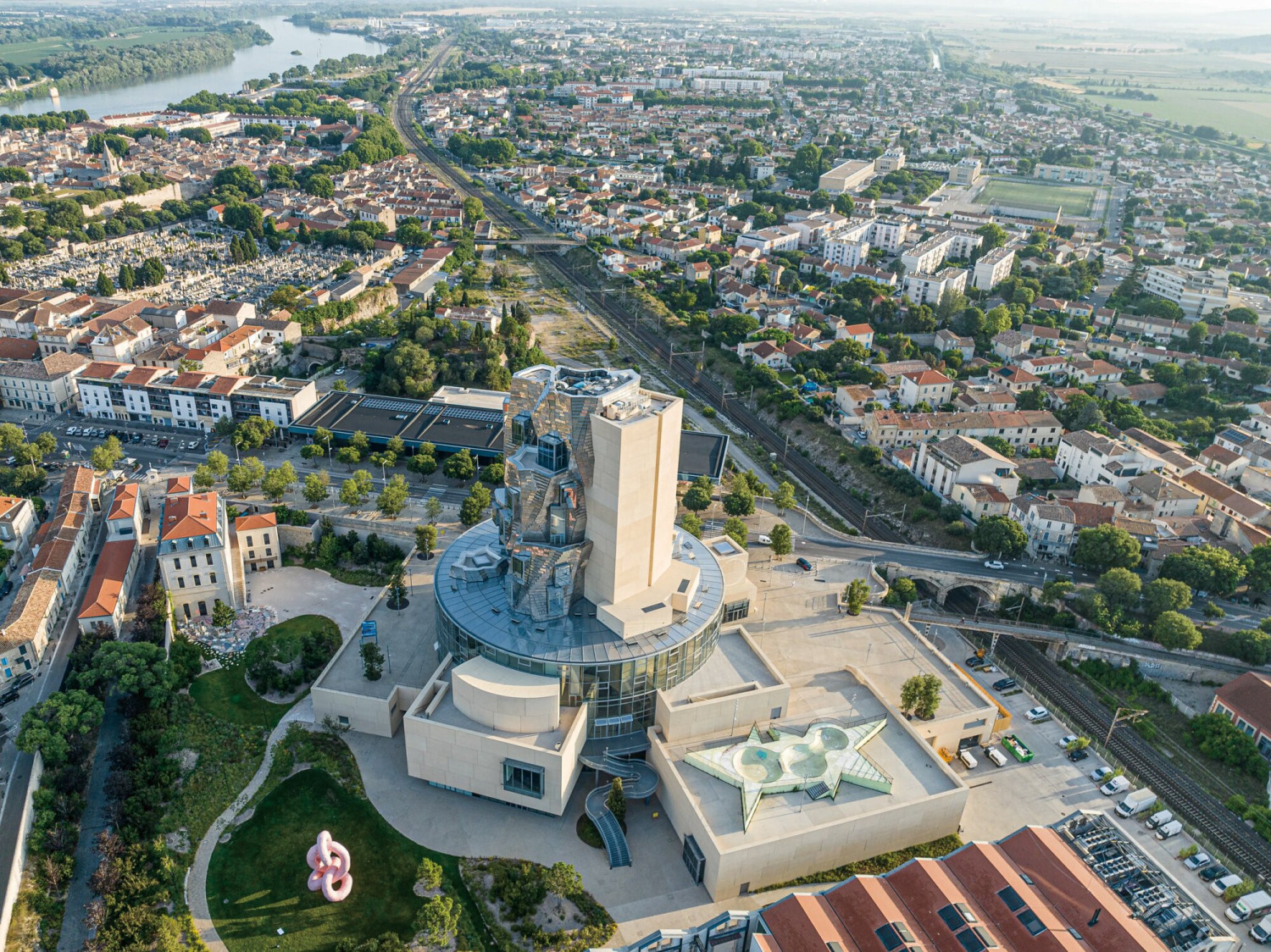
The first workshop building restored for cultural use was La Grande Halle, the site’s largest surviving structure. Paris architecture office Moatti-Rivière renovated it from 2005 to 2007, preserving the historic shell while adding a decorative steel mesh in tribute to the site’s metalworkers. Thereafter, Selldorf Architects renovated the remaining buildings, with minimalist interventions that honored their character, leaving some structures roofless as open-air planted rooms.
© Adrian Deweerdt
A Tower to Draw the Crowds
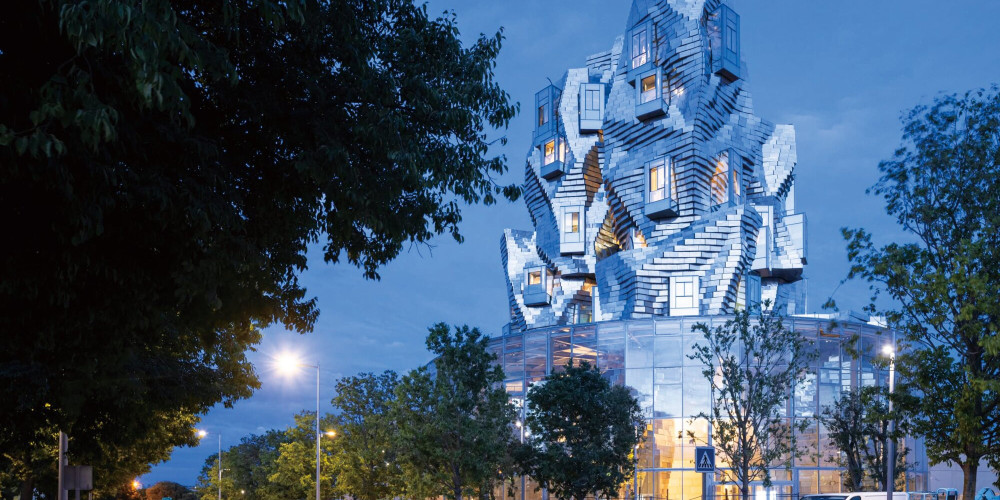
Rising 56m into the Arlesian sky, Frank Gehry’s tower is visible from far across the flat Camargue countryside. Clad in a mix of stone-colored concrete panels and block-shaped stainless-steel “pixels” that catch and reflect the light, the exterior acts as a spectacular beacon, signaling LUMA’s existence to the world. As the sun sets, the pixels sparkle in hues of pink and peach, leading Gehry to compare the sight to Van Gogh’s famed 1888 painting Starry Night Over the Rhône, created during his time in Arles.
Accessed via a giant glass rotunda, the tower houses intimate exhibition spaces in its podium, larger galleries above, members’ rooms on the upper levels and a viewing terrace at the top. Site-specific artworks are embedded everywhere, among them a skatepark by Korean installation artist Koo Jeong A, a mural by the late Lebanese poet Etel Adnan and two slides in the entrance atrium by Belgian conceptual artist Carsten Höller.
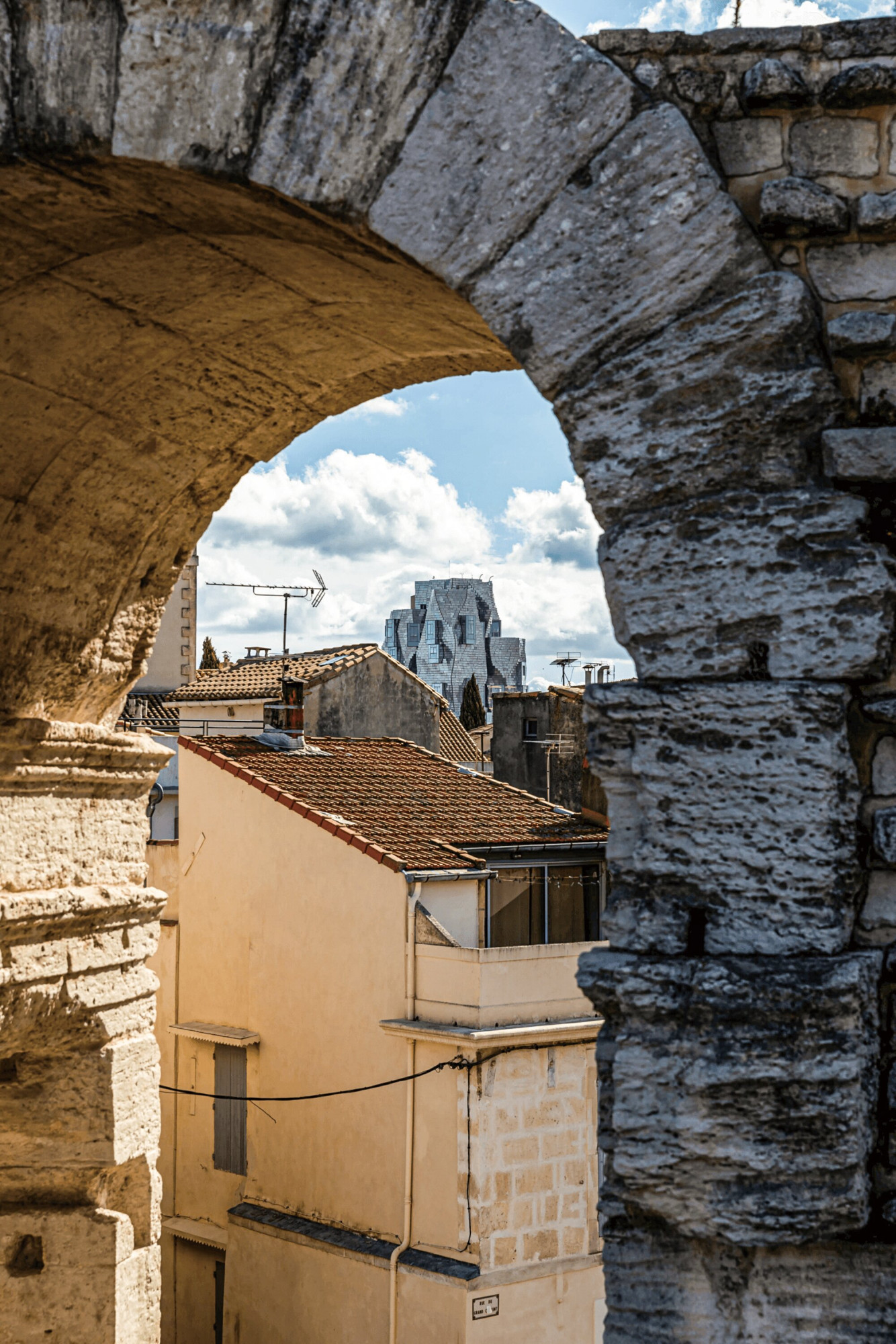
Gehry’s tower was controversial. Some felt it was too aggressively glitzy in the context of historic Arles, which mostly consists of stone-fronted buildings dating from the 15th to 18th centuries. But its wow factor was intended to attract a non-artworld public to what might be an otherwise esoteric cultural complex.

© Adrian Deweerdt
An Oasis of Greenery
Bas Smets’ park offers Arlesians an amenity that was sorely lacking in the densely built town, namely a decent-sized green open space. Creating it was a challenge: scraped down to the bedrock, with no soil or water, the site was desert-like.
Imagining what nature would do, Smets set about rewilding the Parc des Ateliers, designing a topography of dunes, as though the mistral — the mighty Provençal wind — had blown sediment into drifts. He also created microclimates of three local habitats: one based on the Camargue wetlands, another on the dry Alpilles range’s woodlands and the third on the clay and pebbles of the Crau steppe.
Conscious of the park’s civic role, he introduced a sward of grass, ideal for recreation purposes, which rises 4m toward the south, creating the illusion that distant trees are part of the park. As luck would have it, a 16th-century irrigation canal runs just nearby, allowing this oasis of greenery to thrive.
Smets sees his park as a form of “techno nature,” which cools the air in the torrid summer, and there can be no doubt that it has contributed enormously to the success of LUMA Arles. Inevitably, given its size and resources, the foundation has played a major role in the post-industrial transformation of the local economy, which today more than ever relies on culture, leisure and tourism.
- Andrew Ayers is a Paris-based architectural journalist and writer. He is the author of The Architecture of Paris, which explores the city’s architecture and urban fabric, and has contributed to publications including The Architectural Review, Numéro and PIN–UP Magazine. He currently serves as senior ditor of PIN–UP Magazine.
Places to Explore Around the LUMA Arles
Arles Amphitheater
Arles, an important trading center since antiquity, became a Roman colony under Julius
Caesar in 46 BC. It subsequently grew into
one of the major cities in the province of Gallia Narbonensis, as this giant amphitheater attests. Constructed toward the end of the 1st century AD, the venue could accommodate around 20,000 spectators for gladiator combats. Today, among other events, it is used for bullfights.
Museon Arlaten
Founded in the 19th century by famed Provençal poet Frédéric Mistral, this was initially an ethnographic museum dedicated to the culture of the region. Now covering both the history of the Rhône area and of museology itself, the Museon Arlaten was recently renovated with a spectacular staircase by the Arles-born couturier Christian Lacroix.
Lee Ufan Arles
The Korean-born artist, who divides his time between France and Japan, opened this exhibition space dedicated to his work in 2022. Housed in a mansion built between the 16th and 18th centuries, the venue was renovated by the artist’s friend, Japanese architect Tadao Ando.
- leeufan-arles.org
Cathedral of St. Trophime
A major monument of medieval Arles, this Romanesque cathedral, now a UNESCO World Heritage Site, is particularly famed for its 12th-century entrance portal, depicting the last judgment, and for its delightful cloister.
Alyscamps
Another UNESCO World Heritage Site, this is the sole remaining part of a vast Christian necropolis that developed under Roman rule during the 4th century AD. Wandering among its cypress trees, visitors will discover Roman sarcophagi and the medieval church of St. Honorat, all shrouded in an atmosphere of melancholy romanticism.
Written by Andrew Ayers
Photography by Adrian Deweerdt
Image courtesy of Luma Arles
- Korean Air operates direct flights between Incheon and Paris 6 times a week. From Paris, Arles can be reached in approximately four hours by train.