The Time Between You and Me, Do Ho Suh
Ideas jotted down in a sketchbook decades ago remerge in a new body of work for Do Ho Suh. His self-titled exhibition, taking place at the Seoul branch of the National Museum of Modern and Contemporary Art, Korea (MMCA) from August 27, 2026 to February 9, 2027, reveals how questions the Korean artist has pondered for over four decades gain new relevance.
Old Questions Circle Back Around
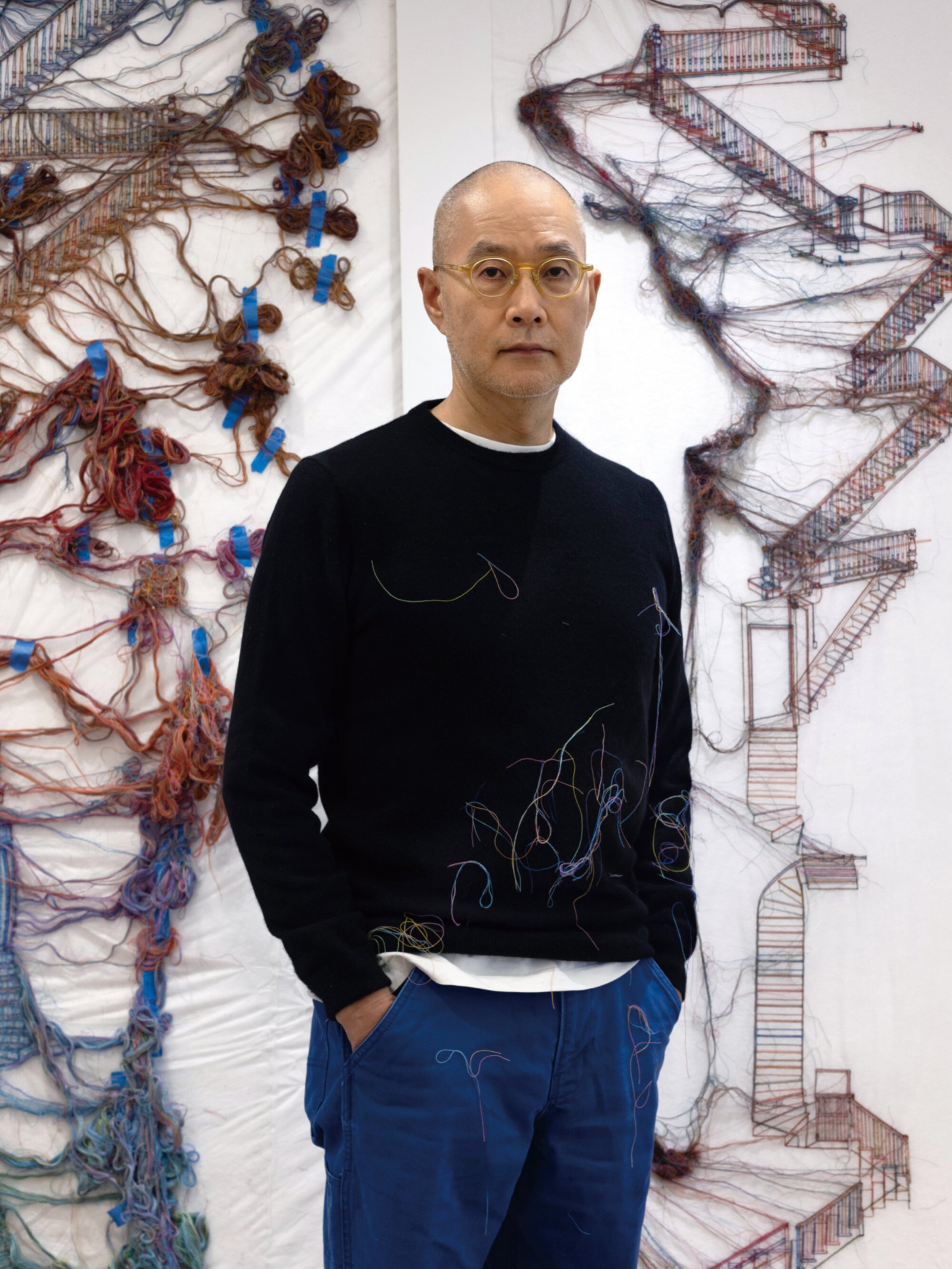
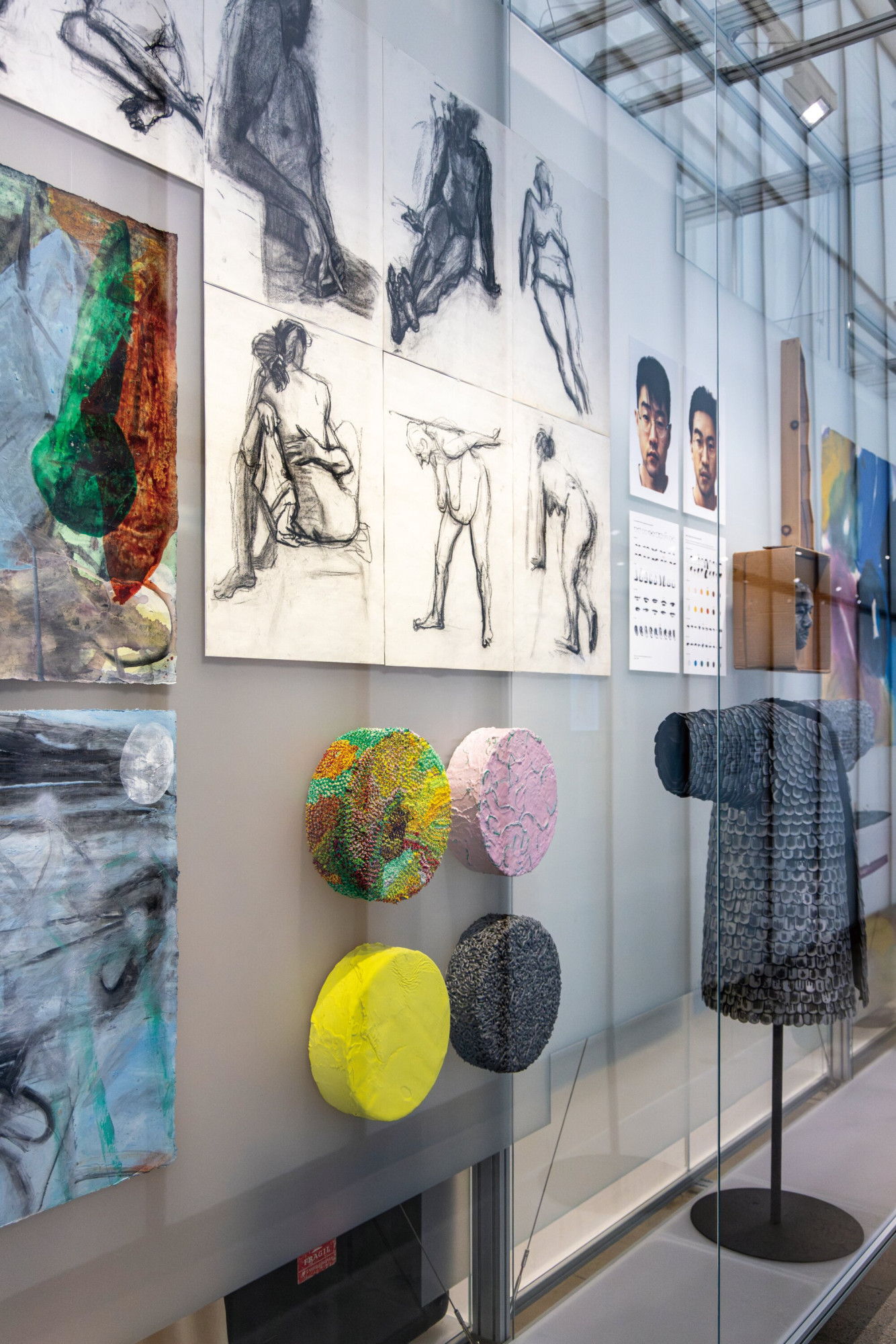
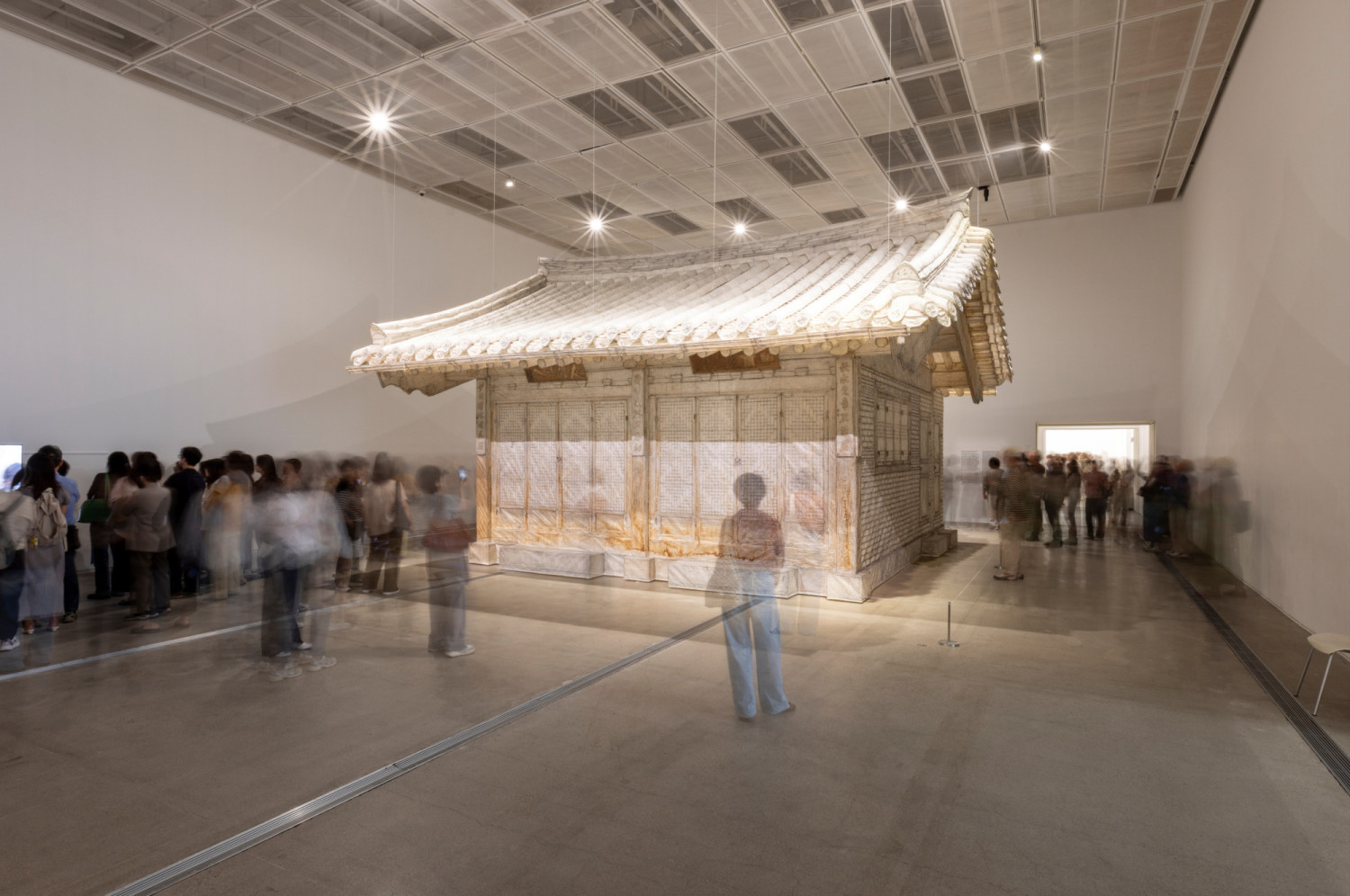
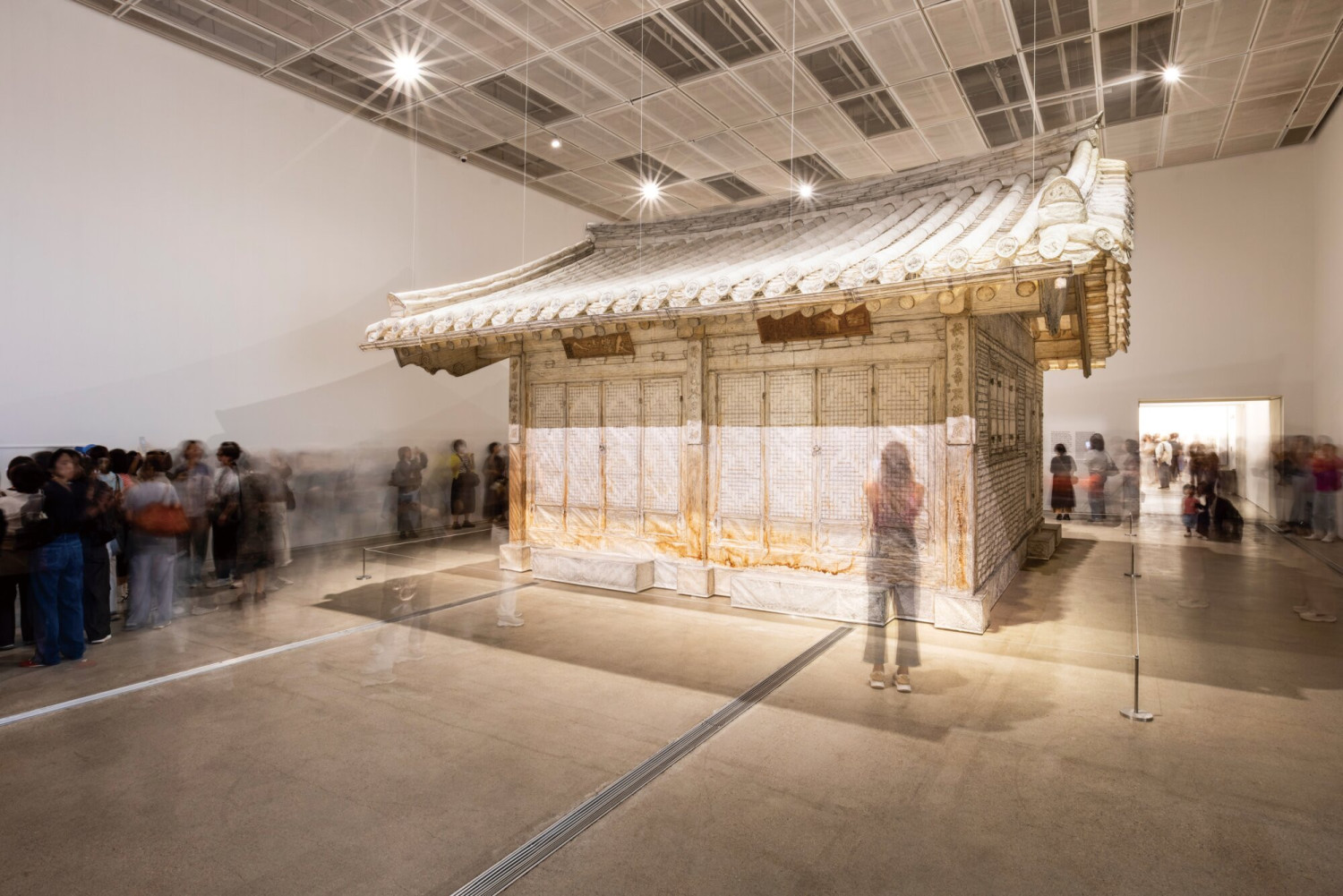
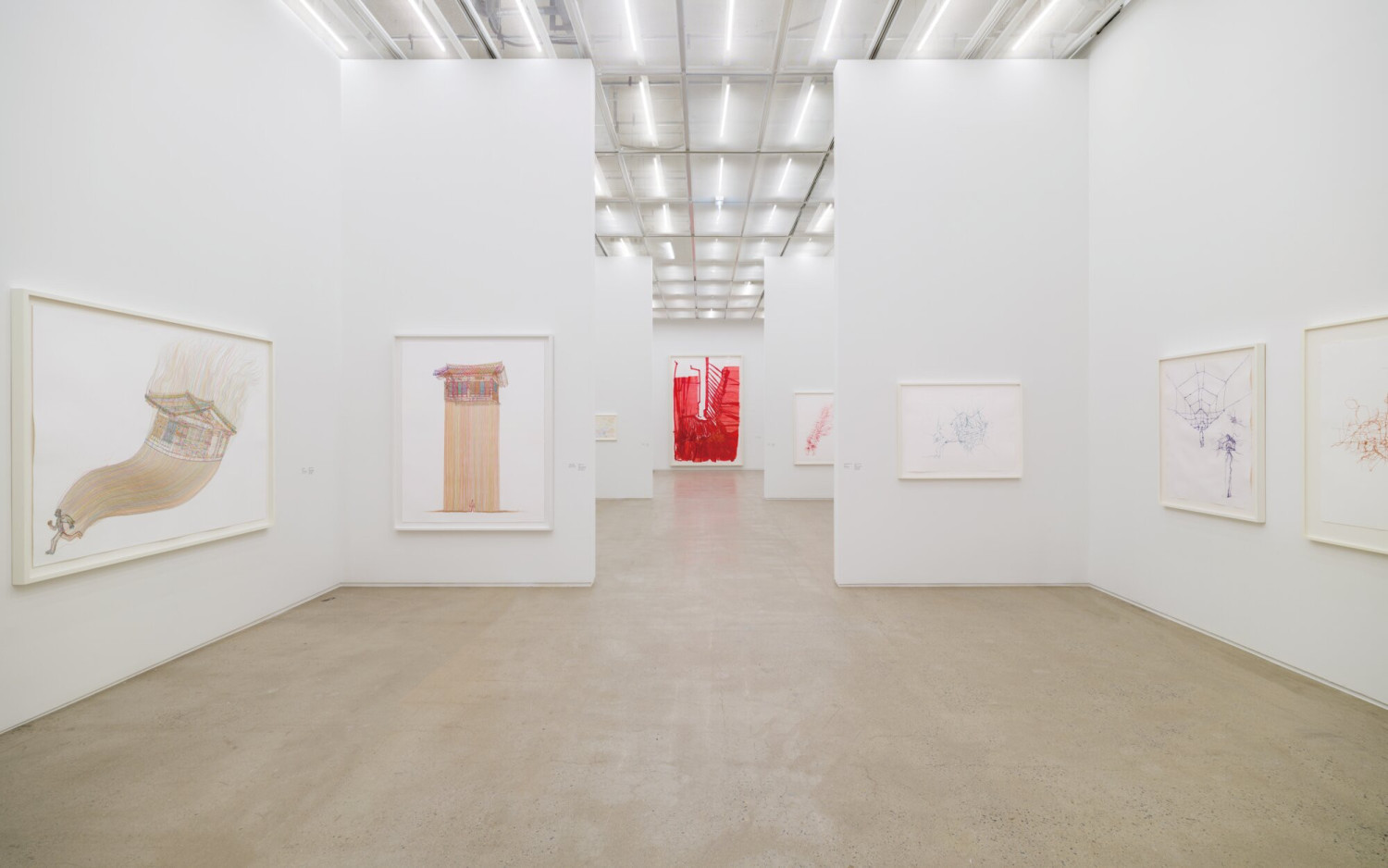
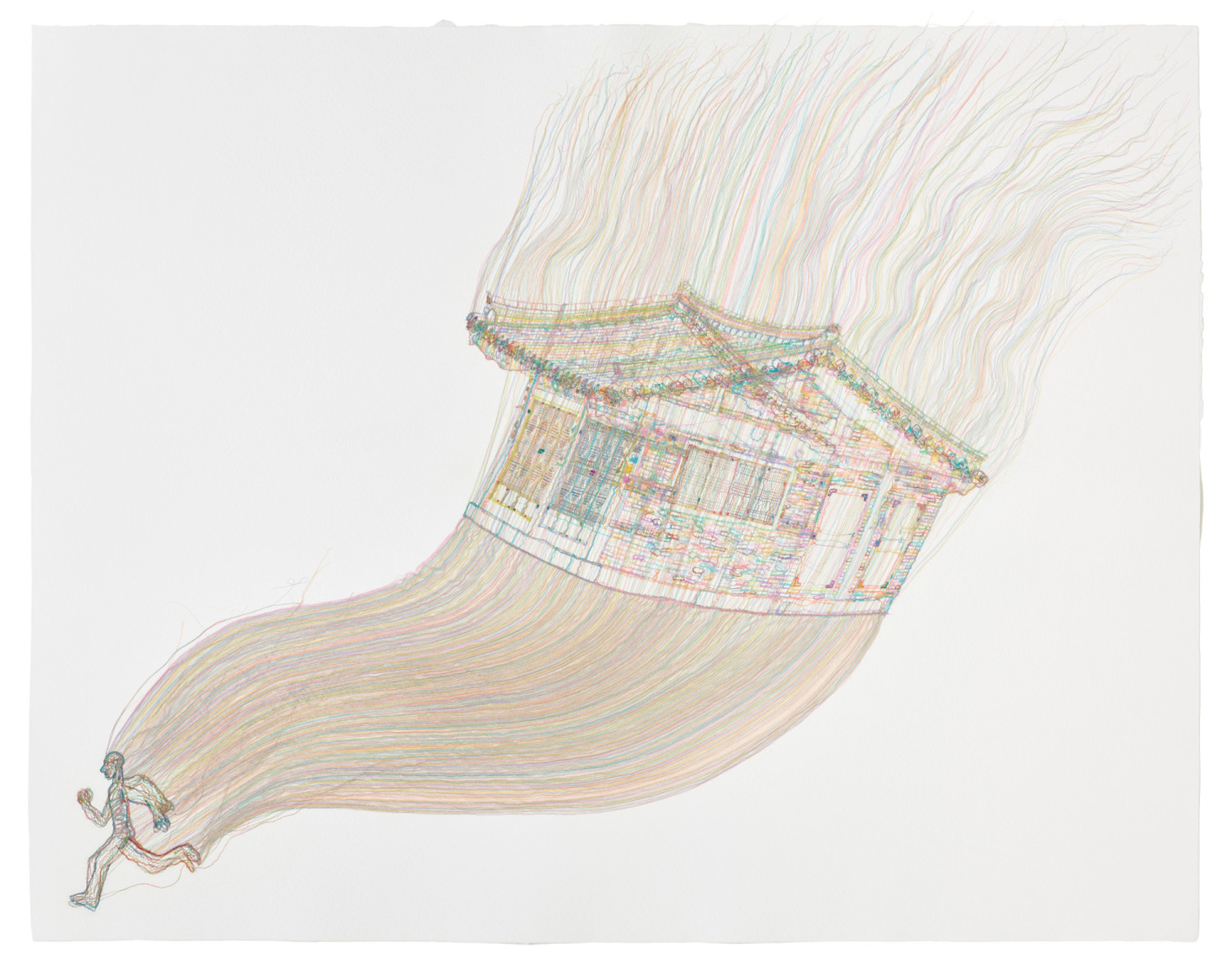
More than 40 years of work by Korean artist Do Ho Suh — created in Seoul, New York, London and other cities — are brought together at the Seoul branch of the National Museum of Modern and Contemporary Art, Korea (MMCA). Childhood drawings and early pieces sit alongside fabric recreations of architectural spaces, rubbings, videos and recent works — all spanning different times and places. At the exhibition’s threshold, the “Seed Bank” compiles clues to the motifs that would emerge throughout his career. A thought jotted down in a sketchbook resurfaces in a work years later, while an unexamined question returns in another form through lived experience. This reflection on the last four decades is especially compelling in how that seamless continuity and evolution overlap. Tellingly, the Korean term Suh uses for the exhibition is not hoego (retrospective) but hoehyang — a Buddhist term that means transferring one’s merit to others. The word shifts the focus from reviewing a chapter of the past to sharing work done in a variety of places with people in Seoul.
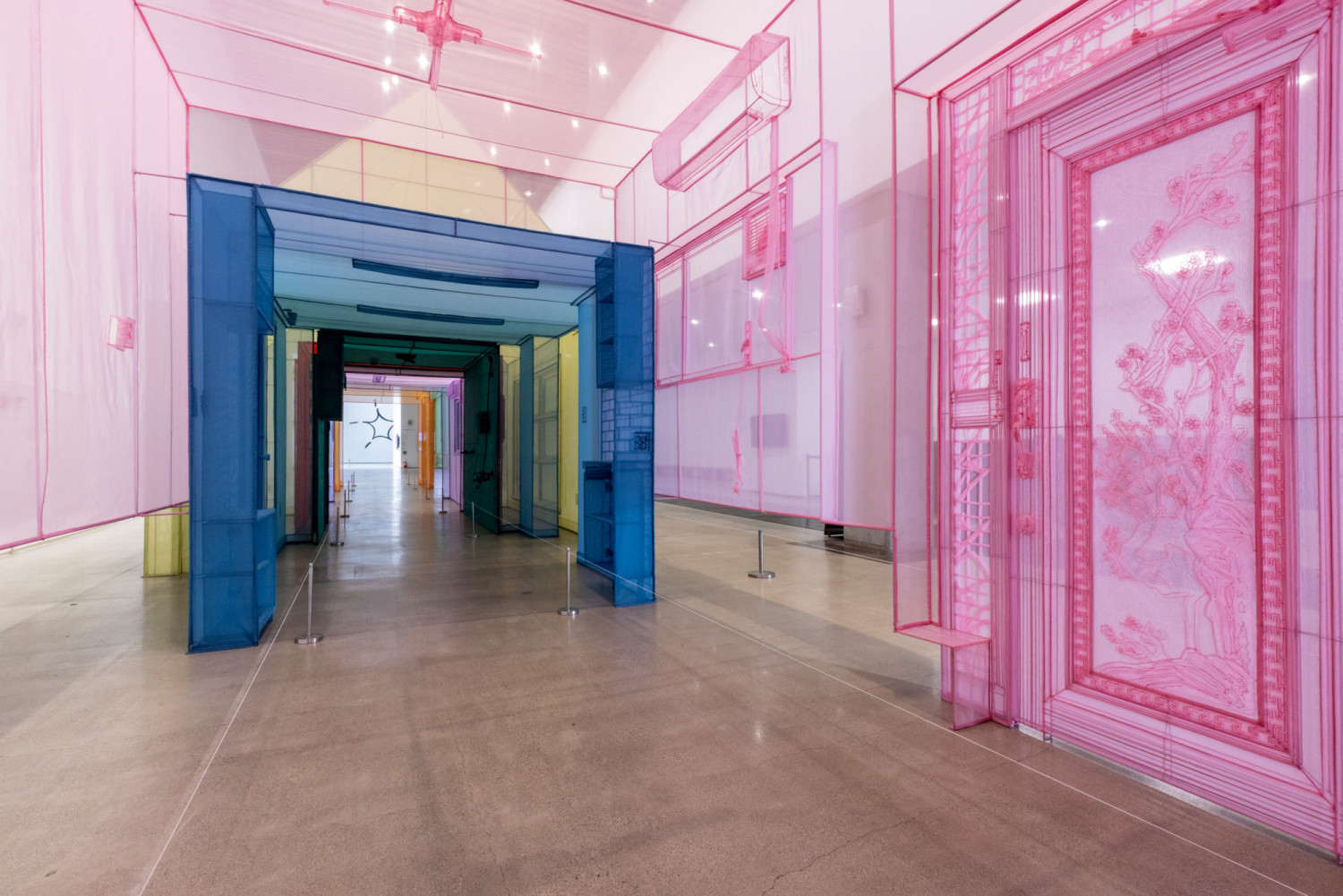
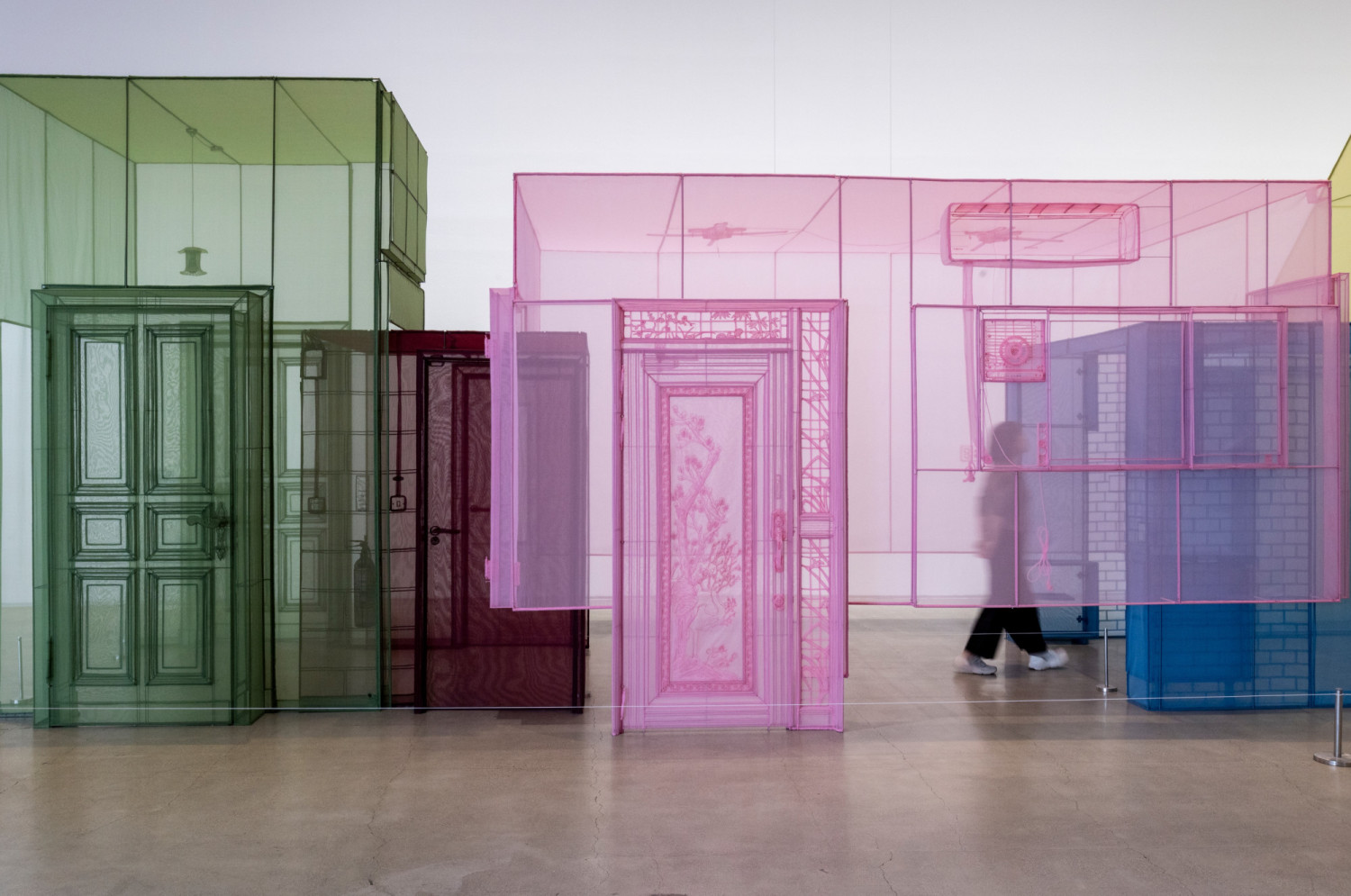
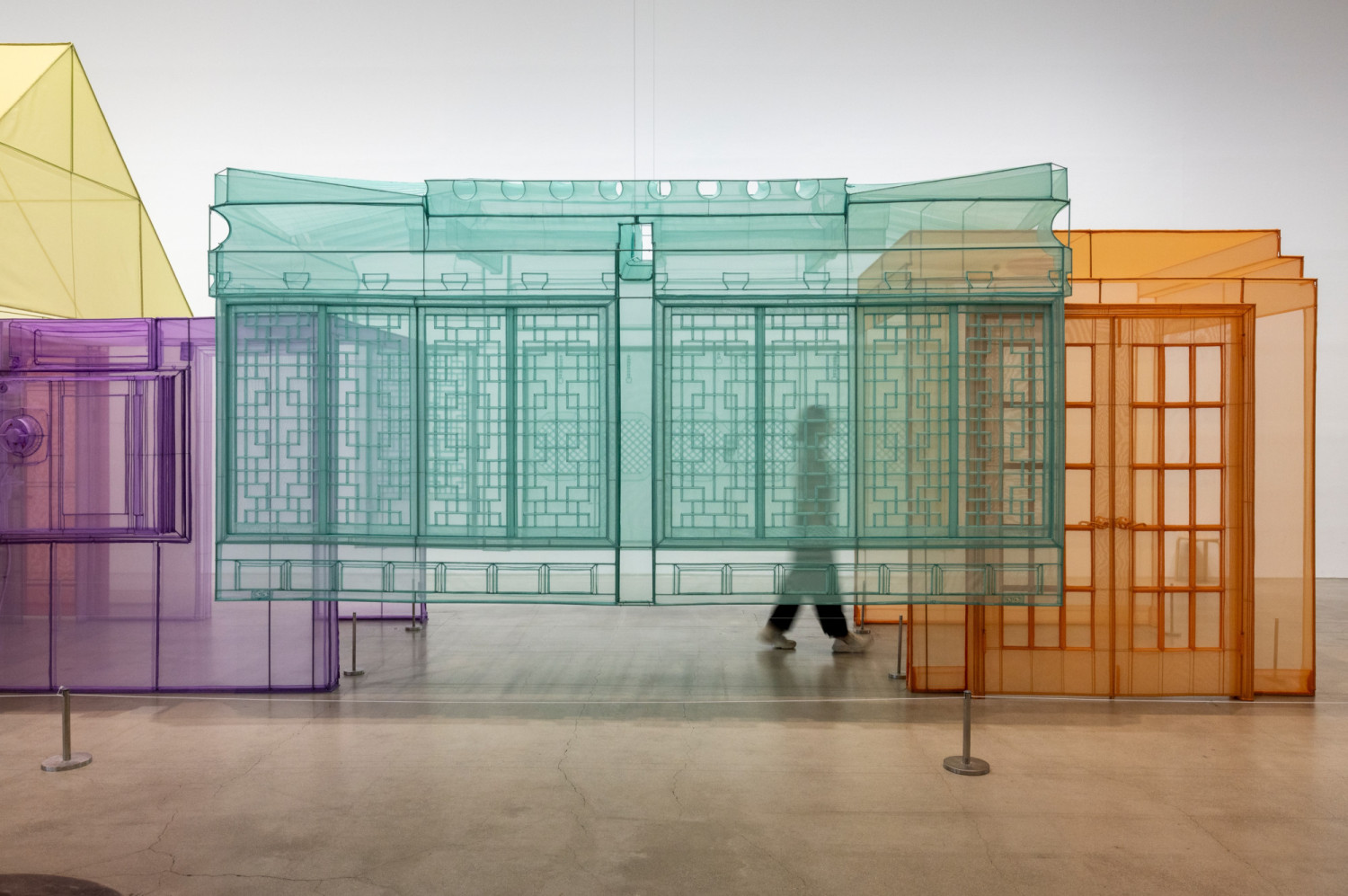
The word “home” has long been associated with Suh. He has recreated the houses, rooms, corridors and stairways he once inhabited in translucent fabric, recorded architectural surfaces through rubbings and connected spaces from different cities within a single structure. Yet in his work, home is less a destination than the origin of his questions. Where does my space end? Where does it intersect with another’s? How do we remain connected to a place after leaving it? Questions that arise at the boundary between self and others have led him, through home and movement, to family and memory.
We experience places by staying in and moving through them, and those experiences remain in the body as sensations and memories. By rubbing our hand against a surface, putting on a garment or passing through a doorway and down a corridor, we turn spaces into conduits for movement, sensation, memory and energy. Leaving turns a familiar place into a space of memory, while new relationships and events in our lives make a place different from before. The spaces we have passed through shape how we think, and our thoughts, in turn, shape our perception of the world. We may return to a place we have left but perhaps not to exactly the same place.
Sixteen years ago, I spoke with Suh about “the space between you and me.” The space we discussed back then was more than a physical location — it was the domain occupied by the individual, a kind of invisible structure forming a boundary with others and facilitating relationships with other individuals and communities. Standing before his work again after all these years, I can now see the time that has passed through that space. In the intervening years, Suh has lived in several cities, started a family and become a father. His gaze, once trained on distant walls and doorknobs, has shifted toward the people closest to him. Seeing his children has led him to reexamine his parents’ generation.
A change in life’s circumstances does not make old questions disappear. They return, subtly altered by new experiences and relationships, in the move from my space to another’s, and from my home to ours. The more than four decades of Suh’s work gathered in this exhibition trace the evolution of those questions in their journey through time.
Interview
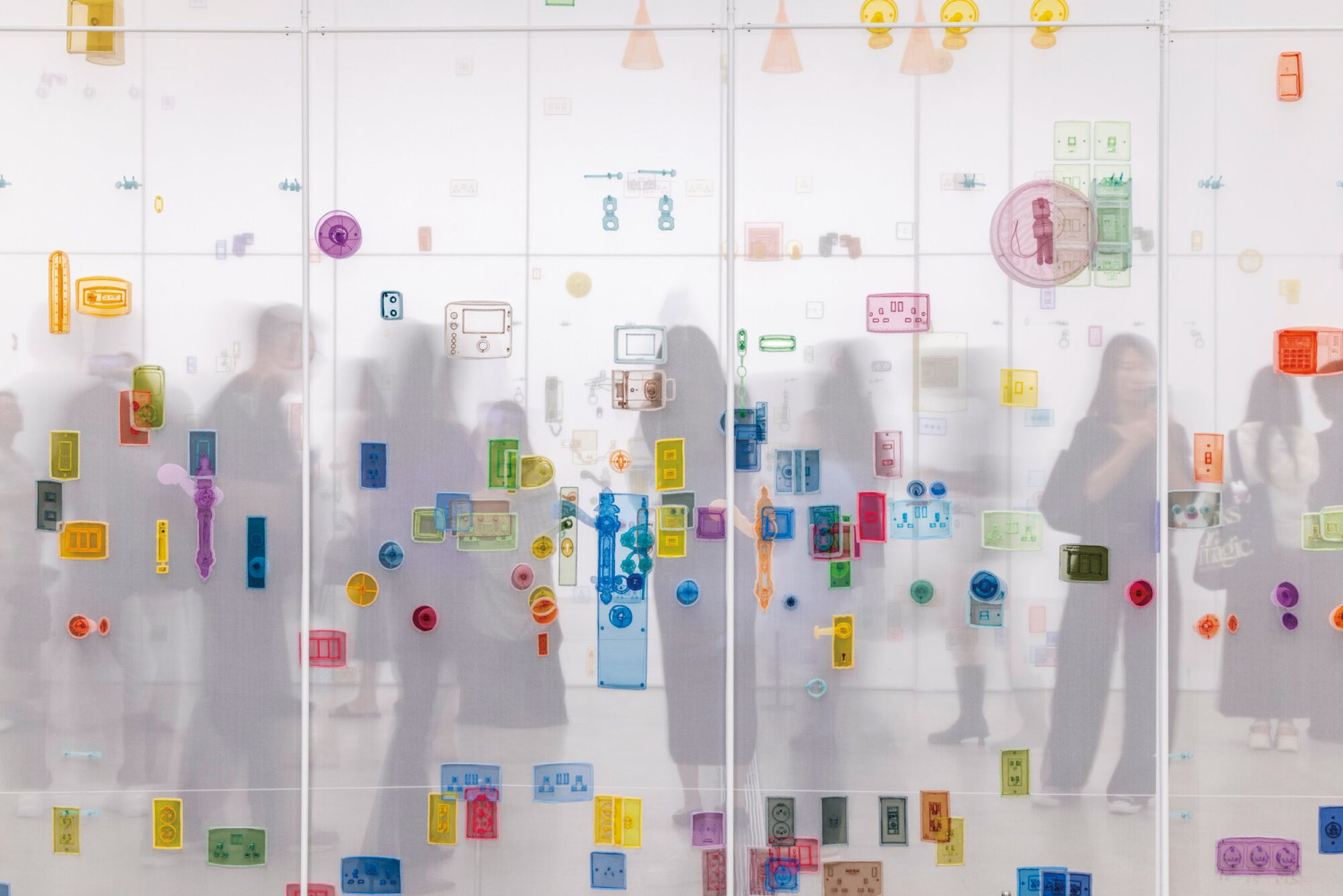
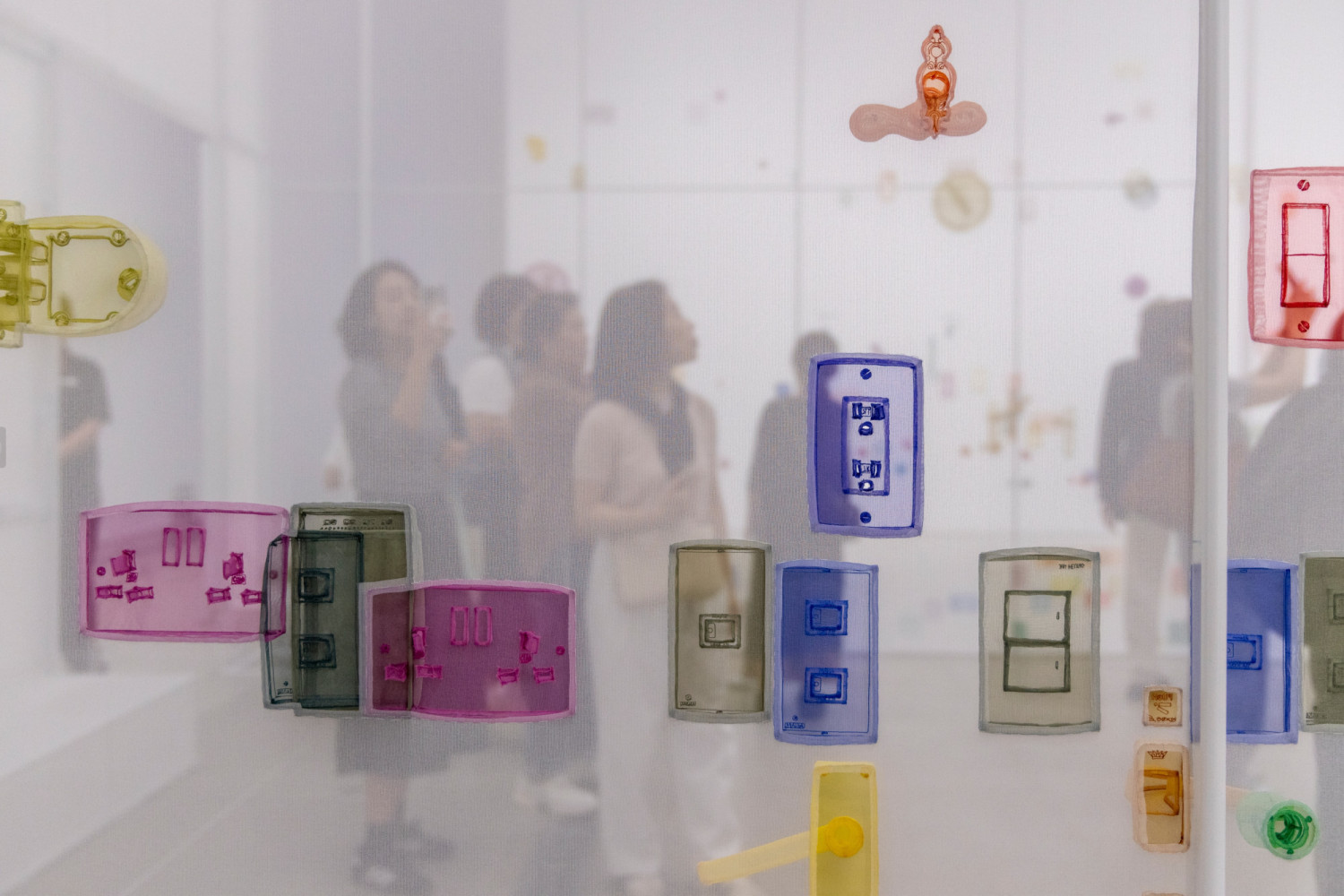
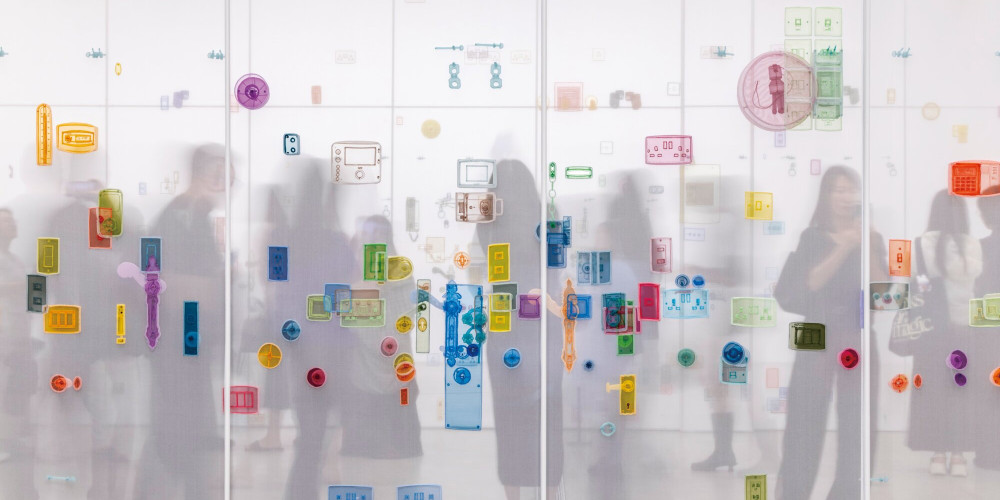
Perfect Home: London, Horsham, New York, Berlin, Providence, Seoul, 2024
Time Moves as a Spiral
This exhibition at the MMCA brings 40-year-old pieces and most recent pieces together in the same space. Seeing work from different periods side by side, what connections did you notice?
Following my survey exhibition at Tate Modern last year, I thought about how to create a distinct experience for this exhibition. That’s the reason for “Seed Bank” in the corridor before entering the exhibition. The space shows the work and ideas I was exploring before I went to the U.S. and during my early years studying there. Looking back at my old sketchbooks, I’m often astonished by what I find. There are ideas in there that manifested in my later work. Back then, when I got an idea, I’d scribble it down in a sketchbook and move on. When I revisit those sketchbooks again, years later, I find seeds of my future work. It’s surprising to realize I’d already been thinking about that back then.
That’s why I think it’s so important to go back and look at old records. Even if an idea isn’t turned into a work right away, it doesn’t just disappear. It lingers somewhere and then resurfaces years later. And sometimes, it’s only later that you can perceive a meaning that wasn’t visible at the time.
Early in your career, you were interested in the space around the individual and experiences within that space. As your life progressed, your artistic subjects and main interests seem to have changed. What has been the biggest change for you?
Becoming a father was a huge turning point in my life. To use the analogy of a camera lens, I used to be focused on a wall or doorknob in the distance. Then my children came along, and my focus moved closer. Seeing my children made me look back at my own life, which naturally led me to look at the generations before and after me as well. This experience also changed the way I viewed time. I thought time moved along a straight line, from the past through the present and into the future. But I came to realize that it doesn’t necessarily work that way. Eventually, I came to think of time moving as a spiral. And if time is a spiral, it cannot be separated from space.
Home as Experience and Memory
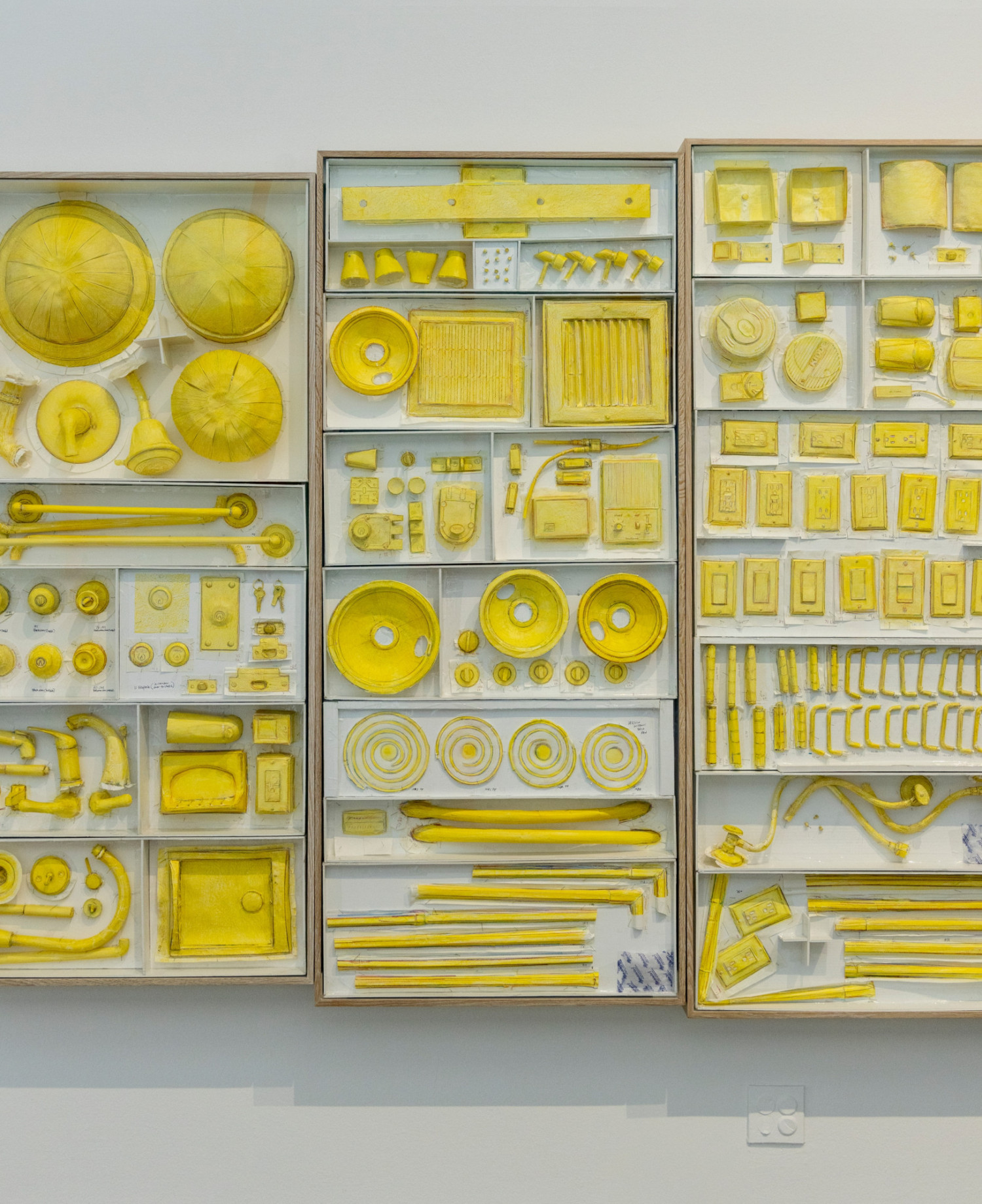
“Home” has consistently been an important theme in your work. In your recent works, we see not only physical spaces but the time and memories collected there. In Rubbing/Loving: Seoul Home (2013 – 2022), for example, you covered the surfaces of your Seongbuk-dong area home with hanji (traditional Korean paper) and rubbed them by hand to capture traces of the space. How is the act of physically rubbing a space related to memory?
The fabric works and the rubbing works deal with the same space, the same house, but they’re actually very different kinds of artwork. In terms of language, the fabric is a signifier: once it communicates meaning, its job is done. But Rubbing/Loving series is different. Rubbing is about pouring energy into the entire house. When you rub the surfaces yourself, even the tiniest traces that you’d normally never notice — a tiny screw hole, for instance — start to appear. As you stare at it and wonder what it’s from, you suddenly remember going out to buy something, as well as the route you walked, the weather that day, the sunlight, the temperature, the smell. One after another, memories resurface that would have remained forgotten if you hadn’t touched those surfaces with your own hands.
I came to think of Rubbing/Loving as almost a form of writing. You follow one tiny trace and suddenly remember a conversation you had in that space or a moment you’d completely forgotten about. A memory doesn’t vanish just because we can’t remember it. It’s still there somewhere in the back of our minds; we just can’t retrieve it. Rubbing/Loving was the process of dredging those memories up from the depths.
The landlord of the house I lived in for a long time in New York was the same age as my father. He cared for me a great deal. I saw up close how this man, who was a psychotherapist, developed dementia and began losing his memory. There were times when he could recognize me but not his own son. And while I was watching him, my own parents were growing older on the other side of the world. Going through that made me feel that when I left the house, I ought to take something with me. It is one of the reasons I made a rubbing of the New York house.
The Seoul house is also connected to my father. He lived through the Korean War (1950 – 1953), and the generation before him lived through the loss of their nation. He grew up with this sense that so much of our surroundings can disappear. Even when I was a child, my parents often talked about how old buildings could vanish one day and needed to be preserved somewhere, in some form, before they were gone. That was the idea behind them building the hanok (traditional Korean home).
I left Korea for different reasons; but in the end, leaving home always involves some kind of loss. In that sense, rubbing was also a symbolic response to disappearance.

Memory Moves Along with the Body
In your work Memory of Love (collaboration with RE;CODE), 2026, located in the final exhibition hall, you seem to have expanded upon that idea of memory. If clothing was the smallest space surrounding the body in your earlier work, now other people’s memories have entered that space.
From early on, I’ve been very interested in how clothing expresses a person’s identity and how that clothing can be interpreted as space. Clothing protects a person and fits the body exactly. It’s the smallest space we can carry around with us. From there, I expanded that idea into architectural space.
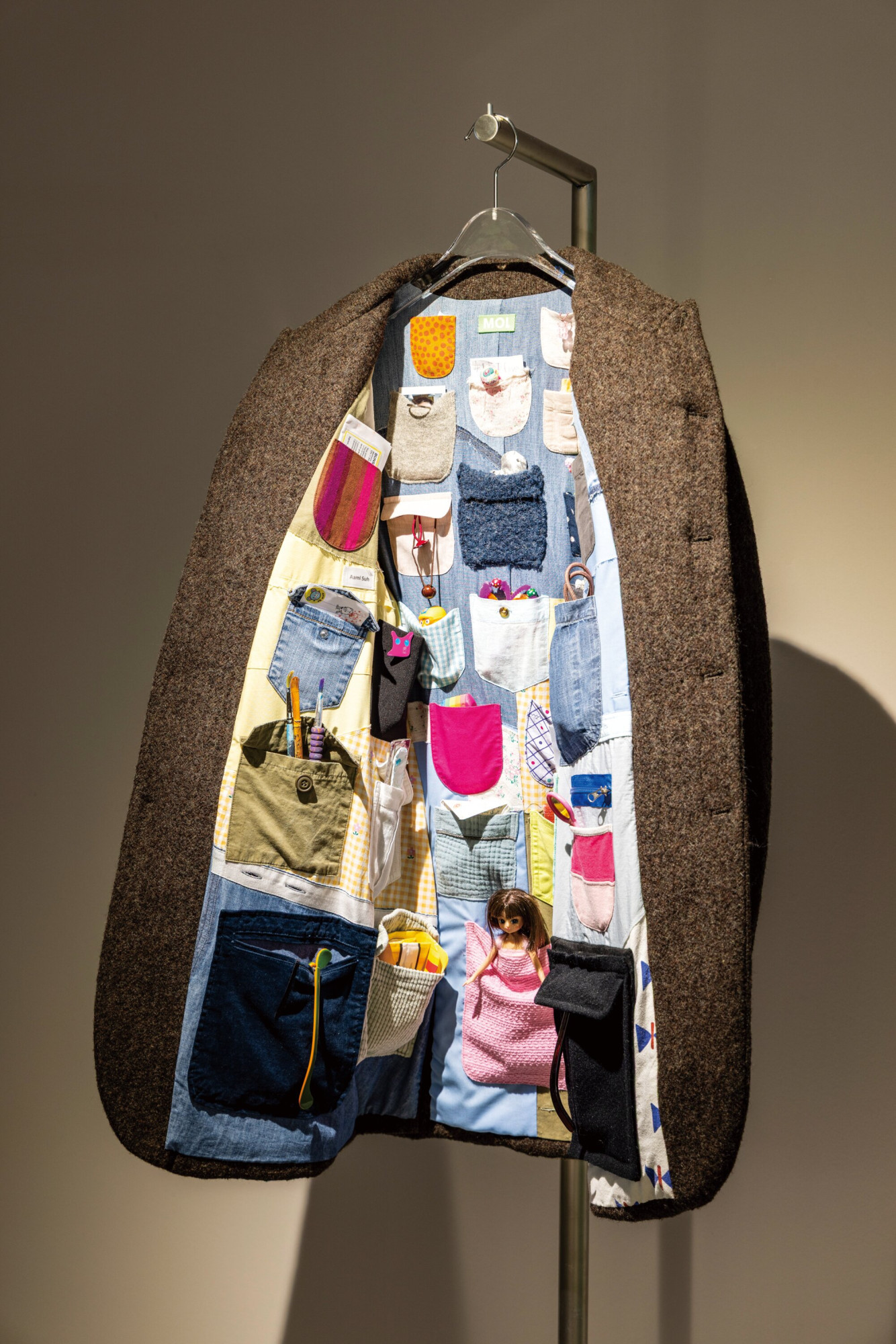
But in my reflections on clothing, I realized there was another kind of space inside it: the pocket. So actually, the smallest space we have is the pocket. We put our belongings in our pockets to carry around with us, right? There’s got to be a lot of energy gathering there. The objects in our pockets — and the energy and memories attached to them — move with us.
That took my thinking about clothing a step further, which brings us to Memory of Love. I took pockets from clothing my family had worn and used them to make the lining of an actual coat. When I put the finished coat on for the first time, I experienced something I hadn’t anticipated. I was capable of visualizing how the coat would look like. But the moment I put my arms into the sleeves, it felt like a tunnel. Instead of fabric, I felt a tremendous energy. I couldn’t contain my emotions. I still don’t understand the mechanism behind that.

From “My Home” to “Our Home”
Now that you’ve spent much of your life living in different cities, has the meaning of Korea as a place and a “home” changed?
It has indeed changed. Over the course of my career, I’ve come to feel that Korea is more than just my homeland. Looking back, I realize there have always been pieces I’ve done out of a sense of responsibility as a Korean. That doesn’t seem like a coincidence anymore. I wonder whether that might have been my mission in a certain sense.
When I think about any given thing, I like to trace it back, step by step, and figure out where it came from. Take this bottle of water I’m drinking. Someone brought it here; someone sourced the water and made the bottle. And if you keep tracing back, there’s the natural source of the water itself. If you follow each connection like that, there’s an endless chain of relationships.
The same is true of the hanok I grew up in. It’s a repository of the knowledge and experience of its builders. A hanok, in particular, is an architectural reflection of Korea’s climate, culture and sensibility, with doors and windows that open it up to its surroundings. So it’s more than merely the home of a single individual. It contains the experiences of many people from many generations. It’s not just “my home” — it’s “our home.”
It’s striking that you framed this exhibition not as a hoego (retrospective) but as hoehyang — the Buddhist concept of sharing one’s merits with others. What exactly does it mean to give back what you’ve received?
From an artist’s perspective, I think the act of making art is itself a form of hoehyang. Through my practice, I shape my thoughts and experiences into works that I can then share with others. With this exhibition in particular, I consider the act of showing my work over the years directly to audiences in Korea as a true act of hoehyang.
We live in an era where images are consumed to excess. We encounter countless artworks in photographic form, but I’ve learned firsthand that seeing a photograph of another artist’s work is completely different from encountering it in person. You might think you know a work from an image, but when you actually stand before it, you realize you don’t.
So I wanted to bring together works that people in Korea haven’t been able to see in person, and give them the opportunity to experience them directly. Not everyone can travel all the way to London to view my work at the Tate Modern. I felt a strong desire to gather the work I’ve created in various places over the years and thoughtfully share it with audiences here in Korea.
Where to Experience the Art of Do Ho Suh
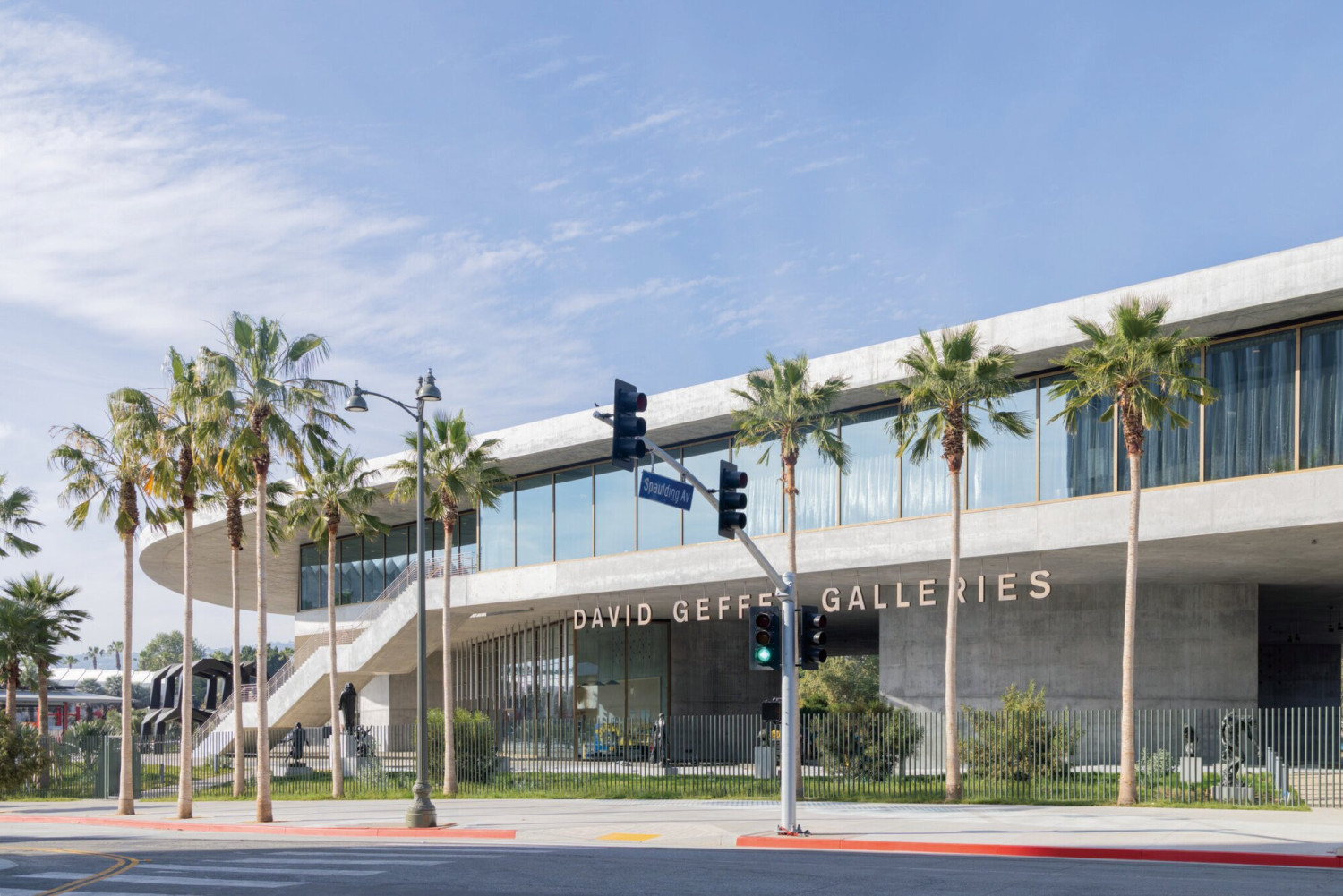
David Geffen Galleries, LACMA
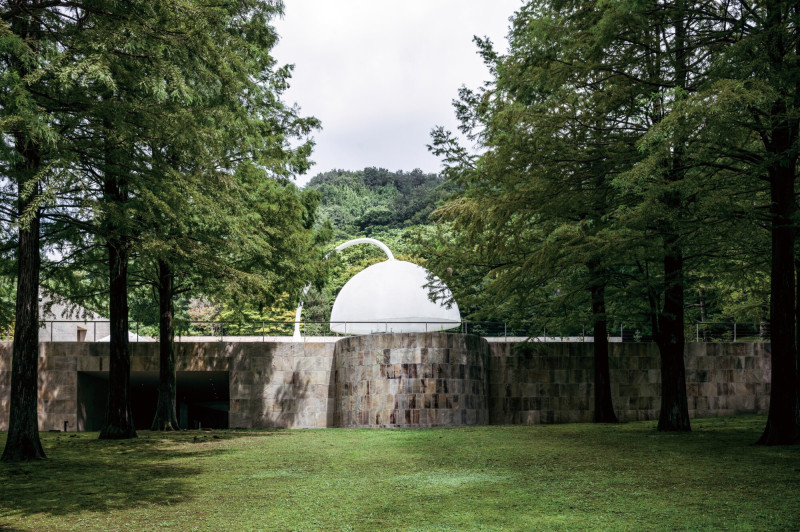
The Los Angeles County Museum of Art (LACMA), one of the leading art museums in the western United States, encompasses art from a wide range of origins and eras, from antiquity to the present. In 2026, the museum opened a new chapter with the David Geffen Galleries, a new exhibition building designed by architect Peter Zumthor that houses Do Ho Suh’s work Jagyeong Hall, Gyeongbok Palace (2025).
- lacma.org
- Korean Air operates direct flights between Incheon and Los Angeles 14 times a week.

Smithsonian's National Museum of Asian Art
April 27, 2024 – April 29, 2029
Opened in 1923 as the Freer Gallery of Art, the Smithsonian’s National Museum of Asian Art was the first Asian art museum in the United States. Today it stands as a major institution for the research and presentation of Asian art. Do Ho Suh’s Public Figures (1998–2023) can be seen outside the museum in Freer Plaza, where it was installed to mark the museum’s centennial.
- asia.si.edu
- Korean Air operates direct flights between Incheon and Washington, D.C. 7 times a week.
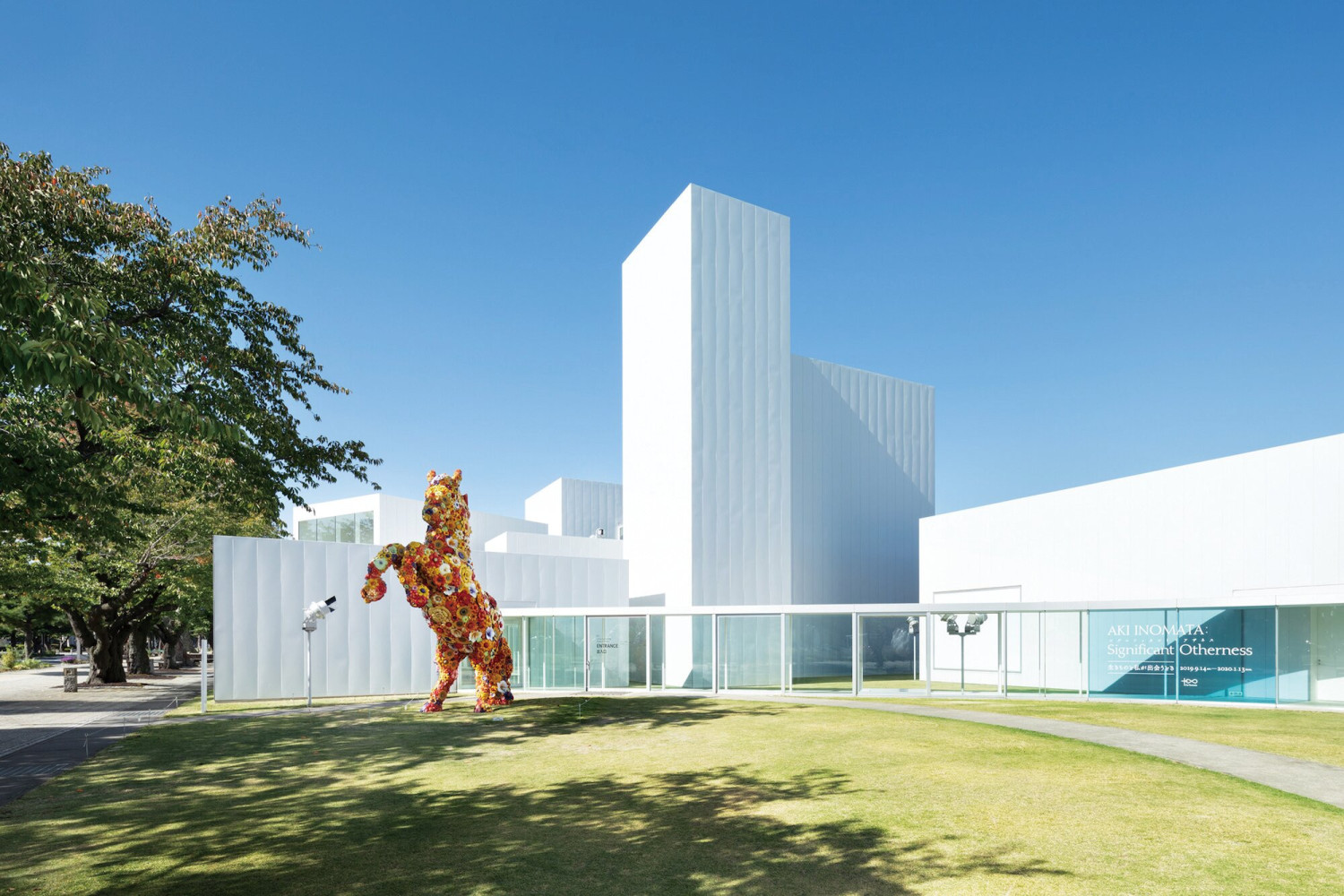
Towada Art Center
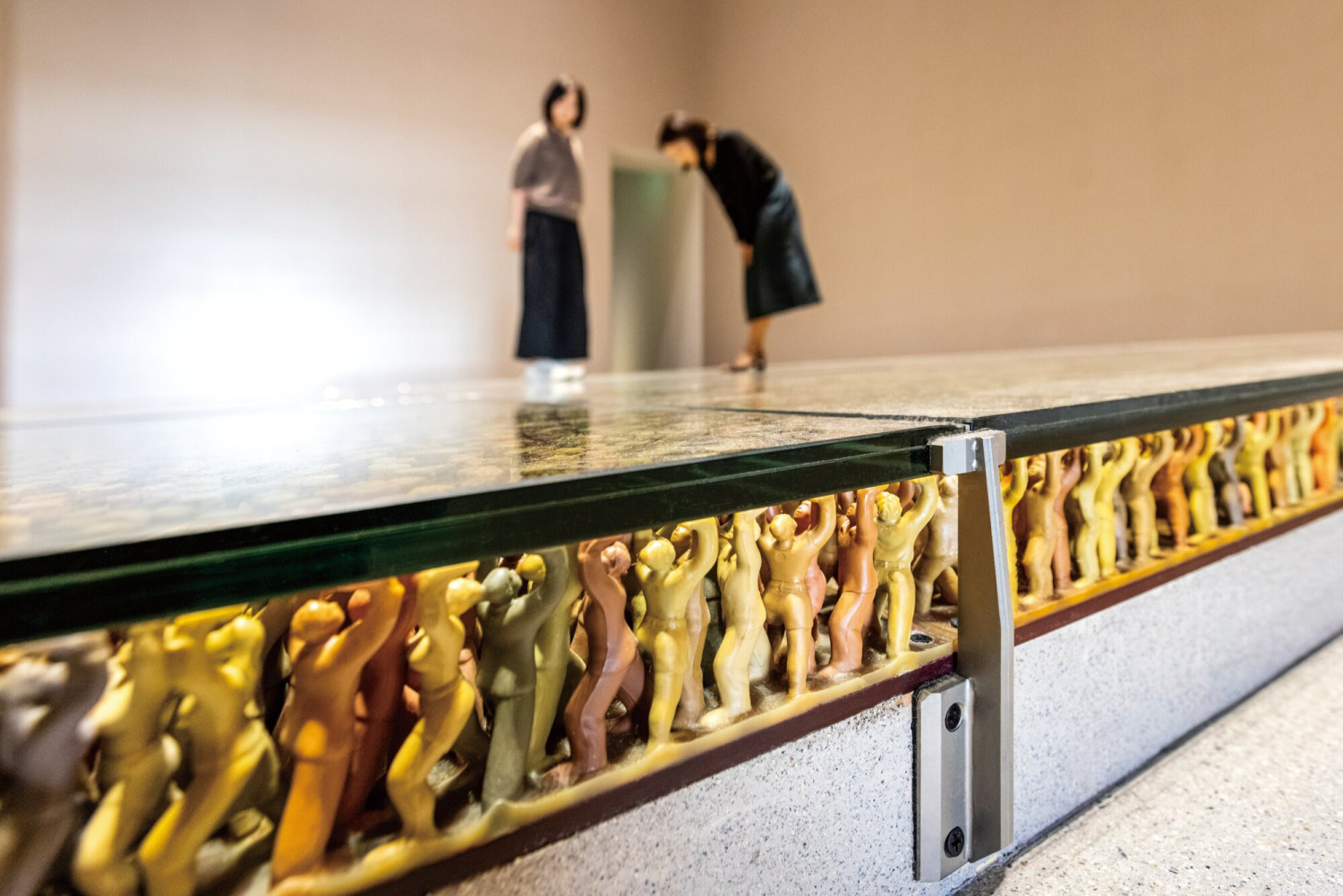
Designed by architect Ryue Nishizawa, the Towada Art Center seeks to extend the art space across the entire city with individual galleries conceived as independent “houses for art.” Alongside works by celebrated contemporary artists such as Yayoi Kusama and Ron Mueck, the museum presents Do Ho Suh’s Cause and Effect (2008) from its permanent collection.
- towadaartcenter.com
- Korean Air operates direct flights between Incheon and Aomori 5 times a week.
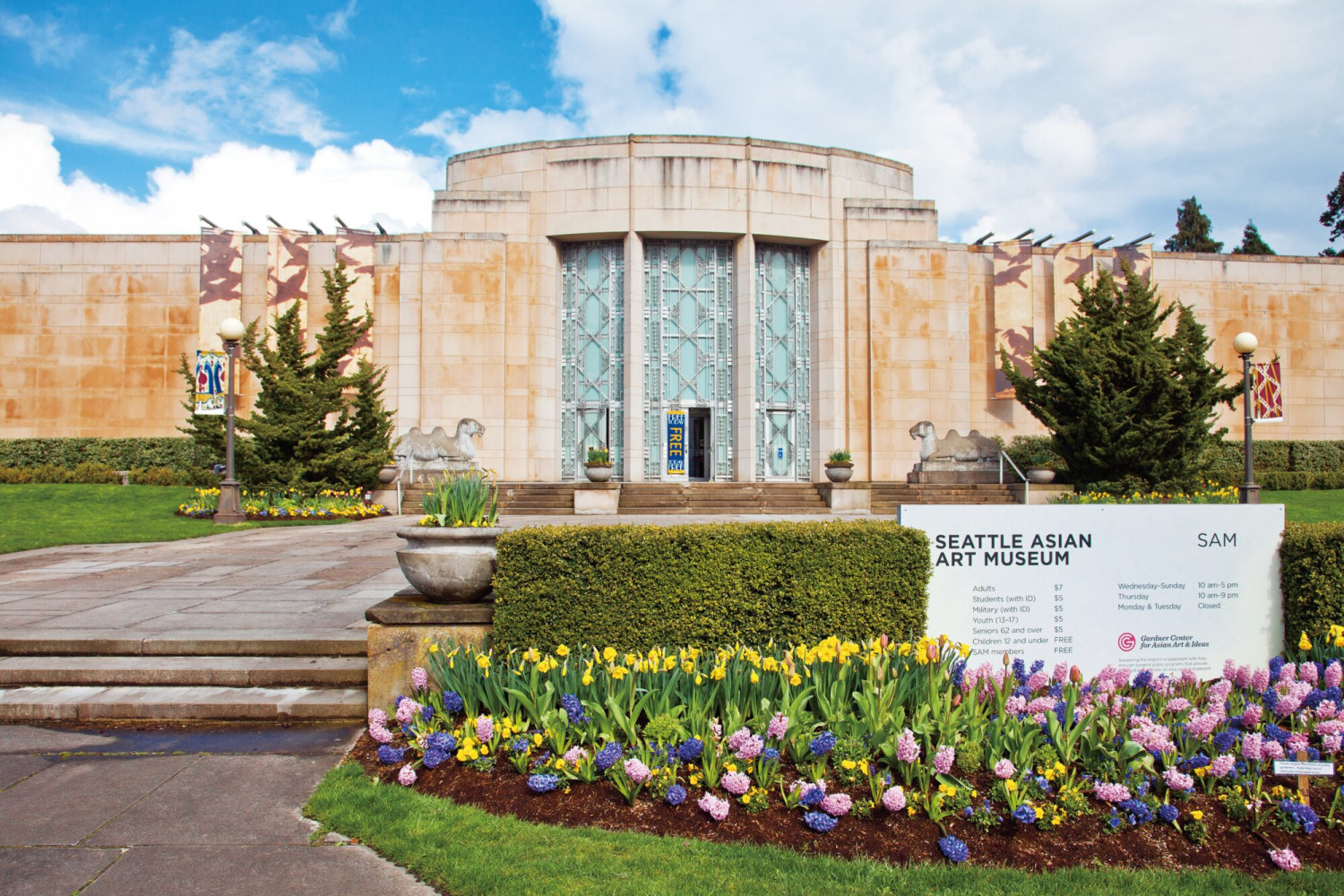
Seattle Asian Art Museum
Located in Volunteer Park, the Seattle Asian Art Museum forges new links between the past and present of Asian art. This Art Deco structure, which dates back to 1933, reopened in 2020 following a major renovation. The museum draws upon the Seattle Art Museum’s Asian art collection to present exhibitions spanning different regions and periods. Visitors to the
museum can see Some/One (2001), one of Do Ho Suh’s major early works.
- seattleartmuseum.org
- Korean Air operates direct flights between Incheon and Seattle 12 times a week.
- Written by Choi Jini
- Photography by Lim Harkhyoun
- Image courtesy of the artist and MMCA