How to Travel
MorningCalm presents Omnibus Story, a series of reflections that illuminate the beauty of the everyday. Through the varied voices and perspectives of global experts, these stories offer moments of insight — during your journey and well beyond.
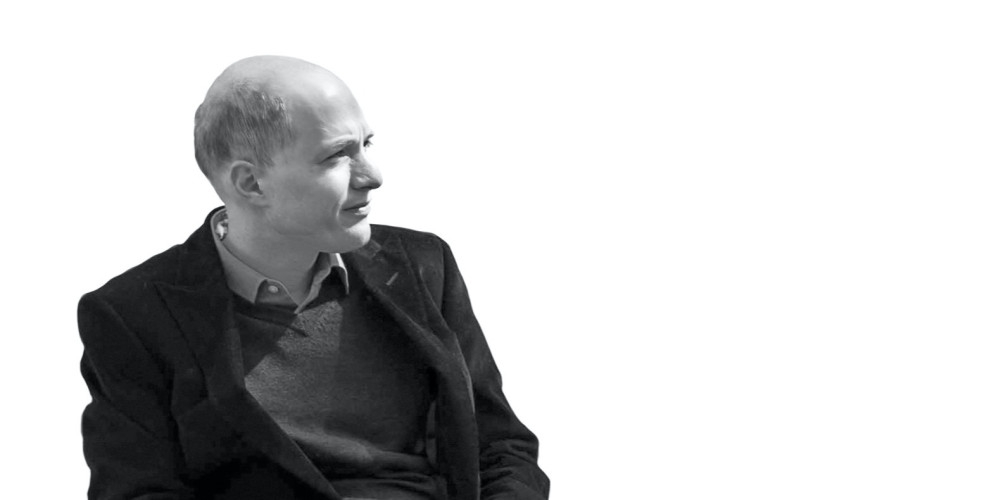
- Alain de Botton is a Swiss-born writer and intellectual who brings fresh insight to modern life by examining everyday subjects — love, travel, architecture, work, melancholy and even airports — through a philosophical lens. Renowned for making complex ideas accessible, he writes with a voice that is both intellectually rich and emotionally resonant. His acclaimed books, including Essays in Love, The Art of Travel, Status Anxiety and A Week at the Airport, have captivated readers around the world with their seamless blend of reflection and resonance. In 2008, he founded The School of Life, a global initiative dedicated to helping people apply philosophy to the challenges of modern living. In recognition of his contributions to culture and the arts, the French government bestowed the award of Knight of the Order of Arts and Letters (Chevalier dans l’Ordre des Arts et des Lettres) on de Botton in 2003.
The Art of Travel
That Broadens My Heart

Dear Readers of MorningCalm
I’ve always believed that to travel well, we must first be good students of our own minds. After all, our journeys do not only unfold across the miles between Seoul and Casablanca or Berlin and Busan, but across the inner terrain of our thoughts and emotions.
At its best, travel offers us a gentle yet profound therapy. We leave behind our familiar routines and encounter places, people and customs wonderfully different from our own. We might find ourselves admiring the ordered geometry of a rice field glimpsed from a train window in Jeollanam-do, or noticing how a stranger in another country ties a scarf or pours tea. These small discoveries can remind us how vast and varied the world is — and, in turn, how many possibilities there are for living a meaningful life.
But alongside the outward adventure lies another, quieter pleasure: the way travel allows us to meet ourselves anew. At 35,000 feet, pressed against the aircraft window, we can look down at clouds sculpted like mountains and realise how small our worries appear from such heights. The tensions and anxieties that felt enormous at home are softened by the sight of the earth’s curve. It’s as though the skies gently insist that we might, after all, be able to start again, to become a little wiser, kinder or more patient.
I feel deeply grateful to Korean Air and MorningCalm for inviting me to share some reflections about travel in these pages. Korea has always struck me as a country that understands the art of journeying, whether across landscapes or within the realms of thought and feeling. From poetry that celebrates the hush of snow on pine branches, to the quiet satisfaction of a well-arranged table of banchan, there’s a spirit of attentiveness and beauty here that resonates strongly with what I believe travel is for: learning to notice, to savour, and to see ourselves and the world with gentler eyes.
I hope that the essays in this issue might serve as small companions for you on your journeys, whether you’re flying to distant cities or simply sitting quietly at home, allowing your mind to revisit places you once loved. Perhaps they might remind you that travel is not only about movement through space but also about expanding the borders of our own hearts.
Wherever you may be reading this above the clouds or settled in your living room, I wish you the kind of journeys that leave you refreshed, inspired and a little closer to the person you hope to become.
With warmest wishes and gratitude,
Alain de Botton
How to Choose a Destination
One of the greatest conundrums of travel also happens to have the most basic ring to it: where should we go? Our societies are not shy about presenting us with options of course, but they are also content to leave us alone with the many deeper complexities beneath the business of choosing. A satisfying answer is less simple than it seems, for it requires us to have a deep understanding of ourselves, a good grasp of the nature of the world and an implicit philosophy of happiness.
Every destination has a character: that is, it emphasises and promotes a particular aspect of human nature. Some, like the long, empty beaches of South Australia, invite us to serenity; others, like the suburbs of Amsterdam, reinforce the pleasures of bourgeois sobriety. Los Angeles speaks to our dormant worldly ambitions and foregrounds a less squeamish attitude to money; Miami or Rio de Janeiro can loosen inhibition and reserve and tug us towards a relaxed sensuality.
The destination we find ourselves drawn to reflects an underlying sense of what is currently missing or under-supported in our lives. We are seeking, through our travels, not just to see new places but also to become fuller, more complete beings. The destination promises to correct imbalances in our psyches, for we are all inevitably a little lacking or excessive in one area or another. The place we go to should, ideally, help to teach us certain lessons that we know we need to hear. Our destinations are a guide to, and a goad for, who we are trying to become. To make a wise choice about where to travel, we therefore should look first not so much at the outer world but at the inner one. We need to ask ourselves what is missing or presently too weak within us, and on that basis, set about identifying a location somewhere on the planet — in the wilderness or a city, in the tropics or by a glacier — with the power to help us develop into the sort of people we need to become. Travel accedes to its true nobility when we ensure that the physical journey can support a well-defined inner journey towards maturity and emotional health.

How to Spend a Few Days in Paris
Paris is one of the world’s most famous and visited cities. How should we spend a couple of days there? In trying to answer this, we’ll simultaneously be examining some big questions about travel more generally.
Often a trip to Paris is organised around a homage to culture. We want to get in touch with great cultural figures: we go to see their works and the places they lived and worked. We’re trying to get close to them. But there’s a strange irony: one of the things these people would never have done is visit museums. We would be better off focusing on what they loved, not what they made or where they hung out.
For instance, we might want to honour the 18th century painter Chardin by going to the Louvre and looking at some of his paintings. But Chardin didn’t spend his time doing that: he had little interest in exhibitions. What he liked doing was going to the market and buying apples and looking at them carefully.
We might be inclined to make a trip to the Café de Flore at the intersection of Boulevard Saint-Germain and Rue Saint-Benoît in order to see the place where Jean-Paul Sartre did a lot of his philosophical writing.

At the back of our minds, perhaps, we hope that by seeing the place we’ll boost our own creative and intellectual life. That’s a very nice and important goal. But there’s something curious about the way we’re pursuing it. Sartre went to that café because it happened to be a pleasant stroll from where he lived and (at the time) it was cheap and convenient. He didn’t himself visit cafés to see where other writers had lunch. To be closer to him in spirit we should do what he did: go to any modestly priced café we quite like that’s near to where we’re staying and work on our own ideas.
It could seem rather interesting — if one is literary-minded — to pay a visit to a recreation at the Musee Carnavalet of Marcel Proust’s bedroom: the cork-walled room where he wrote much of his great novel, In Search of Lost Time. However, this isn’t something that would particularly ever have appealed to Proust himself. What he wanted to do — and would have encouraged us to do — is to stay in one’s own bedroom and think in great detail about one’s own childhood. The true place to commune with Proust is back in one’s own little rented apartment.
Most visitors to Paris drop into Notre Dame. The people who built it wanted us to come. But they weren’t hoping that we’d be impressed by its pioneering use of flying buttresses or by the gargoyle water spouts high up on the roof. They primarily wanted us to examine our consciences and feel sorry for the wrong we have done to others; they wanted us to be generous to the needy and to wonder about the point of human existence.
And these are experiences we can come by — perhaps more readily in other places, perhaps by visiting one of the less famous graveyards, such as the Passy Cemetery, where the brevity of life is grimly apparent and where the hurts and preoccupations of our lives are put in a true perspective. Maybe we’d go to the Musée d’Orsay to see Claude Monet’s painting La Gare Saint-Lazare, which he painted in 1877. The irony is that Monet himself didn’t go to the Musée d’Orsay to paint this work. He spent many hours at the most sophisticated transport hub he could find contemplating the technical grandeur of modern life. If we want to love what Monet loved, we might make space in our visit to spend more time at Charles de Gaulle airport. None of the great Parisian cultural figures — around whom many trips to Paris revolve — went there on holiday. They were writing, thinking and painting in the place they happened to live. They were interested in things — the beauty of ordinary objects, the meaning of life, memories — that don’t belong to any one particular place. Perhaps the ideal outcome of two days in Paris is the realisation that we may not need to visit Paris at all.

Cherishing Memories
Throughout our lives, we spend a lot of time and even more money engineering pleasant experiences. We book airline tickets, visit beaches, admire glaciers, say hello to penguins, watch elephants drinking…
In all this, the emphasis is almost always on the experience itself — which lasts a certain amount of time, and then is over. The idea of making a big deal of revis- iting an experience in memory sounds a little strange — or simply sad.
We’re not assiduous or devoted cultivators of our past experiences. We shove the nice things that have happened to us at the back of the cupboard of our minds and don’t particularly expect to see them ever again. They happen, and then we’re done with them. They do sometimes come back to us unbidden. We’re on a boring train ride to work, and suddenly an image of a beach at dusk comes to life. Or while we’re having a bath, we remember climbing a flower covered mountain with a friend a decade before. But little attention tends to get paid to such moments. We don’t engineer regular encounters with them. We may feel we have to dismiss them as “daydreaming” or “thinking about nothing.”
But what if we were to alter the hierarchy of prestige a little and argue that regular immersion in our memories is a critical part of what can sustain and console us — and not least, is perhaps the cheapest and most flexible form of entertainment. We should learn regularly to travel around our minds and think it almost as prestigious to sit at home and reflect on a trip we once took to an island with our imaginations as to trek to the island with our cumbersome bodies. In our neglect of our memories, we are spoilt children, who squeeze only a portion of the pleasure from experiences and then toss them aside to seek new thrills. Part of why we feel the need for so many new experiences may simply be that we are so bad at absorbing the ones we have had.
To help us focus more on our memories, we need nothing technical. We certainly don’t need a camera. There is a camera in our minds already: it is always on, it takes everything we’ve ever seen. Huge chunks of experience are still there in our heads, intact, and vivid, just waiting for us to ask ourselves leading questions like: “where did we go after we landed?” or “what was the first breakfast like?” When we can’t sleep, when there’s no Wi-Fi, we should always think of going on “memory journeys.” Our experiences have not disappeared, just because they are no longer unfolding right in front of our eyes. We can remain in touch with so much of what made them pleasurable simply through the art of evocation. We talk endlessly of virtual reality. Yet we don’t need gadgets. We have the finest virtual reality machines already in our own heads. We can — right now — shut our eyes and travel into, and linger amongst, the very best and most consoling and life-enhancing bits of our past.
- This article draws in part from How to Travel.

- Written by Alain de Botton and The School of Life
- Illustration by Hwal