Dongdaemun, Portrait of Seoul’s Soul
In Dongdaemun, time doesn’t adhere to a single current. Ancient history whispers from its ramparts, while the streets below pulse with bold, creative energy.
Dongdaemun is one of those rare enclaves in Seoul where you can feel the city’s many historical currents converge. Remnants of ancient fortress walls and age-old market squares endure, even as the Dongdaemun Design Plaza (DDP) — a global design icon — stands as part of the city’s striking new visage. Here, at this crossroads of past and present, where silent memories embrace dynamic culture, we take a fresh look at the urban heart of Seoul.
DDP: Citadel of Creativity
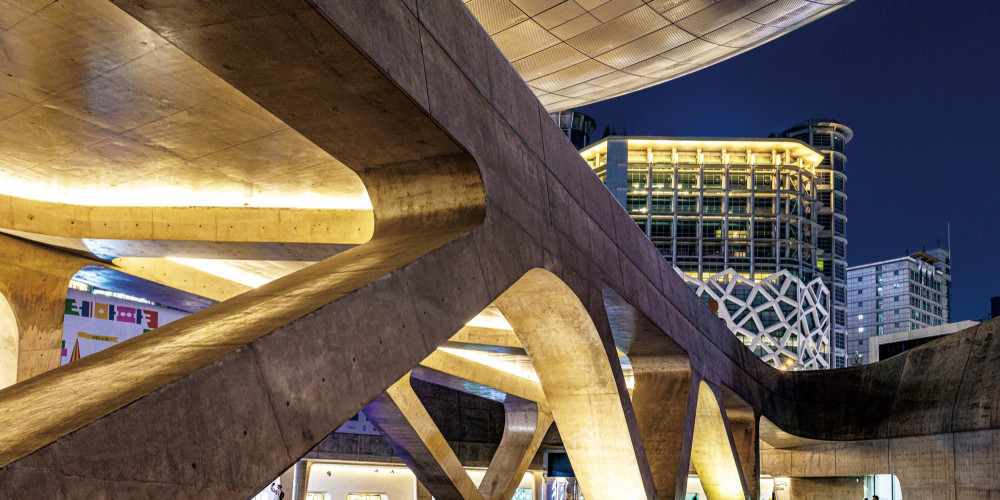
Conceived by the legendary architect Zaha Hadid who defined an era, DDP is Seoul’s signature design landmark, its dramatically curving, metallic skin leaving an unforgettable first impression. Though its initial arrival on a site with deep historical roots and its unusual form prompted some debate, DDP has since become a beloved cultural hub for both Seoulites and international visitors alike. Its organically linked exhibition halls, chic design boutiques and expansive public plazas stand as a potent symbol of Seoul’s boundless creativity and diversity as a global capital of design.
The Hyundai Card Culture Project 29 Tom Sachs, Space Program: Infinity exhibition, on view until September 7, perfectly encapsulates DDP’s innate creative dynamism. Tom Sachs, a New York-based artist, masterfully repurposes common industrial materials — plywood, cardboard boxes and adhesive tape — to reimagine pivotal artifacts of popular culture and our technological age. Centered around monumental installations that playfully reconstruct NASA’s iconic space missions, the exhibition offers visitors an immersive experience, as if they themselves were embarking on a journey into the cosmic expanse. Within the DDP cultural complex, a rich tapestry of exhibition spaces — from design labs and art halls to outdoor arenas — hosts a variety of exhibitions. Though varied in scale and theme, each offers a unique lens through which viewers can discern the evolving narrative of contemporary Seoul. With an ever-changing exhibition calendar, a prudent first step for any visitor is to consult the official website for the latest schedule. After a tour of the exhibitions, a visit to the DDP Design Store is highly recommended. Curating a captivating array of creatively designed goods from a multitude of brands rooted in Seoul and across Korea, don’t miss your chance to discover products that embody the spirit of Korean design and pick up a few unique souvenirs along the way.


© HYUNDAI CARD / Photo by Joshua White
Re-envisioning the Urban Core
A walk tracing the DDP’s fluid, curving exterior unveils yet another layer of its identity. The Dongdaemun Stadium Memorial Museum poignantly chronicles the site’s rich history — from its beginnings as Gyeongseong Stadium in 1925 to its present incarnation. Nearby, the Dongdaemun History Museum showcases artifacts unearthed during the site’s redevelopment. Together, these spaces offer a powerful reminder that the DDP is far from being solely a monument to the new. Here, the often-overlooked chapters of Seoul’s modern and contemporary history are given voice and visibility. The gently sloping, verdant lawn nestled among the exhibition buildings provides the DDP’s most unexpectedly tranquil counterpoint. As you ascend its grassy incline, the usual hurried cadence of city life seems to melt away, and for a moment, you might almost forget you’re in the very heart of a bustling metropolis.
If time and inclination permit, treat yourself to an unconventional promenade by joining the DDP Rooftop Tour. The view from the gracefully arching rooftop walkway reveals a perspective of Seoul that feels fresh and unfamiliar. The tour is only available at limited times throughout the year and access to this remarkable architectural stroll is by reservation only, but it promises an opportunity to connect with the urban environment in a dynamic, three-dimensional way.
As twilight descends, Dongdaemun undergoes yet another captivating metamorphosis. Trace the gentle rhythm of its day drawing to a close, as the vibrant energy of daylight recedes. Bathed in an artful symphony of lights, DDP presents an entirely different face to the night. In the surrounding streets, the Saebit Market unfurls, its iconic, yellow-canopied stalls casting a warm, inviting glow. Here, amid an enticing array of street food and a lively assortment of fashion finds, one can thoroughly savor an atmosphere tinged with a distinctly nocturnal romance.

Faded Paths of Daily Life
Journeying eastward from DDP, the captivating tableau of Dongmyo Market unfurls before you — a place where the day-to-day bustle of Seoul meets a kaleidoscope of styles spanning multiple eras. For the discerning seeker of eclectic tastes, every object in Dongmyo — this remarkable meeting point where the tangible artifacts of the past engage with contemporary perception — becomes an alluring discovery. It is here, amid a delightfully chaotic, emporium-like landscape, that kindred spirits gather, each on their own quest for personal narratives and distinctive finds.
While Dongmyo holds memories of Seoul’s bygone days, Pyeongyang Myeonok preserves another kind of tradition — one passed down through taste. This venerable eatery has been a Dongdaemun fixture since 1985, lovingly tended by three generations of the same family. It stands as one of the area’s most treasured heritage restaurants. The naengmyeon (chilled buckwheat noodles) here, a culinary legacy of its founder who was originally from Pyongyang, is more than just a dish; it’s an edible embodiment of the city’s collective memory. True to the authentic Pyongyang style, it eschews bold, assertive spiciness.
To pair it with North Korean-style mandu (dumplings), similarly distinguished by their refined, mild flavors and a steaming platter of tender suyuk (boiled pork belly), is icing on the cake — a moment of true culinary perfection.


Along Hanyangdoseong’s Path
Amid the soaring silhouettes of Seoul’s downtown skyscrapers, Heunginjimun Gate stands with quiet, imposing dignity. Erected in 1396, at the very dawn of the Joseon Dynasty (1392-1910), it is one of the four original main gates of Hanyangdoseong, the ancient Seoul City Wall. Heunginjimun, more commonly known as Dongdaemun or the “Great East Gate,” has borne silent witness to the city’s birth and its ceaseless transformations. For the finest view of the historic portal, seek out the opposing Heunginjimun Park, where a picturesque pathway follows the contour of the ancient city wall, which once defined the boundary between the inner and outer capital. This segment of the wall extends northeast from Heunginjimun. The ancient, gracefully curving ramparts weave their way silently through the urban fabric, a striking contrast to the vertical thrust of modern buildings and the persistent thrum of city traffic. As you walk along the fortress trail, Seoul’s past and present, its fast and slow rhythms, its complex and simple landscapes will all unfold before you. For those whose curiosity about the city wall’s rich history is further kindled, the Seoul City Wall Museum, connected to the park, offers vivid insights into the urban planning of the Joseon era, the methods of its fortification construction, and the daily lives of the people who resided both within and beyond. At this hilltop museum, the layered history of Dongdaemun comes quietly into view.

- Written by Nho Soyoung
- Photography by Jang Eunjoo