
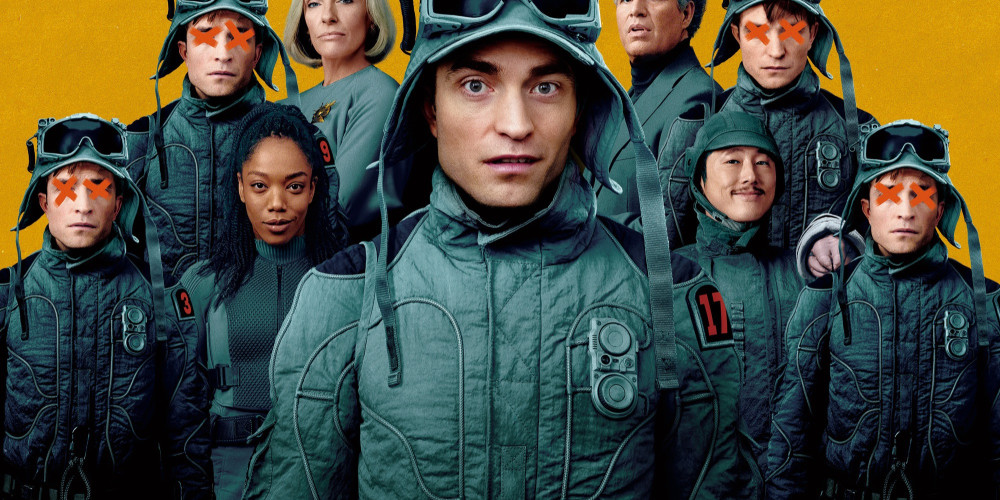
"Mickey 17": Fairy Tale or Philosophical Treatise?
Prominent Korean film critic Jung Sungil shares his recommendation of movies to watch while flying.
If you smile at the sight of Mickey 17 while scrolling through the list of in-flight movies, you’re probably excited at this unexpected chance to view the latest film by Bong Joon-ho. Perhaps you missed the film because of your busy schedule. You’ve no doubt heard various takes from people in your circle. Some gush that you can’t go wrong with Bong Joon-ho, while others grumble that the famed Korean director shouldn’t shoot Hollywood films. Regardless of whatever you heard through the grapevine, consider the following points before deciding whether this is the right film for you.
Here’s the first potential deal-breaker. If you’re grossed out by crustaceans and reptiles (if you’re drawing a blank, just picture a cockroach), you should probably give Mickey 17 a pass. The scenes here are filmed with a bleeding-edge technological realism, including shots that linger on critter innards in excruciating detail. If you’re very unlucky, that might pop up right as your in-flight meal is being served. The director would no doubt find those creepy-crawlies adorable, but I’m not sure the whole audience would agree. I’ll admit there’s something cute, and even sympathetic, about the wriggling creature — called a “baby creeper” in the film — as it’s being captured. But during the eye-popping overhead shots of thousands of creepers rapidly scuttling across fields of snow, I couldn’t help muttering to myself, “Gross!” That kind of shot pervades the last half hour of the film.
Let’s say none of that bothers you. Here’s the second caveat. I can already anticipate the readers’ next question: “Is the film entertaining?” That really depends on the viewer because everybody has their own idea of what’s entertaining. But that’s not the point I’m trying to make here. My point — and I had no idea of this going into the film — is that Mickey 17 is very, very, very violent. I’m not talking about gore. Given its fairy-tale trappings, the film has hardly any scenes that are overtly gory. But the characters are constantly placed in brutal situations.
What kind of situations, you ask? Mickey 17 can be seen as a film about experimenting on the human body. Main character Mickey Barnes dies again and again during these experi- ments, while scientists cheerfully record their observations. The film makes you imagine what is happening to him, which is the brutal part. And a handful of scenes are more explicit. The film evoked the perverse urge to giggle, despite some- times being too creepy to be considered humorous. In some scenes, the camera callously and clinically follows the merciless action, which may prompt you to turn away from the screen and study the clouds outside the window.
(Spoiler warning! If you’ve decided to watch the film, you may want to set this article aside until you’re finished.)

After watching Mickey 17 despite these two caveats, you may find yourself with mental whiplash. It’s kind of like opening what appears to be a fairy tale but feels more like a philosophy text by the time you close the book.
If anybody is wondering about the film’s genre, the obvious answer is science fiction. Set in 2054, the story concerns the happenings on the planet Niflheim, which is a 4.5-year space voyage from Earth. With that setup, it could also be described as an adventure story, though some might categorize it as a revisionist Western. There’s some debate about whether the “creepers” on the planet should be called “aliens” or “inhabitants.”
Needless to say, the passengers on the spaceship are “losers” who either can’t stand or can’t hack the rat race of capitalism. They’re exploited on their journey, being served inedible meals (naturally — this is a film by Parasite director Bong Joon-ho, after all). The passengers are under the thumb of the captain, Kenneth Marshall, and his wife Ylfa, who are sure to remind viewers of a more famous couple. The political commentary can be heavy-handed at times, while other scenes seem to conceal a subtext the film declines to make explicit. Gender and skin color are often subversive and sometimes challenge stereotypical plot progression. When the herd of creepers appears, some viewers may suspect that Mickey 17 pays homage to Nausicaä of the Valley of the Wind, a masterpiece by Hayao Miyazaki — a director whom Bong Joon-ho has often mentioned as one he has always admired. In fact, the two films share the same fictional universe.
Another way to view this film is as a coming-of-age drama for Mickey, whose interrupted growth is a major part of the plot. As such, Mickey 17 and Mickey 18 can be distinguished not merely as the 17th and 18th version of Mickey Barnes, but rather as the 17-year-old Mickey (the end of adolescence) and 18-year-old Mickey (the beginning of adulthood). Mickey 17 is bashful, timid and undergoing a sexual awakening. But when he returns alive from the snow, he encounters Mickey 18, who is violent, decisive and sexually adventurous. While the two are distinguished through these personality differences, the question of which Mickey should be spared (an issue that comes up later in the film) is sure to give any viewer pause.

So what are the big questions in Mickey 17? A central theme is resurrection. When Nasha embraces Mickey (or at least one version of him) as he’s dying inside the test tube, we are reminded not so much of lovers as of the Pietà, the famous sculpture of Mary cradling Jesus’ broken body on her knees. Both friends and enemies in the film ask Mickey the same question: “What’s it feel like to die?” In fact, that ques- tion appears in the first scene of the film. The scene I’d like to rewatch is not the spectacle of the countless creepers scurrying around “Mama Creeper” in the snowfields, but the scene where Mickey answers that question in Kai’s room. The conversation is quiet and calm, with each sentence,each word, clearly audible: “It’s terrible, dying. I hate it. No matter how many times I go through it, it’s scary still — always, every time.”
Mickey can’t help shuddering in the face of death, even with the guarantee of resurrection. That’s the power of ending: the shadow of cessation, the inescapable darkness of our existence. Despite the simplicity of these lines, there’s something primordial about them. They have the profundity of an answer dredged up from the experience of death. In the end, Mickey 17 (who answered the question) is saved, while Mickey 18 (who didn’t answer) dies. That answer will stick with Mickey 17 as he comes into manhood, without any more chances for resurrection.
On your flight home, you may end up watching Mickey 17 one more time. I hope that by then you’ll have come up with a better answer for yourself. A different answer makes a different person.
-
Jung Sungil is a film critic and a director. He played a crucial role in shaping cinephile culture in South Korea in the 1990s by leading Kino, a magazine that transformed the landscape of film criticism.
-
Available content may vary depending on your flight.


Four Bong Joon-ho Films You’ve Probably Never Seen
White Man (1994)
Bong Joon-ho’s first short film was produced by Yellow Door, a film club at Yonsei University, while he was studying in the sociology department. In the film, a white-collar worker living in a luxury apartment complex encounters a severed human finger in a parking lot on his way to work and carries the finger around all day long. Filmed when Bong was just 25 years old, White Man sheds light on the mysterious beginning of this famous filmmaker’s career.
Sink & Rise (2003)
For its 20th anniversary, the Korean Film Academy (where Bong studied film) held a limited screening of an omnibus film project featuring short films by 20 of its alumni. Bong’s contribution to the project was a short film called Sink & Rise.
A father and daughter at a shop next to the Seongsu Bridge in Seoul make a bet about whether a hardboiled egg will sink or float. But “something” emerges from the Han River. You might see this as an abbreviated, or perhaps apocryphal, version of Bong’s big hit The Host.
Influenza (2004)
The film tracks a salesman’s life gradually falling apart through the lens of Seoul’s omnipresent CCTVs. The man’s wretched transformation leads to situations so astonishing they’re sure to evoke a laugh, but the security camera just keeps rolling. Simply put, this is masterful.
Shaking Tokyo (2008)
Bong Joon-ho, Michel Gondry and Leos Carax each made a short film set in Tokyo for an anthology film of the same name. Bong’s film Shaking Tokyo features a man who is a hikikomori — someone who stays at home, shunning contact with the outside world. By chance, a woman is delivering pizza to the man’s house when an earthquake occurs. The tenor of this film is unlike anything you’ve ever seen from Bong.
MOVIE PREVIEW
Beat the Heat With Chilling Thrillers


The Noisy Mansion
Geowool (Kyung Sujin) is an unemployed busybody who sees herself as the neighborhood’s troubleshooter. After squabbling with her younger brother Duon (Lee Jihoon), she ends up getting her own place at Baeksu Apartment. But sleep doesn’t come easily in her new apartment because of the weird noises she hears every morning around 4 a.m. After learning that everybody has been hearing a mysterious pounding for six months, she starts exploring the apartment and collecting stories from neighbors. The mystery deepens when she stumbles upon old records and a hidden room. Because of this seemingly trivial noise, the residents grow distrustful as they dig up each other’s secrets. The closer they get to the truth, the greater the peril they find themselves in.
Whiplash
Talented drummer Andrew (Miles Teller) enrolls in the world-renowned Shaffer Conservatory, where he comes under the guidance of legendary conductor Terence (J. K. Simmons). Andrew is driven to the limit by his instructor’s insistence on perfection. The relationship between teacher and pupil grows fraught as Andrew is put through a relentless regimen of practice and rehearsal in the quest for rhyth- mical excellence. The characters test their human limits as they throw their all into stage performances where not a single mistake is tolerated. This is cinematic tension of a kind you’ve never seen before.


The Amateur
After losing his wife to a terrorist attack in London, CIA cryptographer Charlie (Rami Malek) resolves to figure out who was behind the attack. Angered by his bosses’ apathy, Charlie blackmails the organization into training him to carry out a global vendetta against the culprits. Along the way, he transforms from a mild-mannered analyst to a coolheaded avenger. He combines his hacking and cryptography chops with undercover work as he tracks down his elusive foes. Charlie chases suspects and solves puzzles in a quintessential spy thriller remixed for modern sensibilities.
HITMAN 2
Retired secret agent Jun (Kwon Sangwoo) returns to theaters five years after a film that left Korean theatergoers holding their sides with laughter. His webtoon Assassin Jun, written in a fit of pique, briefly makes him a star writer. Hoping to hit it big (again), Jun launches a new webtoon, but his drawings bizarrely come to life as a shadowy syndicate commits crimes that mimic the events of his webtoon. A copycat terrorist attack brings Jun under the scrutiny of the intelligence community. To prove his innocence, he decides to dust off his combat skills from his days as a hit man. Stick around to find out whether Jun is a terrorist or a prophet.
#한국에서_만나는_타이완


Secret: Untold Melody
Taiwan’s classic romance film Secret is remade in a Korean setting. Snatches of piano music in a school music room lead pianist Kim Yujun (Doh Kyungsoo) to a mysterious figure named Yoo Junga (Won Jinah). The two soon begin a fateful romance, and the piano melody linking the two conceals a secret that transcends past and present. As the haunting melody plays, can Yujun and Junga make their love last?.
You Are the Apple of My Eye
One day in 2002, high school prankster Jinwoo (Jung Jinyoung) is caught goofing off in class by his teacher, who moves him next to bookworm Seonah (Dahyun) to keep a closer eye on him. But the more drawn they are to each other, the harder they find it to express their feelings. The tender moments they share in the classroom rekindle moments of nostalgia for the viewers.

Weekend in Taipei
DEA agent John (Luke Evans) goes undercover in Taipei after receiving an anonymous tip about Kwang, head of a Taiwanese drug cartel. As John sets out to bring down the kingpin, he has an unexpected encounter with his old flame Joey (Gwei Lunmei), who is married to Kwang. As John prepares to take down the cartel, he and Joey rekindle their romance.
#영화로_만나는_인물


The Founder
Traveling salesman Ray Kroc (Michael Keaton) eats most of his meals on the road. A chance visit to the McDonald brothers’ hamburger diner is a life-changing revelation for Ray, who is taken with the highly-efficient oper- ational methods. Partnering with the McDonald brothers, Ray builds a fran- chise model that upends the restaurant business. But soon, they battle over who is the real founder of McDonald’s.
A Man Who Heals the City
Kim Jangha has run a small herbal medicine store for over 60 years in the city of Jinju, Gyeongsangnam-do Province. Choosing to spend very little money on himself, he donated his wealth to society. Interviews with townspeople who have experienced Kim’s good deeds are interwoven with quiet episodes from Kim’s everyday life, encouraging viewers to ponder what it means to be a real man.


Coldplay - Music of the Spheres: Live at River Plate
This director’s cut features Coldplay’s performances at the River Plate stadium in Buenos Aires from their Music of the Spheres world tour, along with interviews with band members and backstage footage. Viewers are virtually transported to the stage with footage filmed with 30 cameras and racing drones using 360 degree filming techniques.
Maria
This biographical film covers the celebrated opera singer Maria Callas’ last week of life. As Maria (Angelina Jolie) looks back on her life in her room in Paris, the film conveys a loneliness that makes a jarring contrast with Maria’s dazzling roles as prima donna on the operatic stage.
#미식의_정수


No Reservations
Kate (Catherine Zeta-Jones) is a chef at a fancy restaurant in Manhattan. She’s a whiz in the kitchen, but not so adept at showing her emotions. One day, two people enter her life: her niece Zoe (Abigail Breslin), and Nick (Aaron Eckhart), the new sous-chef hired by the restaurant owner. Zoe’s pure heart and Nick’s free spirit help Kate to slowly but surely open up.
Julie & Julia
After moving to Paris with her diplomat husband in 1949, Julia Child (Meryl Streep) finds a creative outlet in food. Fifty years later, Julie Powell (Amy Adams) is a low-level civil servant who decides to make all 524 recipes in Julia’s book and chronicle the process in her blog.


The Solitary Gourmet
The long-running Japanese television series about office worker Goro (Yutaka Matsushige) and his hobby of patronizing random restaurants on his way home from work is now available as a feature film. Goro meets an old man who longs to track down a childhood favorite soup. The film depicts their unexpected culinary odyssey.
Chef
Carl Casper (Jon Favreau), a famous chef in Los Angeles, loses his restaurant job after an altercation with a food critic who gave him a nasty review on social media. With his reputation in tatters, Carl becomes enamored with a Cuban sandwich he tries in Miami. He eventually decides to undertake a new culinary journey with a food truck.
- Available content may vary depending on your flight.


