The Age of Noticing
MorningCalm presents Omnibus Story, a series of reflections drawn from the landscapes of everyday life, explored from diverse perspectives. Our hope is that these narratives linger as seeds of inspiration, blossoming throughout your journey when you least expect them.
- Richard Louv is a leading American voice and an author of eleven books including his latest, Noticing: Intimate Encounters With the Natural World. He spent a lifetime exploring the bond between humanity and the natural world and co-founded the Children & Nature Network to bring children back to the great outdoors, receiving the Audubon Medal for his work. In this essay, Richard Louv challenges us to consider if we haven’t so much lost nature as we have lost our ability to notice and connect with it.
We Were Raised By Nature
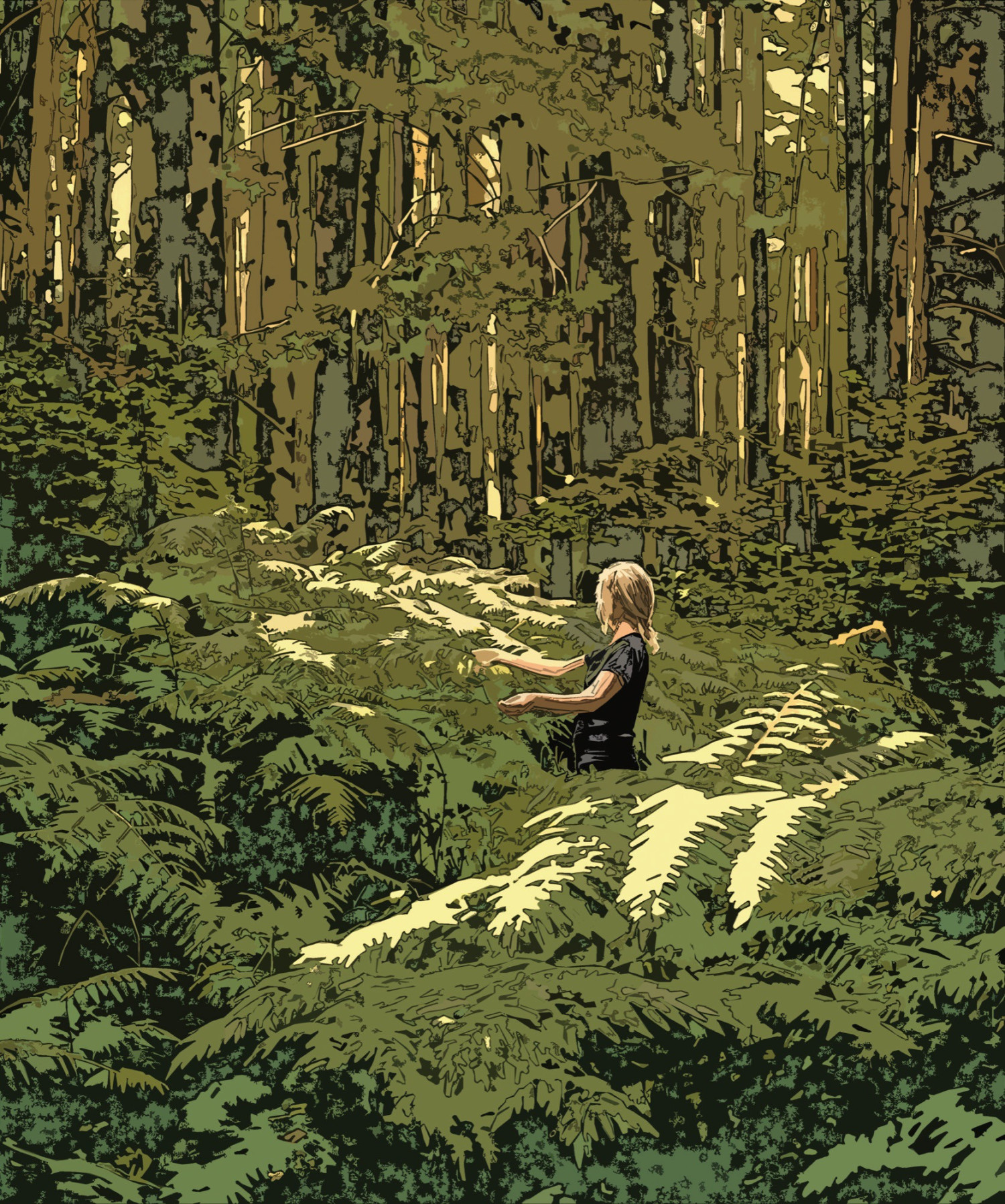
As a boy growing up at the edge of suburban Kansas City, Missouri, I spent much of my time exploring the fields and woods beyond our back hedge. I’d run through corn fields as my collie Banner raced ahead and circled me. My parents may not have known where I was, but Banner always did.
I climbed trees and inspected aphids and ants traveling through the grooves and ravines of bark. In the branches, I’d sit for hours watching banks of clouds build in the east or a crow watching me from a tree, while Banner looked up from below. Pollinated by awe and a sense of wonder, I felt held by something larger than myself. I was lucky.
But in today’s world, too few notice the mysteries beyond the screen. In my 2005 book, Last Child in the Woods, I introduced the term “nature-deficit disorder” — not as a formal medical diagnosis but a doorway to a larger conversation. At the time, the topic was barely discussed. While researching it, I was able to identify only 60 studies related to the growing gap between children and nature or the benefits of nature experiences.
Since then, studying the impact of nature in people’s lives has become a growth industry. The Children & Nature Network (C&NN) — a nonprofit that grew out of Last Child — has compiled an extensive online research library providing abstracts for over 1,500 peer-reviewed studies that link time spent in the natural world to cognitive, physical and emotional health.
Among the potential benefits, experiences in the natural world may: reduce ADHD symptoms; buffer depression and anxiety; prevent or reduce obesity and myopia; boost the immune system; improve social bonding; reduce neighborhood violence; stimulate creativity and raise test scores.
In the past two decades, an international movement to heal the broken bond has emerged. In the U.S., Canada and other countries, pediatricians write “nature prescriptions.” Schools are replacing concrete and asphalt playgrounds with natural play spaces and gardens. Architects and urban planners are incorporating more natural elements into the design of schools, workplaces and whole cities, resulting in increased productivity, creativity and health.
Such benefits are not limited to the wealthy West. In a March 2026 article published by The Conversation, environmental psychologists shared the results of a study of 38,000 people. “Across countries as diverse as Brazil, Japan, Nigeria, Germany and Indonesia, we saw a clear pattern,” the researchers reported. “People who felt more connected to nature also reported higher well-being.”
They Were There All Along
Two trends suggest why so many people hunger for nature. One is the loneliness epidemic. The other is the search for authenticity. During the COVID-19 pandemic, I received emails and letters from parents who reported seeing wild animals in their yards for the first time. That’s due to far more wildlife being in cities than most of us suspect. In the wild, many of these animals are diurnal, thus active during the day. But as human population patterns moved wildlife into cities, these animals became nocturnal for self-protection. As the pandemic moved people indoors, out came the critters.
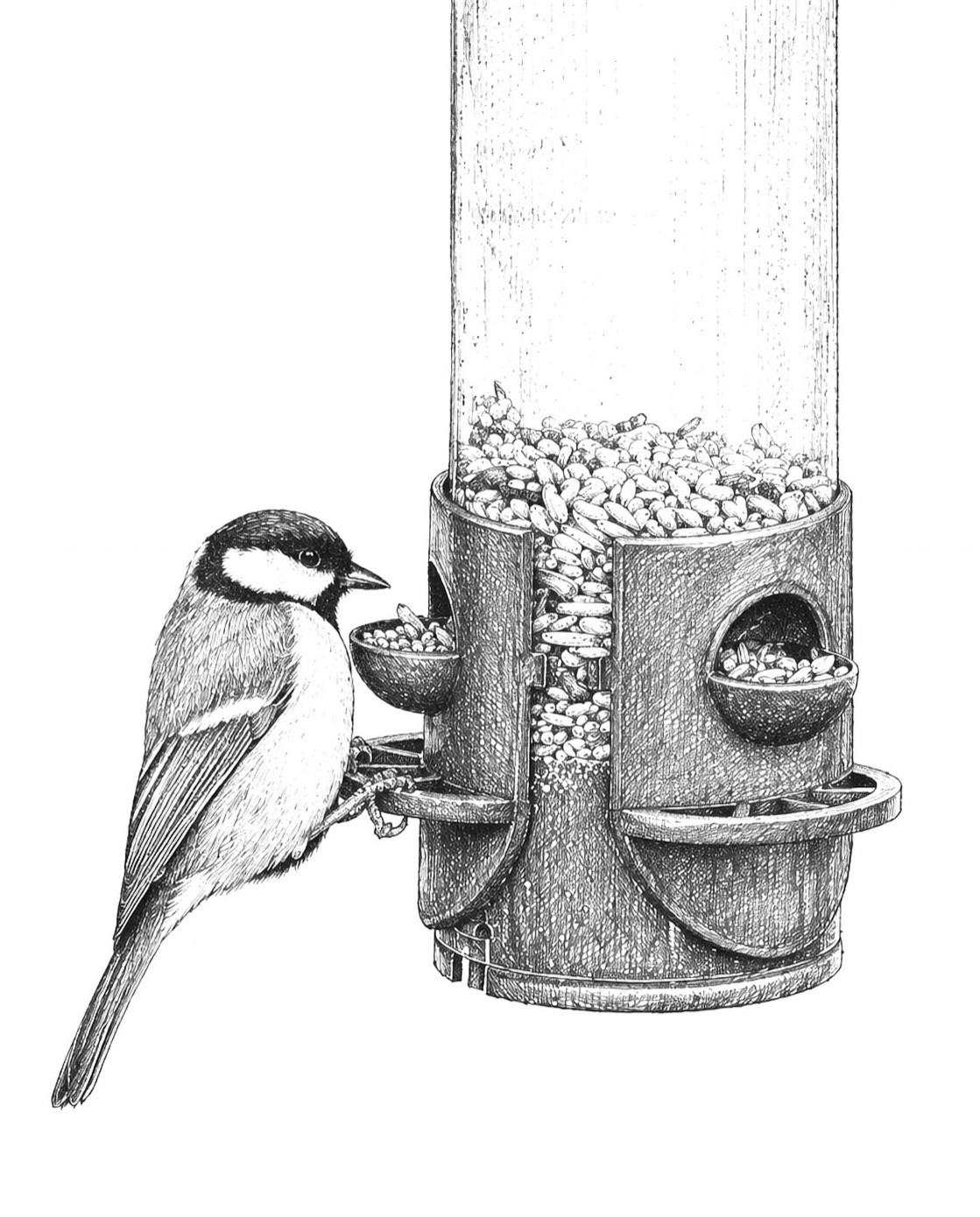
We noticed and did not feel so alone. One friend, Michele Williams of New Port Richey, Florida, told me about placing a bird feeder outside her mother’s bedroom window. The presence of sparrows, chickadees and doves soothed Michele’s mother. Michele is now grateful for “all the fluff and feathers God provides, to be healing for our wounded spirit,” affirming that she won’t again take the presence of animals for granted.
Human loneliness has increased in recent decades, but it’s been there since the beginning. It’s part of us. We suffer, in fact, from “species loneliness,” a term explored by Michael Vincent McGinnis, a professor at the University of California, Santa Barbara. He writes, “Species loneliness in a wounded landscape moves us to want to restore our relationship with place and others, or to put it another way, modern humanity yearns to reestablish and restore an ecology of shared identity.”
While the source of this loneliness has spiritual implications, the truth is we’re not alone. We’re surrounded by what I call “bioenchantment,” a great conversation between and across species, including recently discovered underground fungal systems — an internet of life — that connects plants and whole forests. And us, if we notice.
Remembering my boyhood woods, I realize how often I was there alone but never felt lonely. Banner kept me company, of course. But any isolation I might have felt was balanced by the trees, the grass, the clouds and all the wildlife surrounding me.
As life feels overwhelming, hostile and artificial, people instinctively seek authenticity. Nature writing novelist Jim Harrison, describing the inner life of his character, wrote: “A creek or river would also change the texture of his spirit so that staring into the moving water would make his brain tingle as it had in his childhood when wonder is nothing special but an everyday event.”
What We Lost Was No The Forest, But Our Ability To Notice It
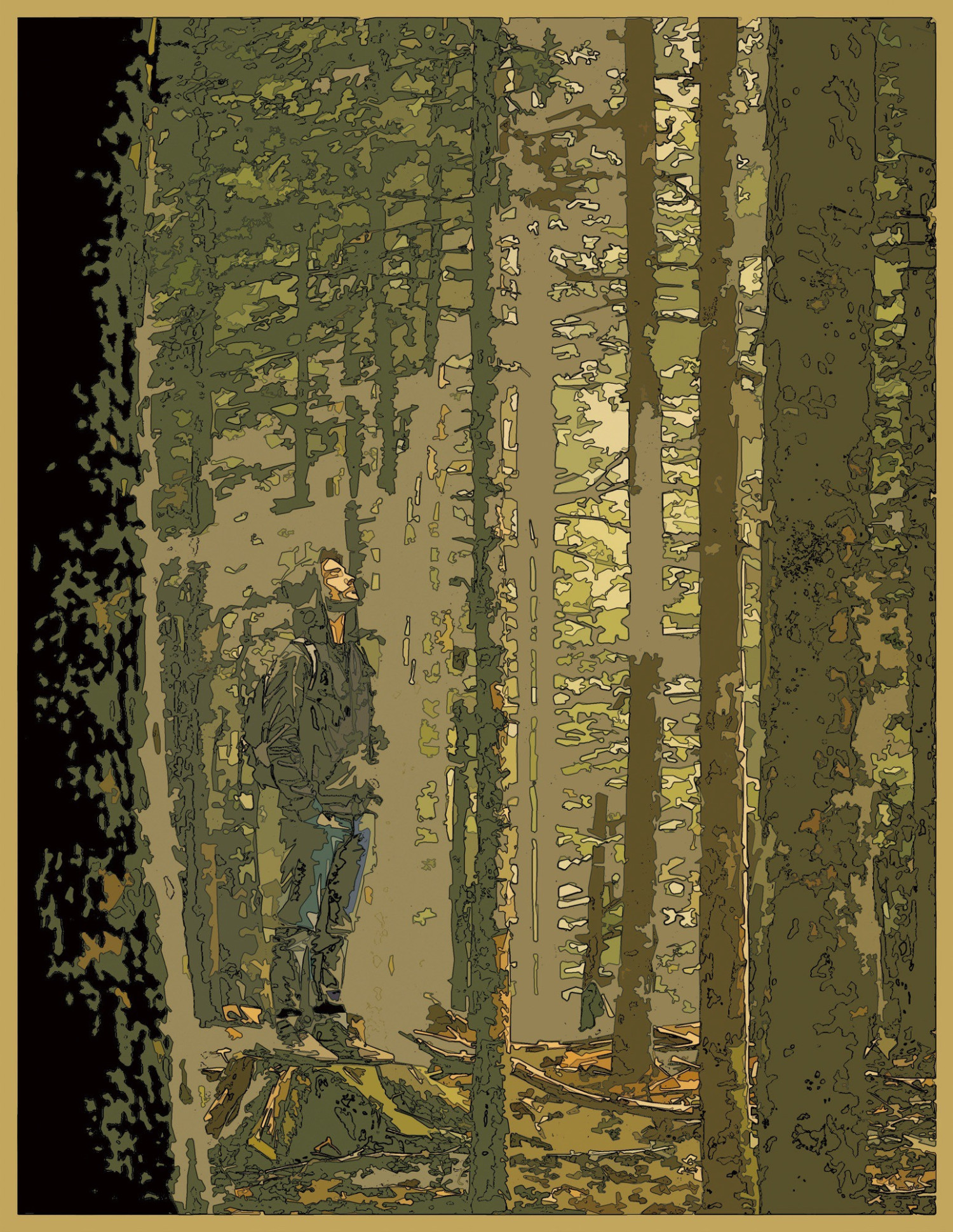
The next stage of the children and nature movement — or, as it includes adults, the “New Nature Movement” — will be to nurture a deeper personal exploration of what we sense in nature. Call it the age of “deep noticing.”
Our prehistoric ancestors, from a young age, developed hundreds of noticing skills, and they didn’t wait for the research to come in. They just wanted to avoid brunch with a bear. They probably used senses most of us don’t know we have. Forget the traditional limit of five senses — touch, sight, hearing, smell and taste. Depending on which researcher you ask, the number of recognized human senses now ranges from nine to 30 or more.
In daily life, politics and internet searches, authenticity is in short supply. That’s part of the explanation for humanity’s hunger for the real: the look in a fox’s eyes as it turns toward us; the sound of singing trees; the touch of a mountain lion track as we kneel to trace it. These moments may be as close as we can get to the larger force that moves us — the life force to which we belong.
Deep noticing can help heal our physical, mental and spiritual health. It attaches us to places and to neighbors of all species. It can illuminate science and lead us to ask better scientific questions. It can enrich and inform our art, music and architecture. It can help build compassion and empathy. Counterintuitively, even as we mourn the destruction of so much of the natural world, we can find comfort in woods or fields, in creeks or desert sands.
One day, long ago, I stood alone in a clearing in my woods. At the center was a marsh with islands of clumped grass. Each clump was about the size of a lion, its full mane rising two feet in the air. Not knowing the plant’s real name, I called it lion grass. Standing in an inch of water, I threw myself backward toward one of those clumps.
I felt that I was falling upward, lifted on the wind, part of something I felt but did not need to fully understand. Something to love.
- Written by Richard Louv