Bruno Mars and the Wide-Angle Lens
Bae Soontak, a writer for the daily radio show Baechulsoo’s Music Camp, which has been discussing music for over a decade, shares his insights on pop music.
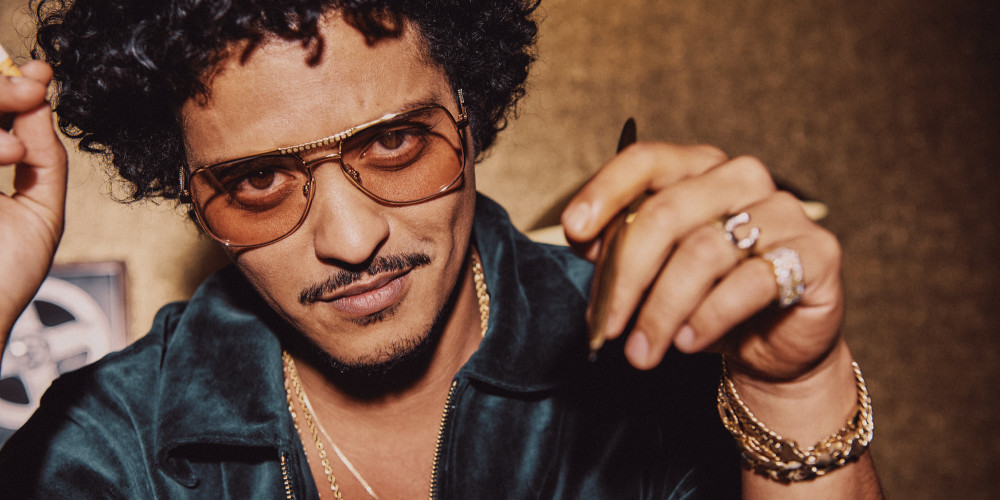
Bruno Mars is not just a star, he’s a superstar. Just take a look at all the records he’s set. No fewer than 20 of his singles have entered the Billboard Hot 100 top 10, with nine of them reaching the number-one spot. That’s a remarkable figure, no matter how you dice it. But a hit parade is not enough to create a superstar. For that, you also need critically acclaimed musical chops. The Grammy Awards offer a solid yardstick for such judgments. Mars has thus far taken home a total of 16 Grammys in his decade-plus career since he debuted in 2010. That’s right — sixteen, when just one would be an honor to last a lifetime.

Path to Superstardom
Of course, Mars didn’t start out a superstar. As a child, his family experienced poverty and at times resided in unconventional accommodations, with his father sometimes having Mars sleep in their car. But Mars’ talent was irrepressible. In his home state of Hawaii, he began performing as early as the age of two in a family band with his parents and siblings. Rather like The Jackson 5, they soon became local legends. Even as a kid, Mars was a crooner capable of pulling off on-the-money impressions of Elvis Presley.
Even after his parents split and his father’s businesses flopped, Mars held on to his musical dreams. But at first, success eluded him. In Los Angeles, his demo tape got him signed to Motown Records, but he was ultimately dropped from the label. That prompted a course correction; he decided to reinvent himself as a songwriter, rather than a singer, and channeled his energy into composing.
Soon, he was getting noticed for his hit songs like Right Round (2009) by Flo Rida, Wavin’ Flag, Celebration Mix (2010) by K’naan and Forget You (2010) by CeeLo Green. In addition to his songwriting credits, he was a featured artist on Nothin’ on You (2009) by B.o.B., which was a launchpad for Mars’ debut as a solo artist.
Mars’ career has continued to dazzle ever since his debut solo album Doo-Wops & Hooligans in 2010. Starting with the single Just the Way You Are, his endless string of hits has included When I Was Your Man (2012) and That’s What I Like (2017), as well as Uptown Funk (2014), co-created with producer Mark Ronson, and Leave the Door Open (2021), released under collaborative project Silk Sonic. It’s no exaggeration to call Mars one of the greatest hitmakers of our time.

Sense of Inclusivity
What makes Mars’ music truly exceptional is his gift for navigating genres. While his style is rooted in R&B and soul, he truly shines when he adds a touch of funk or disco. And as a musician, he’s keenly attuned to what the public wants. Honestly, could anybody resist the plaintive melody of Just the Way You Are or ignore the heartfelt plea of Marry You (2010)?
Mars’ wide-ranging musical taste even extends to K-pop with APT. (2024), his collaboration with Rosé that took Billboard by storm. Clocking in at just under three minutes, APT. is the quintessential 2020s hit song. Considering its playtime, listeners might not hear much to analyze musically, just a percussion loop and a few effects.
What deserves our attention here is the pre-chorus, which begins around the 30-second mark. Its well crafted, catchy melody line maximizes the song’s universal appeal and hooks the listener.
While the rhythmic chant of apateu (Korean for “apart-ment”) is often cited as the hallmark of the track, the song really comes to life in the pre-chorus. Genre-wise, it can be described as pop punk with a dash of electronic flavor: the no-nonsense structure of punk, the melodic stylings of pop and the ear-pleasing effects of electropop. Upon its release, the playful music video added fuel to the fire, making the song a global phenomenon almost overnight.
Big hits are prone to being misunderstood. History teaches that musicians who lean on familiarity and popularity are almost reflexively criticized for lacking originality. In Mars’ case, at least, such criticism misses the mark. The New York Times once described him as “one of the most versatile and accessible singers in pop,” reflecting his facility for slaloming between genres while putting his own spin on each one. In other words, his musical philosophy is not carving out a narrow niche but embracing a broad audience. Rather than peering into a sonic abyss, Mars’ listeners can leisurely peruse a vast vista of genres. In terms of perspective, Mars isn’t using an endoscope but a telescope. And the view, needless to say, is out of this world.
Bae Soontak’s Bruno Mars Playlist
Marry You (2010)
This musical marriage of rock, R&B, soul and doo-wop wasn’t as warmly received on Billboard as many of Mars’ hits. Several tracks on his debut album reached number one on Billboard, but Marry You peaked at a modest 85th place. But in Korea, it became one of Mars’s signature songs.
In the United States, the version of Marry You performed on the jukebox comedy show Glee charted at 32nd place after release. The song is widely used as a wedding anthem, which is honestly a peculiar choice because the song isn’t about a perfect romance.
APT. (With Rosé) (2024)
This song owes its structure to the genre of punk. What is punk exactly? It’s a bare-bones, stripped-down style of music that arose in the mid-1970s. This minimalistic approach to music was a response to the commercialized, ultra-processed music in vogue at the time. Punk’s original creed was that three chords are all it takes to make music. Punk music laid its axe to the root of mainstream music, which was dominated by accomplished instrumentalists. But over time, punk moved from a rebellious movement to one more genre in the songwriter’s toolkit. That’s life, I suppose: all revolutions wind down and are absorbed into our everyday lives.
PREVIEW


TOMORROW X TOGETHER, The Star Chapter: TOGETHER
TOMORROW X TOGETHER’s fourth studio album unfolds like a constellation, a map of the members coming together, which is the theme at the heart of the group’s name. Glimmering synths and bright guitar riffs lead into a refreshing chorus, with lyrics that capture the excitement and anxiety of growing up, and the deep bond that holds them together. It’s an album that marks a clear point in the journey of these artists as they grow up from boys to young men.
10CM, 5.0
Honest lyrics and simple melodies move between light-hearted humor and bittersweet resignation in 10CM’s fifth studio album. With minimalist acoustic arrangements and lyrics that feel more candid than ever, this album is a pure, unadulterated snapshot of who 10CM is right now. It strikes a beautiful balance between late-night ballads and tracks with the easy tempo of a quiet walk.


Tyler, The Creator, DON’T TAP THE GLASS
This is the latest from Tyler, The Creator, an artist who completely reinvents his sound with every album. Even within a single song, the mood can shift in an instant, moving from humor and bravado to surprising moments of self-reflection. Beneath the aggressive rap lyrics, you’ll find an honest exploration of relationships and the self.
Maroon 5, Love Is Like
When slick pop-rock meets a smooth R&B sound, you get that signature Maroon 5 vibe. In their new album, true to its name, the lyrics explore the many contradictions of love, with both direct confessions and clever metaphors that will stay with you long after the song stops playing.

Yunchan Lim, Tchaikovsky: The Seasons
In the hands of Yunchan Lim, these familiar pieces are interpreted not with overwrought romanticism, but with a masterful sense of breath and space. He described the music as a memory buried deep in the heart — momentarily recalled, only to fade away.
- Available content may vary depending on your flight.