The New Language of Fermentation
Fermentation stands as one of K-Food’s most compelling genres. A timeless tradition rooted in the wisdom of preservation is now being brilliantly reinterpreted through the creativity of chefs, achieving profound harmony within the lexicon of modern gastronomy.
There are flavors that season a dish, and then there are flavors that define a civilization. In Korea, that defining essence is found in its fermented foods. While the world reveres the alchemy of fermentation in cheese, wine, balsamic vinegar and miso, fermentation in Korean cuisine — especially in its sauces known as jang, from the earthy depth of doenjang (soybean paste) to the sweet heat of gochujang (red chili paste) and the elegant salinity of ganjang (soy sauce), reflects the nation’s history, wisdom and a way of life that continues to this day.

Legacy Tempered by Hardship
The history of fermentation in Korea is a testament to the virtues of patience and ingenuity. The Korean peninsula is a land of rugged mountains and limited farmland, and for much of its history, less than a quarter of the soil could yield rice. Meat was a rare indulgence, reserved for the wealthy or for ceremonial occasions; for most, livestock were too valuable to be eaten. Protein came instead from the sea, from wild greens foraged in spring and most crucially, from the humble soybean.
It was through fermentation that soybeans, salt and water were transformed into something extraordinary: jang. In times of scarcity, jang was sustenance, providing essential protein, vitamins and minerals when little else was available. In this way, jang became both a culinary and cultural lifeline, proof that necessity can give rise to profound beauty.
Even in today’s era of abundance, jang remains a quiet guardian of health, offering balance in a diet increasingly influenced by the heavy consumption of meat and dairy. It is a bridge between the frugality of the past and the sophistication of the present.


Fermentation Secrets Passed Down to Posterity
For generations, jang was not purchased; it was made, nurtured and guarded like a family heirloom. In rural villages and urban courtyards alike, clay vessels known as jangdok (or onggi) stood in orderly rows, their contents slowly fermented under the watchful eye of the seasons. The process begins with meju — dense bricks of boiled, pounded soybeans, bound with rice straw to invite the right microbial guests. These bricks are dried in the winter air, then submerged in brine, where the dance between time and nature creates ganjang and doenjang. The flavor is never identical from one household to the next; it is shaped by the maker’s hand, the local climate and the subtle interplay of bacteria and yeast unique to that place.
Though industrial production has largely replaced home jang-making, the tradition endures. Each jar is a testament to patience, craftsmanship and the intimate dialogue between human skill and natural process.

Unlimited Potential of Fermentation in Jang
If home fermentation was the heartbeat of everyday life in Korea, temple cuisine distilled that rhythm into a meditative art form. Preparing and waiting for jang could be seen as a spiritual practice — an embrace of the natural flow of the seasons without haste. Perfected over long periods of time, the making of jang is a symbol of patience. Emphasizing philosophies like “as it is in nature” and “harmony that does not harm the body,” temple food excludes meat, fish and the five pungent ingredients, including garlic, green onions, chives and wild leeks. In this way, the deep flavors of jang become the very core of temple food.
Mingles, Korea’s only Michelin three-star restaurant, achieved its latest accolade in 2025 under the leadership of Chef Kang Mingoo, who regards Buddhist nun Ven. Jeong Kwan as his mentor. “I felt like I had been playing the piano by hitting only the middle C, and now the entire keyboard had been opened to me,” Kang recalls. He explains that using high-quality jang allows him to reduce the need for complicated techniques, while its flexibility makes endless experimentation possible.
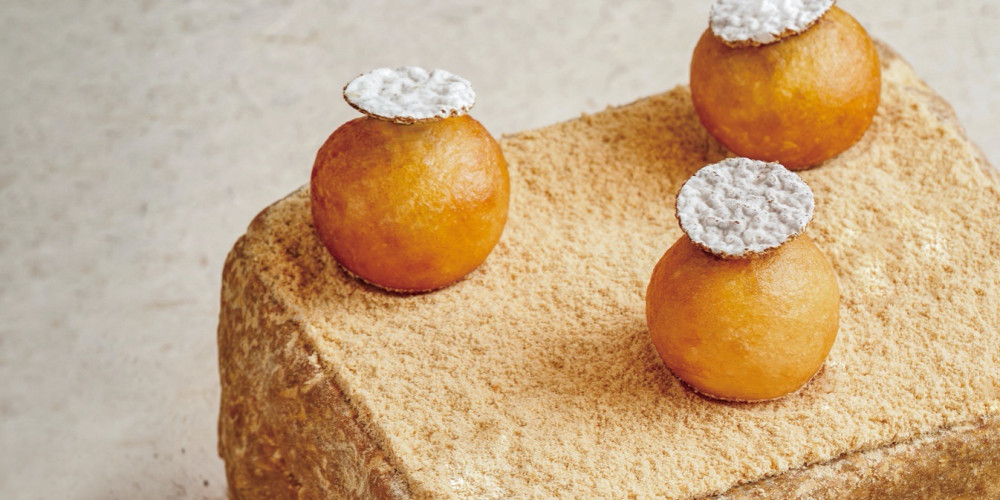
At the newly opened restaurant Bium, Chef Kim Dae-chun presents the culmination of years of study in both Korean and temple cuisine. Meanwhile, at Evett — awarded two Michelin stars in the Michelin Guide Seoul 2025 — Australian chef Joseph Lidgerwood pays tribute to Korea’s fermentation culture with a playful bite-sized creation: the “Meju Donut,” a whimsical nod to tradition.
Flavors of Korean Fermented Foods on the Global Table

ⓒ Giwagang


ⓒ Mingles
Not long ago, Korean food abroad was largely confined to the “Koreatowns” of major cities — havens for immigrants seeking the flavors of home but rarely acknowledged by the wider culinary establishment.
Today, the transformation is remarkable. In New York City alone, there are 12 Michelin-starred Korean restaurants, and jang-based recipes — from Eric Kim’s Gochujang Buttered Noodles and Doenjang Jjigae to Ali Slagle’s Roasted Gochujang Cabbage — appear regularly in the New York Times.
Beyond Korean restaurants, jang has infiltrated the menus of American, French and Mexican kitchens. The irresistible appeal of K-BBQ and Korean fried chicken owes much to marinades built on ganjang or gochujang. Grocery aisles now stock K-BBQ-flavored snacks, gochujang cookies, and hybrid condiments that marry Korean fermentation with local ingredients. What was once a marker of cultural specificity has become a versatile global muse.
To taste jang is to taste Korea’s past and present in the same moment. In a spoonful of doenjang jjigae (fermented soybean paste stew), you can sense the frugality of an agrarian society making the most of its resources. In a plate of gochujang tteokbokki (rice cakes in gochujang sauce), you feel the exuberance of modern street food culture. In a bite of ganjang bulgogi (thinly sliced beef marinated in soy sauce), you experience the elegance of balance — sweet, salty and savory.
From clay jars in quiet courtyards to Michelin-starred kitchens and supermarket shelves across the world, jang continues to evolve — carrying with it the soul of a nation, one bite at a time. More than just a cooking method, the culture of fermentation forms the unseen foundation that sustains the world of Korean food — an enduring heritage that lives and breathes within the Korean palate.
- Written by Nadia Cho
- Nadia Cho is the founder of Jeong Culture and Communications, an organization dedicated to promoting Korean food in the United States. She produced the Netflix series Chef’s Table episode on Buddhist monk Jeong Kwan, co-authored JANG: The Soul of Korean Cooking, and regularly introduces Korean food content through various media outlets.
- Edited by Yang Yeonjoo
- Temple Cuisine by Venerable Beopsong
- Photography by Shin Kyuchul