The Moving Monument
MorningCalm presents Omnibus Story, a series of reflections that illuminate the beauty of the everyday. Through the varied voices and perspectives of global experts, these stories offer moments of insight — during your journey and well beyond.
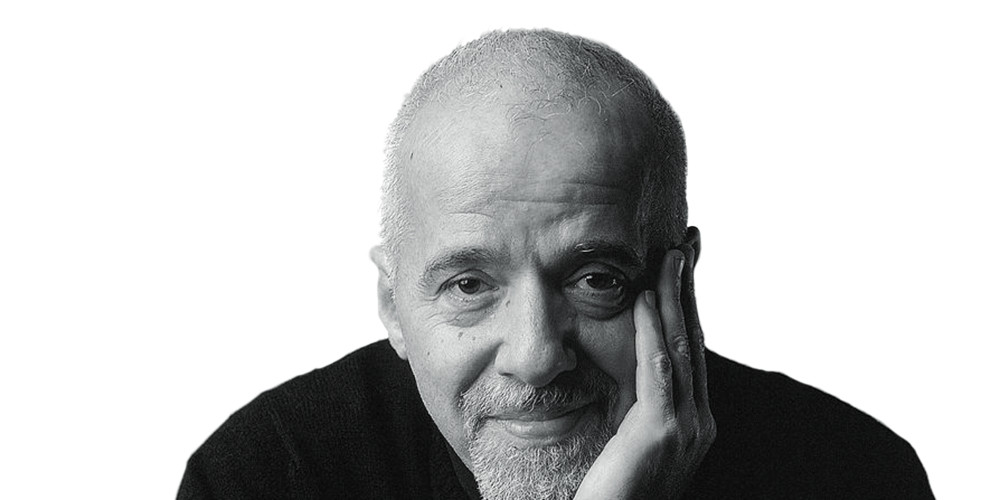
- Paulo Coelho, Brazil’s most celebrated contemporary author and a lifelong traveler of the spirit, has inspired millions of readers to listen to their inner voice and search for the essence of life. His masterpiece The Alchemist continues to guide readers around the world toward discovering “their own path.” Known for his deceptively simple prose infused with symbolism, spiritual insight, and fable-like storytelling drawn from the everyday, Coelho has become one of the most beloved writers of our time.
I have visited many monuments in this world that try to immortalize the cities that erect them in prominent places. Imposing men whose names have already been forgotten but who still pose mounted on their beautiful horses. Women who hold crowns or swords to the sky, symbols of victories that no longer even appear in school books. Solitary, nameless children engraved in stone, their innocence forever lost during the hours and days they were obliged to pose for some sculptor that history has also forgotten.
And when all is said and done, with very rare exceptions (Rio de Janeiro is one of them with its statue of Christ the Redeemer), it is not the statues that mark the city, but the least expected things. When Eiffel built a wrought-iron tower for an exposition, he could not have dreamed that this would end up being the symbol of Paris, despite the Louvre, the Arc de Triomphe and the impressive gardens. An apple represents New York. A bridge not welcome initially is now the symbol of San Francisco. A bridge over the Tagus is also on the postcards of Lisbon. Barcelona, a city full of unresolved things, has an unfinished cathedral (the Sagrada Família) as its most emblematic monument. In Moscow, a square surrounded by buildings and a name that no longer represents the present (Red Square, in memory of communism) is the main reference. And so on and so forth.

Perhaps thinking about this, a city decided to create a monument that would never remain the same, one that could disappear every night and reappear the next morning and would change at each and every moment of the day, depending on the strength of the wind and the rays of the sun.
Legend has it that a child had the idea just as he was … taking a pee. When he finished his business, he told his father that the place where they lived would be protected from invaders if it had a sculpture capable of vanishing before they drew near. His father went to talk to the town councilors, who, even though they had adopted Protestantism as the official religion and considered everything that escaped logic as superstition, decided to follow the advice.
Another story tells us that, because a river pouring into a lake produced a very strong current, a hydroelectric dam was built there, but when the workers returned home and closed the valves, the pressure was very strong and the turbines eventually burst. Until an engineer had the idea of putting a fountain on the spot where the excess water could escape.
With the passing of time, engineering solved the problem and the fountain became unnecessary. But perhaps reminded of the legend of the little boy, the inhabitants decided to keep it. The city already had many fountains, and this one would be in the middle of a lake, so what could be done to make it visible?
And that is how the moving monument came to be. Powerful pumps were installed, and today a very strong jet of water spouts 500 liters per second vertically at 200km per hour. They say, and I have confirmed it, that it can even be seen from a plane flying at 10,000m. It has no special name, just “Water Fountain,” or Jet d’Eau, the symbol of the city of Geneva (where there is no lack of statues of men on horses, heroic women and solitary children).

Once I asked Denise, a Swiss scientist, what she thought of the Water Fountain.
“Our body is almost completely made of water through which electric discharges pass to convey information. One such piece of information is called Love, and this can interfere in the entire organism. Love changes all the time. I think that the symbol of Geneva is the most beautiful monument to Love yet conceived by any artist,” she said.
I don’t know how the little boy in the legend would feel about it, but I think that Denise is absolutely right.
- Written by Paulo Cohelo
- Translated by James Mulholland
- Photography by Chung Heesung