Clay Refined by Time, Onggi
Traditional Korean earthenware called onggi embodies the accumulated wisdom of its makers and their insights into nature. While refrigerators have replaced the once-familiar sight of onggi fermentation jars lined up in rows, artisans and craftspeople continue to highlight these valuable vessels crafted to breathe and evolve with the times.
Sensing Clay Through Touch and Sound

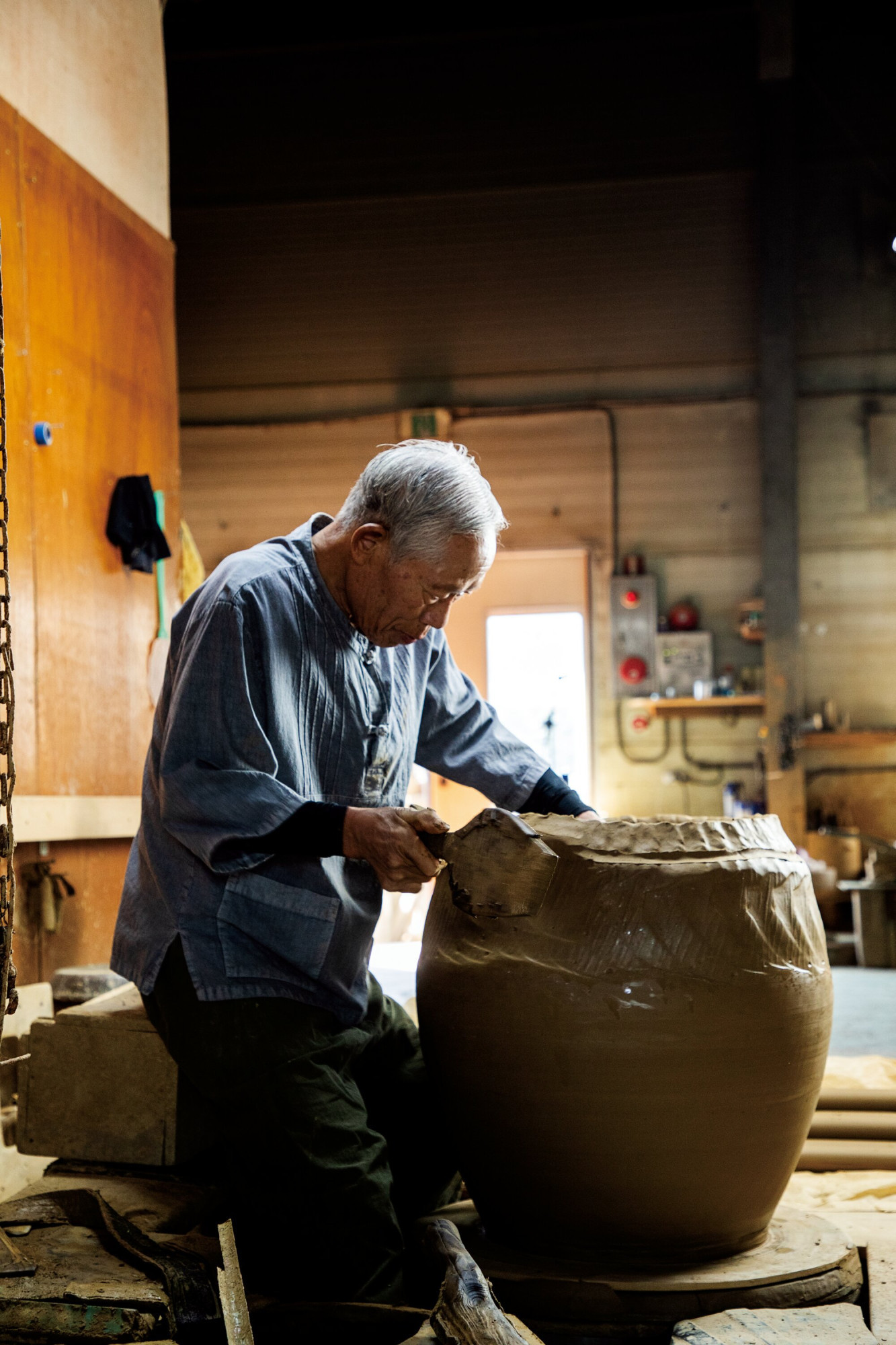
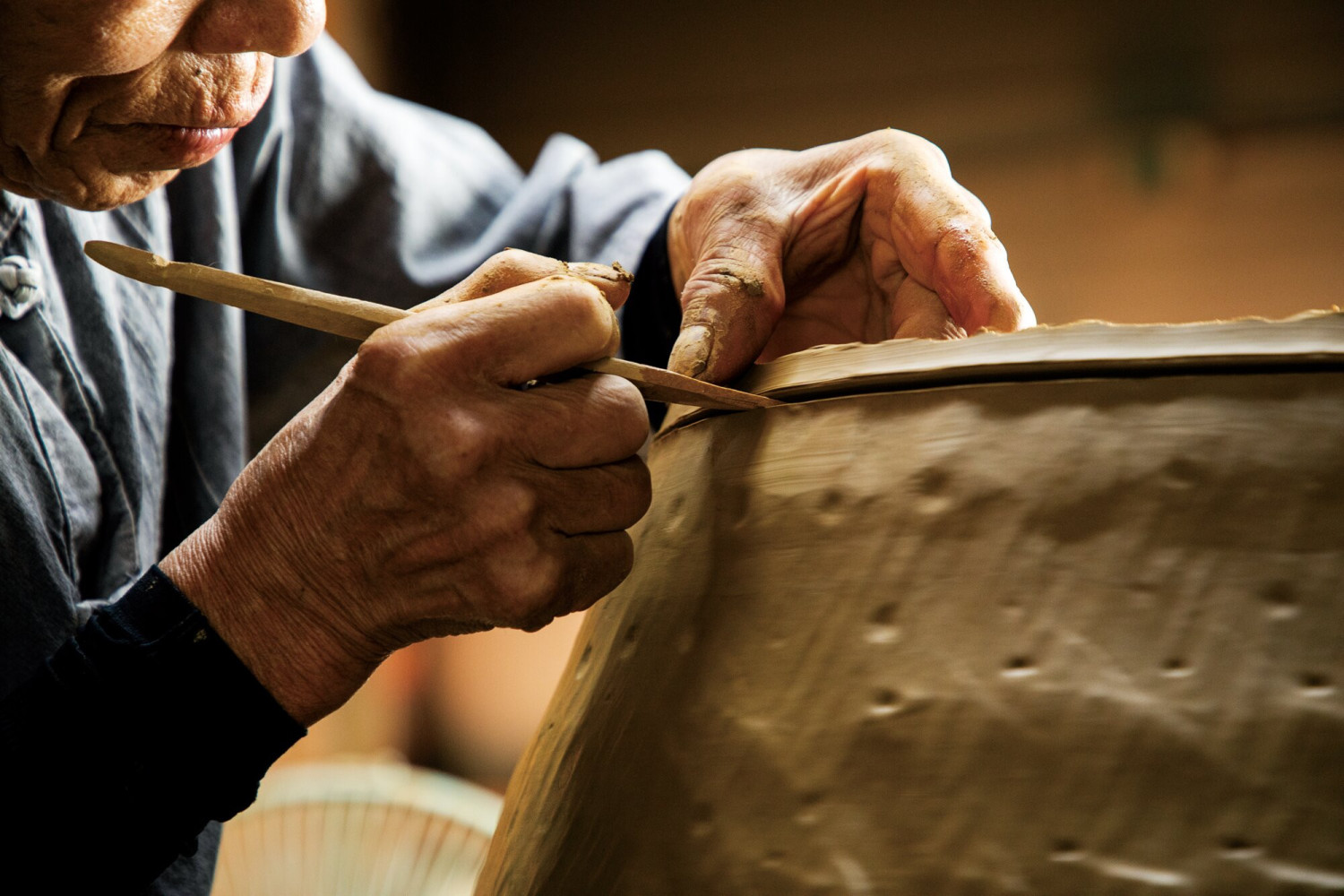

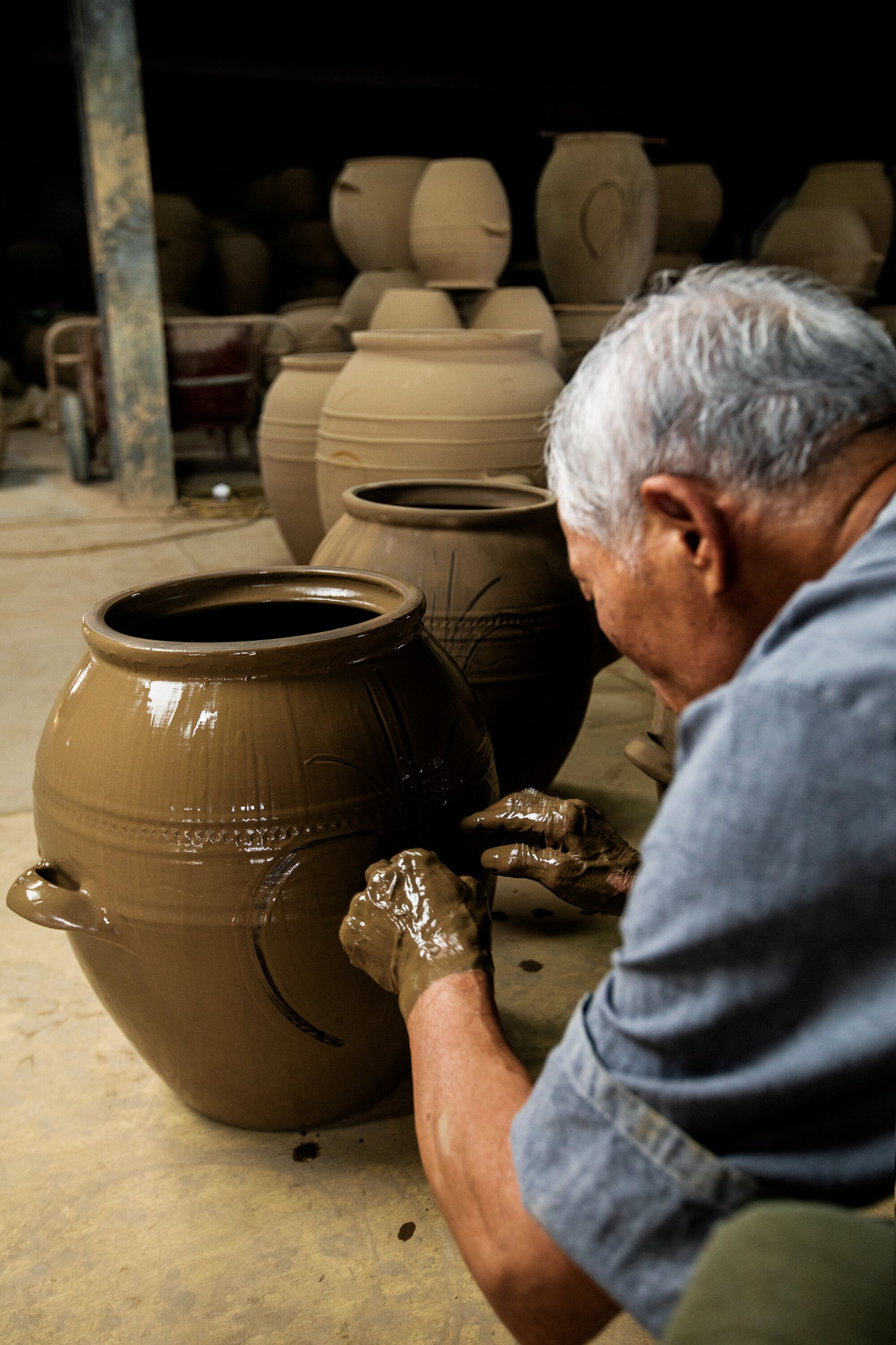

2. Bang Chunwoong, National Intangible Cultural Heritage holder for onggi making working on a piece at Galsantogi, his workshop in Hongseong-gun County
3. A slender wooden tool is used to refine the rim of the jar.
4. Onggi is dipped and rolled in the aged ash-glaze bath to ensure an even coating over the surface.
5. Before the glaze dries, patterns are drawn across the surface in a single sweep.
6. The final stage of onggi belongs to the fire. As temperature is raised gradually, from the gentle piumbul to the intense keunbul, the vessel’s color takes hold.
The creation of traditional Korean jars called onggi begins with earth. Since not all earth found on the Korean Peninsula is the same, artisans had to first understand the character of their local clay. The perfect mixture of heat-resistant red clay and the softer white clay, the techniques used to shape them and the temperature of the fire were all adapted accordingly. Even the taryeom (coiling) method of building up a vessel differed by region.
The most important tool was the craftsperson’s body. Fingertips tested the moisture level of the clay; feet controlled the speed of the wheel. At every step, the artisan’s experience outweighed the technical guidelines. That was true for decisions about adjusting the kiln’s temperature, as well as for the surejil technique of hammering the walls to the same thickness with a paddle while a brace provided support within.
In the workshop, sound was part of the craft. When clay was stretched into plank-like slabs during taryeomjil, the thwack it made against the board was enough to tell a novice from a master. And during surejil, the resonant pounding of the paddle grew louder and clearer as the jar took shape. The artisan could read the condition of the clay through these sounds. In short, onggi making was a whole-body skill involving the eyes, ears and hands.
The final work belonged to the fire. Once dried, the vessels were placed in the kiln, where the heat was slowly raised from the initial piumbul firing to the final keunbul (big fire) stage, then gradually allowed to subside. The color of the onggi depended on the interplay of the clay, kiln and fire. Jeju Island onggi, made from volcanic-ash clay, were fired in basalt kilns without an ash glaze, but took on a glaze-like appearance with colors ranging from yellowish hues to reddish black — the marks of flame and ash.
Vessels Open to Sun and Wind

© Jeju Clay Pottery Lab
Onggi is often described as earthenware that “breathes,” a term that neatly captures a defining characteristic. As organic matter in the clay is burned away or transformed during firing, microscopic pores form within the body of the vessel. Low-fired earthenware has a less dense structure with more pores, making it more permeable to air. Onggi fired at higher temperatures, by contrast, develops a denser body, giving it greater strength and water resistance. As a result, not all onggi possess the same properties: different clays and firing methods produced vessels for varying purposes.
Knowing what to store in a particular vessel required a practiced eye — an ability to read its qualities and condition. A jar used for jang (fermented sauce) would remain a jang jar; one used to hold water would continue to do so. Since air and light could pass through the minute pores, traces of the contents could seep into the vessel. Onggi, then, was not merely a container but a tool that harnessed nature to regulate the fermentation of its contents over time.
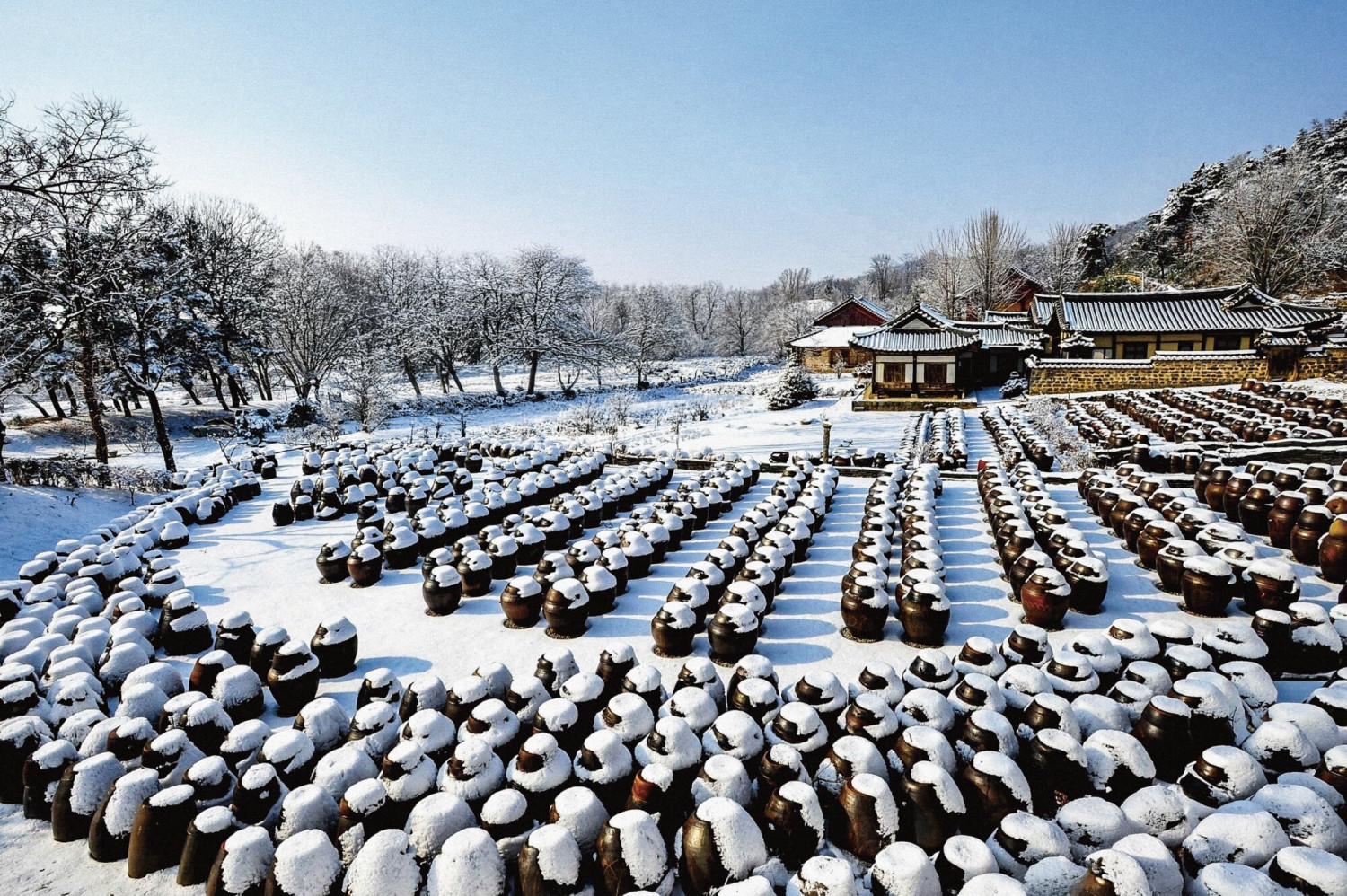
Nowhere was this wisdom more evident than in the jangdokdae, the traditional terrace for fermentation jars. Usually positioned on slightly elevated ground with good sunlight, ventilation and drainage, a jangdokdae might also consist of a layer of rounded stones and gravel about 20 – 30cm high with stone slabs on top. Lids were opened and closed according to the season and weather to adjust the fermentation of jang and kimchi, while the jars themselves were regularly wiped down to ensure they could breathe freely. This was particularly important in summer, when white salt deposits could bloom on the surface and a sticky residue could seep out. In short, the vessel’s material and pores, the sun and wind as well as the worker’s experience combined to create an integrated fermentation system.
Shaping New Uses
© SWNA
© Jeju Clay Pottery Lab
In the late 20th century, modernization and changing lifestyles quickly diminished the use of onggi. Piped water, refrigerators and more convenient vessels of plastic, glass and stainless steel replaced traditional water jars, including Jeju Island’s heobeok vessels. Yet, what draws us back to the onggi may be the web of relationships surrounding it: the artisan shaping clay and reading the fire; the homemaker gauging the sun and wind; the clay being struck and formed in the workshop. All were part of the landscape that made onggi what it was.
Onggi has always molded itself to the clay and kilns of each region, with the foods it held and the people it served. As such, its reappearance today — as storage pots suited for modern homes, tableware and vessels for aging alcohol and fermenting foods — should be seen as another chapter in that long history of adaptation.
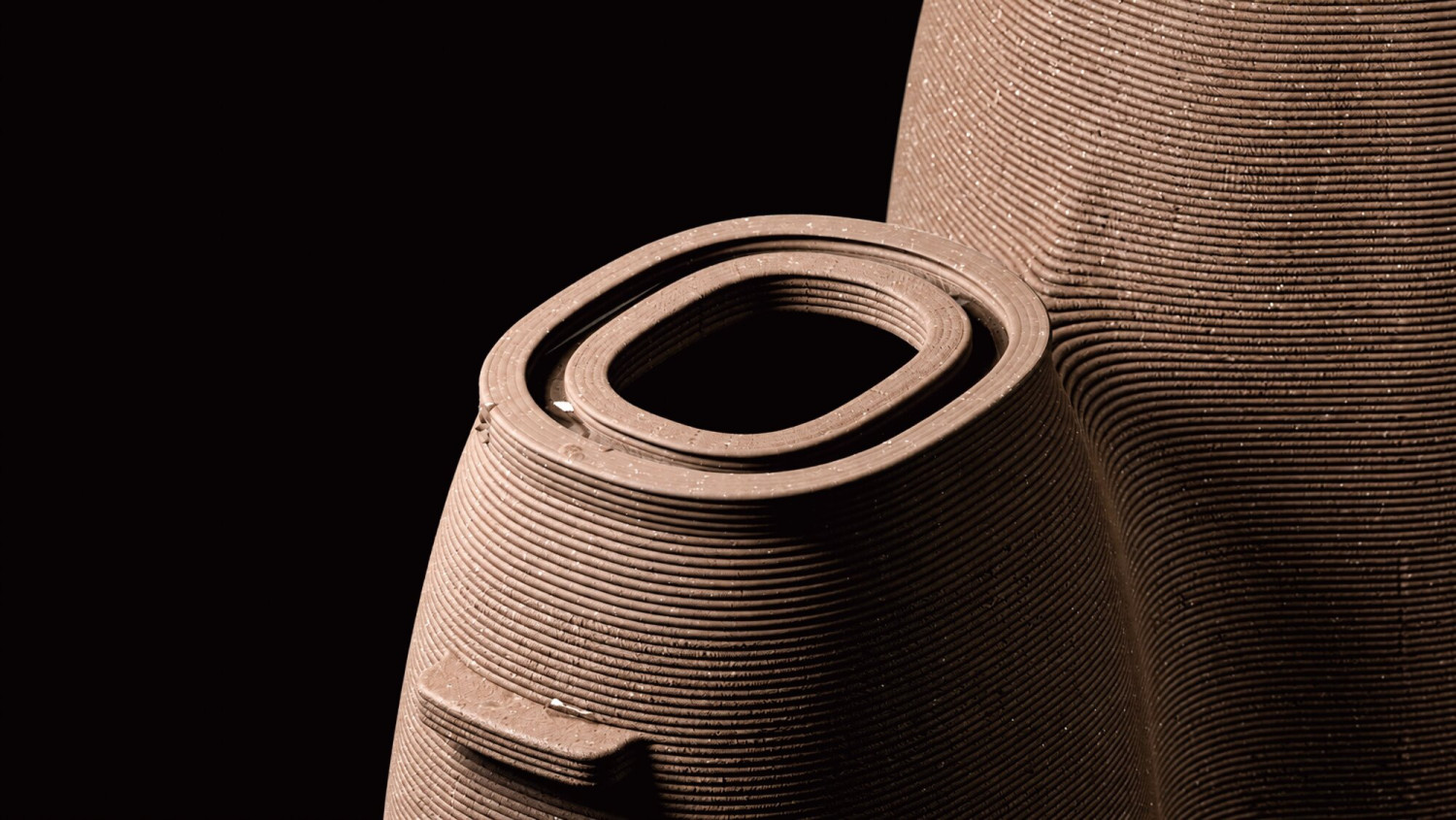
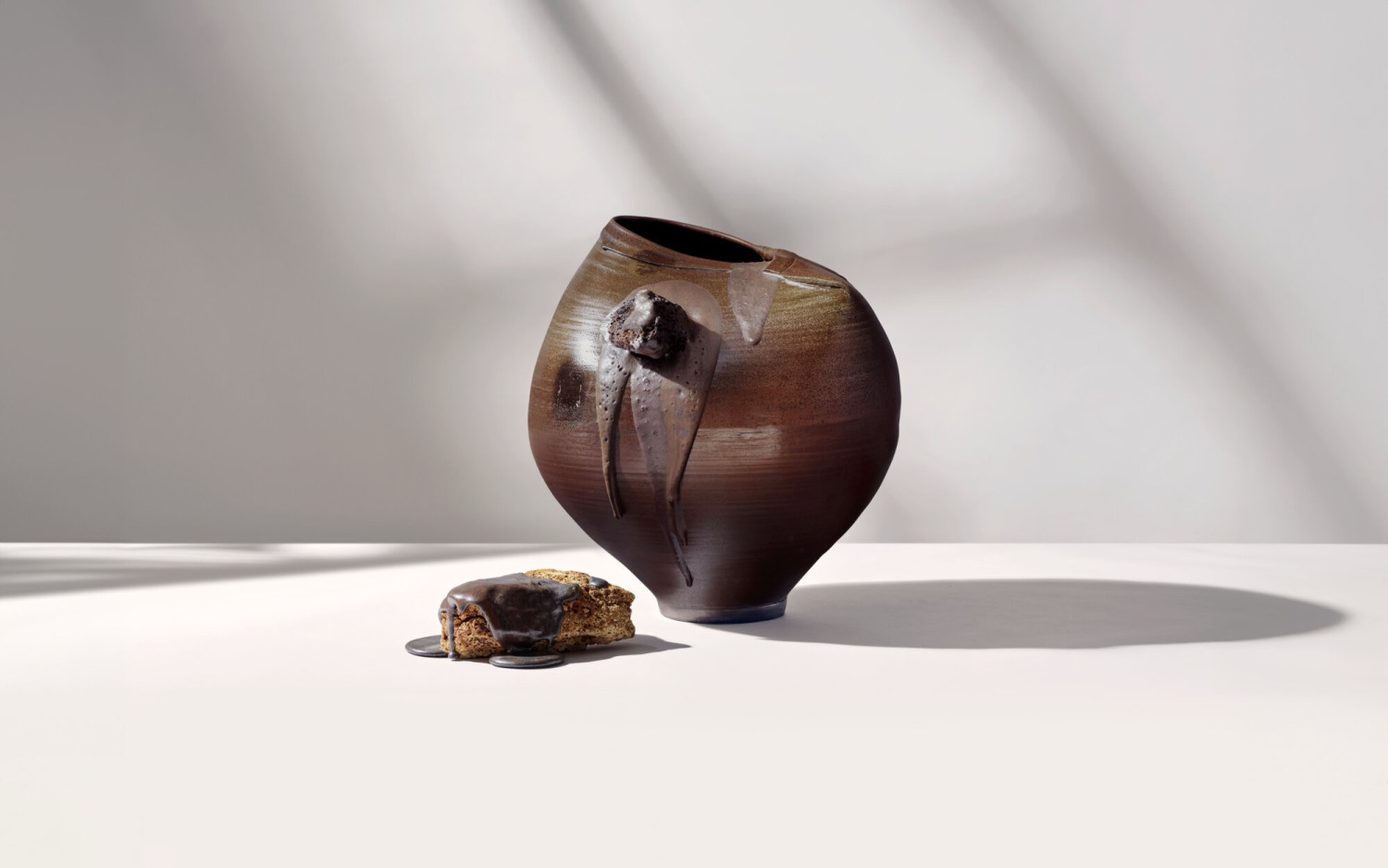
Distilled-soju brand Hwayo, for example, uses onggi in its maturation process to round out the flavor of its spirits. A younger generation of ceramic artists is likewise shaping onggi anew, showing that the vessels are not relics for museums but still relevant today. Jeju-based potter Kim Kyungchan collects the island’s volcanic-ash clay himself and filters it through fine cotton. Korean product design group SWNA reinterprets traditional onggi through a contemporary lens, introducing new ways to use these vessels in modern living spaces.
Tradition endures not by slavishly reproducing the forms of the past but by bringing them into new relationships with life in the present. In the artisan’s hands, earth transforms into an onggi; in ours, it becomes a part of daily life. As long as we remember the hands and sounds of the heritage craft, the art of creating onggi can continue to be an enduring part of our future.
- Written by Lee Kyunghyo
- Lee Kyunghyois a senior curator at the National Folk Museum of Korea. Beginning with Jeju Island’s onggi, she has continued to conduct research and curate exhibitions on traditional vessels. She also cataloged the National Folk Museum’s onggi collection, participating in the publication of related literature.
- Edited by Han Milim