

How to Experience a City
MorningCalm presents Omnibus Story, a series of reflections that illuminate the beauty of the everyday. Through the varied voices and perspectives of global experts, these stories offer moments of insight — during your journey and well beyond.
- Darcy Paquet is a U.S.-born film critic and translator who has been based in Korea since the late 1990s, where he has researched Korean cinema and the film industry. He founded Koreanfilm.org, a comprehensive English-language resource on Korean film that serves international audiences and researchers, and has worked as an advisor and critic for film festivals in Korea and abroad, including the Udine Far East Film Festival. He has also translated English subtitles for hundreds of Korean films, including Parasite, contributing to the international circulation of Korean cinema.
Many years ago, I took a trip to Paris. I visited all the sites one is supposed to visit in Paris: the Eiffel Tower, the Louvre, Notre Dame Cathedral, Musée D’Orsay. I remember all of those places, and have photos of them stored away somewhere. But when I think back on that trip today, one memory stands out more than the others. It was an ordinary moment: my wife and I sitting at a table outside of a café, having breakfast. The food was simple — a baguette, raspberry jam, some cheese and scrambled eggs — but unexpectedly good (as food in France often is). And yet I don’t think it was the food that makes that morning stand out in my memory. It was an hour when I felt completely at ease, watching the people pass by, letting the soundscape of the city wash over me. I had no particular objective in that moment, and probably never would have imagined at the time that it would be this memory of Paris that would stay with me the longest.
Travel is a curious thing. We tend to approach it with a particular mindset, namely that a trip to someplace far away is an opportunity to visit and see extraordinary things that one can’t find at home. The idea makes intuitive sense. When in Rome, one should visit the Colosseum. Nonetheless, it is often the most ordinary moments of a trip that, in retrospect, are the most pleasurable.
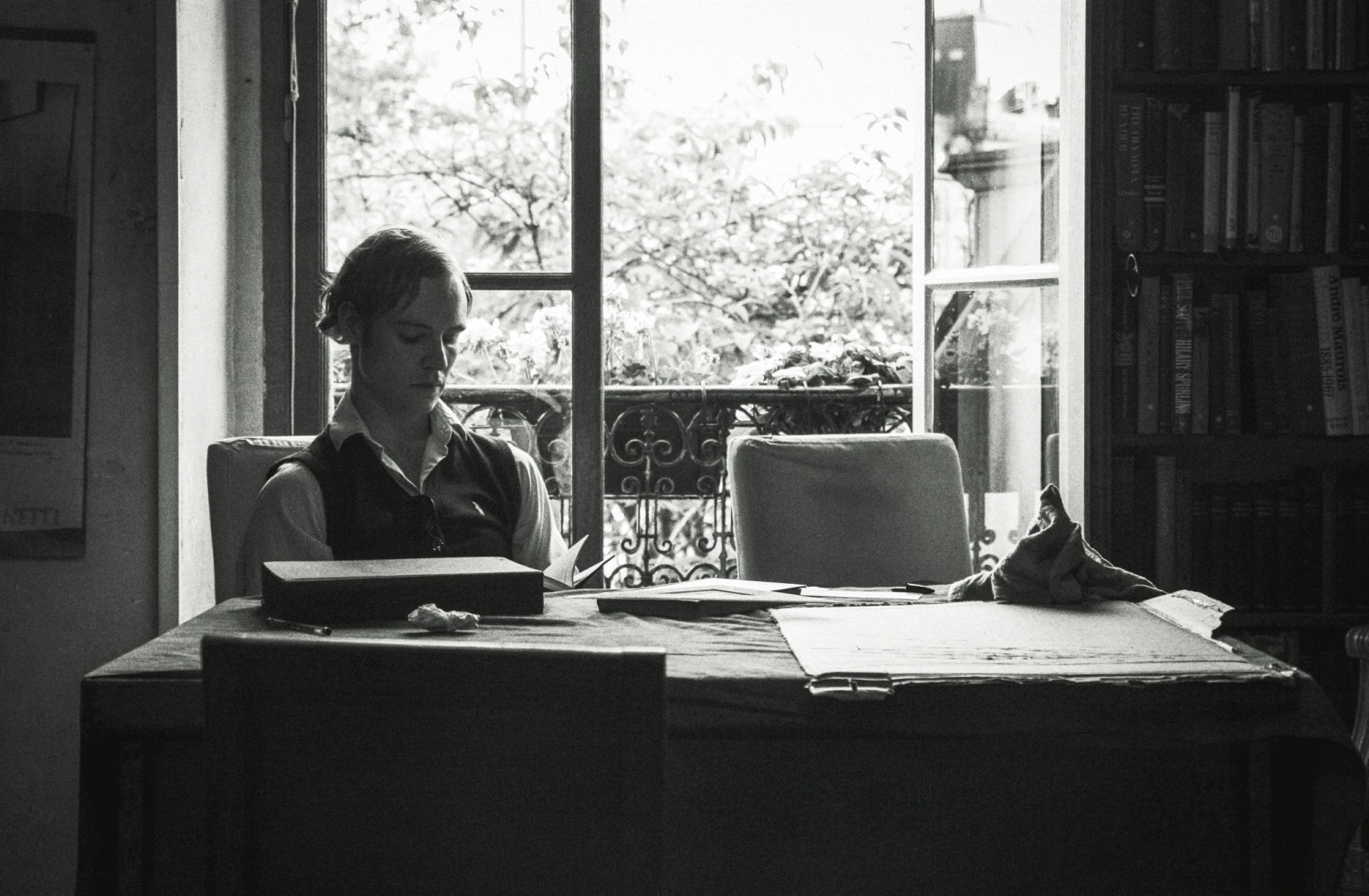
I took my first trip abroad when I was in my twenties, and I managed to visit and see some amazing places. I took photos, gazed at famous sites with my own eyes, and bought some interesting souvenirs, but at the end of the trip, unexpectedly I felt a bit empty. I was left with the sense that I had gone to a new place but never fully experienced or felt it. I know that everyone experiences travel in a different way, and many people love nothing more than to plan and execute a detailed travel schedule that brings them to all the famous sites and recommended places to eat and shop. Other people approach travel as a form of study, to deepen their understanding of art, history or architecture. Everyone should find the approach that suits them, but for those who wish to try it, I’d like to suggest a slightly different way of traveling to, and experiencing, a new city.
It starts from the idea that the whole point of travel is to enjoy yourself — why spend money and time if you’re not going to be happy while doing it? But at the same time, I think we expect more from a trip than just enjoyment. For travel in particular, we want to create lasting memories. We may not be able to re-visit a place in the future, but we’ll still be able to draw on memories of that trip years later.
So my proposal basically consists of two parts: to self-consciously center one’s trip on more ordinary, pleasurable experiences, and to use writing (and photos) as a way to preserve those experiences in one’s memory.
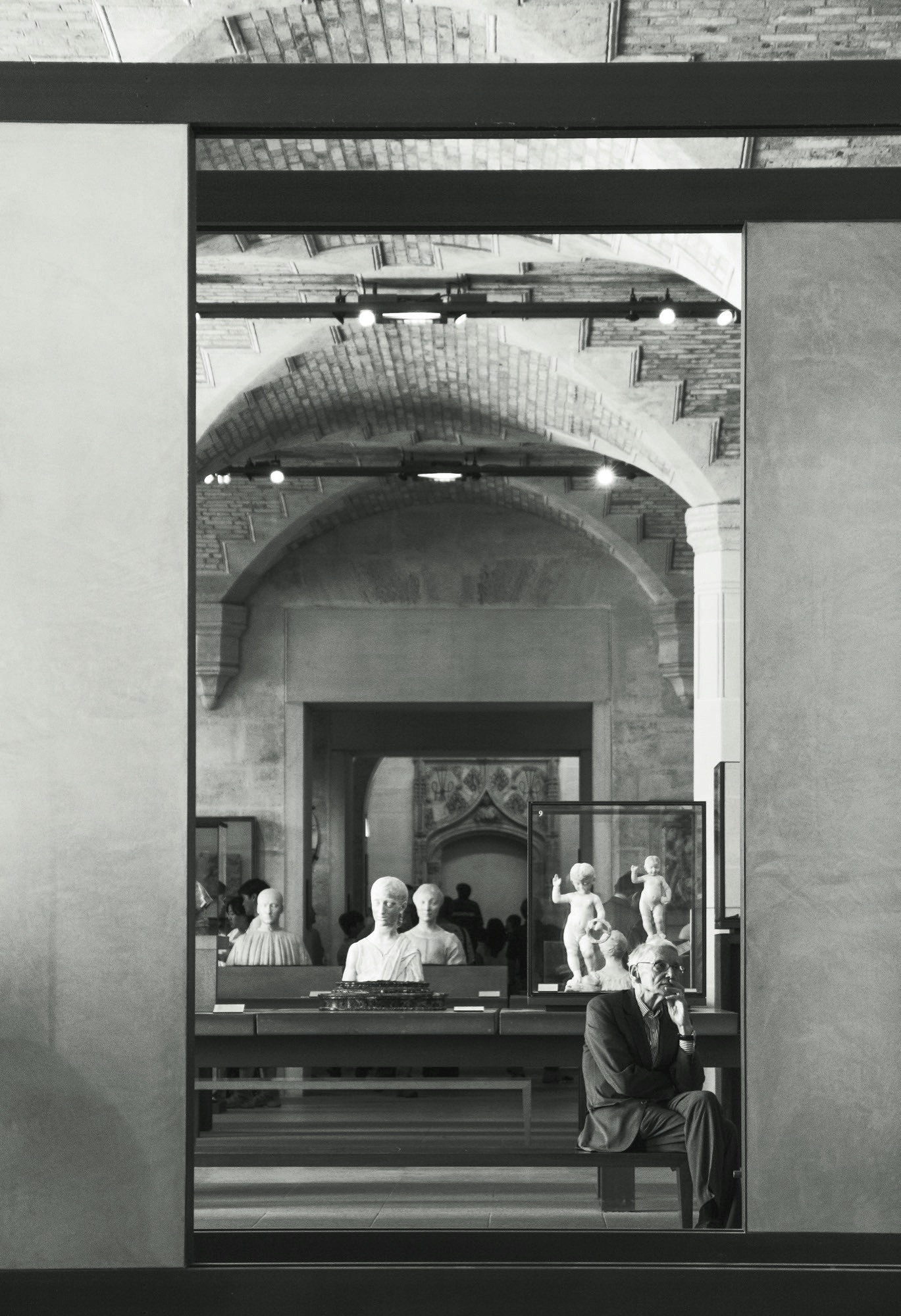
The first part requires a bit of preparation. One can start by drawing up a list of activities that you enjoy doing in your daily life. The list might include going on long walks, listening to live music, watching sporting events, working out in a gym, visiting museums, reading, cooking, yoga, shopping for clothes, drinking wine, watching movies, sketching, dancing, seeing plays or musicals, playing tennis and so on. Obviously, for every person the list will be different.
The next step is to choose a number of activities that you’d like to do on your trip. Not too many — perhaps one per day, or at the most, two. Some of them may require a bit of planning or creativity to make them work. For other activities, language may be a barrier. It should also be said that this is specifically related to city travel. Spending time by the beach can be equally pleasurable, but it’s a funda- mentally different sort of travel than going to the city. Here is a list of five activities, as an example.
1. Spending time in a public library, reading a magazine.
A public library can be a very inviting and memorable place to spend an hour or two, if you have something to do while you’re there. One of my most prominent memories of a three-day trip to Bologna was spending a few hours in the public library near the city center. If you pick up
an interesting magazine before your trip, you can carry it with you and take some time reading it in a public library. The experience may be more memorable than you expect.
2. Attending a music performance at a university.
There are few things like live music to give you vivid memories of a new city. But it doesn’t have to be at the city’s most famous venue. One option is to visit the website of a good music school, to see if there are any performances taking place during your trip. A jazz or classical concert at a top music school can be a distinctive experience in a memorable setting, and it may even be free.
3. Taking an hour-long long walk, hike or run.
If you enjoy walking, or running, it is definitely worthwhile to schedule a bit of time for this on a trip. What better way to spend a morning in New York than to take a run around Central Park? In a city like Seoul that is nestled among the mountains, it is possible to spend hours walking on trails in the forest without even leaving the city limits.
4. Sitting at a café and sketching something interesting in your field of vision.
Some of us are better at drawing than others, but for those who enjoy it, sketching can be a great pleasure. The point is not to find a remarkable subject to draw, or to produce a work of art. It is to lose yourself in the process and enjoy the moment.
5. Visiting an exhibition at an art museum.
Museums are a common tourist destination, and for good reason. They provide a fun experience and often teach you something new as well. But instead of simply choosing a museum, it can be worthwhile to do some research before your trip to see what temporary exhibi- tions will be taking place during your stay, and choose one that suits your interests.
Again, these are just examples, and everyone’s list will look different. Perhaps there may be one-day cooking classes or tango lessons that one can sign up for. Sometimes a particular festival or sporting event might be taking place during your stay.
Some readers might look at the more ordinary experiences on the list above and think, “I can do all of these things at home — why take up precious time on them during my travels?” I especially hear such comments when I tell people that one of my favorite things to do while visiting a foreign country is to go to the movies. How is that any different from watching a movie at home? My answer is, I think that the setting and environment really matter to our experience of everyday activities. If we do some of our favorite things in a foreign city, it will feel different, and we will remember it even more. I have a very distinct memory of watching The Banshees of Inisherin at the Curzon Soho movie theater in London, that I wouldn’t have had watching the film at home.
Also, when an experience is tailored to your own tastes and interests, that memory belongs specifically to you. Waiting in line to see the Mona Lisa might result in a memorable, powerful moment (if the crowds are not too noisy or distracting), but an experience shared by thousands of people per day will not feel as personal as sitting in a library with your favorite magazine.
The second part of this proposal involves a bit of writing. The idea of a travel journal is centuries old, so my suggestion is hardly original. But I recommend creating a sort of “city notebook” (either digital or on paper) in which you write about the experiences on your list. I’m not saying to write in the moment, but to find time later that evening, or the following morning, when the experience is still fresh in your mind, to jot down your impressions. There’s no need to produce good writing — a scattered collection of sentences or notes is sufficient. If you have photos to place among your writing, that’s even better.
The point is not to convince yourself that this experience was something rare or extraordinary, or to use writing to turn it into something extraordinary. Rather, the purpose of the writing is to record the ordinary experience in as much concrete detail as possible, so that you can remember it well later. Employ all of your five senses in describing how you felt.
At the end of your list of five (or however many) experiences, feel free to add a section titled “Sightseeing.” After all, you shouldn’t plan only ordinary experiences during your trip. If you travel to Rome, you really should go and see the Colosseum. But the writing in your city notebook can focus mostly on your selection of person- alized experiences, while the “Sightseeing” section can be simpler, with only photos and/or brief comments. (Perhaps another section titled “Food” would be warranted as well.)
The proposal I’ve written above may seem best suited to solo travelers, but when traveling with a companion, it could also be interesting to keep separate notebooks, and then to share them with each other afterwards. Even when describing the same experiences, two people will have different perspectives that will come through in their writing.
The opportunity to relive the same experiences through your companion’s eyes could be fascinating.
Assembling such a notebook obviously requires some effort, but there is nothing like writing to preserve one’s memories for the future. However much enjoyment we may get out of a trip, those memories will start to fade with time. But if years later, you revisit your city notebook titled “Melbourne 2025” or “Hanoi 2026,” the experiences you had in that city will come rushing back in a particularly vivid and detailed way.
- Written by Darcy Paquet
- Photography by Kim Kyungbum


