
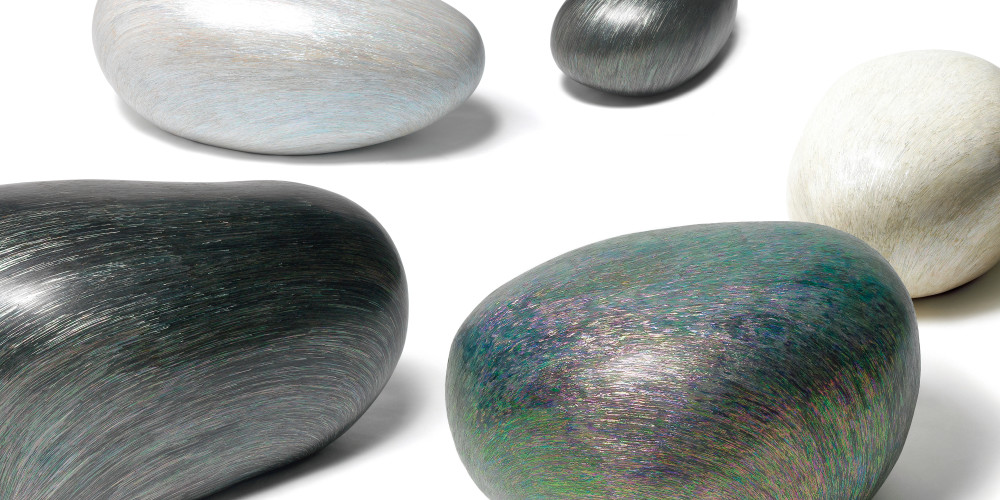
Najeon: Korean Mother-of-Pearl Lacquerware
Korean lacquerware inlaid with mother-of-pearl known as najeonchilgi has sustained a legacy of light for over a millennium, morphing the marvellous, iridescent blend of five colors embodied within the seashell into pure art. In the perfect union of jagae (mother-of-pearl) and otchil (lacquer), we discover the wisdom of ancient Koreans, who prioritized harmony with nature, and a depth of artistry that speaks to generations of extraordinary craftsmanship. This is the enduring core of Korean craft — the radiant beauty of najeon.
- Future Heritage K is a column founded on the idea that the most uniquely Korean creations are, in fact, the most original. We explore how the wisdom and aesthetic of the past are constantly evolving into new legacies within the creative spirit of the present.
Najeonchilgi: The Aesthetics of Nacreous Iridescence
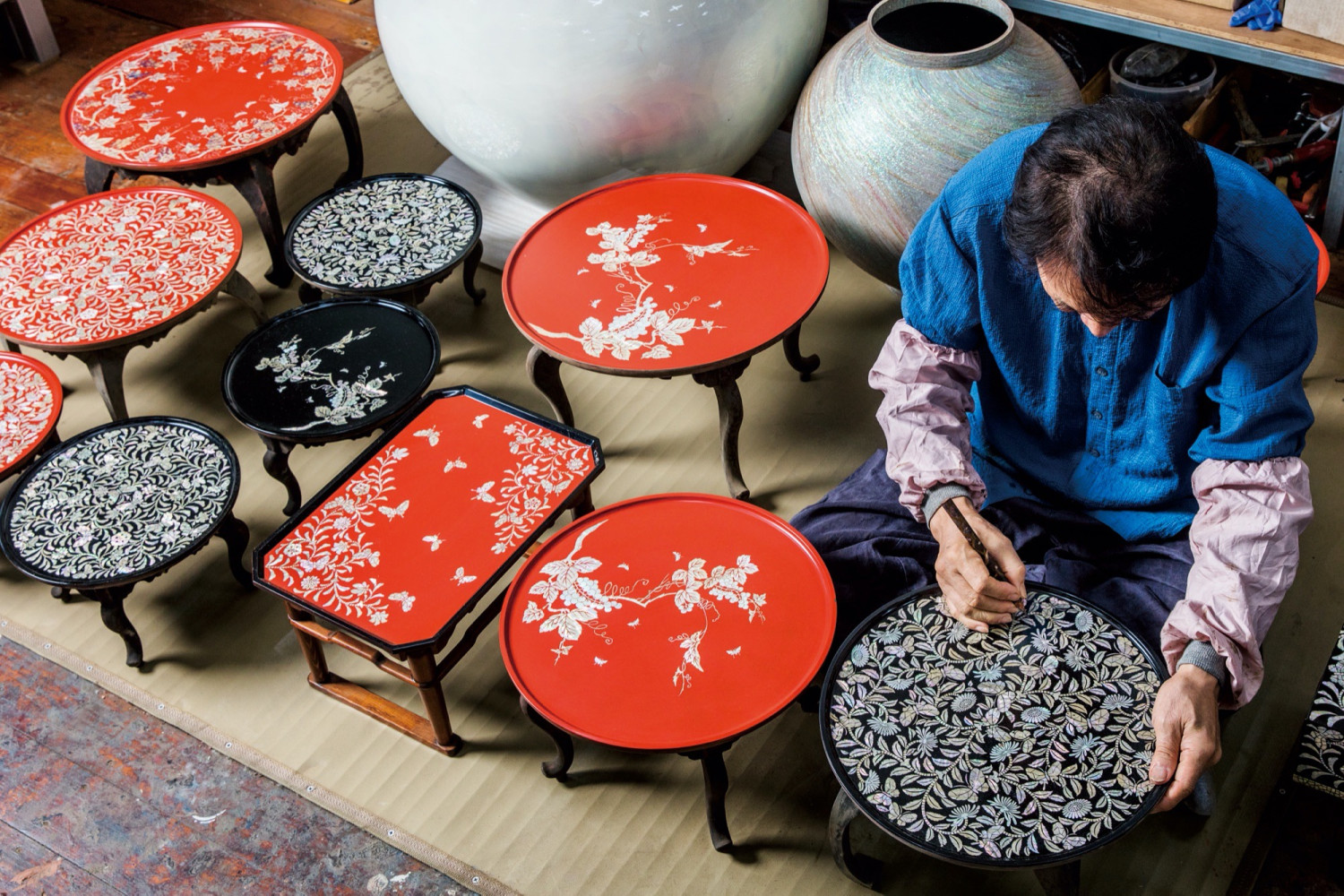
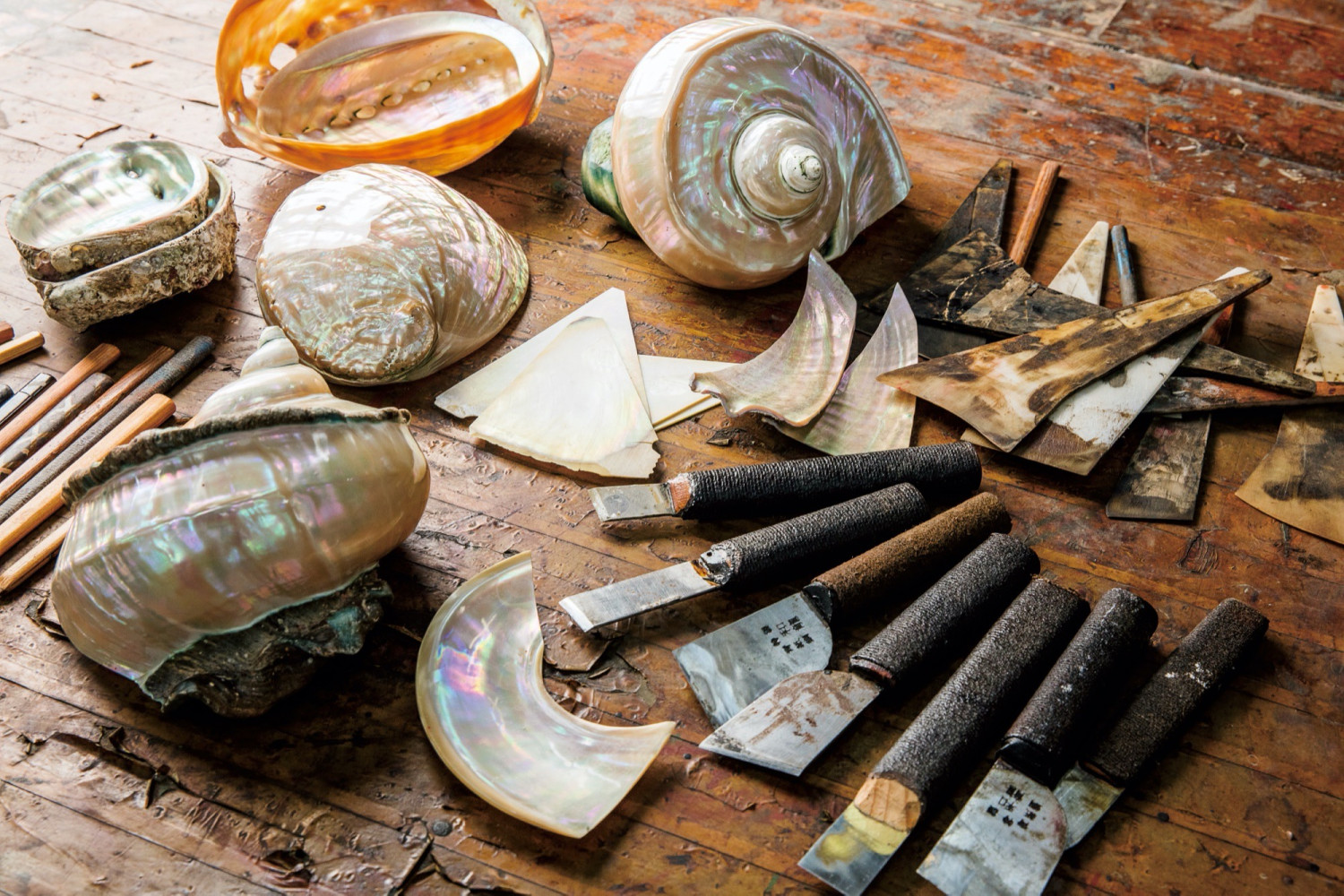
The Korean term najeon, a compound from the Chinese characters for “shell” (螺, ra) and “decoration” (鈿, jeon) used in the Korean language, refers to the traditional technique of carefully shaving the brilliant, iridescent inner layers of a shell and inlaying them onto a surface. In Korean, this inlay material is dubbed jagae and its combination with lacquerware, najeonchilgi, has long been the definitive masterpiece of Korean lacquer craft. While other Asian nations, such as China and Japan, also developed intricate mother-of-pearl crafts, Korean najeonchilgi is uniquely distinguished by its deep dedication to the precise, demanding technique of inlaying, a method that fully maximizes the inherent beauty of the shell itself.
The other pillar of najeonchilgi is the lacquerware vessel or chilgi, which is created by applying multiple layers of the sap of the lacquer tree onto a primary material like wood or paper. This natural varnish or lacquer known as otchil not only provides exceptional durability and waterproofing but also possesses antimicrobial properties, significantly enhancing the longevity and preservation of everyday objects. Najeonchilgi, therefore, is the artistic fusion of resilient lacquer and the splendor of shimmering jagae.
The shell’s incredible display of multi-colored light is caused by the calcium carbonate, its primary component, which forms colorless, transparent crystals that interact with light like a prism. Historically, Korea used abalone shells, prized for their complex spectrum of greens and blues, with shells harvested from the South Sea often considered the absolute finest material. This spectrum of five-colored light, known as osaekgwang, is the aesthetic heart of Korean najeonchilgi.
© Shin Gyuchul
© Shin Gyuchul
© Shin Gyuchul
The Pinnacle of Refinement
The technical skill and aesthetic maturity of Korean najeonchilgi achieved international recognition as early as the Goryeo Dynasty (918–1392). The prominence of Goryeo najeon is first documented in the 11th century, with a record from the Dongguk Munheon Bigo (Reference Compilation of Documents on Korea) stating that King Munjong offered najeonchilgi pieces as tribute to the Liao Dynasty court.
In 1123, when Song Dynasty envoy Xu Jing visited Goryeo, he praised the technological sophistication of the lacquerware in his memoir, Seonhwa Bongsa Goryeo Dogyong (Illustrated Record of the Chinese Embassy to the Goryeo Court in the Xuanhe Era). He described the craft with the idiom se-mil-ga-gwi meaning, “highly prized for its exceedingly meticulous technique.” This became the defining catchphrase celebrating the skill and artistry of Goryeo najeonchilgi for centuries to come.
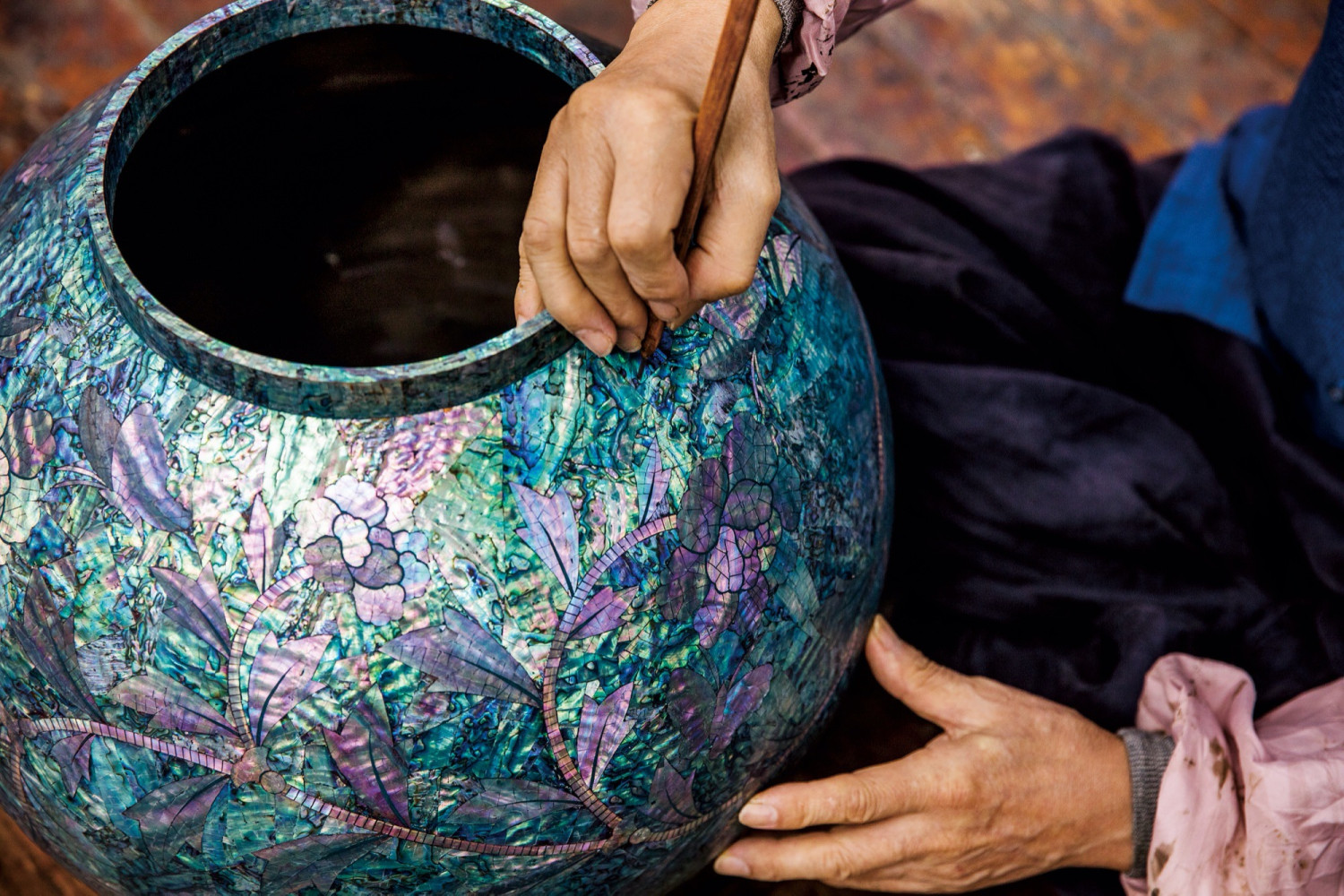
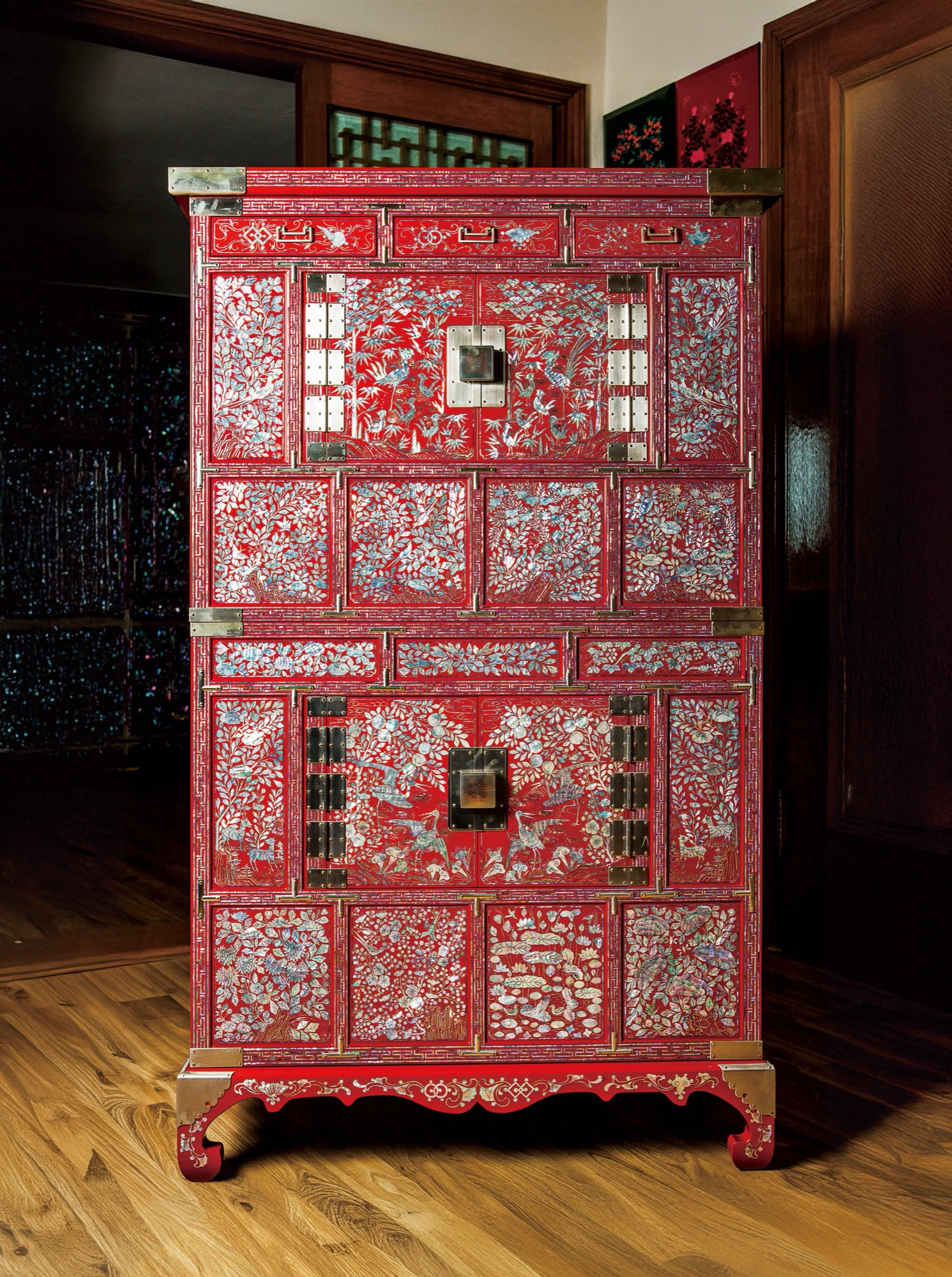
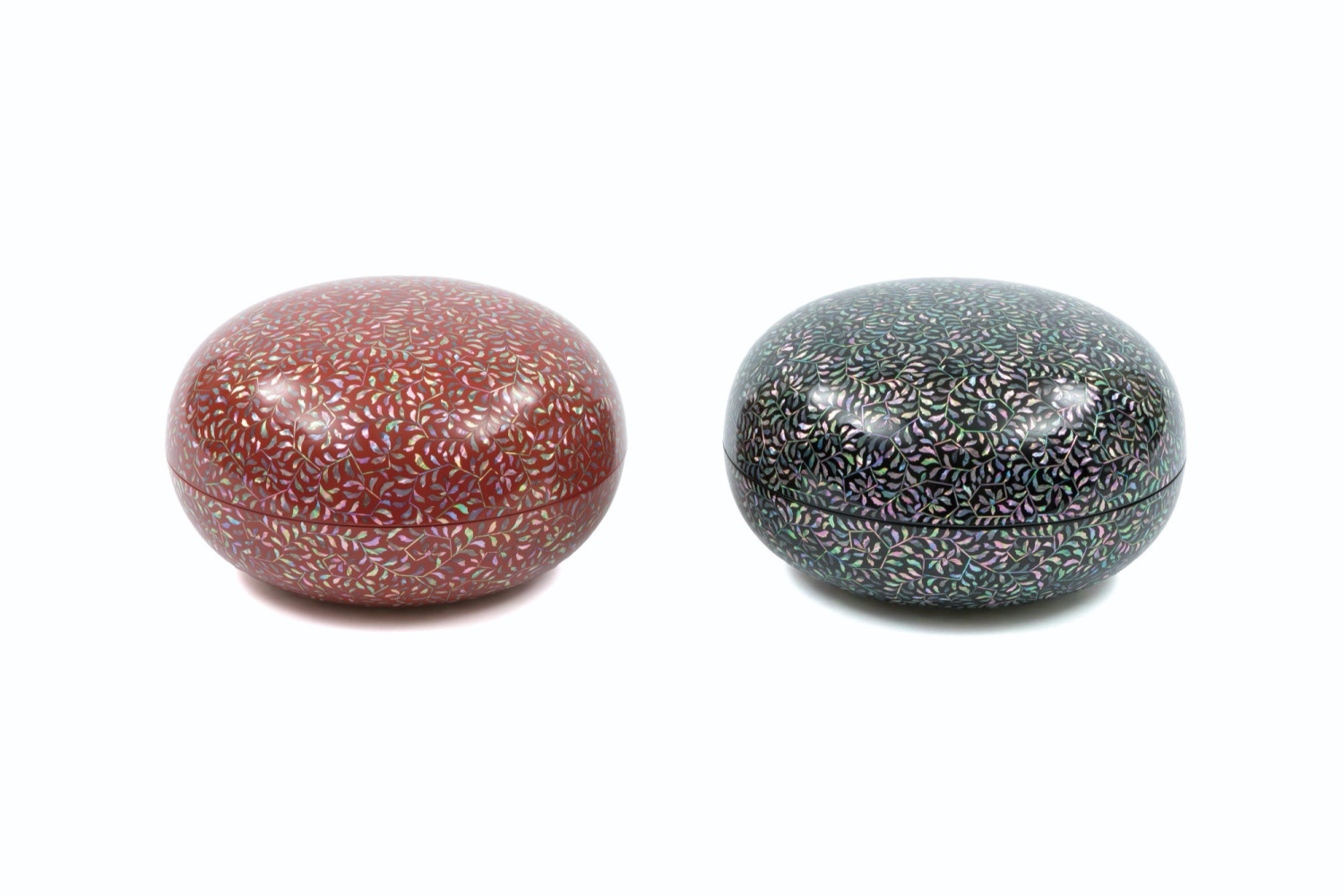
To create the artform’s delicate and vibrant patterns, two primary techniques are employed: jureumjil and kkeuneumjil. Jureumjil requires a craftsman to use a fine string saw to cut the mother-of-pearl into fluid curves for organic forms like flowers, animals and landscapes. Kkeuneumjil involves cutting the jagae into thin, filament-like strands and piecing them together without a break to create linear and regular shapes such as chrysanthemum blossoms, as well as geometric and continuous patterns such as tortoise-shell designs.
These two techniques, perfected by the hands of master artisans, form the foundation of najeonchilgi’s uniquely elaborate and inventive aesthetic. A single piece can demand hundreds, sometimes thousands, or even tens of thousands of precise movements, proving that this craft is far more than just a technique — it is an art characterized by profound devotion.
© Shin Gyuchul
Iridescent Light That Endures
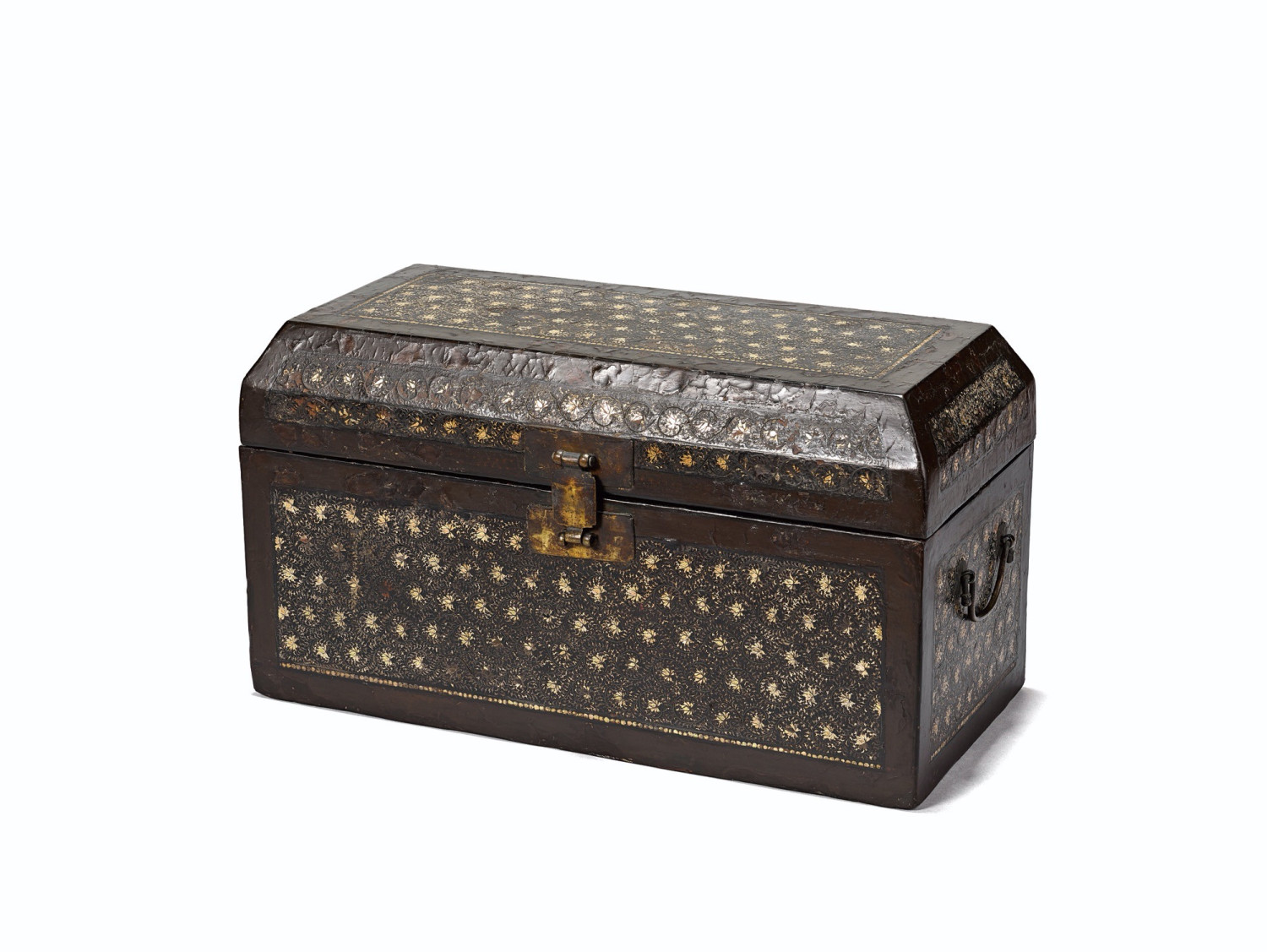
With the advent of the modern era, najeonchilgi underwent a major turning point, driven by the industrial shift, the push to adapt the craft to Western-style furniture, and its increasing value as an export commodity. New production methods involving mechanization and specialization allowed for mass production, and a new aesthetic emerged that combined traditional motifs with Western decorative elements. At the heart of this historical transition was the jagaenong (mother-of-pearl wardrobe). Emerging in the early 20th century, the jagaenong became the quintessential najeonchilgi furniture piece, an iconic fusion of traditional Korean craftsmanship and Western furniture. These typically consisted of two-to three-tiered wardrobes, decorated invariably with auspicious symbols such as the phoenix and the peony, as well as longevity symbols such as the cloud and the deer.
This was more than just beauty; it was a physical embodiment of ancient Koreans’ earnest hopes for prosperity, long life and bountiful offspring. Between the 1920s and the 1960s, a jagaenong was said to have cost the equivalent of a giwajip (a traditional tiled-roof house) and such furniture was firmly established as a status symbol in wedding culture, signifying the newlyweds’ financial footing and social standing.
A major driver of this modernization was Jeon Seonggyu (1880–1940), also known by his pen name Sugok. He is recognized as Korea’s first modern najeon master. His adoption of modern fret saws and contemporary design motifs was pivotal in industrializing and popularizing the craft, and his efforts to train the next generation contributed immeasurably to the continuation of najeonchilgi.
The generations that followed, like najeon master Choi Sanghoon, a National Intangible Cultural Heritage status holder, built upon Jeon’s legacy, navigating the delicate path between preserving tradition and adapting to the modern world. Today’s najeon masters continually elevate the craft to the realm of pure art, passing down techniques like jureumjil and kkeuneumjil, while ensuring their work engages with the contemporary spirit. They preserve the tradition but never cease to converse with the present.
The artisan Son Daehyeon, who continues the tradition of lacquer craft, exemplifies this evolution by combining classical otchil techniques with modern design to push the boundaries into contemporary craft. His piece, Najeon Geonchil Dal Hangari (Dry Lacquer Mother- of-Pearl Moon Jar), perfectly illustrates this vision: it features mother-of-pearl with kkeuneumjil over a hemp cloth base, creating a luminous sculptural form that honors the roots of traditional craft, while keeping pace with the sensibilities of the modern era.
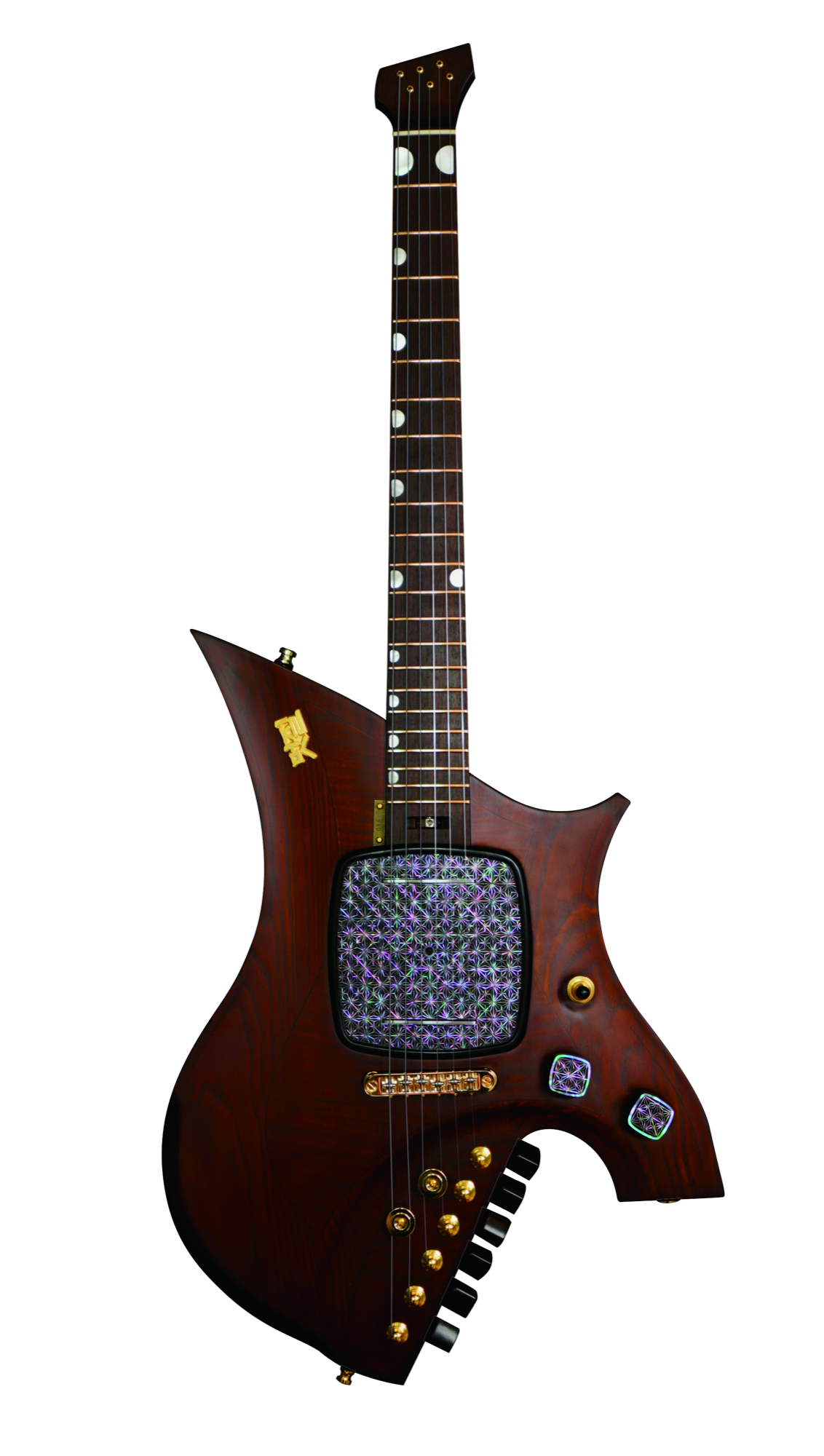
Thus, najeonchilgi today is no mere technique of preservation. It is in a constant state of creative evolution, merging traditional skills with modern aesthetic and practical applications. It is expanding its canvas into pure art, interior design and high-end fashion accessories, powerfully marking the unique value of K-design on the world stage through a legacy of artistic transformation. From the technical refinement of the Goryeo Dynasty to its creative adaptations in the present, najeonchilgi, a millennial legacy, continues to shine luminously, carrying within it the artistic ingenuity and cultural identity of Korea.
- Written by Jung Eunjoo
- Jung Eunjoo is a researcher in the exhibition planning department at the Seoul Museum of Craft Art. She has been responsible for curating major exhibitions that bridge the aesthetics of traditional craft with modern values.
- Edited by Han Milim


