
The Oculus, Wings of Light for New York
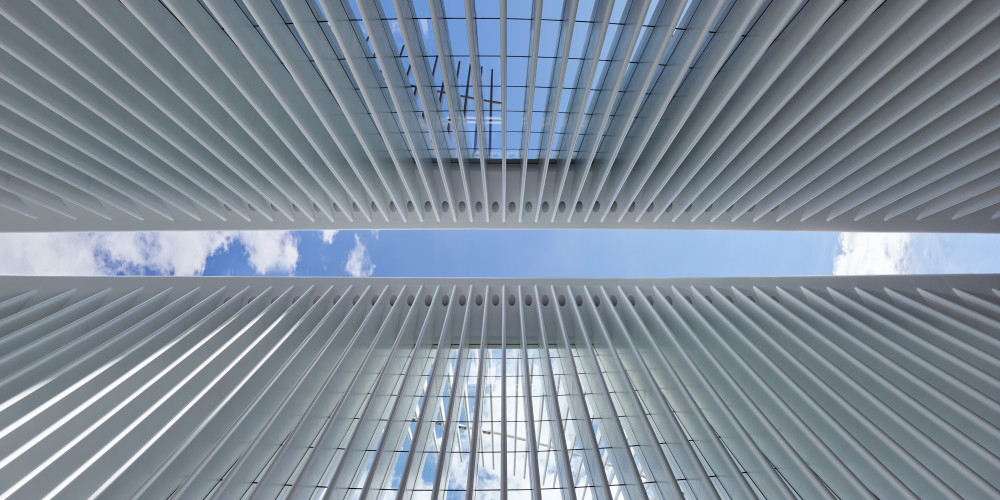
In the heart of Lower Manhattan, Santiago Calatrava’s luminous, all-white space known as the Oculus blends light and flowing curves into a structure that offers a sense of freedom and possibility within the rhythm of everyday life. It spreads its wings of light across the city like a bird ascending into the sky.
City Reborn Through Light
On September 11, 2001, when terrorist attacks killed 2,977 people and destroyed New York City’s iconic World Trade Center (WTC) Twin Towers, the physical damage was far from surface-level. It also penetrated underground to the Port Authority Trans-Hudson (PATH) rail service, one of the key commuter lines that moves employees, visitors and tourists between New Jersey and New York daily. To help raise Lower Manhattan from the tragic ashes, Spanish-Swiss architect and engineer Santiago Calatrava was commissioned in 2003 to create a transit hub that would not only replace the subterranean PATH stations but also unite them with New York City’s subway system and the rebuilt WTC campus above.
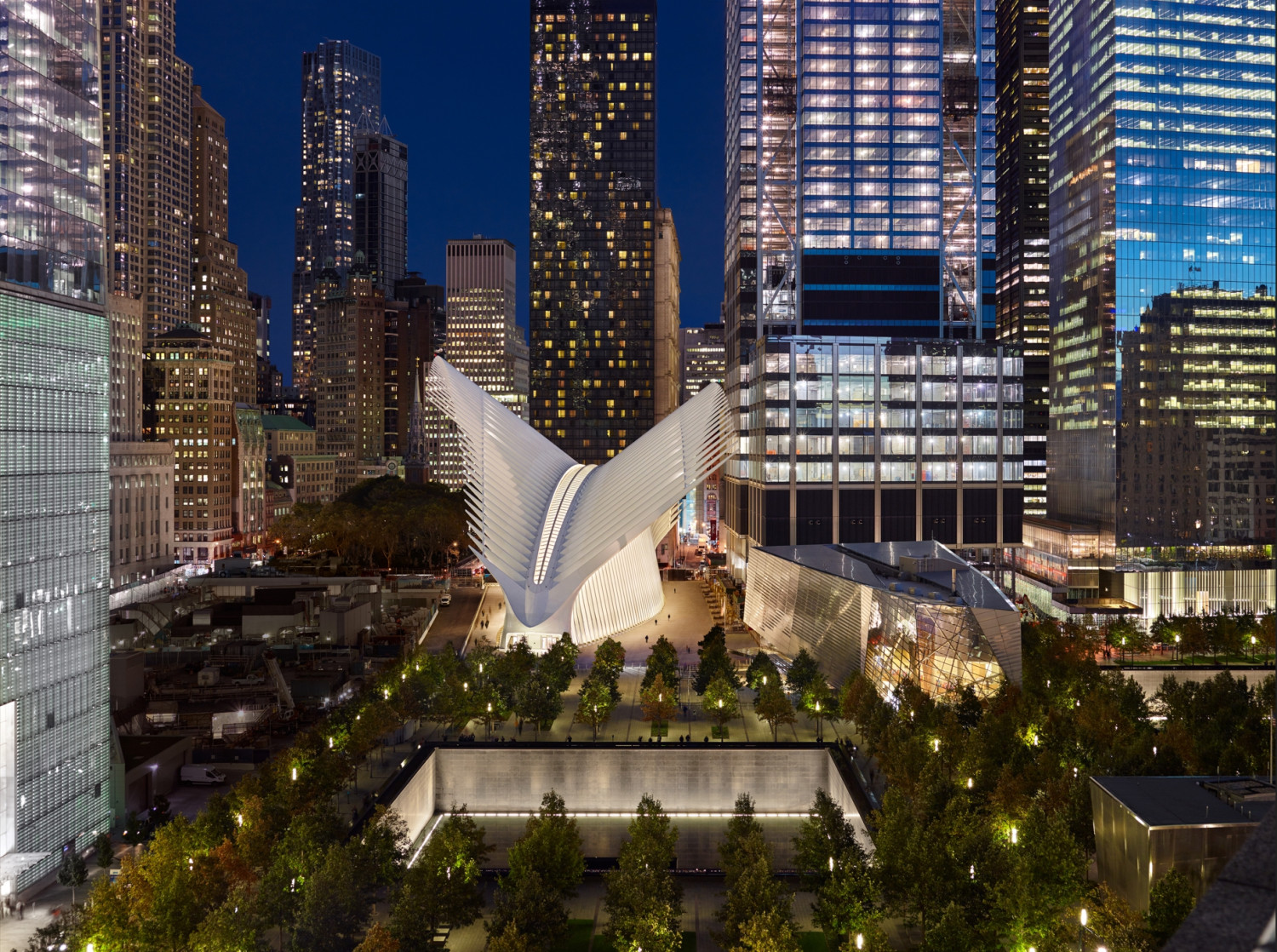
His design added a bit more poetry to that brief. Oculus, which comes from the Latin words for “eye” and “opening,” opened in 2016. This freestanding structure is located on a plaza that connects the WTC campus to its historic surroundings, including St. Paul’s Chapel, Manhattan’s oldest church building. Part of the WTC masterplan by architect Daniel Libeskind, the new building was bound to stand out and required a design that would make it a landmark for Lower Manhattan. In addition, the original World Trade Center site was situated on Ground Zero, an emotionally charged area. The nearby memorial is a place of annual pilgrimage for friends and family members of the terror attack victims, so Calatrava wanted the transit hub to be a beacon of hope.
Poet of Living Structures
Calatrava is known for his poetic ability to meld otherworldly architectural form with state-of-the-art engineering. In his projects, white concrete, steel and glass material palette put the structures on full display, often as spine-like supports to buildings or bridges changed every hour by sunlight and shadows. Many of his projects are public, and he designed his first train station, Zürich Stadelhofen, at only 33 years old. To make the Oculus a civic icon for its city, he lived and worked in New York for 14 years.

New York’s Gateway of Light and Air
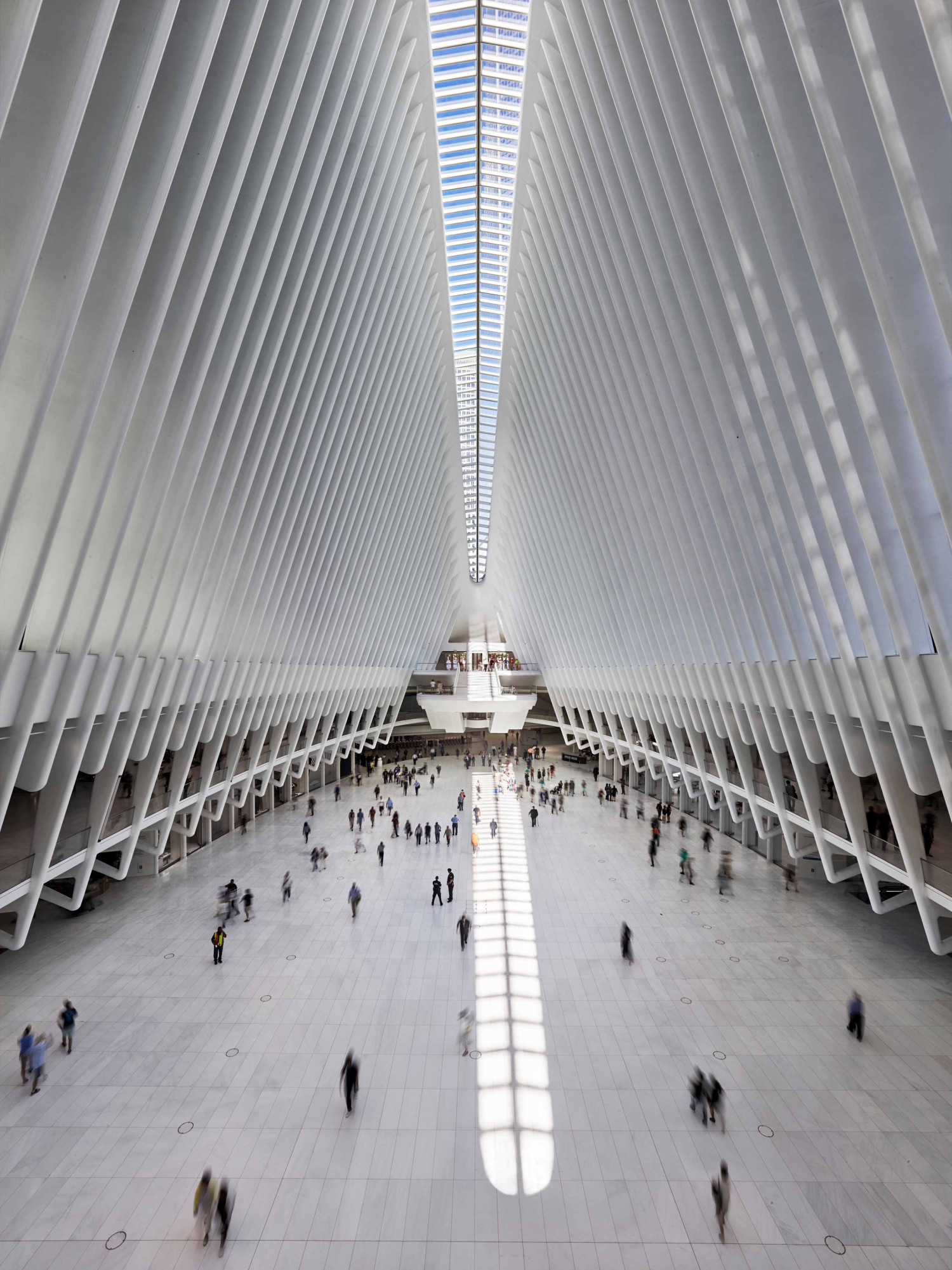
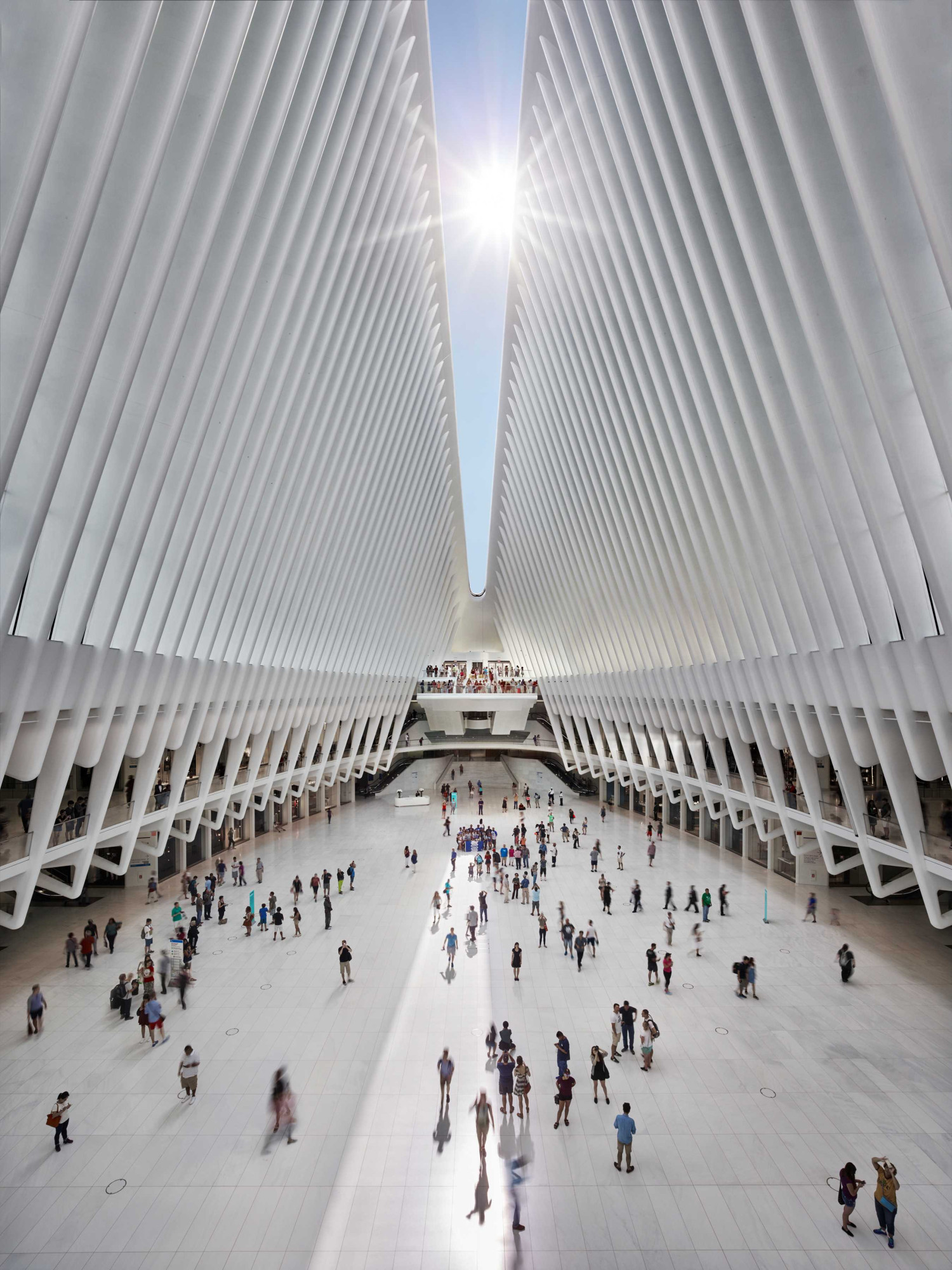
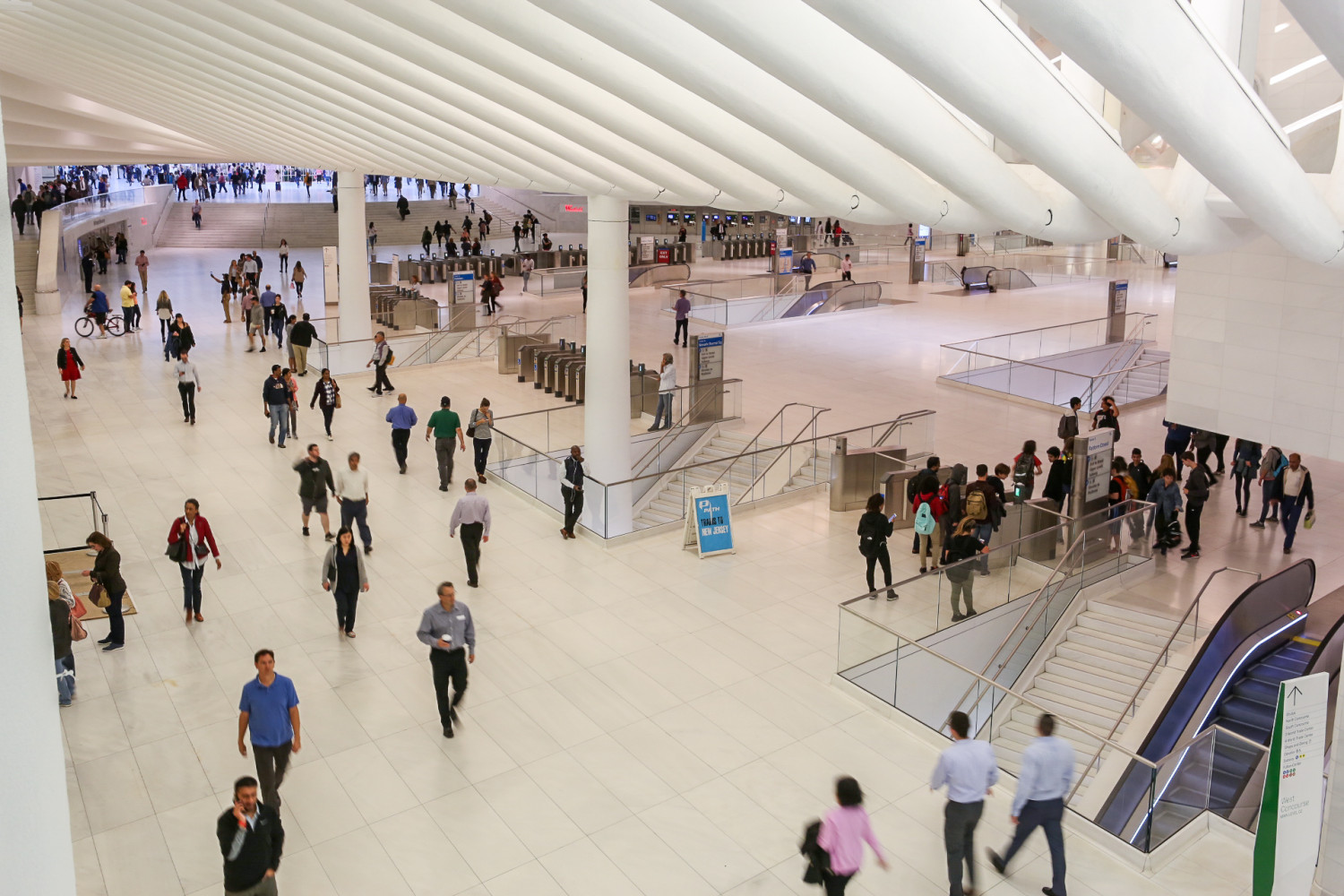
The Oculus structure is formed with two ribbed wings that canopy over the flanking sidewalks. Where they come together is an operable linear skylight, opened annually on September 11 to cast an uninterrupted stretch of light onto the white floor below. Inside the below-grade transit hub, these arches create a soaring elliptical public space, meeting the mezzanine as elegant L-shaped supports that create a totally column-free area on the lowest levels, occupied by shops, eateries and commuters making their way from trains to offices and back. The Oculus connects the PATH system with 12 New York City Metropolitan Transit Authority subway lines as well as the new World Trade Center skyscrapers.
Like in any great New York City space, the buzz is constant. However, Calatrava’s architecture simultaneously creates an oasis of calm. Throughout the day, sunlight casts playful shadows across the structure’s interior, but thanks to Calatrava’s signature color scheme the space remains bright and lively. Strolling under its exterior wings, large glass walls provide a bird’s-eye view of New Yorkers going about their day. Among Lower Manhattan’s field of reflective glass-and-steel towers, this striking building beckons. Once inside, it’s business as usual — and there’s certainly hope in that.
Places to Explore Around the Oculus
Saint Nicholas Greek Orthodox Church and National Shrine
Reopened in 2022 with a new design by Santiago Calatrava, this church is the last element rebuilt on the World Trade Center campus. The structure’s exterior is made of Pentelic marble, the same stone used for the Parthenon in Athens, and the ribbed stone-and-glass dome is illuminated at night. Situated atop a raised plaza, it provides a unique view.
- 130 Liberty St, New York, NY 10006
Printemps New York
In March 2025, this French department store found a home in New York City, occupying around 5,110m2 of space in the Art Deco residential tower, One Wall Street. Within an interior designed by Laura Gonzalez, the most spectacular space is the groundfloor Red Room. With 10-meter-high ceilings, it features the original 1930s red-and-gold mosaic.
- 1 Wall St, New York, NY 10005
National September 11 Memorial & Museum
On the former site of the Twin Towers, two waterfall reflecting pools honor the people killed during the September 11, 2001 attacks and a previous World Trade Center bombing in 1993. This powerful site of remembrance is accompanied by a museum documenting the events and their aftermaths.
- 180 Greenwich St, New York, NY 10007
Wall Street
Although the New York Stock Exchange itself is not open to the public, its 1903 building makes a significant impression from Wall Street, where the opening and closing bell can be heard every weekday. The iconic charging bull sculpture attracts visitors looking for a bit of good luck.
One World Observatory
Atop the new One World Trade Center building, designed by architect David Childs of Skidmore, Owings & Merrill, this observation deck offers spectacular panoramic skyline views of New York City from 381m above street level.
- 117 West St, New York, NY 10007
- Elizabeth Fazzare is a New York–based journalist
and editor who covers architecture, design and
culture for major publications including Architectural
Digest and Dwell. She studied journalism, art history,
urban design and architectural studies at New York
University.
- Written by Elizabeth Fazzare
- Photography by Alan Karchmer
- Korean Air operates direct flights between Incheon and New York 14 times a week.


