
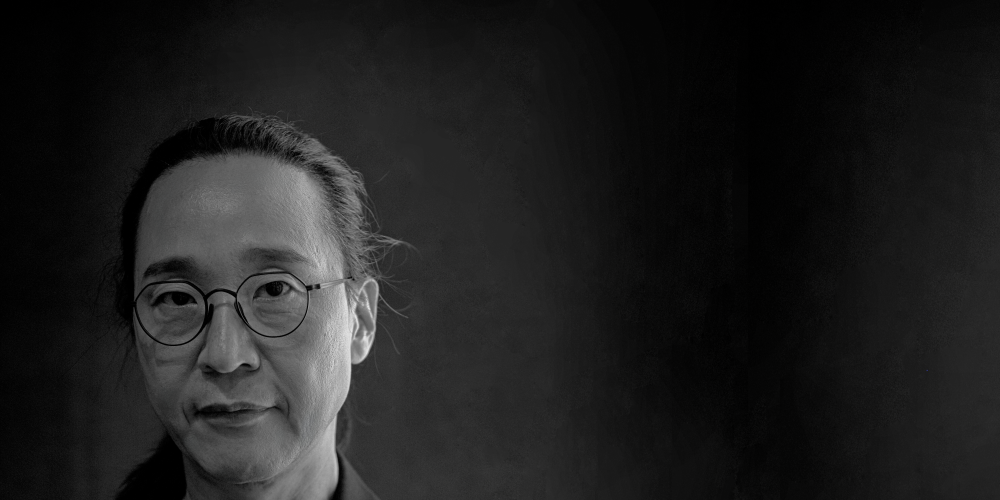
The Mind Miner, Song Gilyoung
In an era where change is the only constant and the massive wave of technology is blurring the lines between society and the individual, how should we approach our lives? We sit down with Song Gilyoung, a “mind miner” at the forefront of forecasting these shifts, who offers a simple yet profound answer.
The Rise of the “Lightweight Era”
Q. Following your previous concepts of the “nuclear individual” and the “named society,” you’ve now presented the idea of a “light weight civilization.”
Song⎮ The Sidae Yebo (Forecast of the Times) series usually comes out at the end of September each year, but this time, we moved it up by about two weeks. I felt that it needed to be published earlier because the pace of change has accelerated considerably. Many organizations will begin to try to “lighten” their structures by adopting AI, and in that process, individuals will need to prepare for a shift in their careers. So I wanted to get this message out, like a special bulletin, to alert people to this change just a little bit sooner. The “lightweight civilization” is a civilization where both organizations and individuals are preparing to stand on their own. As new tools like AI begin to take over a significant portion of our work, organizations will need to shed their bulk. And by the same token, individuals will no longer be able to rely on the organization for their security. It’s an era in which we must all develop our own capabilities.
Q. The three principles you present in the book regarding a “lightweight civilization” — “We meet now,” “We meet for a short time,” and “We meet again” — are fascinating. What is the meaning of the first principle: “We meet now”?
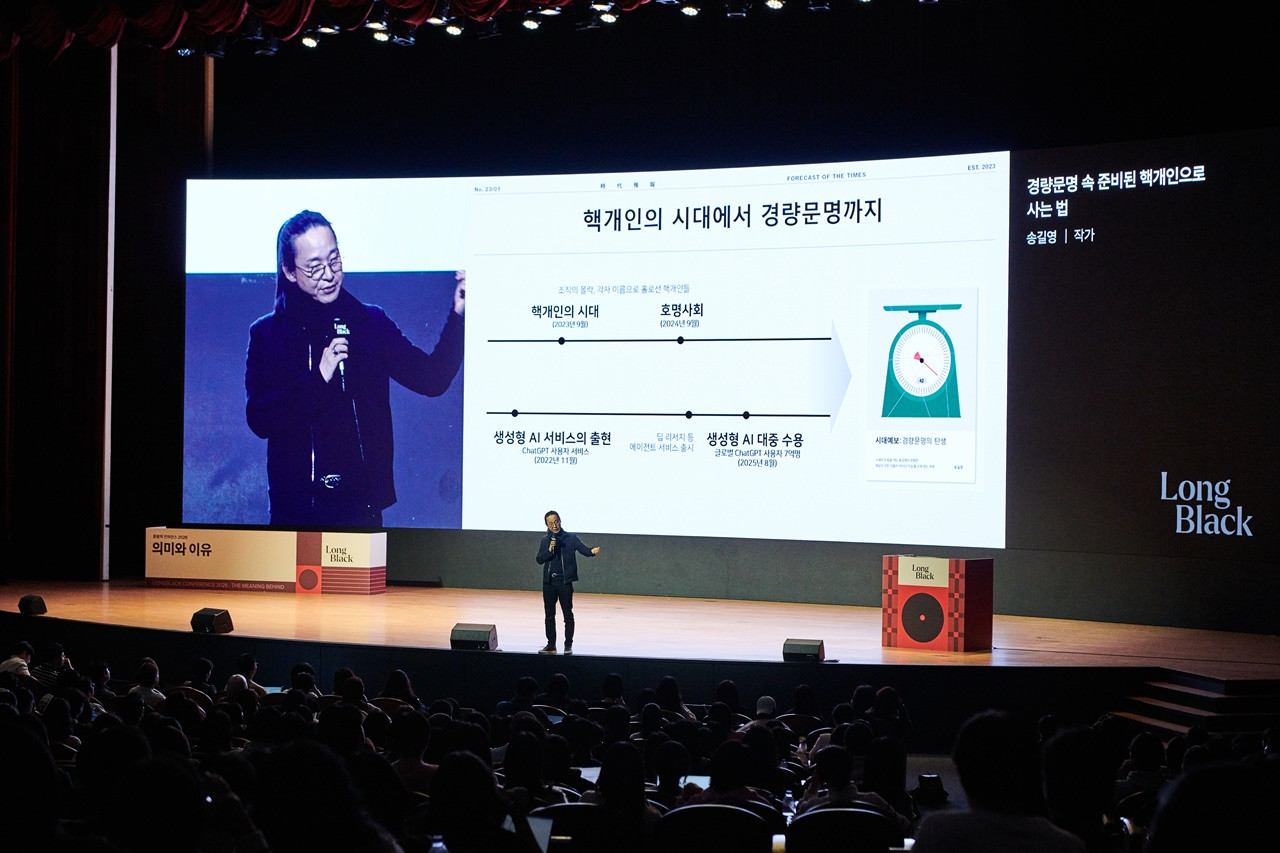
Song⎮ It means “only engaging with people who are prepared.” In the past, companies would hire through open recruitment and then train their employees. But these days, the job interview itself has become the place where you have to prove your professional competence. We are seeing a global shift away from giving opportunities to newcomers, and a growing preference for seasoned professionals whose skills are already augmented by AI and other tools.
Q. How do the principles of “We meet for a short time” and “We meet again” signal a change in the way we work?
Song⎮ We used to work together in one department for up to three years at a time, but now, we gather for a project for maybe three short weeks, give it our all, and then disband. This is what I mean by “We meet for a short time.” “We meet again” means that while the old, sticky bonds of the organization are disappearing, an individual’s personal reputation is becoming paramount. To be the kind of person others want to collaborate with again, you of course need to be skilled, but you also have to have an attitude of kindness and consideration. Put simply, you have to be kind.
How to Navigate an Age of Uncertainty
Q. The development of AI has been truly astonishing. If you had to pick a single keyword for us to focus on in the new year, what would it be?
Song⎮ First, AI. Second, AI. And third, AI. And
this isn’t just a Korean thing; it applies all around the globe. Just last year, AI’s intelligence might have been under 100 on an IQ scale, but now it’s over 130. It’s over-whelmingly superior in terms of efficiency, so our lives and careers will inevitably be restructured around AI.
Q. A lot of people are anxious about AI taking
their jobs. From your perspective as a “mind miner,” what is the most realistic way to deal with this anxiety?
Song⎮ First of all, we’re right to be anxious. The entities we collaborate with are no longer necessarily human. AI doesn’t sleep and it doesn’t complain. So you have to stop thinking of AI as a competitor. You need to develop the mindset of a manager, one who can delegate tasks to AI and then curate and finesse the outcomes. But the anxiety is also a signal that you need to start preparing for whatever changes might come. The most important thing here is to redefine the notion of stability. People used to think that if they reached a high position, like an executive position, they would achieve some degree of stability. But the truth is, the higher you climb, the more unstable your position becomes. Stability isn’t a position; it’s a state of mind. It’s being able to leave your current job and know that you can always do something else. Anxiety will only disappear when you’ve achieved your very own state of sustainability.
Q. You’ve said that the era of mass employment is coming to an end. If so, how can individuals survive?
Song⎮ You have to find your own essence: the thing you genuinely love, your unique interest. When you combine that with AI technology, you’ll be able to function like an organization, even if you work all by yourself. For example, in the past, if you wanted to create something, you needed a separate design team, a video team, a development team. But now, with tools like Canva and Sora, a single individual can handle the entire creative process. That’s why you can’t be efined by your role or your sense of belonging within an organization anymore. You have to discover and pursue what it is you truly want to be. This is no longer a choice; it’s a necessity.
Q. In an era where technology is rapidly changing the roles we take on as humans, do you believe there are still things that only humans can do?
Song⎮ Of course. I devoted an entire chapter of my book to this idea of “things that will remain the same,” because I believe that uniquely human work will always exist. Things that require a long accumulation of experience and wisdom — what you might call “the work of the heavens,” “the work of time” and “the work of the earth” — these types of work won’t easily be replaced. There will also always be areas that involve an experience or the provision of a service where we want it to be offered by a human being, not a machine. If you can build up your own deep experience and aesthetic sense in these areas, there will still be plenty of work opportunities for people, even as technology replaces many other things.
Discovering the World Within You
Q. It seems it’s become more important than ever for everyone to have their own stage.
Song⎮ That’s right. Look at all the people who
have taken up running these days. They track their progress on an app, share it on social media and cheer each other on. People are moving away from the Squid Games-like narrative, where you’re finished if you lose out on a promotion. Instead, they want to grow at their own pace, on their own stage. This is proof that our society is maturing, moving from a focus on competition to a deeper appreciation for each person’s life
Q. Do you have any advice for those who still don’t know what they like or what they should be doing?
Song⎮ I’d say: Don’t do what other people tell you to do. Those things are usually just passing rends. As I said before: Do what you genuinely love. If you don’t know what that is yet, now is the time to think deeply about it. We live in a world where an 18-year-old kid can make music in their bedroom, distribute it to the whole world and make a living from it. I want to tell people that even if it seems small at first, if you stubbornly stick with what you love, one day you will make a name for yourself.
Q. That sounds like advice from someone who created their own job title of “mind miner.”
Song⎮ Does it? In the early days, I can’t tell you how many times people asked me: “What on earth is a ‘mind miner’?” But I spent over a decade defining my own existence and being active in my chosen field, and now people accept it as perfectly natural. The only reason I was able to persevere along this path was because I genuinely loved this work. When you do something you love, you have the strength to keep going even if you don’t see results right away. And eventually, there’s a good chance that it will become your true vocation.
Q. Can you share a one-sentence forecast for the readers of MorningCalm as they head into 2026?
Song⎮ “Do something, anything.” The future is already here, and this wave of change is an unstoppable current. The key is not to just get swept away, but to use AI as a tool to create your own unique value. This light weight civilization can be, paradoxically, a heartfelt civilization, a world where anyone’s dream can become reality.
- Written by Han Milim
- Photography by An Woongchul
- Venue courtesy of ROYAL&CO. HOUSE


