
A Gentle Lag
MorningCalm presents Omnibus Story, a series of creative works that infuse everyday themes with the language of insight. We hope that each piece, brought to life through the contributions of multinational and multidisciplinary experts, will spark novel ideas and conversations, both during your flight and long after you’ve landed.
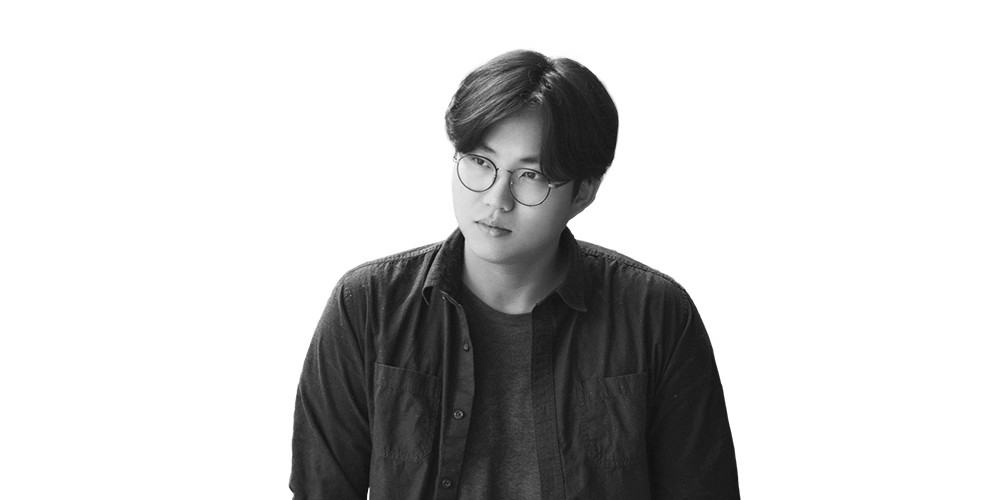
- The poet Park Joon occupies a truly unique place in the landscape of Korean literature. He is known for his deeply lyrical poems, where memory and imagination gently intertwine, and for his warm, compassionate prose that soothes the quiet ache of loss and death. His first collection of poems, For Days, I Survived on the Name I Gave You, became a bestseller, affirming the universal appeal of his voice. His subsequent collections have earned him numerous literary awards, with critics remarking that his work seems to carry “the DNA of Korean poetry’s long and beautiful history” — a kind of shared aesthetic soul passed down through generations.
1. Seoul
There are times when the very act of thinking feels like a chore you’d rather put off. Times when, instead of moving forward like you’d hoped, you just feel stuck in place. Or worse, not even stuck — you’re lost, sinking into invisible quicksand. The only moments that greet you with a friendly wave are the ones you want most to forget. You find yourself sleeping when you aren’t tired and eating when you aren’t hungry. You try to dodge familiar faces, while the strangers you meet remain just that: strangers. You find yourself collecting sharp glances, keeping your heart guarded. You admit to not knowing things, but you also pretend not to know the things you do. Day by day, your own words begin to feel thin, brittle. And right at the end of all that anguish, the idea of a journey appears. You search for a place to go because you feel you have no choice but to leave. Or maybe it’s only when the desire to leave becomes absolute that you finally begin to look for a destination. I’ve come to think that a journey is about creating just enough distance to remind yourself of what’s worth keeping close. After all, you have to leave to be able to come back.
Neighborhood
I am getting my hair cut in a town I don’t know. A man who came in before me sits in the mirror’s frame. The barber asks if I can wait a bit. I nod, with a little smile. Sunlight, sheared into pieces, tumbles across the afternoon floor. When he asks if I’m from around here, I tell him I live nearby. I’ve decided, from now on, to stop calling the place I’ve left “far away.”

2. Busan & Jeju
Many days have passed since I was in Busan. This is a city that stays the same by always changing. And it’s only now, here on Jeju Island, that the moments from that trip come back to me. Maybe it’s the sound of the waves. Sleep in northern Jeju is especially sweet — a slumber that feels truly restful. I slept deeply again tonight, just as I did then. So deeply that when I awoke, I couldn’t tell if two hours had passed or several years. All I knew was that when I opened my eyes, I was still in Jeju. And thinking about it, maybe I’ve always been in Jeju. I’ve passed through times of not being here, yet here I am again. But tomorrow, I have to let Jeju’s gentle rhythm go. I wonder if writing this can anchor, just for a moment, the unsettled tremor of a coming departure. I revisited Gwaneumsa Temple; there’s much more gold now. I still liked it. It felt like a place to leave your troubles. At dawn, I had to go to the emergency room. In the bed next to me, someone was watching over a patient, and the caregiver looked worse than the patient. I was alone. A high fever. Just as my IV was nearly done, an old man arrived. He’d been in a small car accident near the Bijarim Forest. He was on the phone for a long time. I decided not to write down what he said. I have a feeling that if I ever need to recall that story, my future self will remember it perfectly.
Oreum (Volcanic Cone)
Only when I was deep in the mountain valley
did the mist finally open its arms
to the light and to me
Straight down to the west
there’s a village of the Hong clan
where a great sickness passed through long ago
And near the coast
there are places where people killed other people
Even on the road into town
you couldn’t take your eyes off the new spring green
The truth is, this path — its flowers now gone
and its fruit now set
I have walked before with someone else
Once the hydrangeas were in bloom
Another time it snowed
I wanted to tell you
there was a wide pasture nearby
but you were walking right through
a landscape of my memory and your steps were quick
always so quick

3. Denpasar
I used to play a game called Prince of Persia. The goal was simple: rescue your beloved from a faraway
castle. I remember the clunky graphics on our old IBM, the endlessly looping music. The controls were just as simple: you ran, leaped over traps, scaled walls and fought off enemies on your way to the top. After many adventures, as I neared the final tower, I hit an impasse. A chasm appeared, wider than any I had faced. No matter how perfectly I timed my jump, my hero always fell short, plunging into the darkness. I eventually quit playing, never figuring it out. Then, years ago, I was reading a book about video games, and I finally learned the secret. The trick to crossing that chasm wasn’t to jump farther, or higher or to run faster. It was simply to walk. Just walk, the book said, and a bridge would appear from thin air. A journey, in its own way, is a lot like that. Last winter in Bali, I just walked. My phone said I took thirty thousand
steps one day. And thankfully, with every step I took, a path unfolded before me. And life, when you think about it, is a lot like that, too.
On the Way to the Bathhouse
The old monks who haven’t left the temple grounds
since the full moon last October
are making their way down the long hill
Like young boys learning a prayer for the first time
faltering, haltingly, they go on

- London
The best part about making a living as a writer is the freedom. You aren’t tied to a specific time or place. You can write in a café or restaurant, or on a plane or train. Sometimes on a laptop, sometimes in a tiny notebook. But this freedom is also a trap. Being able to work anywhere, anytime, soon becomes the pressure to work everywhere, all the time. I’ve found myself writing poems on lurching buses and taxis, fighting a wave of headache-inducing nausea. I’ve sat on a sunbed by a hotel pool in the middle of the day, or on a beach waiting for sunset, tallying up a word count for a column or essay. A few years ago, I took a longish vacation to London. But I had to meet an upcoming deadline for a collection of essays, so my memory of that trip is mainly of the white walls of my hotel room and its small window. It might be surprising, but I almost never write about the things I actually see and do on my travels. Let’s say I travel to the Arctic and I’m lucky enough to see the northern lights of the aurora borealis. I’m sure it would be beautiful enough to bring me to tears. But I just don’t have the skill to describe it without making it sound smaller than it is. Even if I wrote it down perfectly, that awe would be my experience, and mine alone. I can just imagine the reactions: “How nice for you. I’m envious. So, you’re doing well enough to see the aurora these days? But what’s the big deal about some lights in the sky?” What I can write about, with confidence, is the feeling of a quiet evening in a restaurant I discovered in a new city. I’m there, eating alone, as usual. A little before the kitchen is about to close, a young person sits at the table next to mine. They look around nervously, and as soon as their food arrives, they start eating with a desperate sort of hunger. This is the sort of scene I can write about. Because that feeling of having to eat while being chased by time, by the world, by your own emptiness — everyone has felt that. The things that are truly precious and beautiful in this world aren’t found only in one special place. They aren’t absent, either. They are, in fact, everywhere.
Full of Names
Soon
the day will grow dark
To turn and look back on an empty road
is to make the path you’ve walked the path you must walk again
but today I’ll set my backpack down right here
its edges frayed from the journey
The people here
love primary colors
and come early evening
the bowls on their shelves
will start to give off their own humble light
By then of course
night will be falling where you are too
And even if it’s not night there are always
other things — hunger, a sigh, a sudden worry
that have a habit of showing up early

5. Tokyo
Last summer, I was in Japan for back-to-back events celebrating the translation of my books. I was so grateful to meet readers who were connecting with literature from another language. After my last event in Tokyo, I went to a bookstore and bought a few books of Japanese poetry. Books I couldn’t read, of course. Still, I used a translation app on my phone and went through them, line by line. It was hard, but it wasn’t an unpleasant kind of hard. Because the challenge isn’t just about the imperfect nature of translation. A deeper, more profound kind of difficulty arises the moment any human thought or feeling is clothed in the garment of language. It’s not about translating language; it’s about translating how one feels. I’ve studied literature, written poems and worked as an editor my whole life, but even for me, poetry is still hard. It’s a very particular kind of hard. It’s made of simple words I know; it has no complex philosophical terms, yet I can finish a poem and feel completely baffled by it. And it’s not just poetry and literature. I feel this same bewilderment in front of all kinds of art, often scratching my head at a classical music composition or an abstract painting. Actually, I feel this way about all of life’s most important things. People, especially. You can have a friend you’ve known forever, a family member you grew up with, a person you love with your whole heart, and still not understand them completely. You know their history, their hopes, their habits, but then they’ll say or do something that makes absolutely no sense, and in that moment, they can feel more distant than a stranger on the street. Love is like this, too. You feel it so powerfully, but good luck trying to explain where it came from or why. You love someone for the ways they’re just like you, and you love them for the ways they’re completely different. Without any warning, any logic, you fall in love. And then one day, the love that felt like the sun can just fade. You get annoyed by the ways they’re like you, and annoyed by the ways they are not. An intense passion can be extinguished in an instant, also without any warning. The way we face a confusing poem or painting is the way we face other people, and ultimately, ourselves. We can turn away, our faces hard and closed. Or we can approach with honesty, admitting one simple thing: we don’t understand. Art, people and love are not subjects you can master. You can’t just memorize them once and be done with them. So maybe this difficulty, this not-knowing, is the most natural thing in the world. And so, I ask you not to feel alienated or afraid. If you don’t understand something right away, you don’t have to dismiss it or push it away. The important thing is to simply keep alive the desire, the willingness to understand. To keep it close, and to look upon it from time to time. If you do that, you’ll find there are moments when your vision suddenly expands and grows brighter. That is the birth of perspective. The moment when the world in all its strangeness, the other person, and the self, standing before it all, clicks into a single, sharp, unique focus.
6. Seoul, Again
There’s a particular airport scene I love. An airport isn’t just for those coming or going. For every person returning, there is someone there to welcome them home. For every person departing, there is someone there to see them off. People helping with bags, pulling suitcases, whispering a final, gentle stream of loving advice. I love to watch those who have just finished waving a big goodbye as they linger for a moment in their seats before finally turning to leave. And I love the sight of those waiting for arrivals, standing restlessly before the flight board, their eyes blinking, endlessly waiting. And just like that, the gentle lag, a kind difference in our times, intersects once more.
Love in a Dream
The sweater I bought you this time — wash it once and hang it by the window. Whatever they say, sunlight is best. But why did you have to pick white? It’ll be such a hassle, always staining, and it’ll look old after a few wears. Still, it was so pretty, like a cloud. The new batch [kimchi] is a bit bland, so eat it up quick. If you have any left over, have your friends over, add some oil, and fry it up. And, once in a while, drop your father a line, will you? Just stopping by on your way back from seeing me — it’s not the same thing. So what if the house faces west? It still gets sun, just a little later in the day. Anyway, it’s such a long, long way. Just think of it as a nice nap. With your eyes wide open, even a familiar destination feels impossibly far. Take care, now. And next time, don’t you come here. I’ll come to you.

- Written by Park Joon
- Illustration by Da An


