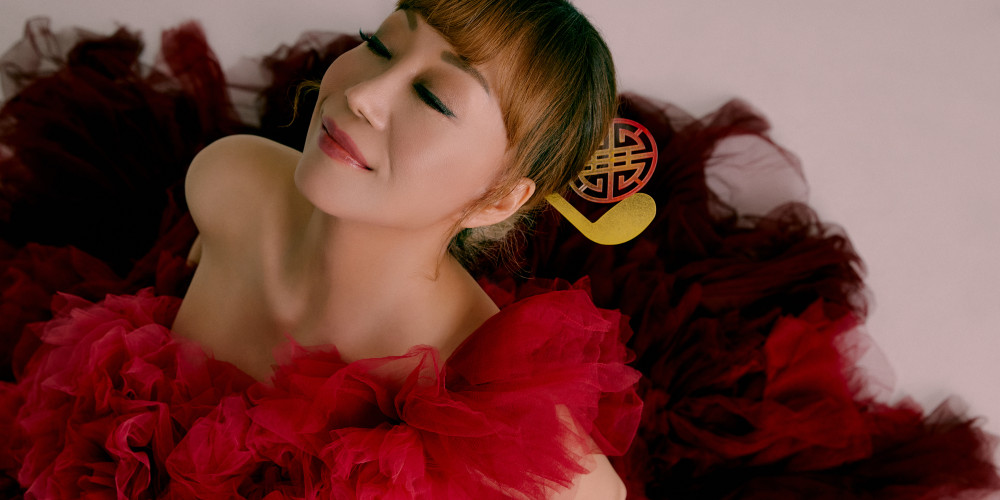
Soprano Sumi Jo: A Voice That Reaches Hearts Around the World
The internationally revered soprano Sumi Jo recently celebrated yet another distinguished accolade, being elevated to the rank of Commandeur in the French Ordre des Arts et des Lettres — the order’s most prestigious honor. Often described as a “once-in-a-century gift to humanity,” Jo has consistently burnished the reputation of Korean classical vocal artistry on the global stage. MorningCalm had the distinct honor of speaking with Sumi Jo about her extraordinary musical odyssey and her vision for the journey still to come.

Q. After decades of gracing the world’s stages, you still describe yourself as someone who is continually “learning and embracing new challenges.”
I always thought of myself as “a work in progress.” Though I’ve had the honor of standing on countless stages in cities across the globe, a tremor of anticipation and a touch of fear still accompany me each time I step into the spotlight. Paradoxically, this very tension is the wellspring of my ability to continue singing. The moment an artist feels they’ve reached their artistic peak, their growth ceases. This unending voyage of self-renewal on stage is the true path I must preserve as an artist.
Q. Since embarking on your studies overseas in 1983, you have carved out an unprecedented path as an Asian woman in the predominantly Western world of opera.
In the 1980s, the very idea of a Korean woman, barely past 20, assuming leading roles on the illustrious opera stages of Europe was almost beyond the realm of imagination. Having to account for my appearance or nationality before my musical abilities could even be assessed forged within me a profound sense of purpose.
The most potent force enabling me to surmount those formidable barriers was an unshakable faith in the music itself. When I stood humbled before the majesty of my chosen art, the ambient prejudices and my own fears seemed to dissolve, losing their power. Looking back, I now perceive that those obstacles were not mine alone to overcome; they were, in a sense, gateways for those aspiring artists who would follow. It is my fervent hope that the path I’ve walked might serve as a wider, more welcoming road for them, allowing their unique voices to find communion with the world.
Q. With initiatives like the Sumi Jo International Singing Competition, launched in 2024, you continue to engage in diverse collaborations with emerging artists. If there is one quintessential piece of advice you wish to impart, what would it be?
“Have no fear of your ‘voice.’” This counsel extends beyond the mere physical sound of a singer; it is an exhortation to believe in and fiercely protect. The international arena, for all its allure, can be an exacting and ㅣonely place. I’ve also felt my resolve waver at countless junctures, navigating moments of self-doubt that tested the very limits of my conviction. Yet, ultimately, the anchor that kept me afloat was the authentic voice that welled up from within — a voice beholden to no one, a true emanation of the self. While technical mastery and skill are undeniably crucial, I believe the artist’s most compelling strength lies in their core — that deep, heartfelt desire to move the human spirit.
Diverse Avenues, Stages Without Borders
Q. Your contributions extend far beyond your musical career, encompassing significant roles as a UNESCO Artist for Peace, a fervent advocate for animal welfare, a supporter of disability rights campaigns and a dedicated mentor to rising artists.
I don’t believe our voices should resonate solely within the confines of a concert hall. On the contrary, I am convinced that an artist’s true voice achieves its most profound reverberations when it engages with the wider society. During my years performing in Europe, the gaze of children affected by war and displacement stirred within me a keen awareness that simply singing was not enough. Then, there was an unforgettable encounter with an audience member who was hearing-impaired; she shared that she had “heard my sound” through its pure vibrations. This was a revelation — the power of music transcends the mere arrangement of notes and rhythms.
The love bestowed upon an artist must ultimately flow back to benefit society. Music is a universal language, effortlessly transcending boundaries and ideologies. As a person entrusted with this language, I want to continue to embrace the responsibilities it entails. I truly believe this is the highest purpose of the voice I’ve been given.
Q. Your appointment as a visiting distinguished professor at the KAIST Graduate School of Cultural Technology in 2021 appears to have broadened the canvas of your activities even further.
For someone whose life had been solely devoted to song, working with KAIST brought me face-to-face with cutting-edge technology and helped me to see how the future of art is evolving. It prompted me to think about the future of art from perspectives well beyond the familiar stage. My explorations into the synergistic potential between art, science and technology culminated in the establishment of the Sumi Jo Performing Arts Research Center within the institution. The Center is currently a place for interdisciplinary innovation, spearheading projects such as the AI-driven analysis of classical vocal techniques and pioneering experiments with futuristic performance modalities incorporating virtual reality, augmented reality and digital humans — all with the objective of creating a new performance language for generations to come. Within this dynamic environment, I share the fruits of my artistic journey, mentor the inventive endeavors of students and researchers, and together, we seek out new pathways. It’s an immensely thrilling prospect that the experiences I’ve gathered on stage are now fueling new explorations at the very intersection of art and technology.
Q. Given these exciting developments, what considerations do you believe are essential as we envision the future of the performing arts?
In this era of breathtaking technological leaps, I find myself increasingly pondering a perhaps counterintuitive question: “What must remain unchanging?” The performing arts of tomorrow will undoubtedly assume forms quite different from those familiar to us today. Yet, I profoundly believe that human emotion and authenticity must endure through every transformation.

Ever-Evolving Diva
Q. What captivating performances and projects can we anticipate from you in the near future?
A This summer will mark another significant inflection point in my musical odyssey. Beginning with an opera gala concert in mid-June, featuring the brilliant laureates of the inaugural Sumi Jo International Singing Competition, I’m preparing for a series of truly meaningful stage engagements across Korea, other Asian nations and Europe.
Above all, the year 2026 resonates with a very special personal significance. Marking the 40th anniversary of my international debut, it will see the official launch of a major global endeavor: Sumi Jo Festival: vocalNATION 2026. A particularly cherished event will be a special recital on September 4, 2026 at the Seoul Arts Center, held in celebration of this four-decade milestone.
Q. What does the future Sumi Jo aspire to be? If you were to describe your life as a journey or a voyage, what new horizons beckon?
I choose to remember my life not as a series of career achievements or a catalogue of accolades, but as a “pilgrimage of the voice.” I’m often asked to recount the most memorable moment from my life as a soprano. It was the quiet, unassuming words of an audience member who approached me after a performance, sharing simply, “Your song helped me get through the day.” That single, heartfelt sentence has time and again been the force that draws me back to the stage. Ultimately, I believe the artist’s true calling lies in connecting with others through one’s voice.
The Sumi Jo of the future aspires to be someone who offers messages of hope and inspiration to the world. Even if not always manifested upon a physical stage, I intend to continue this voyage through other means, weaving connections between music and people, technology and time and cultures and languages. Perhaps the ultimate destination is not some far-flung, predetermined place, but rather, the hearts of the new souls I have yet to encounter. Because that passage towards their hearts remains incomplete, I stand here today, as ever, ready to sing.
- Sumi Jo is a globally celebrated prima donna who broke new ground as the first Asian woman to win six major international vocal competitions and perform leading roles at five of the world’s premier opera houses. A graduate of the renowned Santa Cecilia Conservatory in Italy, she has become a symbol of artistic excellence on the global stage.