Listening to the City
MorningCalm presents Omnibus Story, a series of reflections drawn from the landscapes of everyday life, explored from diverse perspectives. Our hope is that these narratives linger as seeds of inspiration, blossoming throughout your journey when you least expect them.
- Daniel Lidemann is a German-born Korean TV personality with an academic background in Korea studies and international relations. He rose to public prominence in 2014 as rhe representative for Germant on the JTBC panel show Non-Summit. Lindemann is also a pianist and composer who has released full-length albums of his original music.
The Art of Listening

I once heard the saying that everybody sees the world through different eyes. Depending on your job, taste or longtime interests; the same seascape, the same city streets — even the same restaurant can leave an entirely different impression. One person’s eyes linger on a city’s architecture, while another recalls the voices and expressions of people passing by. Then there are those who put on a playlist of favorite tunes whenever they stroll through an unfamiliar city. That’s the kind of person (like myself) who understands the world through music. I’ve long viewed the world through the lens of music.
In fact, music accounts for a major part of my life. Since my appearances on Korean broadcasts have brought me where I am today, many are inclined to still think of me as a TV personality. Few know how much time I’ve devoted to music over the years. Music began as a hobby in my childhood, but more recently, it has become a guiding force in my life. While recording piano pieces, preparing for concerts, and meeting people in the performing arts, I, too, have gradually begun to change.
I used to always be on my guard. I was constantly aware of how other people might see and judge me — about the undercurrents in relationships and the standards I’d set for myself. I was ever watchful of what was happening around me, afraid I might miss out on something. Deep down, I was haunted by an anxiety I struggled to explain. That was partly because, as a celebrity, I felt an incessant need to prove myself.
But as I began immersing myself in music, my perspective on the world changed remarkably. I felt tension loosening and calm returning. Was that just part of getting older? Sure, that was one factor. But music has given me a sixth sense, so to speak. Listening to sounds has become a way of ultimately listening to the world. The voices of people, the rhythms of the city, the rush of the wind and the streets — they all started to sound different from before. So when I get ready to travel, I make sure to pack that sixth sense that music has bestowed. That way, wherever I go, I have my own way of listening to the city.
On the day I was bound for Nice, a city in southern France, I was in the window seat of an airplane as usual, watching the clouds drifting by. The air was suffused with sunlight glittering on the waves of the Mediterranean far below. My wife and I were planning to spend a few days in Nice and its surrounding towns. While the area is not so far from my home country of Germany, I had strangely never given the city a proper tour. That made me even more curious about what kind of views I could expect there. But there was something that intrigued me even more. What kind of sounds would I encounter there?
A Playlist Modeled After France


Nice was a more charming city than I’d expected. The aroma of fresh bread wafted through the little streets in the morning, and sunbeams slid down old walls. As a tourist, my eyes and nose had plenty to take in; as a musician, my ears rejoiced. Seeing the beautiful buildings, smelling the delicious dishes, and the endless rhythm of runners on the beach brought an inexplicable urge to listen to bossa nova. A bit random, I suppose. But strolling in that sea breeze, I suddenly had the feeling that a bossa nova melody plucked on a guitar would perfectly fit this (obviously non-Brazilian) city. A few chords and a simple rhythm would capture the city’s soul.
Bossa nova was born from the seaside culture of Rio de Janeiro, Brazil. With husky crooning and jazz chords set to a samba rhythm, the genre could be described as a subdued summer sound, too cool to be hot. The first time I heard bossa nova, what I noticed was not its temper but its temperature. It’s the kind of music that changes the mood without ever overplaying its hand. Perhaps that’s why, for some time now, I’ve been reminded of bossa nova whenever I visit the seaside or a sun-drenched city. Music is birthed in specific countries and then categorized into genres, but we end up rediscovering it somewhere else altogether.
In the village of Villefranche-sur-Mer, near Nice, I parked my car near the beach and took a long walk. After a motorcycle roared by, the noise of vehicles faded, leaving only overheard fragments of a leisurely conversation to wander in the wind. Laughter rose from servers playing pranks, and a car passed by in the distance as the noise of the beach swelled in a slow crescendo. From a tiny whisper, the urban rhythms rose to a mezzo forte (moderately loud), filling the air around me. Simply standing still felt like listening to a perfect symphony.
A short drive east is Èze Village, a beloved tourist destination. In this wide-open landscape, the exotic garden at the top pieces together sea, hills and antiquated houses into one stunning panorama. The view of the Mediterranean peeking between the cactuses remains familiar without losing its luster, like a pop song that stays popular down through the years. It soon becomes clear why crowds of tourists insist on revisiting the place.
The song that came to mind here was Summer Soft. The silky-smooth keys and rippling rhythms of R&B wizard Stevie Wonder bear a curious resemblance to the midsummer zephyrs wafting through Èze Village. The song appears on Songs in the Key of Life (1976), a monumental album that effortlessly navigates the genres of jazz, soul, funk and Latin music. Stevie Wonder’s ceaseless search for new rhythms and sensations unconfined to any one genre is a welcome reminder that the piano is an instrument that can open portals to completely new worlds. That’s because the art of music relies more on feeling than on form.
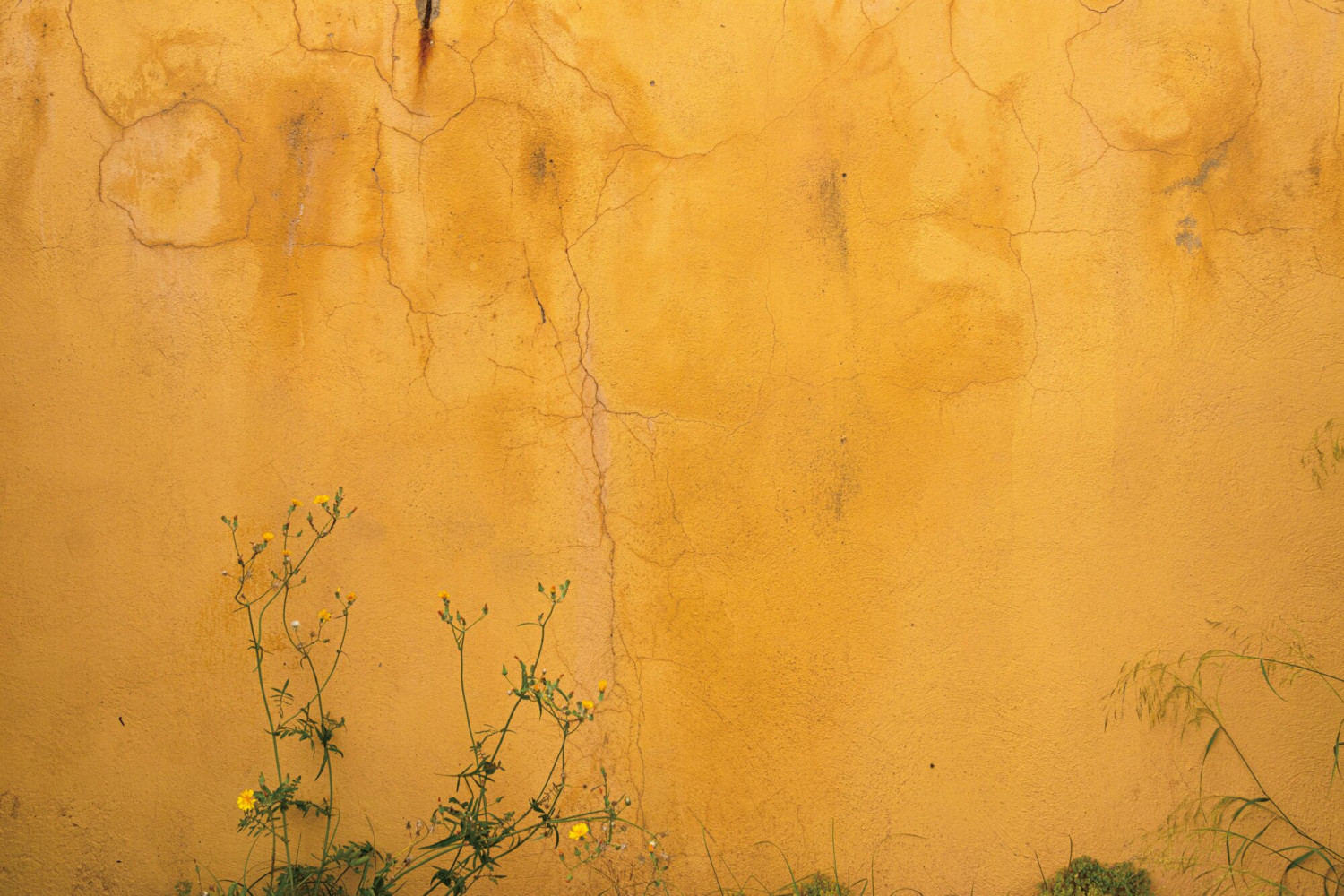
The final spot on our tour is the town of Menton, which could well be described as a living, breathing oil painting. The colors of the buildings here are unlike anything I’ve seen elsewhere. The facades stand out in yellow ochre, the first hue I notice, along with a range of pastel tones faded by centuries of exposure to the baking sun and the salt-laden sea breeze. Far from gaudy, these washed-out colors linger like the languorous afternoon sunshine. Such colors remind me of funky tracks like Chameleon on electric jazz icon Herbie Hancock’s 12th studio album Head Hunters, released in 1973. In the streets here, I can feel the tasteful pressure sustained, but not strained, by Hancock’s impeccable grooves and poise. His steady layering of synths above a minimal baseline also resembles Menton’s laid-back vibe.
Among the town’s not-to-be-missed spots is Les Rampes Saint-Michel (or Saint Michael’s Ramp). The iconic staircase leading to the Saint-Michel Archange Basilica begs to be climbed so you can appreciate the contrast of the warm yellow hue against the brilliant blue above. My wife and I were among the countless couples that have taken a snapshot there. Continuing up the stairs, we reach narrow alleys without any sound at all. The buildings here seem to be peering down at us, just as trees watch a traveler ambling through the woods. A song fit for these silent alleys is Claude Debussy’s Ballade (1890).
The Travels of a Pianist

People sometimes assume that if you’re a pianist, you must be constantly listening to classical music. But for me, music isn’t a genre to follow but a way of understanding the world. That’s why I make a point of listening to a wide range of music when I go traveling. On some days, it might be jazz or bossa nova, or I might have old French pop songs or electronic music playing on repeat. Simply put, the important thing is not the genre of music but the way it permeates a space and lets me hear its emotional overtones more clearly.
Indeed, such experiences have grown increasingly important as I spend more time working with music. While I used to concentrate on the craft of playing the piano, I now spend more time examining the relationship between sound and space: footsteps in an alley, voices mingling in a café, and the rhythmic crash of waves on the shore, to give a few examples. Over time, those moments are integrated into my playing in surprising ways. They can lead to changes in the tempo of my extemporizing or my choice of chords. What I’ve gradually come to realize is that in the end, music isn’t only made in the studio — it’s slowly shaped in our lived landscapes and cherished memories.
This trip will be one I long remember. I expect the light and wind I encountered in Nice and its neighboring towns, as well as their measured rhythm, will someday return in the form of melodies at my fingertips. I mean to weave those memories into a musical composition, and I’ve already thought of a title: Memories in Blue.
“Blue” here is not the color of sadness, but a nod to the moments I spent gazing upon the Mediterranean Sea. Each day, the sea at Nice passes through myriad shades of blue. In the morning, its limpid waters approximate the pale blue of the sky. At sunset, they slowly sink into a navy blue splashed with violet. But strangely enough, those colors feel warm rather than cool. I’ve long considered blue the most emotive of colors. Simultaneously embodying silence, longing, peace and depth, they overlap with the emotions evoked by this trip. Rather than flashy or forceful impressions, it was a time of patient moods and rhythms, laughter and sunbeams, and wind on the waves. Those are all things I plan to fold into my composition so I don’t forget them.
This trip may be over, but I know that someday, I will find new rhythms and melodies in another city. And each time I do, I’ll sit down at the piano to translate those memories of travel into a song.
- Written by Daniel Lindemann