The Eras of BAE CHULSOO
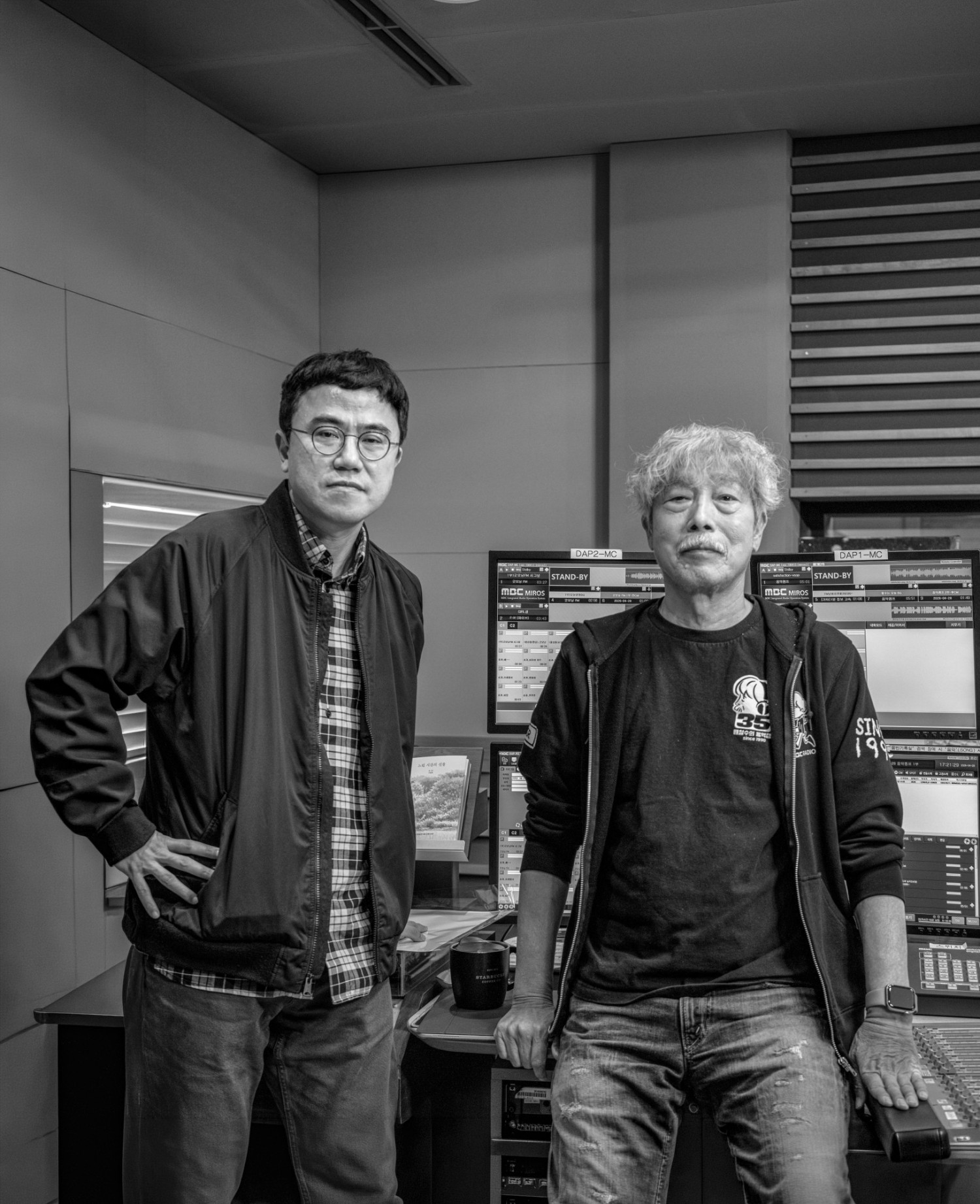
Leader of the band Songgolmae and host of Bae Chulsoo’s Music Camp for 37 years, Bae Chulsoo spent decades sound-tracking the evenings of a nation. Recently awarded the Lifetime Achievement Award at the Korean Music Awards, he stands as a monument to Korean pop culture history. Music critic Bae Soontak sits down with him to look back on the past decades of a musician and radio DJ who chose personal taste over fleeting trends.
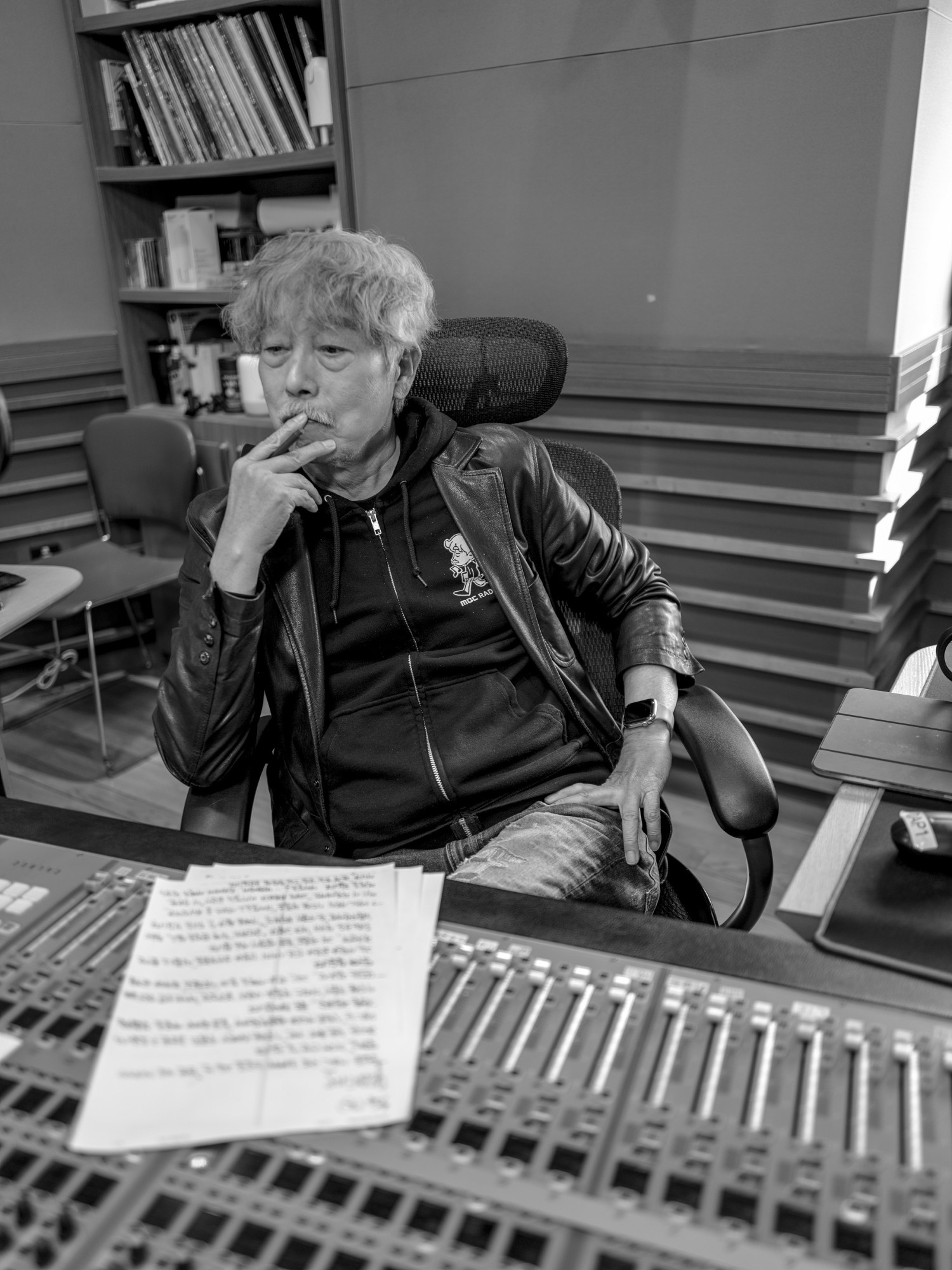
Q. You’ve hosted this show daily for 37 years now. You always say, “I’ve just been lucky to have lasted this long,” but occupying the same seat for nearly four decades is something that transcends mere survival.
It doesn’t feel like anything extraordinary. Doing radio for so long, my life has taken on the shape of the broadcast. It’s just been a steady accumulation of days. There are moments when the line between myself and the radio blurs entirely — my schedule, my whole life revolves around it. To others, it might look like some remarkable trajectory, but for me, it’s simply what I’ve always done.
Q. But you weren’t an overnight success on the radio. In 1980, your very first stint as a DJ lasted only six months, and it was a decade before you returned. I often think that early failure was actually the experience that forged your longstanding success with Bae Chulsoo’s Music Camp.
I suppose I learned from failure. Back then, I had no real standing, and more than anything, I let myself be swayed by the voices around me. One word from the director, a comment from the producer, a passing
remark from a colleague — pretty much everything rattled me. I lacked a core standard. I was like a reed bending this way and that way in the wind, which is why I was off the air in just six months. So when I stepped back into the booth, I made a solemn promise to myself: This time, I’ll do it my way. Even if I get fired, I’m going to lay all my cards on the table. It seemed far better to go down showing people who I truly was than to fail while trying to imitate some idealized version of a DJ.
There are moments when the line between myself and the radio blurs entirely — my schedule, my whole life revolves around it. To others, it might look like some remarkable trajectory, but for me, it’s simply what I’ve always done.
Q. Today, younger broadcasters treat your style as the gold standard, but back then, you must have seemed incredibly unconventional.
I was a bizarre DJ (laughs). The radio hosts of that era were all exceptionally smooth and polite. But I was unpolished, and I refused to say things just because they sounded appealing to my listeners. Today, people might look back and call it a candid, refreshing style, but at the time, most people probably wondered, “What on earth is his problem?” Yet, strangely enough, as time passed, it began to resonate. The truth is, I hadn’t changed much at all over those ten years. I recently looked at some of my old notes, and my fundamental outlook was exactly the same. I was simply ahead of my time.
Q. You also shattered so many industry conventions. Your signature sign-off, “Let’s go listen to some commercials,” or going on vacation, and even insisting on curating your own playlist — these were all unprecedented.
Back then, the very concept of a radio DJ taking a vacation didn’t exist. If you wanted to take a few days off, you had to pre-record every single show before you left. But one day, I was watching the news and noticed the anchor was on holiday. I thought, “If a news anchor can take a break, why not a radio DJ?” So I proposed that DJs take vacations. The playlist was the same. Traditionally, the producer selected all the tracks. But I firmly believed that if it’s a music program, the DJ must present their own musical tastes. MBC deserves credit for trusting me and granting me that autonomy, and looking back, I believe that was the precise point that set Bae Chulsoo’s Music Camp apart from everything else.
Q. So, curating the music was ultimately another form of self-expression.
Sharing your personal taste in music is, after all, an act of revealing your true self. Who can objectively decide what makes a piece of music good? It’s entirely subjective. I simply play the music I love. What’s funny is that people often complain that my selections are too obscure or difficult, when in reality, I’m an entirely mainstream music enthusiast who loves a good pop hit. It’s just that younger listeners today aren’t as familiar with the classics. My goal has always been to seek out those enduring tracks that, even when played today, still carry a timeless resonance.
Q. It’s fascinating because that same sense of self-expression was noticeable in the music of your rock band, Songgolmae. In an older interview, you echoed David Bowie’s
sentiment by saying “Ultimately, I make the music I love; I don’t compose songs with the public’s expectations in mind.”
I never made music with any grand, lofty intentions. Most songs are born “by accident,” and it’s only later that the critics imbue them with deep meaning. But it’s true that I’ve always been drawn to the road less taken. Taking the same path as everyone else simply bored me, and that attitude naturally found its way into our music.
Q. While tracks like Rainwater and Gather Around were massive hits, they didn’t necessarily define Songgolmae. Is there a particular song you hold dearest? Because looking through your discography, there are so many brilliant tracks.
When we were working on our albums, we occasionally tried to fuse traditional Korean themes with rock music. I’m not sure if those attempts fully resonated with listeners at the time, but songs like Song About Life as a Fisher on our sixth album, or The Song of Cheoyong on our seventh, are deeply meaningful to me because they carried that spirit of bold experimentation.
Q. You’ve always remembered the exact moment you decided to pursue music with remarkable clarity.
Yes, it was entirely because of the film A Star Is Born (1976). After finishing my military service, I was walking past a theater and caught sight of the movie poster depicting an outdoor rock festival. In the very first scene, when Kris Kristofferson steps onto the stage and the crowd erupts into a thunderous roar, a voice inside me said, “I have to do this.” I was on the cusp of returning to university, thinking I should study hard and secure a stable job, but that single film altered the trajectory of my life in an instant.
Music will endure as long as we do. When you think about it, music may well be humanity’s greatest invention.
Q. Even by today’s standards, Songgolmae was an incredibly unique band, particularly in having two distinct lead vocalists.
Vocalist Gu Changmo and I were exceptionally close. I absolutely loved his voice, and I think he found a certain charm in my raw, unpolished tone. People assumed we must have clashed, but in reality, we shared a deep friendship. Of course, Songgolmae was also blessed by the timing of our era. Back then, rock music was practically non-existent in the mainstream. Then, through the college music festivals, school bands burst onto the scene all at once, and we found ourselves riding the crest of that wave.
Q. During the 2022 Songgolmae reunion concert, you seemed deeply moved.
It had been nearly 40 years since we last stood on stage together. To be honest, I never imagined such a massive arena would be filled to capacity. I was terrified that no one would show up. But as I prepared backstage and peeked out at the seats, they were packed to the brim. When that first roar of the crowd washed over us, it was a moment of pure, overwhelming emotion.
Q. So many people had been waiting to see Songgolmae again, yet you always seem to guard against being overrated.
I find that kind of adulation uncom fortable. I know exactly who I am and what I’m capable of. If my actual capacity is, say, a seven out of ten, I find it much more comfortable to live at five or six. Trying to project myself as an eight or a nine is simply exhausting. People call it humility, but it’s really just a healthy sense of self-awareness (laughs). I’ve never considered myself an exceptionally gifted person. I benefited from the timing of my era, a healthy dose of luck, and I put in a modest amount of effort.
Q. For me, the greatest lesson I’ve learned from you is your self-discipline, the way your entire life is structured around radio.
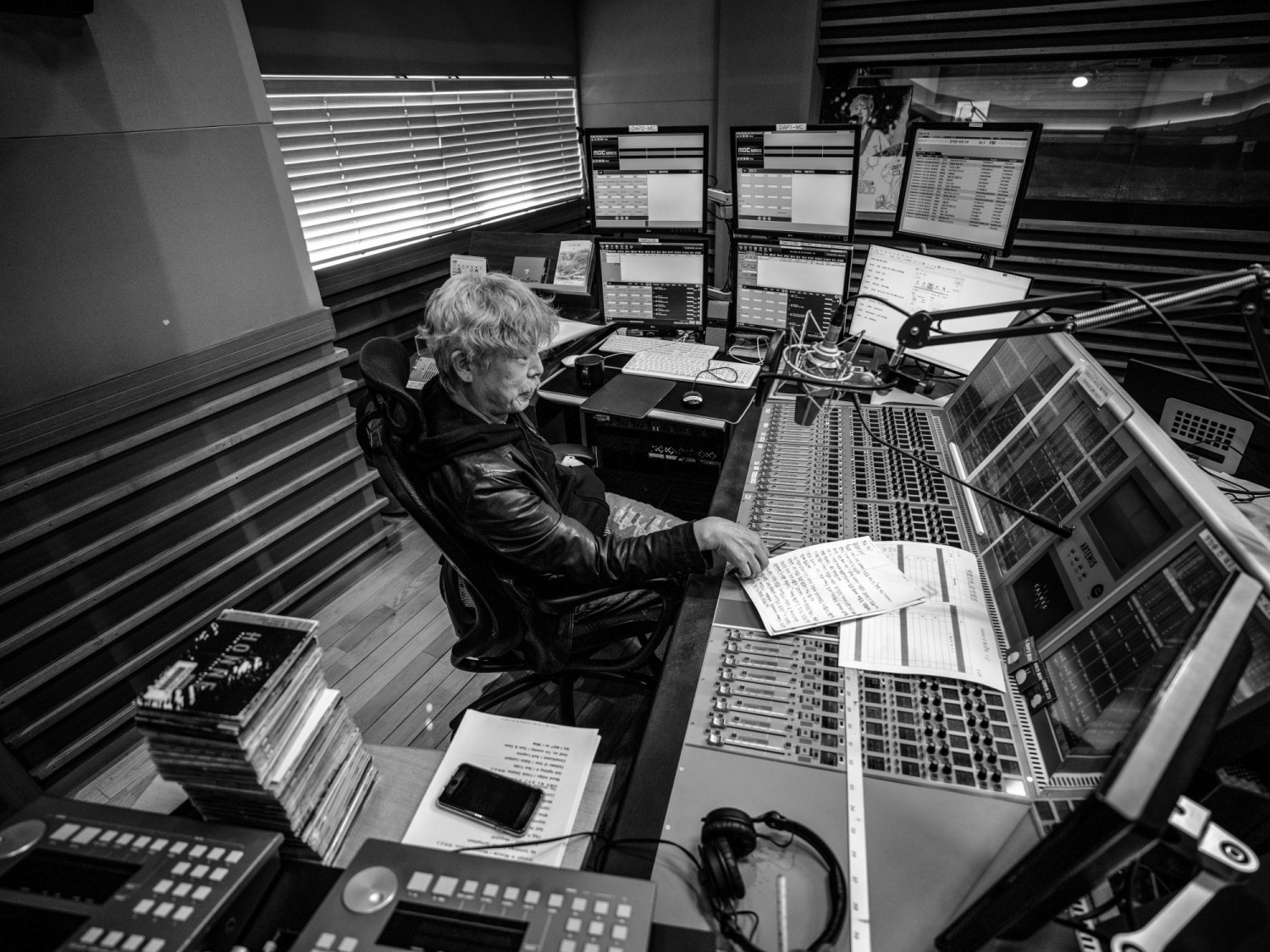
I realized early on in my radio career: “Ah, this is where I belong.” Making music was exciting at first, but playing the club circuits eventually left me cynical. Radio, however, was pure joy. From that moment, I began turning down almost everything else, because at 6 p.m. on the dot, I had to be in that booth. I even refused advertisements for products I didn’t personally use. I was offered a lucrative apartment commercial once, but I turned it down; I couldn’t bring myself to promote a place I didn’t actually live in. I wouldn’t even do car commercials unless it was for a vehicle I actually drove.
Q. Last year, for our 35th-anniversary broadcast, we traveled together to the Lollapalooza festival in the U.S. What struck me was that instead of simply enjoying the performances, your priority was maintaining your energy level for the upcoming show. Yet, it also made me wonder what continues to draw you to these live festival settings.
I go because it’s fun. When you’re actually there, you can feel the direction in which music is moving.
You see what kinds of sounds people are responding to, you absorb the atmosphere. But because I have a show to host, I can’t just wander around and watch everything. Once the show is done, I have to head back to my room and conserve my energy levels — even if you stayed out to watch the performances until the very end (laughs). Even without experiencing it all, there is a unique, meaningful excitement that can only be felt on-site.
Q. If we’re being honest, you’re someone who had many other passions beyond radio.
I did. I wanted to be a football referee, and I seriously contemplated becoming a golf commentator. I also wanted to be a travel writer. I wrote quite a bit in the ‘90s, and I entertained the idea of traveling the world and writing books. But in the end, none of it happened. Somehow, I’ve ended up doing radio for 37 years (laughs). At this stage, I feel I’ve grown a bit too old to embark on something entirely new. I have immense respect for those who begin completely different chapters of their lives in their seventies.
Q. You have spent more than 40 years of your life with music as your medium. What, to you, is the true power of music?
Music, in the end, is a mirror of the times. If you listen to contemporary music, you can discern what people are feeling. The reason I might look a bit younger than my years is likely because I continually listen to new music. And music possesses an undeniable capacity to heal. So many people have endured their darkest hours supported by a song. Of course, we also need music in our joy, and we need it in our sorrow; we are always surrounded by it. Even a horror film loses its terror without a soundtrack. Music will endure as long as we do. When you think about it, music may well be humanity’s greatest invention.
- Interview by. Bae Soontak
- Edited by. Han Milim
- Photography by. An Woongchul