Open Architecture, Minsuk Cho
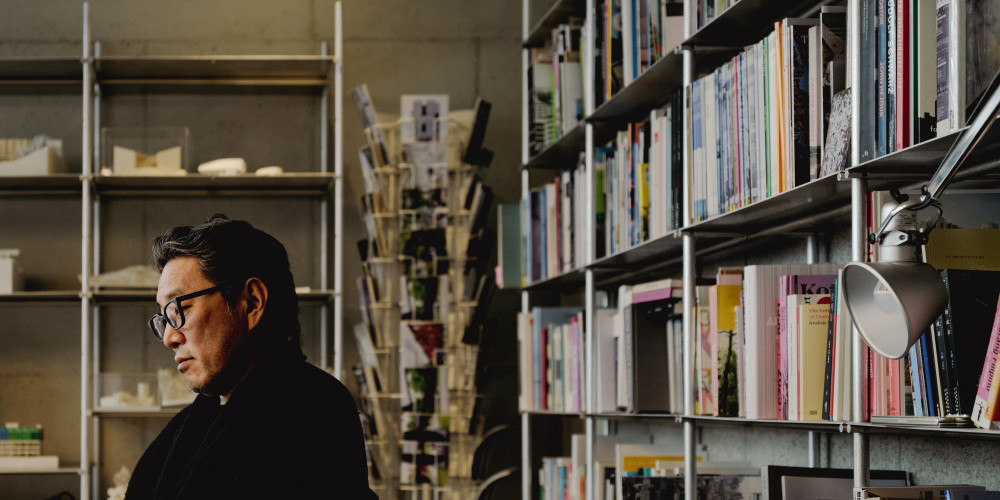
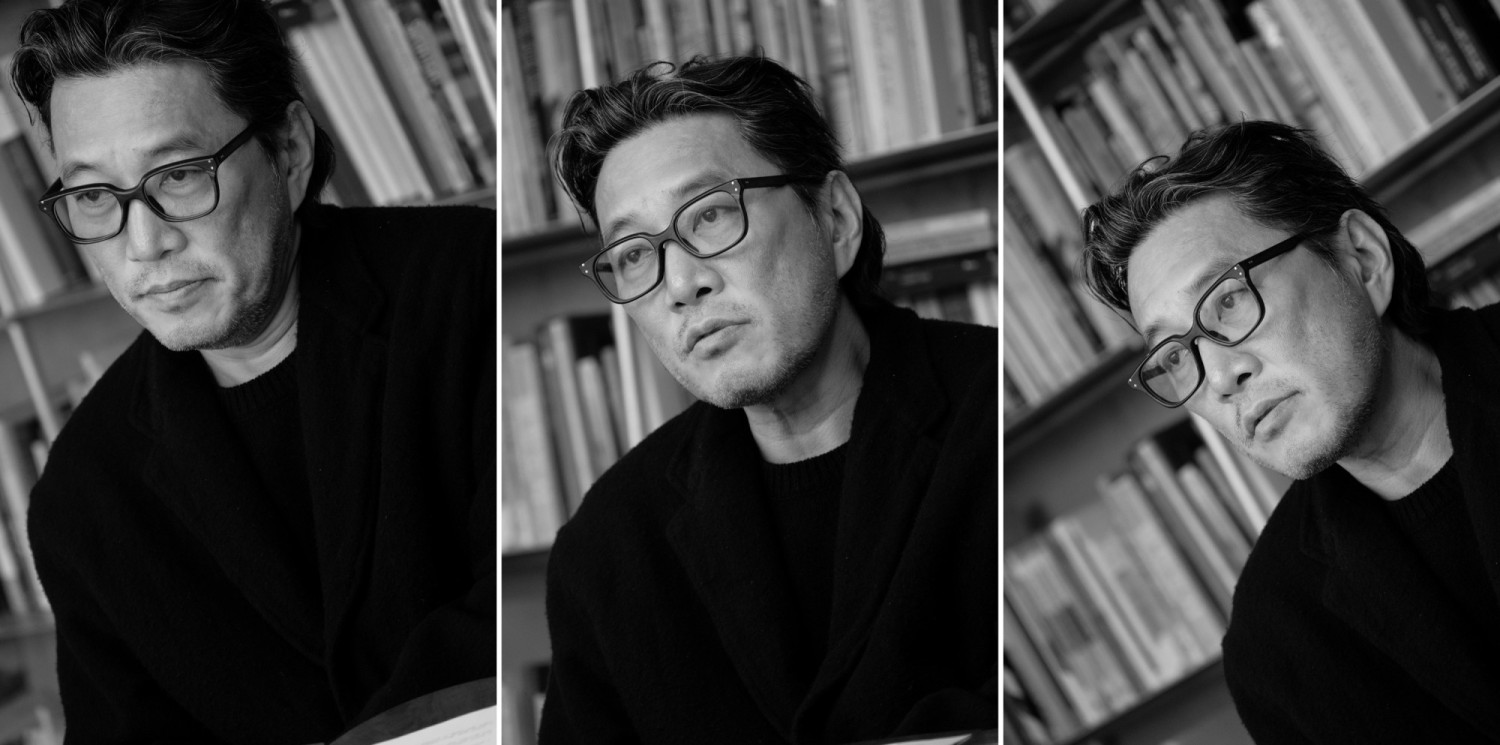
Minsuk Cho, the first Korean architect to design the Serpentine Pavilion in London, is now transforming Seoul’s Dangin-ri Power Plant — once a key driver of urban growth during Korea’s industrialization — into a cultural space. By infusing new layers of communal time and utility over its industrial history, he offers a vision for the city’s self-renewal. From memories of apartment corridors in the 1970s to the Serpentine Pavilion, the idea of “shared space” consistently runs through his work.
Q. Looking back at your beginnings, what do you feel was the most pivotal moment that shaped the architectural world you’ve created today?
Cho⎮ I think it began with a very personal memory. The five-story apartment building where I grew up was unlike the ones today. We knew all of our neighbors. We played in the hallways and on the stairs; it was an experience of life lived in a shared space. Even though there was no elevator and the corridors were narrow, I remember children running around, laundry hanging out to dry and families making kimchi together. It was the original model for a warm, vibrant community, completely different from the private, isolating apartment complexes that came with the development of Seoul’s Gangnam district.
Looking back, I think that was a time when I learned that a warm sense of community and a rich human story can spring up even within a massive man-made structure. Those childhood experiences have remained in my architectural subconscious, and they reappear in my work today as an attempt to restore that sense of human connection, even in my large-scale projects.
Q. Instead of following a more stable, predictable career path, you’ve often made unconventional choices. What’s one choice you made that you feel was the right one?
Cho⎮ At the time, I always felt a sense of anxiety. But in hindsight, I can see that all of those choices were the result of simply following my curiosity. Leaving New York to join the Office for Metropolitan Architecture (OMA) in the Netherlands, and then my decision to return to Korea — they all came from the same instinct. In those decisive moments, the thought that “if I don’t do this now, I’ll wonder about it for the rest of my life,” was always stronger than any careful calculation.
Q. The decision to suddenly leave your career in New York for OMA in the Netherlands seems particularly unique. What was on your mind at the time?
Cho⎮ It was less about a career move and more about a deep personal longing. Initially, I turned down OMA’s offer because I was just settling into life in New York — I even recommended a junior colleague for the position. But the thought that I had missed this incredible opportunity kept me up at night for several months. In the end, I called them back and asked them to arrange a meeting with Rem Koolhaas. It was one of the few times I was able to take back a choice I had already started to regret. And it turned out to be one of the best decisions of my life.
Q. How did those two and a half years at OMA change you as an architect?
Cho⎮ It was such an intense period of work that two and a half years felt more like seven. When I was in New York, I tended to see the world in a very binary way, of “developed” and “developing” nations. But my experience in the Netherlands gave me a much more multifaceted perspective. I came to the conclusion that “there is no perfect place in the world,” and that realization gave me a more balanced, unbiased view, which I’m incredibly grateful for.
Q. There’s a perception that in the Dutch architectural world, architects are treated as philosophers. What’s your experience?
Cho⎮ I don’t think it’s unique to the Netherlands. Any good architect must think deeply, with a foundation in logic. Because a large part of the Netherlands is reclaimed land, they have a very strong tradition of pragmatism, of believing in human rationality and science. That intense need to understand everything through facts can sometimes feel dry, but what’s fascinating about the Netherlands is that incredibly unique and creative people emerge from within that environment.
Q. Your work is often described as having a strong narrative quality, a sense of “reading the context.” What is the first thing you try to read when you start a new design?
Cho⎮ Most of the time, a space is given to you like a crime scene, particularly when it’s located within a city. So, like a detective, I begin to trace the history of the place. If I encounter a site that is incredibly beautiful, I might imagine a fairytale-like narrative, something that won’t harm its inherent beauty. But if I encounter a disordered urban environment, I dig into the past, asking myself, “How did it get to be this way?” I try to first understand its stories and why it looks the way it does now. Only then can I see where architecture might intervene.
Q. Was this philosophy reflected in your design for the Serpentine Pavilion?
Cho⎮ Yes. At the time, I was wary of the Pavilion becoming just another showcase for an architect’s own spectacular vision. Instead, I wanted to lay out a Koreanstyle straw welcoming mat, known as a meongseok, to create a space that anyone could enter and enjoy. My focus wasn’t on making the architect the star of the show but on creating a foundation where people could freely gather together and form their own social connections.
Q. After your many public projects, I imagine your criteria for what makes a good public structure have changed.
Cho⎮ I’ve come to think that a public structure is less a stage for an architect’s individual personality and more a mirror that reflects the inherent state of society. And so, it must be honest, but at the same time, it must project a sense of hope. I believe we shouldn’t stop at just reflecting reality as it is, but that we should also propose a vision of what we wish to become.
Q. The Dangin-ri Power Plant project seems like a culmination of these ideas. What was the one principle you were most determined to protect?
Cho⎮ It was to preserve the layers of time that this space embodies. We had a lot of budget and scheduling constraints, but I wanted to respect the memory of the place, at least in its external form and structure. I felt it was important to set clear priorities, even if we couldn’t complete everything perfectly all at once.
My goal was not to create a flashy exterior but to foster a space where multitudes of people would feel welcome, as if it were their own home, a place that could spark social connection. There are still some administrative variables and budget issues, but we expect it to open in 2027 or 2028. I believe direction is more important than speed. We are in the process of making the best possible choices within the given conditions.
Q. What, in your view, is “Korean architecture”?
Cho⎮ I don’t think it’s about just copying tradition. Álvaro Siza, an architect I deeply respect, once said that “Tradition is important when it contains moments of change.” In the end, what’s most important is to honestly capture the way Korean people are living in the present moment. Architecture is, after all, a self-portrait of its era.
Q. In a fast-paced society, should architecture try to keep up?
Cho⎮ By its very nature, architecture has to evolve gradually. It’s not something to be quickly consumed like a trend. Rather than chasing trends, I think we have to try to think about the questions that will still have meaning even as time passes.
Q. What’s the biggest driving force for you now?
Cho⎮ In the end, it’s curiosity. The desire for achievement, the critical perspective — it all starts with curiosity. Once I’ve made a choice, all I can do is put forth my best effort. And sometimes, when faced with a place of incredible beauty, the best thing to do is to put away the critical mind and just try not to harm its inherent beauty. Sometimes that’s sufficient.
Q. Do you have any advice for younger architects or creators?
Cho⎮ I don’t really like to give advice. But looking back at my own journey, I do think it would have been good to exhibit a little more humility when I was younger. To have an attitude of respect for the time and experience of those who came before you.
Q. What is “good architecture” in your opinion?
Cho⎮ I believe it is architecture that forms a “good match” with its surrounding location. I sometimes describe this as playing a game of baduk (Go) with the world. It means carefully adding possibilities for new life without damaging the uniqueness of an existing place. If it can end like a fairy tale with a happy ending, that will be the ultimate success.
- Written by Han Milim
- Photography by Park Shinwoo