Discovering Myself in the Unfamiliar
MorningCalm presents Omnibus Story, a series of reflections that add depth to the everyday. Through the diverse voices and perspectives of international contributors, these stories invite moments of thought — both during the flight and long after. Yi Jeongmo, who has translated science into the language of everyday life, considers how travel is a reflection of our lives and how it could transform us.
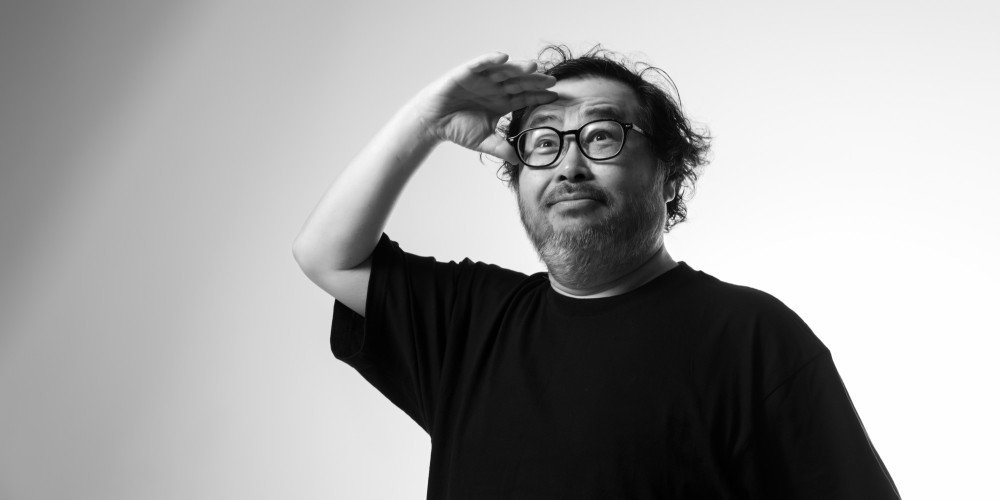
- Yi Jeongmobegan his career as the director of the Seodaemun Museum of Natural History and later served as the inaugural director of the Seoul Science Center, where he helped establish a paradigm shift from “observational science” to “hands-on science.” In 2020, he was appointed director of the Gwacheon National Science Museum and went on to bring about meaningful changes in Korea’s national science culture administration. Rather than merely presenting scientific knowledge, Lee has articulated a philosophy of science as a humble way of engaging with the world. He currently runs the science-communication platform Penguin Museum of Science, continuing to expand points of connection between science and the public.
People often describe travel as a form of rest — a time to step away from the everyday, to let the body relax and the mind loosen. And of course, travel can serve that purpose. But for me, it holds a meaning that is a little more uncomfortable, a little more profound.
If I had to sum up why I travel in a single phrase, it would be “to make things unfamiliar.” My day-to-day life is a world of the familiar. I walk the same streets, speak the same language and laugh and work among similar kinds of people. And after a while, I start to forget who I am. Life grows more convenient, but the self begins to calcify.
And so, I have to travel to a place that is unfamiliar. A place where the language is different, the culture is different, even the smell of the food is different. It is only there that the routines of daily life begin to fall away, and the self that was hidden underneath can finally emerge. But the beginning of my travels, in truth, wasn’t to a faraway land. The first place I ever experienced a true sense of unfamiliarity was in an alleyway near my home. I was about five years old. I remember taking my three-year-old sibling by the hand and walking to an alley a few turns away from our own. It probably wasn’t the first time I’d been there; I must have passed through it while holding a grown-up’s hand. But that day was different.
For the first time, my brother and I were on our own. And suddenly, the world looked completely different. Walls that usually seemed unremarkable felt towering, and the houses looked like strange, unreadable faces. The alley became a labyrinth. And then, from somewhere, I heard an adult’s voice.
“I think those children are lost.”
Those words shot through me like a jolt of pure fear. What was more frightening than the fact that I was lost was the fact that the world had become, in a single instant, utterly unfamiliar. Afraid of scaring my little brother even more, I didn’t say a word. I pretended to be calm on the outside, but inside, my heart was pounding. After wandering for a long while, we eventually found our way home. And in that moment, I understood something. “The world is much, much bigger than I thought. And I am much, much smaller.” From that day on, I believed that the safest place in the world was inside our house.
Of course, as I grew up, I continued to travel. My father loved to travel and he often took our family to all sorts of different places. But those trips didn’t feel unfamiliar. My father was there, and I was safe. In university, I traveled with friends. Those trips, however, were less about the destination and more about the company. Amid the singing, the shouting and the drinking, I got to discover a different side of myself. Those travels were characterized by the boisterousness of youth rather than the thrill of the unknown. During my junior year of university, I planned a backpacking trip from Woljeongsa Temple to Sogeumgang Valley, but all my friends bailed at the last minute to study for exams. So I set out on my own. It was a reckless decision. I had to carry all the gear that we were supposed to have split between us — I even had a five-person tent strapped to my back. Just the hike from Woljeongsa to Sangwonsa Temple was an ordeal. The next day, when I started down the mountain path from Sangwonsa, I wanted to give up. A police officer saw me and said,
“It’s dangerous to hike these mountain trails with a pack that heavy.”
But you know what it’s like at that age. His concern felt like a challenge to my pride. And so I kept trudging along. I truly thought I was going to die from the sheer exhaustion of it. But at the end of that road, what I discovered wasn’t the mountain scenery but myself. “You’re really hopeless, aren’t you?” I thought. “If you keep living like this, you’re not going to make it.” Travel often exposes who you really are in this way.
In an unfamiliar environment, I cannot hide from the person I truly am. After getting my driver’s license, I went to Germany to continue my studies. A few years later, I bought a Volkswagen Polo with 170,000km on it for about 400,000 won. It was my first car. I had almost no driving experience, but since I’d bought a car, I had to go on a road trip. So I set off on a trip with my wife and my young daughter who was still in a stroller. Over five days, we drove 1,400km. We started in Bonn and drove through Koblenz, Göttingen, Goslar, Bremen, Lübeck and Bremerhaven, before heading back through Bremen and Düsseldorf. This was before the age of GPS navigation, so we navigated with a giant road atlas spread across our laps. The official destinations of our trip were the science-focused cities of öttingen and Braunschweig, but to be honest, we pretty much just passed right through them. My wife was more interested in the witches of Goslar and the musicians of Bremen than she was in learning about science.
Since our daughter couldn’t talk yet, my wife and I filled the 1,400km journey with our own conversation. I was a clumsy driver and my wife was a clumsy map-reader. We bickered, but we were both filled with a
deep sense of happiness to be on our first family road trip in our first car, bought with what little money we had. Then, on the second day, we were almost in an accident. So, I asked my wife, “Aren’t you worried that we’ll get into an accident? I’m still not very good at this.” My wife answered calmly, “The three of us are all together, so what’s the big deal? If we die, we all die together.”
Funnily enough, I realized something that day. I was no longer alone. I wasn’t just a husband and a father; I was part of a family. And from that day onwards, my driving skills improved remarkably. In the summer of 2012, I appeared on the EBS travel show, World Theme Travel, for an episode on Madagascar. It was the most important journey I had yet undertaken. It was my first trip to the developing world and an experience of entering into a primordial natural environment.
Madagascar is an island that’s believed to have been inhabited by humans for around two millennia. But it’s a place that broke off from the African continent around 150 million years ago, creating an ecosystem unlike any other on earth. I wandered through forests in search of lemurs and visited rural villages to experience a completely different way of life. And there, I thought again about who I was. Surrounded by people who were so different from anyone I’d ever met, in front of animals that were so different from any I’d ever seen, I found myself surrounded by natural history.
In 2019, my wife and I spent a month traveling in South America. In the Galápagos, I swam with sea turtles and marine iguanas. We island-hopped, and I felt like a young Charles Darwin. By that time, I had already finished my tenure as the director of the SeodaemunMuseum of Natural History, but it was only then that I felt I had truly become a bona fide natural historian. I hadn’t felt this way when I was digging for dinosaur fossils in the Gobi Desert in Mongolia. That was work. That was research. It wasn’t travel.
Then, in the winter of 2025, I spent 40 days in Antarctica. I flew to Christchurch and then boarded the
icebreaker RV Araon, joining a research voyage to study hydrothermal vents along the mid-ocean ridge.
On that vast sea, there was nothing to see but seabirds. Not another ship, not an island. It was, quite literally, an endless ocean. With a beam using sonar technology, we created a map of the seafloor 2,000m below — a world invisible to the naked eye. We measured the magnetic field and sent down a remote-operated diving vehicle to identify and collect the minerals and living creatures that were there. The seabed near the mid-ocean ridge is the youngest land on Earth. It is a place that is still being created at this very moment. And there, I began to see myself not as a human, but as a small part of the Earth itself.
When I visited Korea’s Jang Bogo research station in Antarctica, I was undeniably a stranger. Antarctica was a place I was not meant to be. It is the land of penguins and seals and skuas. For 15 days, I experienced a world where night did not exist. It was a place of only blue sky and white ice; darkness was nowhere to be found because it was summer in the Antarctic. A world without darkness was surprisingly difficult to endure. The unfamiliar is beautiful, but it also has a way of stripping the human bare. Some of my friends envy me for having traveled so much. But there’s no need for envy. You can see the landscapes on television and indulge in exotic food almost anywhere.
The real gift of travel is something else entirely: it is the opportunity to find the space to think about who you truly are within an unfamiliar environment. So, have I discovered my true inner self, after all my travels to these unfamiliar places? I still can’t answer that question with confidence. I find myself needing to travel more. Or maybe, travel is not a process of finding the right answers, but of continuing to ask the right questions. To rediscover myself anew in a novel and unfamiliar space, I set out on yet another journey today.
- Written by Yi Jeongmo