A Korean Love Story Soybean Sprouts
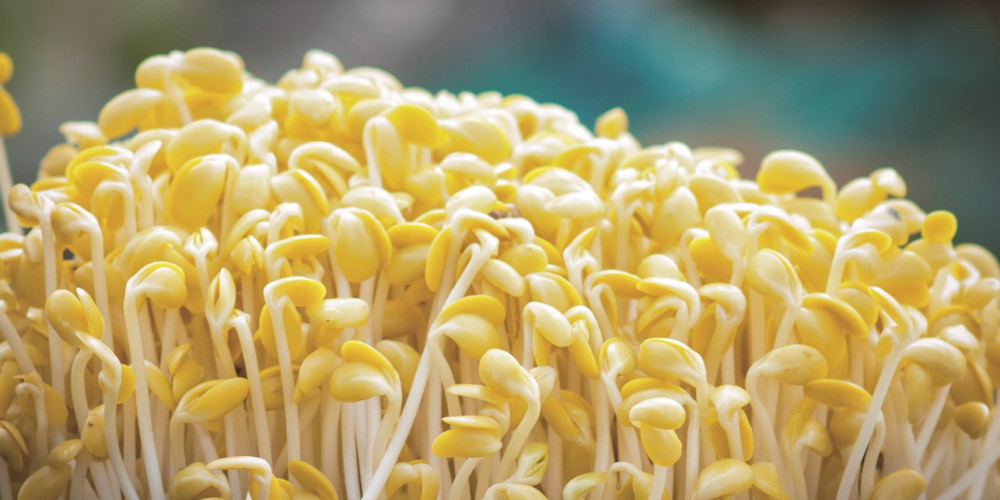
For centuries, Koreans have enjoyed soybean sprouts known as kongnamul. The humble ingredient is beckoning tomorrow’s palates through a lens that is distinctly Korean.
“Though the soybean is one of the five grains, people do not hold it in high esteem. But when we speak of the role grains play in sustaining human life, the contribution of the soybean is immense. (…) The fine grains and tasty foods all go to the powerful and the well-off, but for the person who is barely getting by, the only reliable food they can lean on is the soybean. (…) And when it is sprouted in the form of kongnamul, its volume and its value multiply several times over. The poor can grind the beans and pick the sprouts to make porridge to fill their bellies.”
This is an excerpt from a section on soybeans in the Seongho Saseol (Treatises on Practical Topics), a vast collection of essays by the late-Joseon era scholar and thinker Yi Ik (1681–1763). For Yi, whose intellectual curiosity deeply influenced a generation of Joseon’s most brilliant scholars, the soybean was a precious resource. And in any conversation about soybeans, one could not leave out the sprouts, known as kongnamul to Koreans. At the end of his essay, Yi wrote, “Having lived in the countryside, I am intimately familiar with these matters,” and added that he hoped “those who nurture and govern the people might read this and gain a new understanding.”
Mung Bean Sprouts vs. Soybean Sprouts
Whether the intellectuals of the day wrote about them or not, the farmers of the countryside were already living a life deeply intertwined with kongnamul. Born about a hundred years after Yi, the poet Jeong Hakyu (1786–1855) wrote of the “Eleventh Month” in his Nongga Wollyeongga (The Songs of Monthly Events of Farm Families), a beautiful ode to the 12 months of a farming family’s year: “With kong-gireum and ugeoji (fibrous outer leaves of green vegetables including cabbage) for a simple breakfast of rice and a dinner of porridge, we are fortunate indeed.”
Here, “kong-gireum” is another name for soybean sprouts. It’s a simple line that beautifully illustrates just how essential kongnamul and dried vegetables were in helping people to make it through the year. For the people of the Korean Peninsula, soybean sprouts were a familiar, dependable and deeply appreciated food. They were and are, a world away from sukju, or mung bean sprouts. Sukju is enjoyed not only in Korea, China and Japan but across Southeast Asia. But kongnamul has for centuries remained an important culinary resource on the Korean Peninsula. The nutritious sprouts of soybeans were enjoyed as food
predominantly by the Korean people.
Culinary Uses for Kongnamul
So when did Koreans start eating soybean sprouts? We don’t know for sure. But as the soybean is believed to have originated in the region between the northern Korean Peninsula and southern Manchuria, we can guess that from the moment the early inhabitants of the Korean Peninsula began eating the bean, they also naturally began to eat its sprout. Returning to the Seongho Saseol, we learn:“I recently hosted a gathering where a trio of bean dishes were served: a porridge of yellow soybeans, a kimchi of kongnamul and a fermented soybean paste.”
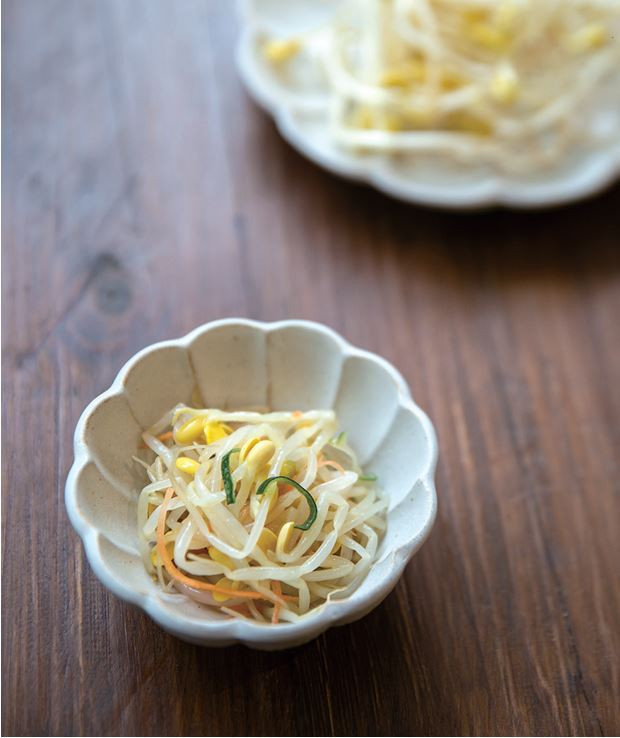
Such was the humble yet thoughtful table set by Yi Ik, who hoped that the leaders of his time would recognize the value of the humble soybean sprout. For him, a meal of soybean porridge, soybean sprout kimchi and a rich soybean paste made from fermented bricks of soybeans called meju was a meal worthy of sharing with his dearest friends, his family and fellow intellectuals. Fast forward to the modern era and soybean sprout kimchi is still a favorite Korean side dish. So what are the various ways Koreans enjoy soybean sprouts? First, there’s kongnamul muchim. To make the beloved side dish, the sprouts are blanched, drained and left to cool. After allowing the excess moisture to evaporate, the sprouts are seasoned with salt and a touch of sesame oil. It can also be tossed with a more complex seasoning paste, or with scallions, garlic and a pinch of red chili powder for a spicy kick.
Sometimes, it’s mixed with seafood like gompi (type of seaweed) and seasoned with doenjang (soybean paste). And then there’s the bright red, deeply fermented soybean sprout kimchi or mul kimchi made by pouring a light, savory broth over the sprouts. There’s even a cold soup, or naengguk, made by chilling the blanching water and seasoning it lightly, with the cooked sprouts floating gracefully within. For a more substantial meal, there’s kongnamul-bap (rice cooked with kongnamul), bibimbap with soybean sprouts, and even kongnamul porridge.
Taste for a Mature Palate
ⓒ KOCHI
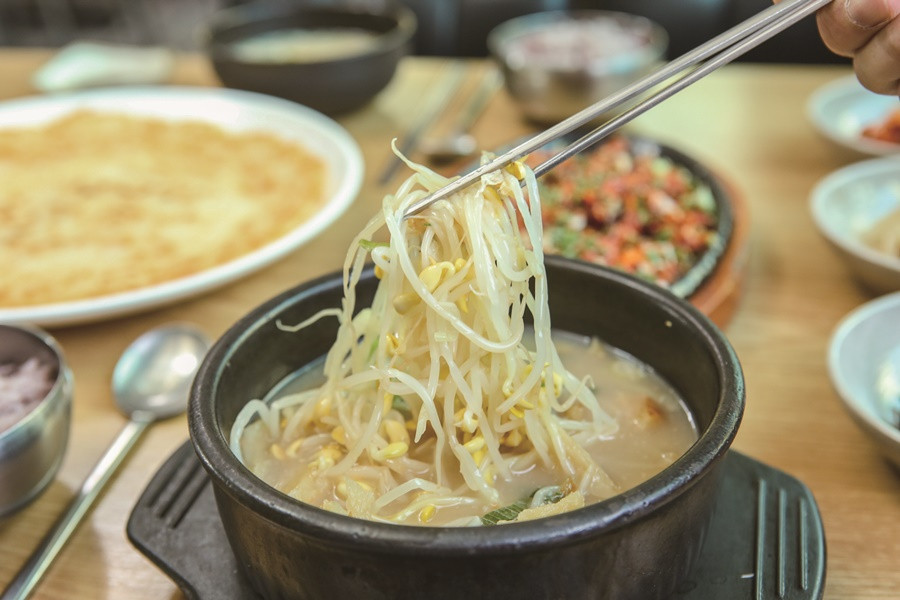
In any discussion of soybean sprouts, we can’t leave out kongnamul-guk, or soybean sprout soup. Simply put, it’s a soup with kongnamul as the star ingredient. Enjoying a bowl of piping hot soybean sprout soup, seasoned with nothing but salt, or perhaps a light dusting of red chili powder, will have many Koreans exclaiming, “Ah, siwonhada!” The paradoxical expression, loosely translated as “How refreshing,” encompasses a physical feeling of relaxation and a sense of deep calm. The tension in your organs has been released, leaving you feeling utterly refreshed and at ease.
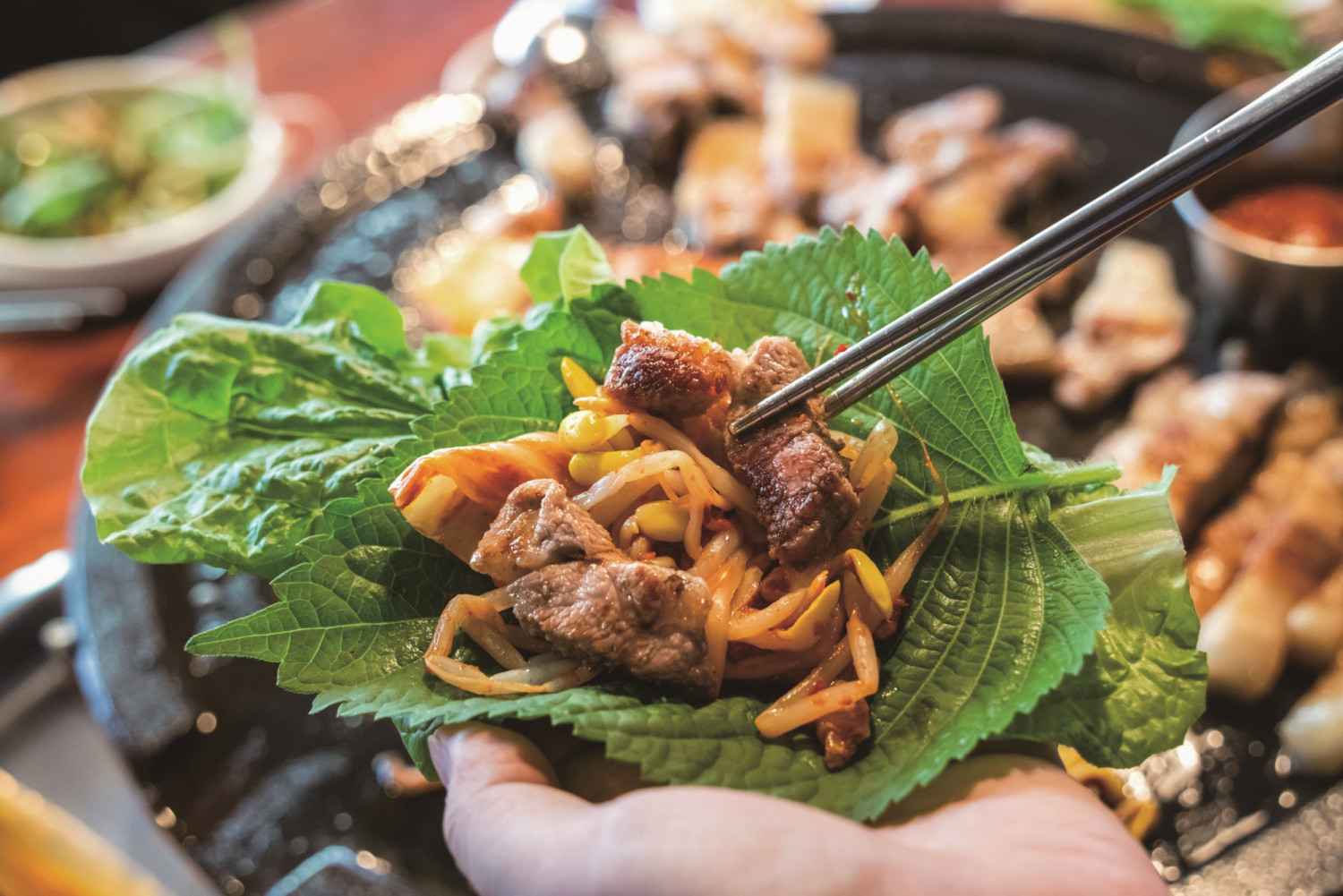
Kongnamul-guk, arguably one of the simplest soups in the Korean culinary repertoire, is a soup you can enjoy anytime, anywhere. A similar dish is kongnamul-gukbap (soybean sprout soup over rice), which early on became a modern restaurant staple, especially in the southwestern city of Jeonju. In the early 20th century, there was even an article published in a popular magazine praising the deep flavors of soybean sprouts and soybean sprout soups. And so, kongnamul has traveled across the vast expanse of time, through centuries, and has remained an important part of Korean cuisine to the present day. Think of its role in dishes like dried pollack soup, radish soup, japchae (stir-fried glass noodles), tteokbokki (spicy rice cakes), ramyeon (instant noodles), kimchi soup, spicy braised monkfish and spicy stir-fried pork. Whenever kongnamul is added to a main ingredient to elevate the character of a dish, the core of that particular pleasure comes from the delightful textural contrast and the cool, crisp crunch of the sprout bursting in your mouth.
“Oh, you’re just a street musician / Oh, you’re so mean to me / I don’t know, I don’t know, I don’t know why you steal my food / The bulgogi and tteokbokki, you keep for yourself / The pickled cucumbers and the kongnamul, you leave for me / Oh, you’re so greedy, you’re so mean, you’re just a selfish miser.”
Even the first verse from the 1938 hit “Oppaneun Punggakjaeng-i (My Brother is a Street Musician),” sung by Park Hyangrim, captures a slice of life with soybean sprouts. The simple yet comforting flavor of kongnamul may belong to those with a seasoned or mature palate, a world of flavor and sensation that reveals itself only to those who are ready to truly savor it. So, when you find yourself wondering whether you’ve got a grown up palate, maybe it’s time to try a bite of kongnamul-muchim or take a sip of kongnamul-guk and see for yourself.
- 글. Go Young
- Go Young is a food humanities scholar who explores the history,
culture, and popular phenomena of Korean cuisine through the
lens of historical culinary texts. She currently writes the column
Go Young’s Table in Literature for the Kyunghyang Shinmun, where
she continues to reflect on the historical contexts and cultural
meanings embedded in the food we eat.