On the Beauty of Things That Fade Away
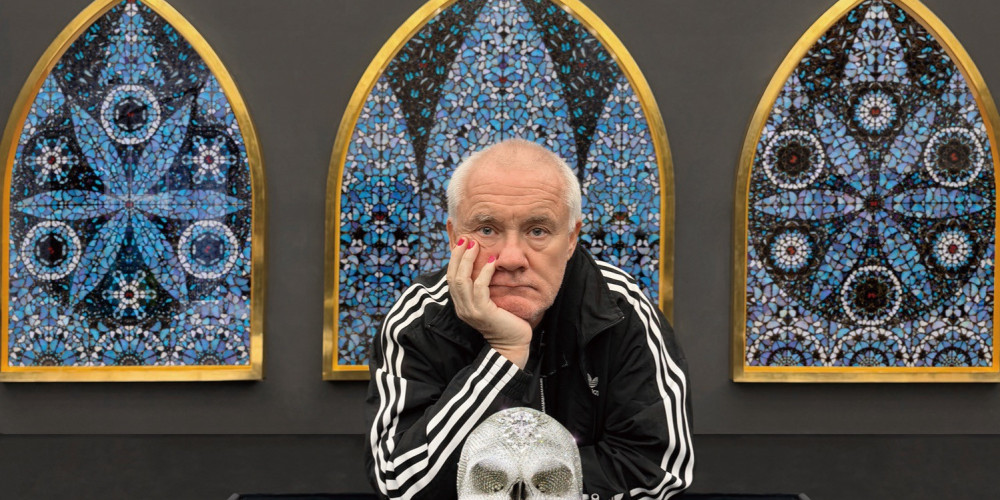
Contemporary art has undergone a profound transformation, shifting from the question of what it shows to what it makes us think about. Since the 1990s, Damien Hirst has stood at the center of that shift. His work challenges us to reconsider what we have long regarded as beauty, to question the systems of order and beliefs we have constructed to make sense of life.
© Damien Hirst and Science Ltd. All rights reserved, DACS 2026
Damien Hirst: Contemporary Artas a Question
While some artists turn intangible experiences into art, others use a single, searing image or tableau to pose a profound question. Though these methods may seem different, both directions reveal the incredible, expanding frontiers of contemporary art.
This shift is the reason many find contemporary art difficult to deal with. It demands that we think not about what we are looking at, but why this thing is considered art in the first place. Yet, if we approach contemporary art from a slightly different angle, it reveals itself to be less about specific formats and more like a symptom, an indicator of how fundamentally our way of understanding the world has changed. In other words, rather than presenting an object, modern art has evolved into a mechanism designed to force us to reconsider the very standards and sensibilities we have long taken for granted.
A major revolution in the contemporary art world was the sensational emergence of the Young British Artists (YBAs) in the UK during the late 1980s. This new generation overturned how an artist operated, the form of exhibitions and the relationship between art and society. Foregoing established museums, they curated shows in empty warehouses and abandoned buildings, presenting works that broke free from traditional forms and forging a new current in the art world. And at the center of it all was Damien Hirst.
Hirst has continuously questioned art’s limits with provocative works of art that test the boundaries of contemporary creation. His portfolio has diverse and shocking imagery constructed from unconventional materials: sharks, pills, glass display cases, colored dots and butterfly wings. Though disparate in form, his works are unified by a persistent thread: an unrelenting questioning of the systems humans have created to comprehend the world as well as the senses we rely on to perceive beauty.
Since the 1990s, art has defied definition. The artist is now less a “maker of things,” more a “proposer of ideas.” Hirst burst onto the scene as this transformation was taking root, igniting countless controversies. In the years since, he has become an icon of his era; yet, he faces the criticism of now being an artist confined to textbooks — a relic. However, his footprint on the history of contemporary art is too important to be summarized so simply.
Now in Seoul, Hirst, one of the most controversial artists of our time, places himself back onto the chopping block of debate, once again asking: What is art? The reason his work has remained at the center of controversy for so long is perhaps, ultimately, because it is not just a conversation about art, but a conversation about life itself.
National Museum of Modern and Contemporary Art, Korea.
Photographed by Prudence Cuming Associates Ltd.
© Damien Hirst and Science Ltd. All rights reserved, DACS 2026.
Scenes
The Genesis of an Artist: The Origin in a Self-Portrait
Hirst’s self-portrait is a denim shirt hung on a wall. Raised in a working-class family by a strict mother, he grew up in an environment where much was forbidden. But his mother approved of his love for drawing. In his 1987 work Self Portrait, he exhibited his own worn clothing instead of his face, declaring that the clothes he wore revealed who he was. This self-portrait highlights the reality that before an artist, he was an individual forged in a working-class environment, and it signals the very beginning of his lifelong endeavor to explain himself through imagery.
The YBAs and Freeze: The Rise of the London Art Scene
In 1988, while still a student at Goldsmiths, University of London, Hirst conceptualized an exhibition titled Freeze with his fellow students in an empty warehouse in the London Docklands. This show marked the first collective appearance of the artists later known as the YBAs, including Sarah Lucas, Gary Hume and Michael Landy. At the time, the British art world remained heavily overshadowed by the New York-centric art market and its discourse, but this exhibition acted as the catalyst for young London artists to form a powerful scene of their own.
Later, Charles Saatchi avidly collected their work; when his Sensation exhibition was held at the Royal Academy of Art in 1997, it triggered an enormous reverberation, cementing London’s rise as a hub of contemporary art in the 1990s. Hirst was a part of this engine that brought a group of young artists to the fore — the figure shifting the entire art market and its foundations. He was an artist who altered the structure of contemporary art, one whose emergence rewrote global contemporary art history.
The Expansion of Conceptual Art: Spin Paintings and Spot Paintings
Hirst is the artist standing at the extreme edge of conceptual art — where one ponders, “Is this actually art?” His spin paintings and spot paintings exemplify this question. The crux here is the process by which the paintings are brought into being. His spin paintings are created by placing a canvas on a rotating disc and pouring paint from above, utilizing centrifugal force to generate patterns. Whereas Jackson Pollock left marks on the canvas through the movement of his body, Hirst uses the force of a machine to create a painting.
His spot paintings follow this exact same logic. This painting series, inspired by pharmaceutical pills, consists of evenly spaced colored dots, and almost all of them were created by Hirst’s assistants. The size of the dots, the spacing and the color choices follow a strict set of rules. Through this process, which deliberately minimizes the artist’s own emotion or direct expression, Hirst poses a vital question: “Must a work of art be physically made by the artist themselves?” To him, true creation is not the execution of a concept; it is the concept itself.

© Damien Hirst and Science Ltd. All rights reserved, DACS 2026. Photographed by Prudence Cuming Associates
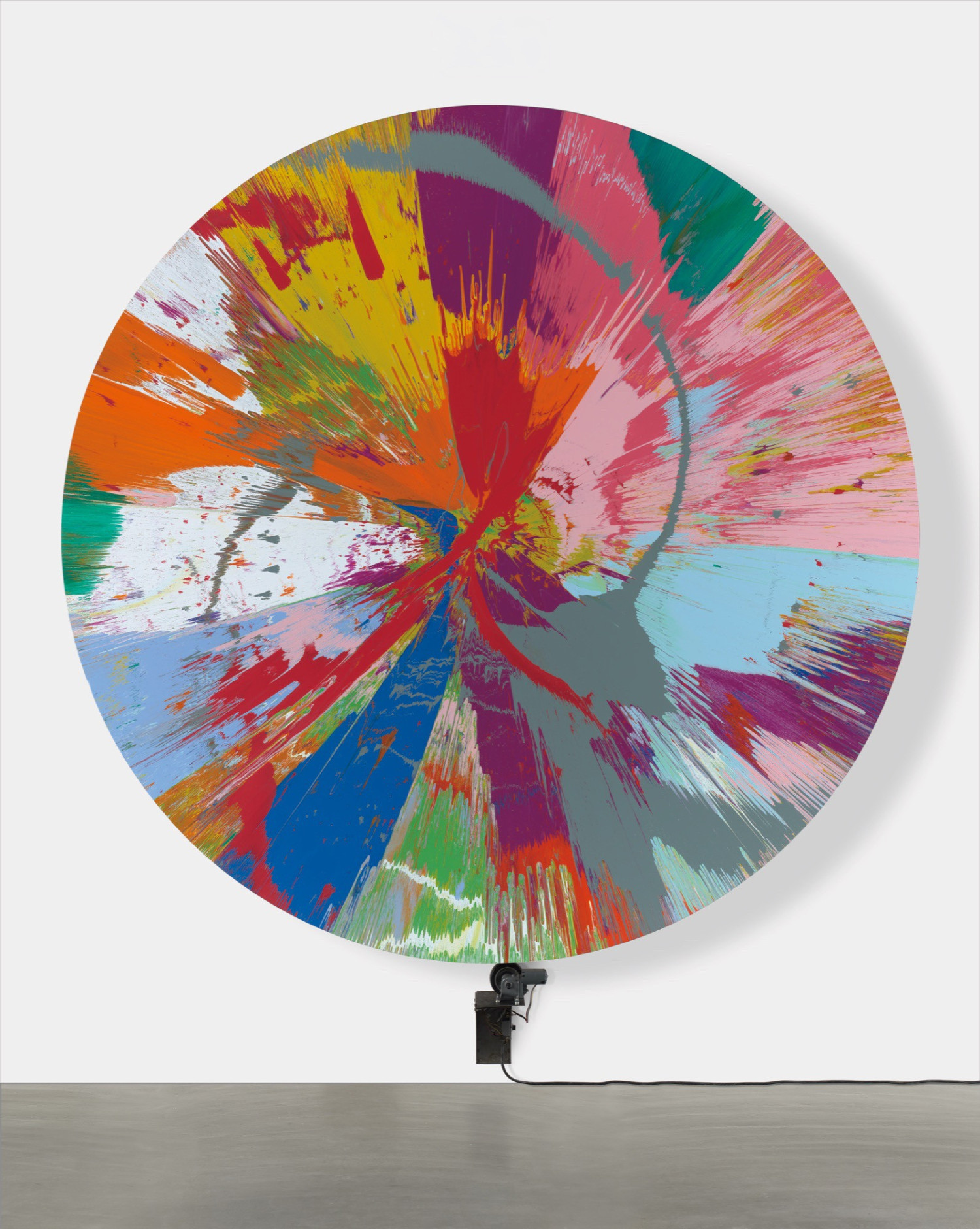
© Damien Hirst and Science Ltd. All rights reserved, DACS 2026. Photographed by Prudence Cuming Associates
Science and Religion: Pills, Medicine Cabinets and Spot Paintings
A compelling point of the current exhibition is its focus on Hirst’s early works. His pill and medicine cabinet pieces are prime examples. Hirst viewed medicine — something that people take and rely on — as the ultimate object symbolizing contemporary society. He noted the profound, almost devout, faith his mother placed in pills she received from the hospital, leading to his conclusion that science and medicine fulfill a role akin to religion in the modern world.
We believe medicine will save us; yet, it cannot remove the inevitability of death. In this sense, even science is a system of belief. Hirst’s medicine cabinets, pills and spot paintings are visualizations of this belief — a constructed order and the desire to exert control over our finite, mortal lives.
The Beauty of Things That Fade Away
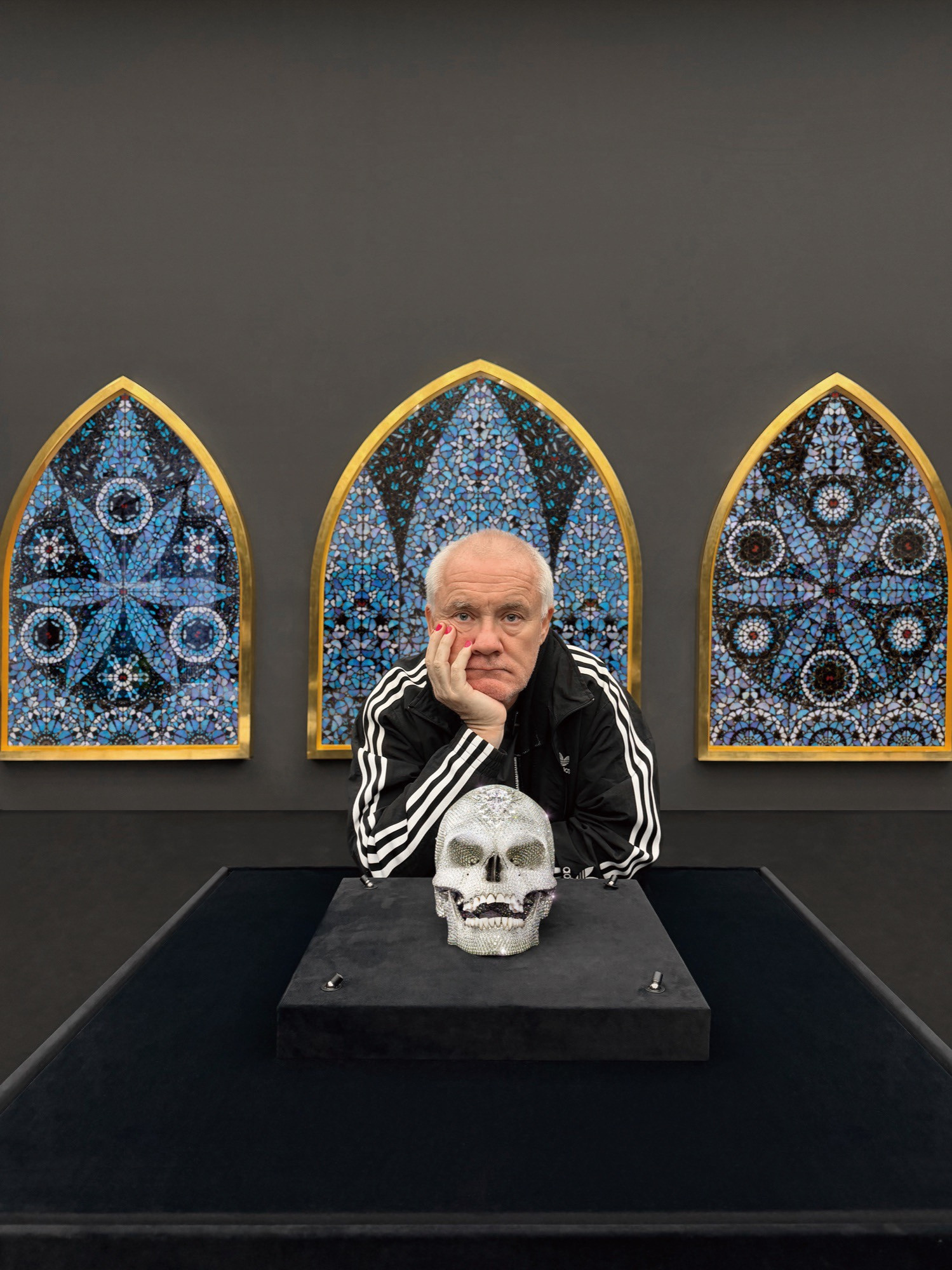
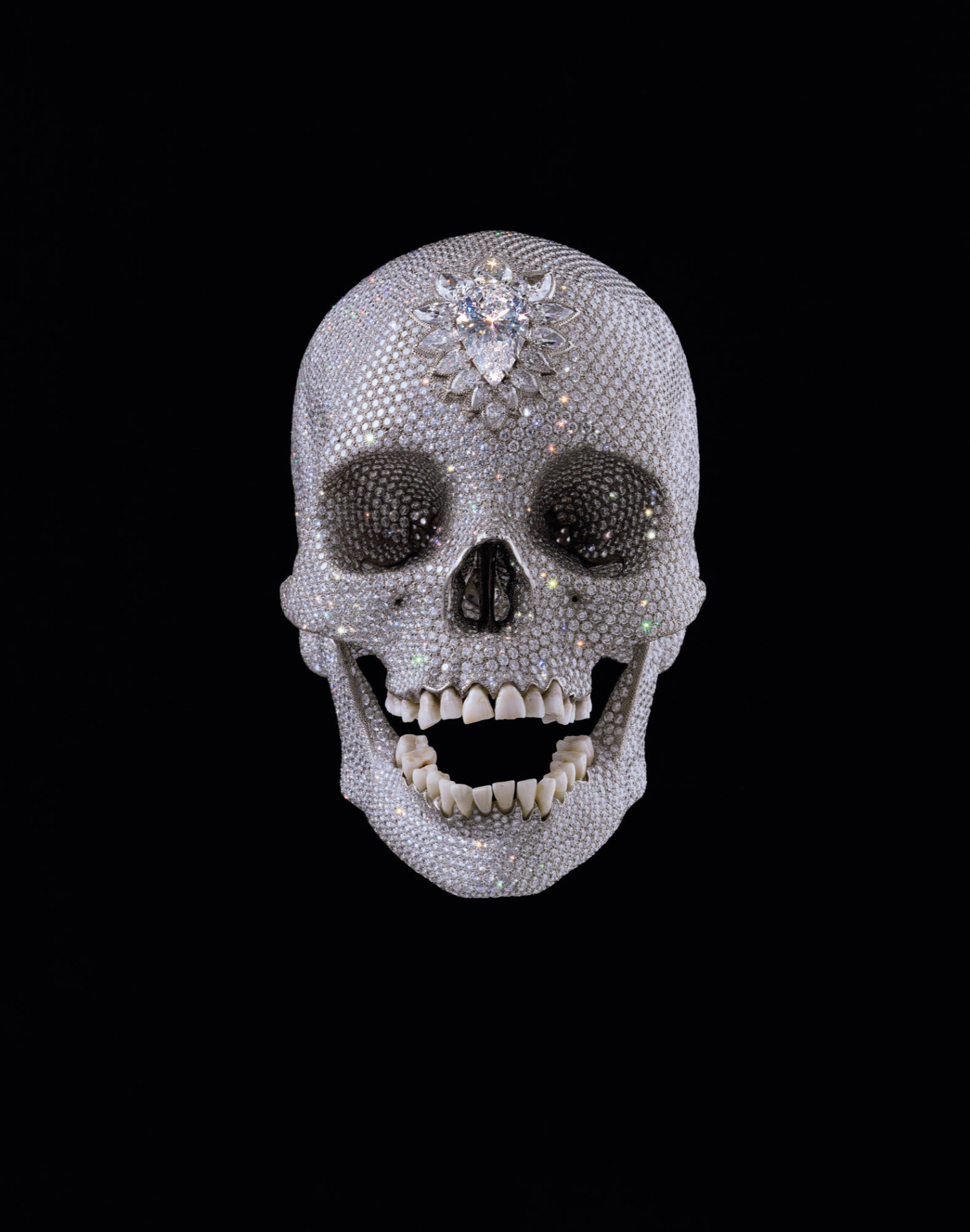
Hirst’s 2007 masterpiece, For the Love of God, is a platinum cast of a human skull, set with 8,601 diamonds. This piece is a descendant of the 17th-century Dutch vanitas painting tradition. Vanitas was a genre of still-life featuring skulls, wilting flowers, hourglasses and jewels to communicate the transience of human life and passage of time. Hirst modernizes this traditional theme, juxtaposing ageless diamonds with the skull, the symbol of human finitude. It is a work that tells us that even the most dazzling and perfect things cannot outrun time.
This theme is echoed across his other major works. His sharks suspended in formaldehyde, among other pieces, serve to illustrate that life is an endless, repeating cycle of birth and death. What matters most in his work is not the shocking image itself but the sobering realization that the many things we believe will last forever actually exist within a remarkably brief, fragile sliver of time. Fundamentally different images of skulls, sharks, butterflies and cherry blossoms are, in the end, all telling the exact same story. They remind us that everything we perceive as beautiful, including this very moment that we inhabit, is entirely subject to the dictates of time.
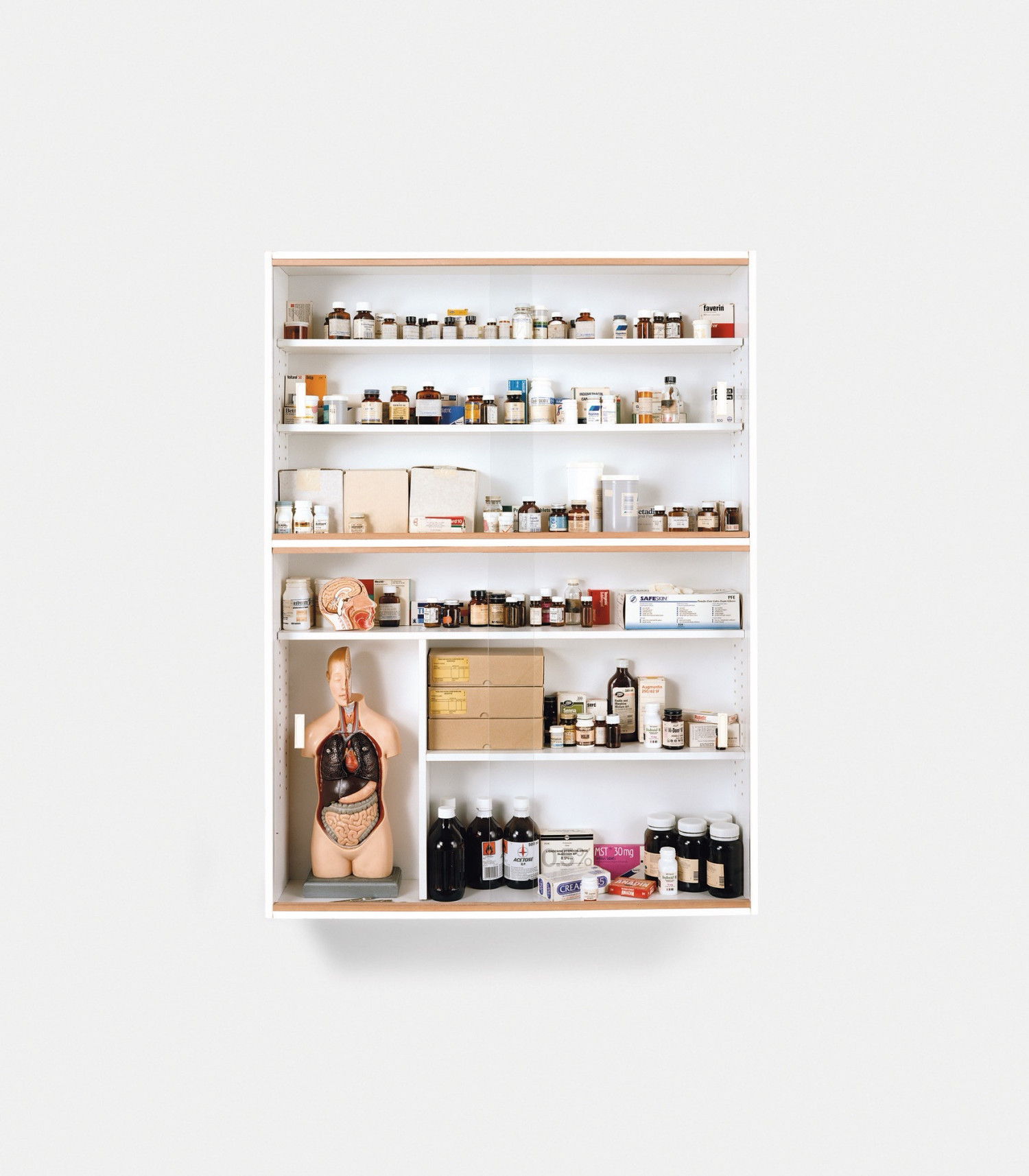
© Damien Hirst and Science Ltd. All rights reserved, DACS 2026. Photographed by Prudence Cuming Associates
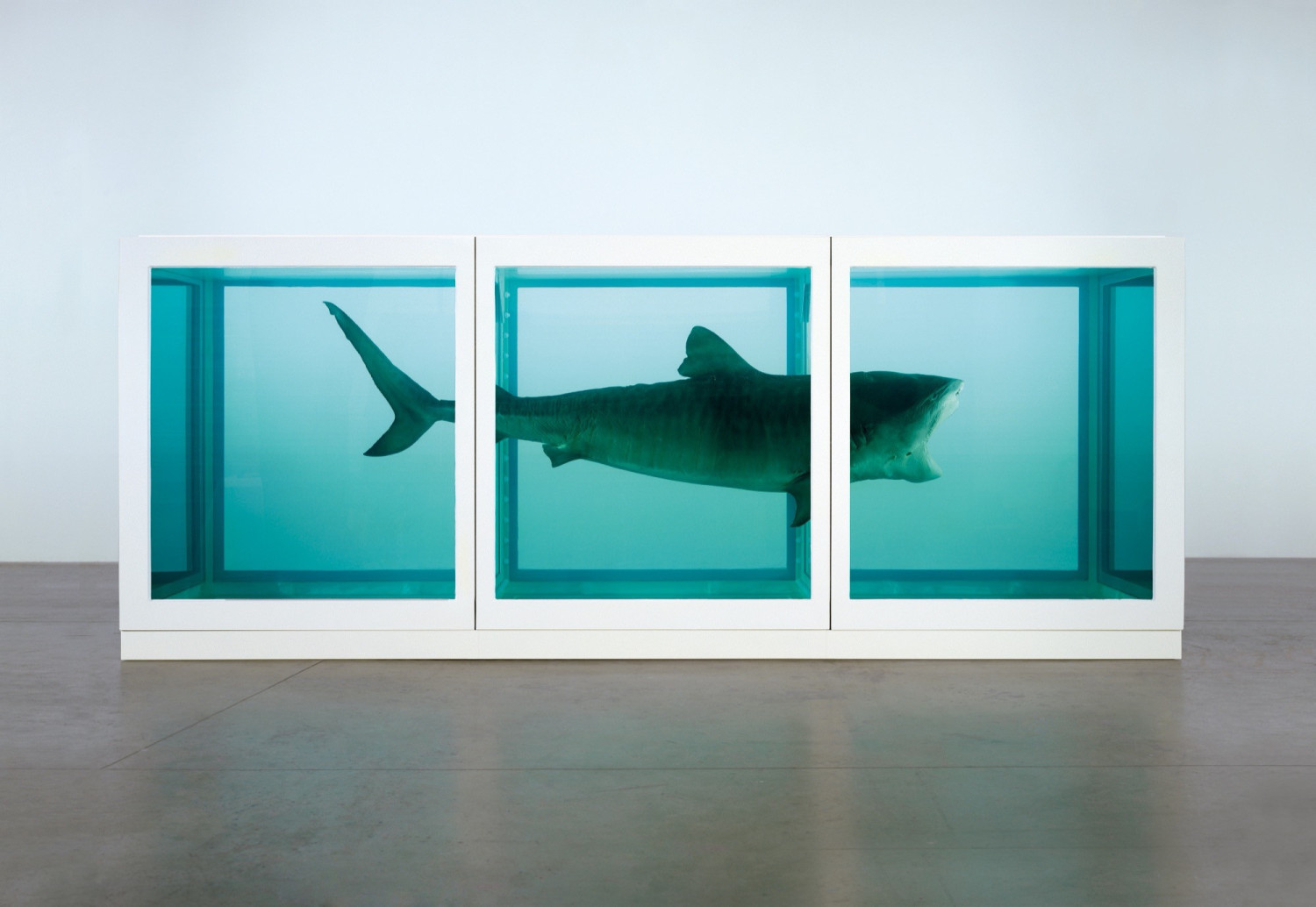
© Damien Hirst and Science Ltd. All rights reserved, DACS 2026. Photographed by Prudence Cuming Associates
The River Paintings: The Painterly Ambitions of Damien Hirst
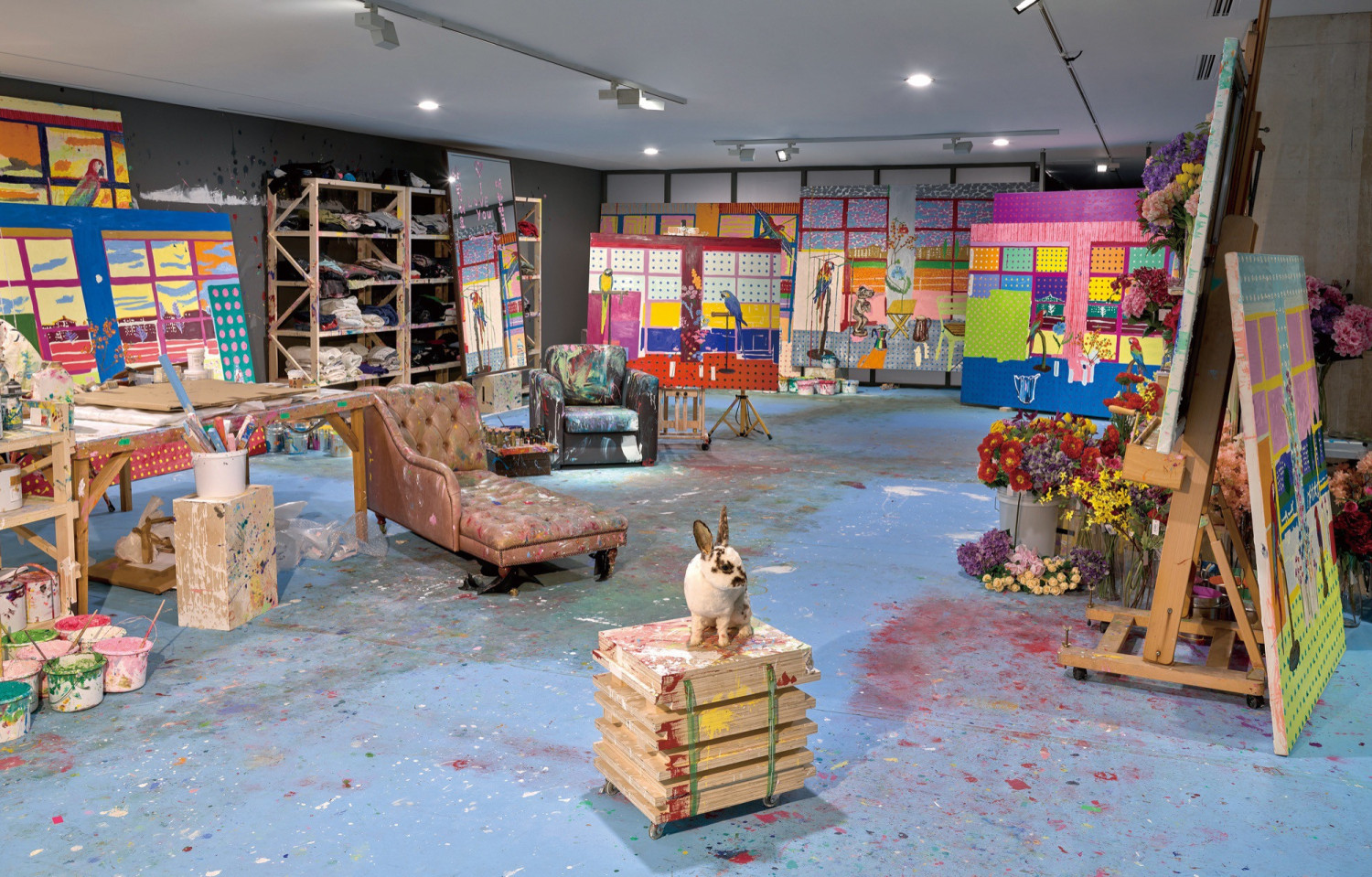
After walking through Damien Hirst’s current Seoul exhibition, visitors may find that their impression of Hirst has shifted. What awaits at the end is the recreation of Hirst’s actual studio, complete with unfinished canvases and the scattered remnants of paint. This scene, oscillating between abstraction and imagery, paint and landscape, illuminates the profound questions Hirst has harbored about the medium of painting.
Hirst has often acknowledged his enduring reverence for painting, yet paradoxically, faced with the absolute freedom to paint anything, he found himself unsure of what to put on the canvas. Consequently, he sought his own artistic language through methods entirely outside of traditional painting. His spot paintings were a clinical experiment in color and order; his spin paintings were an attempt to generate images through pure chance and momentum. In essence, he never abandoned painting; rather, he traversed other paths only to return to it.
The studio recreation and his newest series, the River Paintings, do not feel like an end point but a vivid scene in a continuously unfolding process. These paintings, originating from a studio overlooking the River Thames and the view through its windows, demonstrate that for Hirst, the physical act of painting remains a crucial, driving force in his present reality. What the audience ultimately encounters at the conclusion of countless controversies and experiments is a painter’s studio and the timeless landscape of paint and patience that he has visited time and time again.
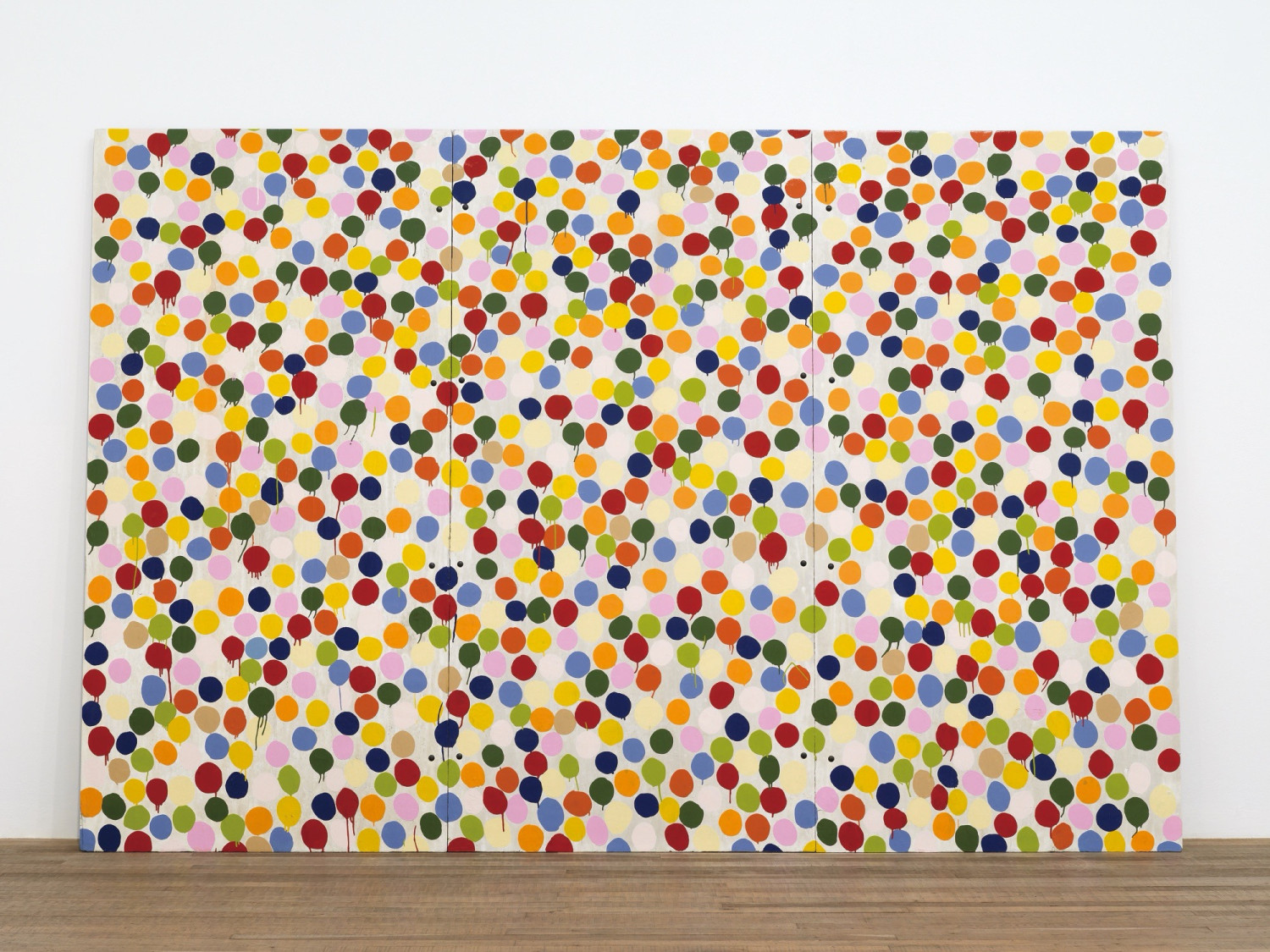
© Damien Hirst and Science Ltd. All rights reserved, DACS 2026. Photographed by Prudence Cuming Associates
© Damien Hirst and Science Ltd. All rights reserved, DACS 2026. Photographed by Prudence Cuming Associates
Where to Experiencethe Art of Damien Hirst
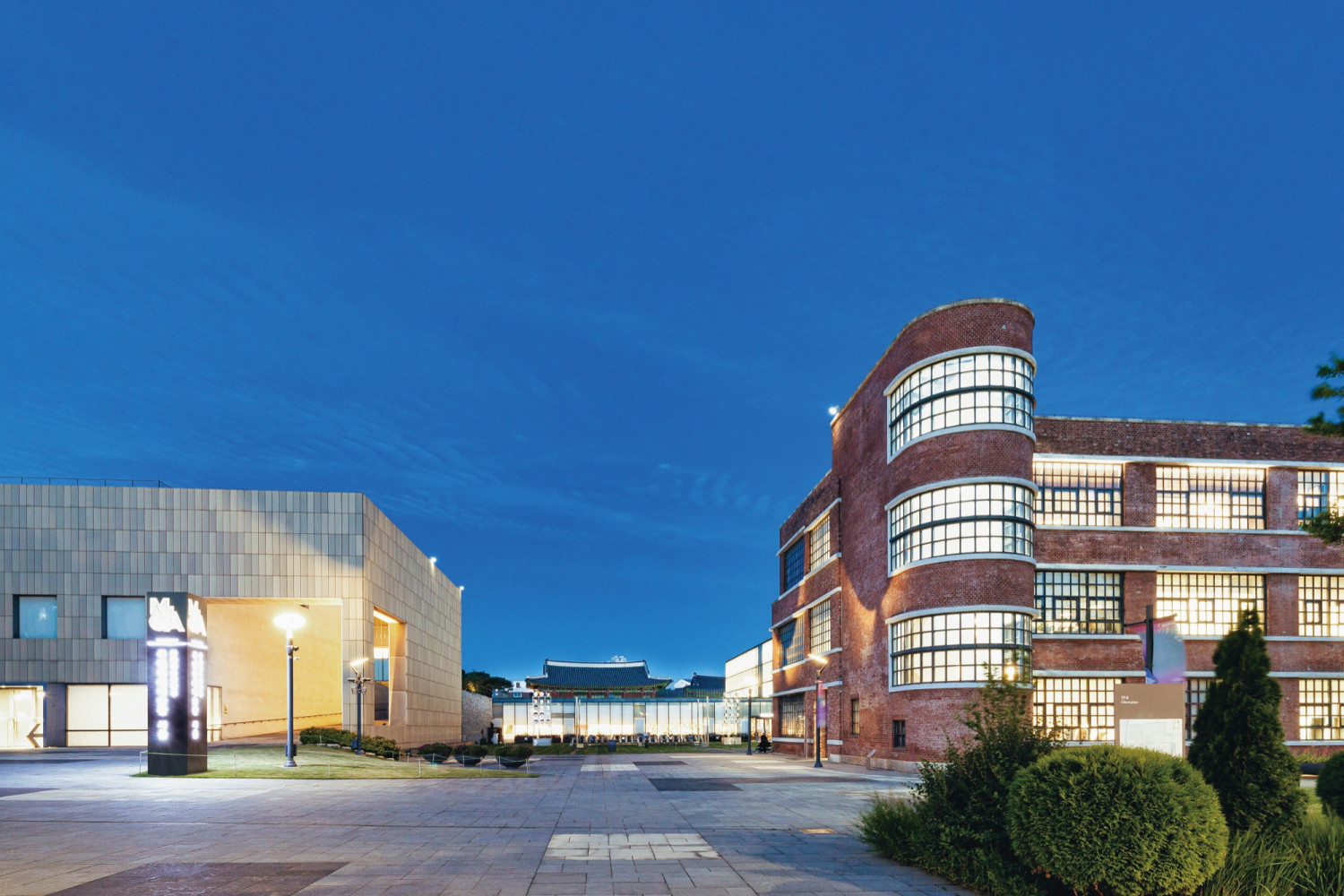
Museum of Modern and Contemporary Art Seoul
Damien Hirst: Nothing Is True But Everything Is Possible
3.20 – 6.28
MMCA Seoul is the nation’s premier national contemporary art museum. It has consistently hosted major exhibitions that trace the arc of Korean modern art and introduce cutting-edge international contemporary works to the public. Situated in the city’s vibrant downtown area where tradition seamlessly merges with the contemporary, it has established itself as an indispensable cultural space, introducing diverse currents in modern art through architecture, exhibitions and educational programs. Damien Hirst: Nothing Is True But Everything Is Possible is the artist’s first major solo exhibition in Asia. Curated to offer a panoramic view of an artistic world built over approximately 40 years, it features around 50 works spanning installation, painting and sculpture, allowing visitors to intimately explore the impressive breadth of his creative career.
- www.mmca.go.kr
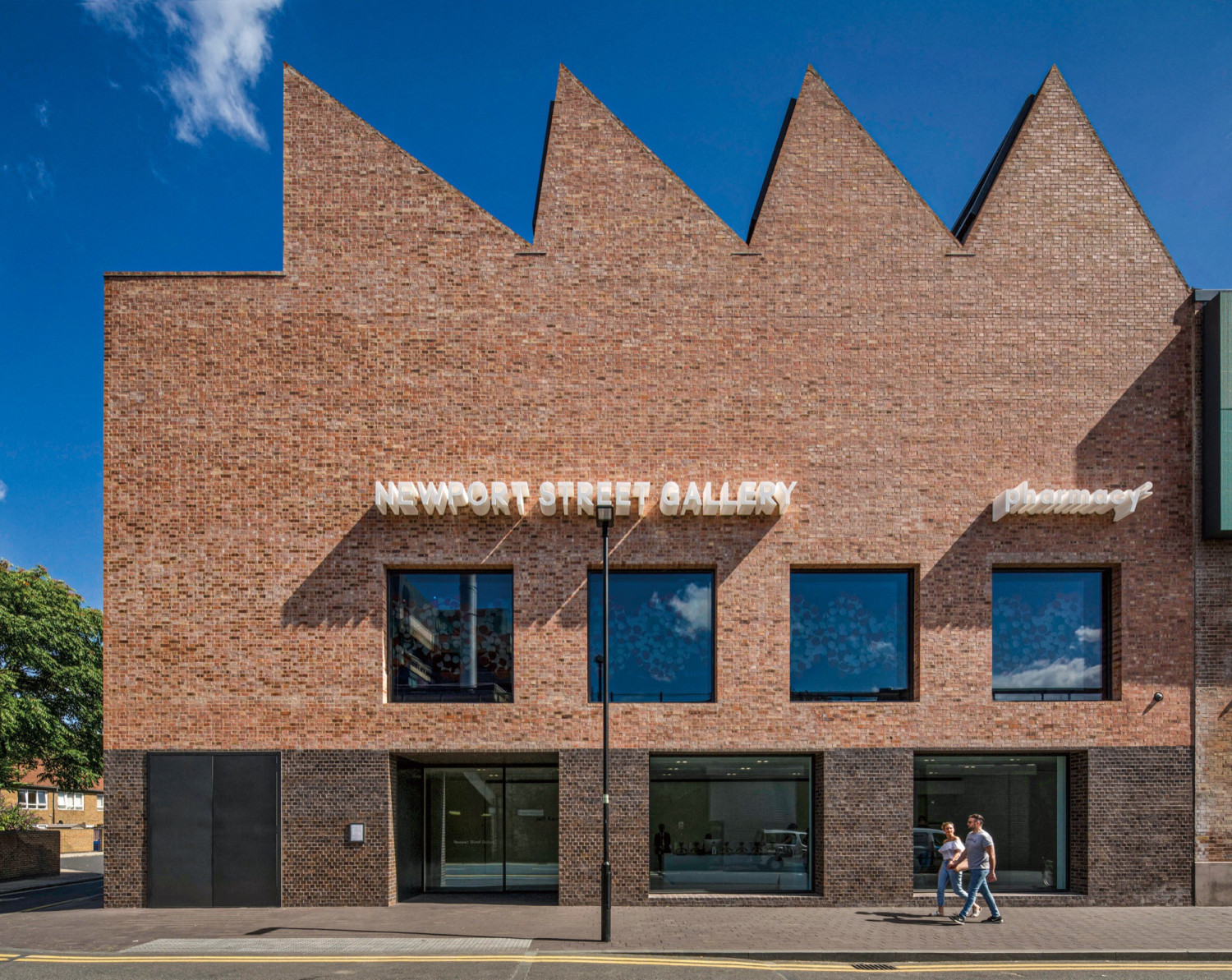
Newport Street Gallery
A contemporary art gallery located in Vauxhall, London, Newport Street Gallery was established by Damien Hirst specifically to exhibit his vast personal art collection to the public. This sprawling space, transformed from a site that originally functioned in 1913 as a stage scenery-painting studio for West End theaters, comprises six large exhibition galleries. It hosts rotating, specially curated exhibitions in the form of solo and group shows, featuring not only Hirst’s own works but also pieces from his collection, operating as a vital cultural space that offers visitors an opportunity to observe the broad currents of contemporary art entirely through the discerning eye of a single artist’s collection. Admission to the gallery is free. During exhibitions, the venue also hosts Pharmacy 2, a unique café designed by Hirst inspired by his Pharmacy installation.
- www.newportstreetgallery.com
- Korean Air operates direct flights between Incheon and London 7 times a week.
- Written by Choi Jini
- Image courtesy of the artist and MMCA, Korea