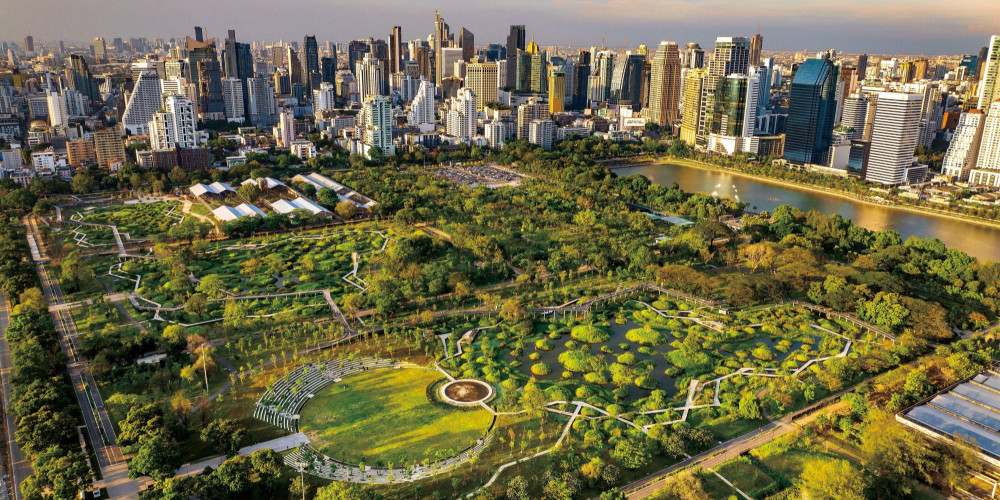
A Park Forged From Urban Emptiness, Benjakitti Forest Park
Bangkok is a city teeming with sound, heat and light; yet even in its vibrant heart, there are places to quietly catch one’s breath. Benjakitti Forest Park offers a serene testament to how a city can not only coexist with nature but thrive alongside it.
An Ecological Oasis in the City’s Core
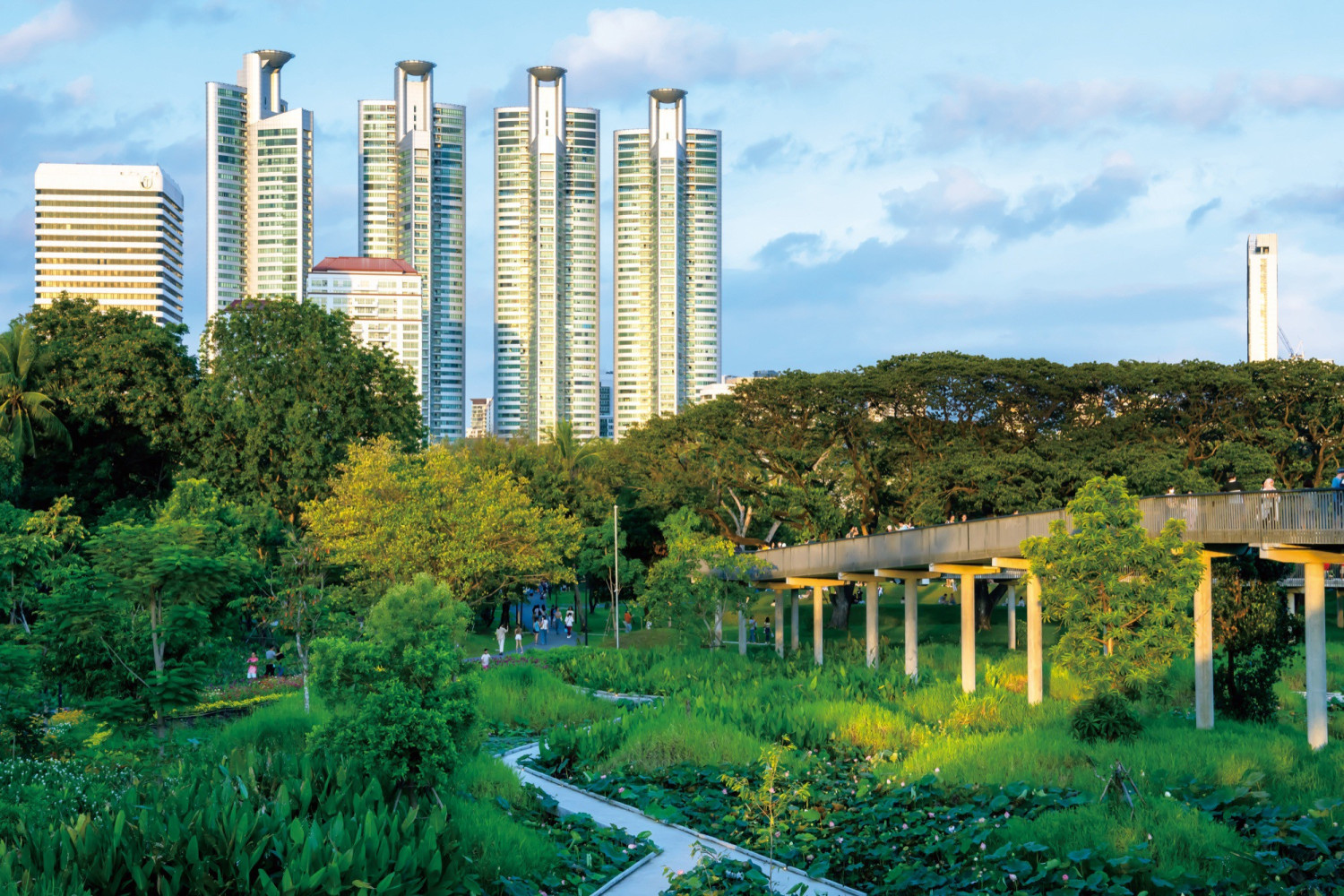
Just blocks from Asok station in Bangkok, the city’s dense urban fabric suddenly gives way. The towering skyscrapers, elevated roadways and relentless flow of traffic recede; in their place, a vista of water and trees opens up. Benjakitti Forest Park emerges almost as if it has seeped into the city’s very pores.
The Khlongtoei District, where the park now stands, was an indus trial zone for years. A polluted canal flowed along its northern edge; a major expressway severed it from neighboring areas on the west. The plot of land — nestled between the original Benjakitti Park to the east and the Queen Sirikit National Convention Center to the south — had become an idle, isolated island in the city’s heart.
More critically, Bangkok is a low-lying metropolis, with an average elevation of 1.5m above sea level. Prone to monsoons bringing around 1,500mm of rain annually and facing subsidence from groundwater use, its risk of flooding has only grown. Following heavy rains, the city is easily submerged, and traditional drainage methods have proven inadequate. Under these conditions, the site’s fate was not a matter of simple development; it was tied to the very survival of the city.
The Chinese landscape architect Kongjian Yu of Turenscape and Thailand’s Arsomsilp Landscape Studio collaborated on the project. Instead of building more, they chose to empty. Instead of bringing in new materials, they chose to use what was already there. Thus, an industrial site was returned to nature. In its place, a beautiful forest park was dedicated to Queen Sirikit, a space where Bangkok can find a new, more harmonious equilibrium.
A Park Forged from Water and Wetlands
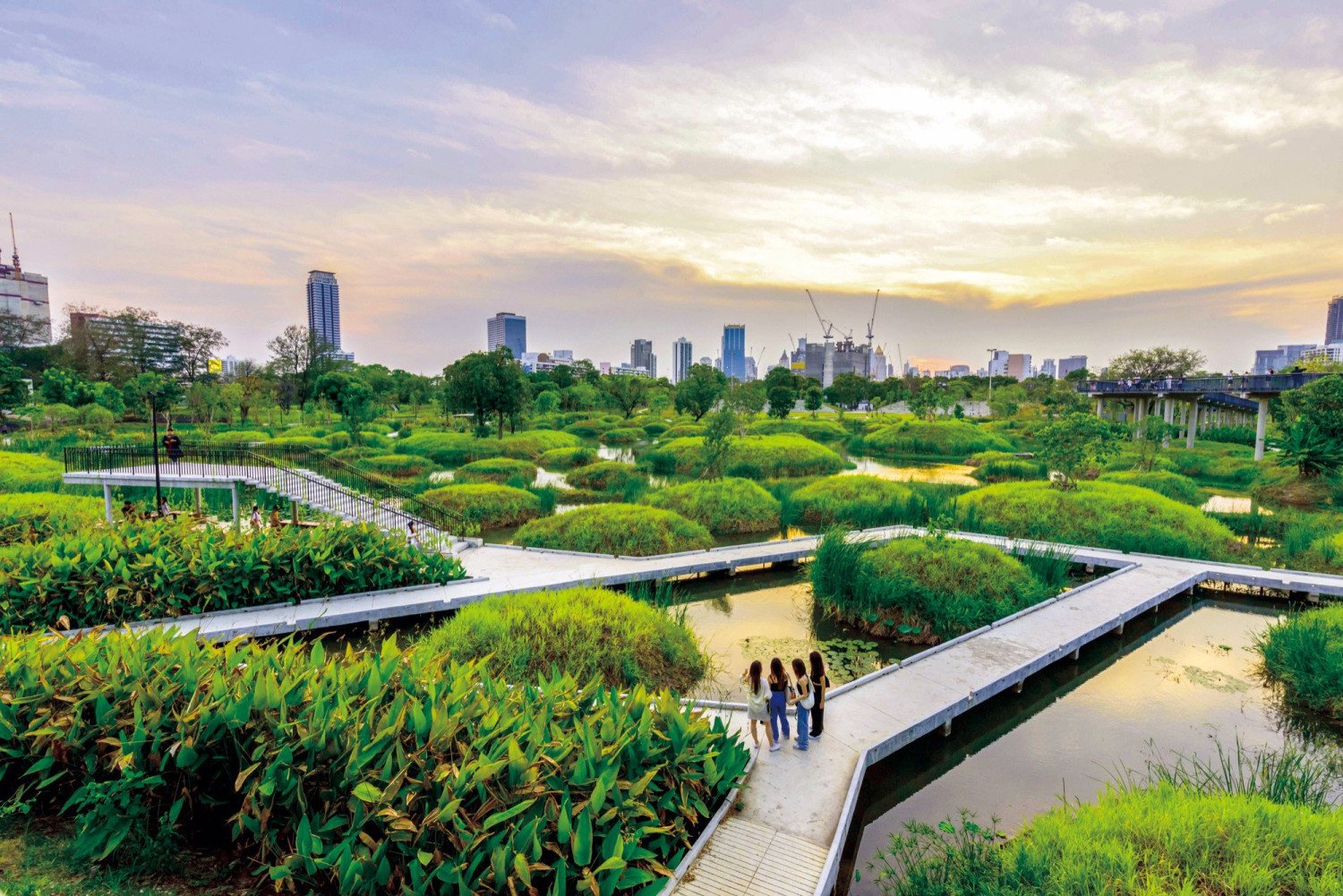
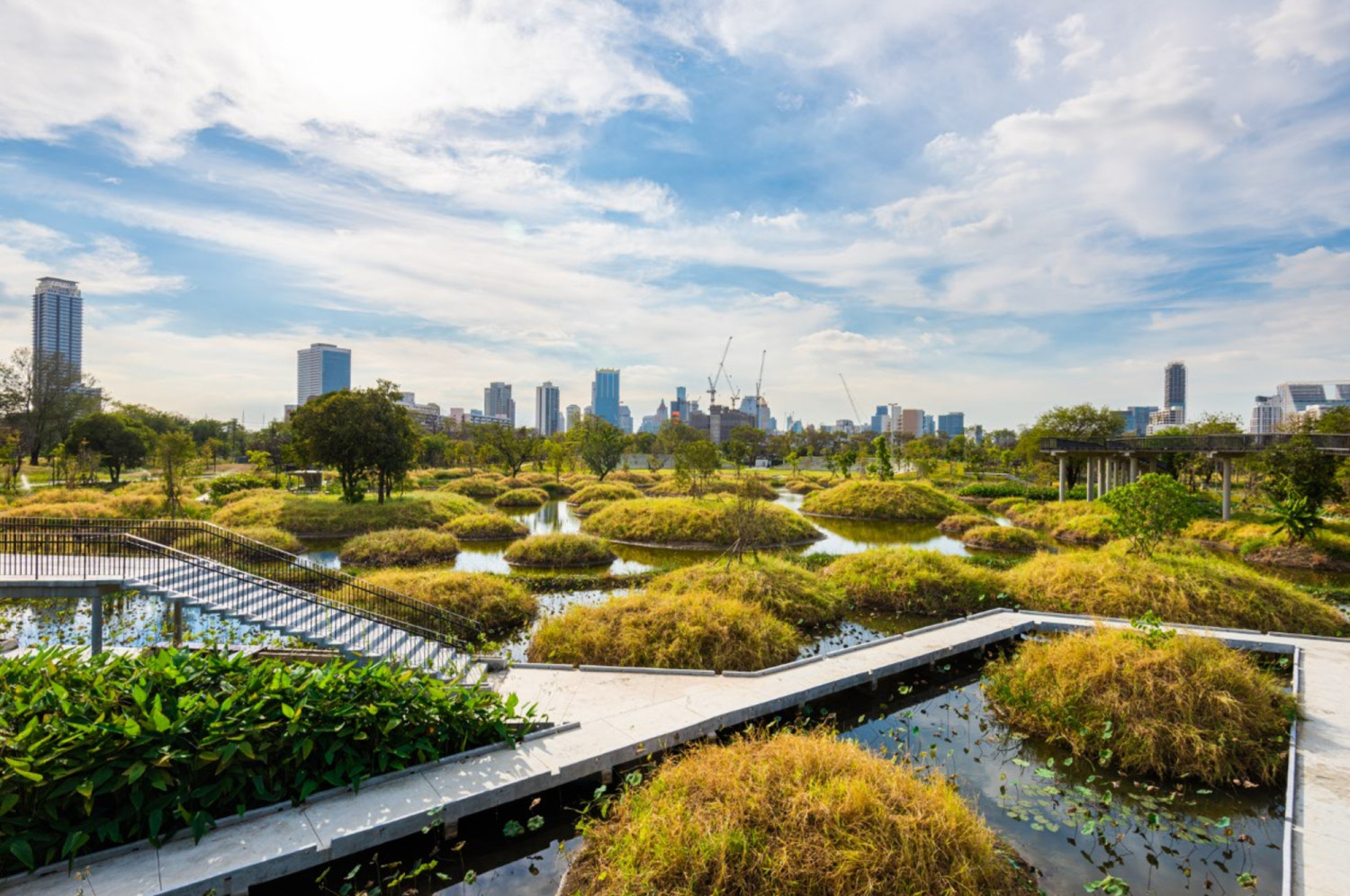
Stepping into the Benjakitti Forest Park, the first thing you notice is the four lakes, connected in a sequence of varying depths and contours, with hundreds of small islands scattered in between. While it looks entirely natural, this breathtaking landscape is the result of careful, intentional design — the focus being on the land itself. Rather than importing soil, the designers excavated the ground to create low-lying wetlands, then used the earth to form the mounds and islands that define the landscape. Through this simple process, a hard, impermeable clay surface was transformed into a structure that could shed, absorb and hold water. The concrete from demolished buildings was not discarded either. It was crushed and repurposed as the foundation for the islands and a base for the walkways. The traces of the site’s industrial past did not disappear; they were simply reborn in a different form.
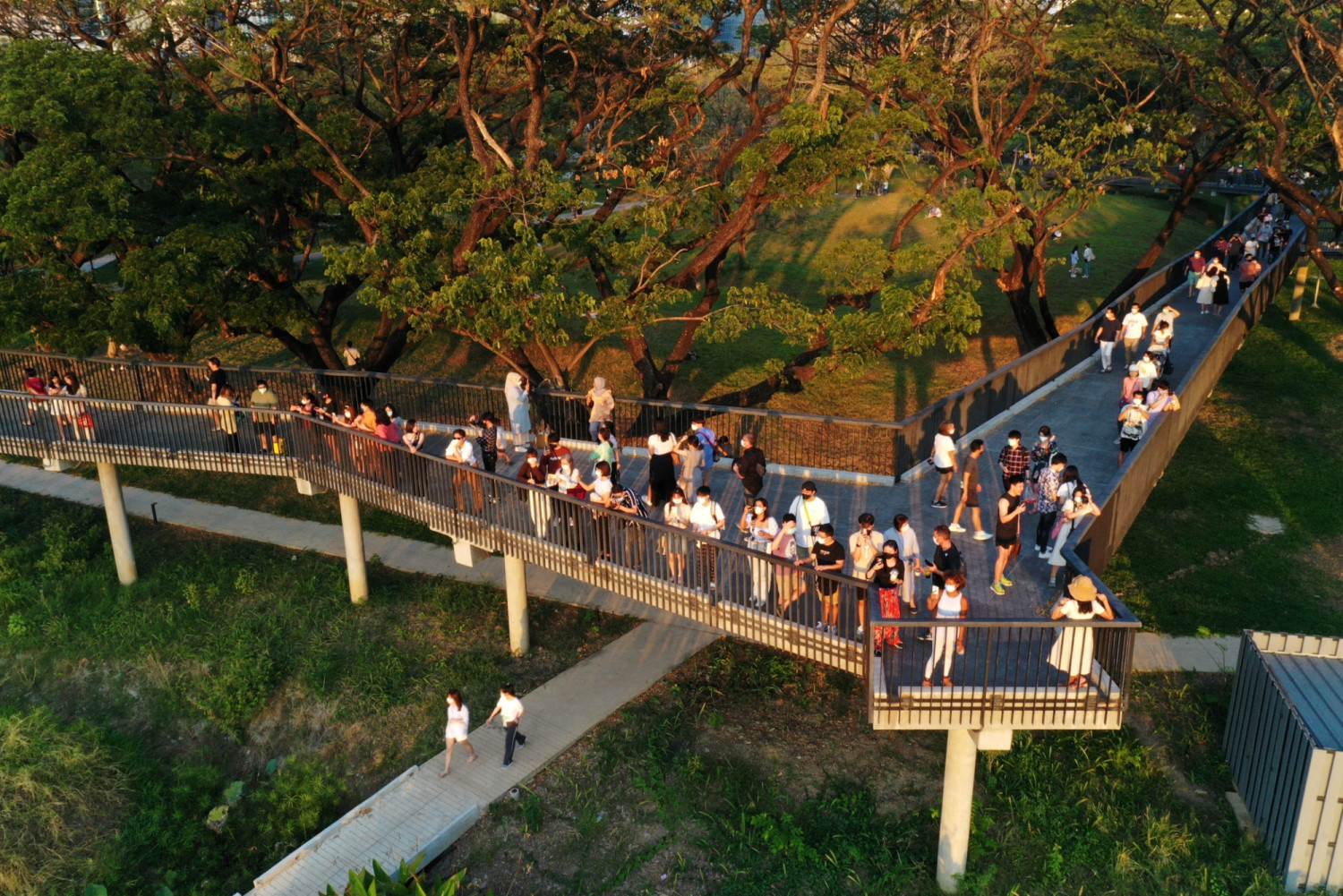
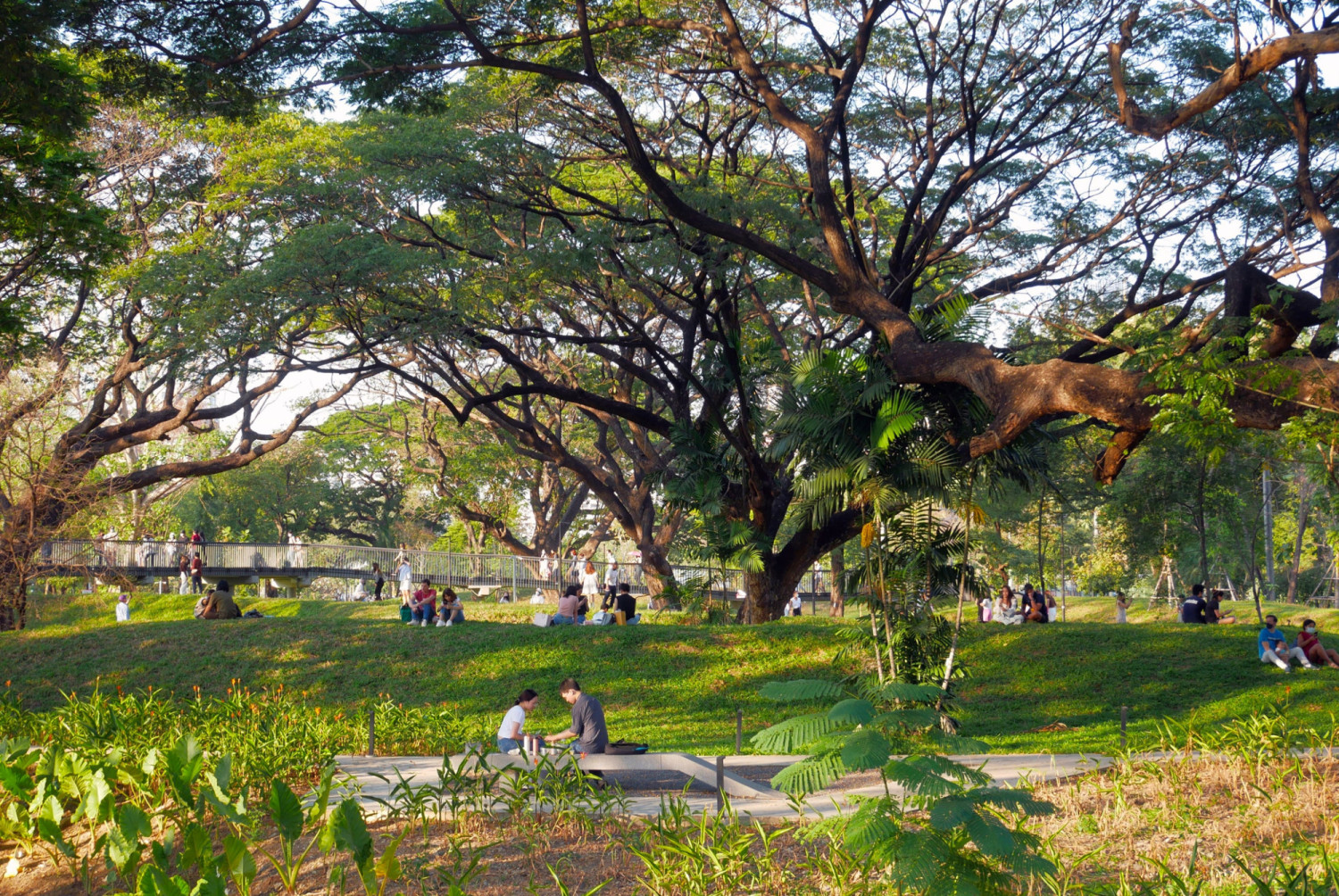
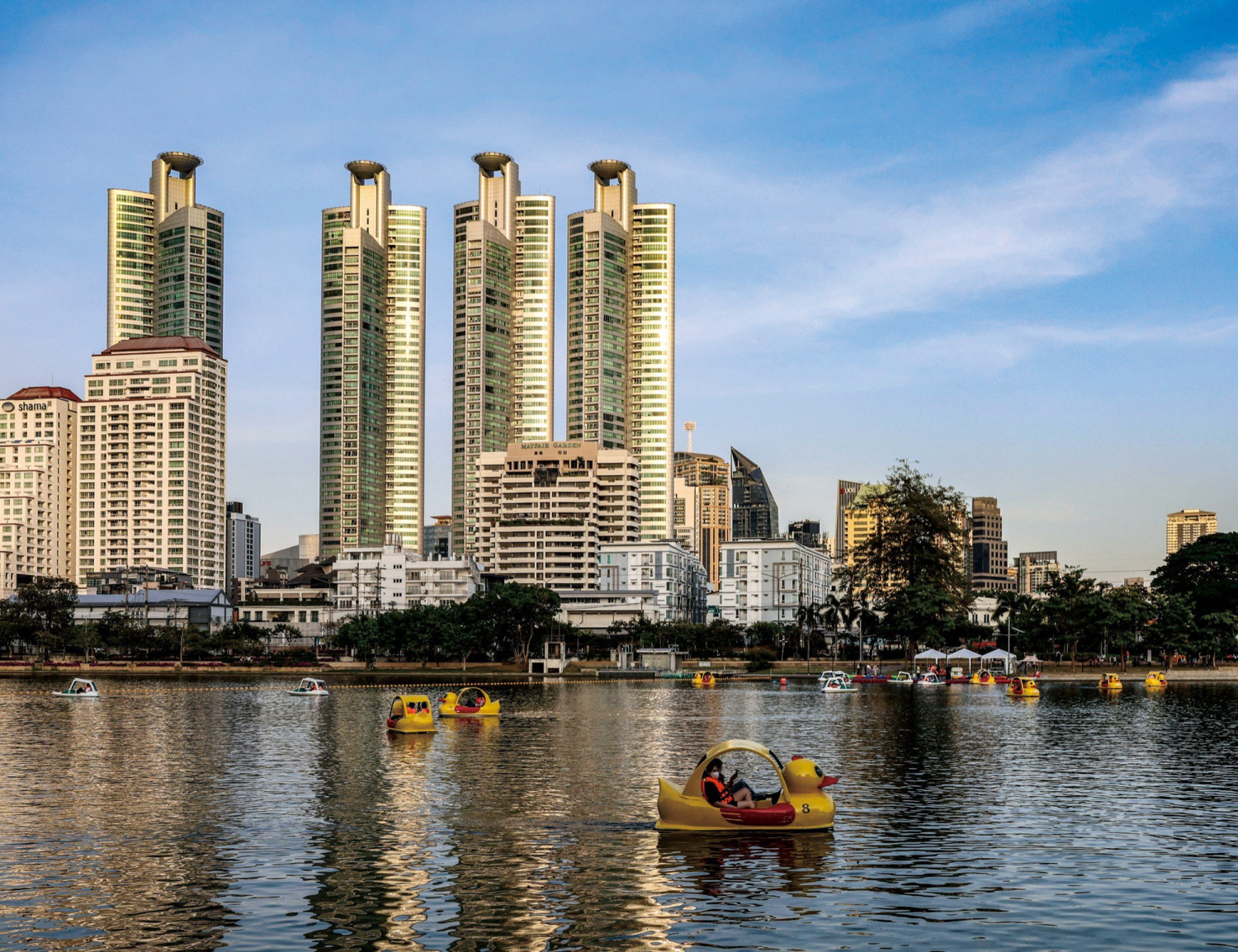
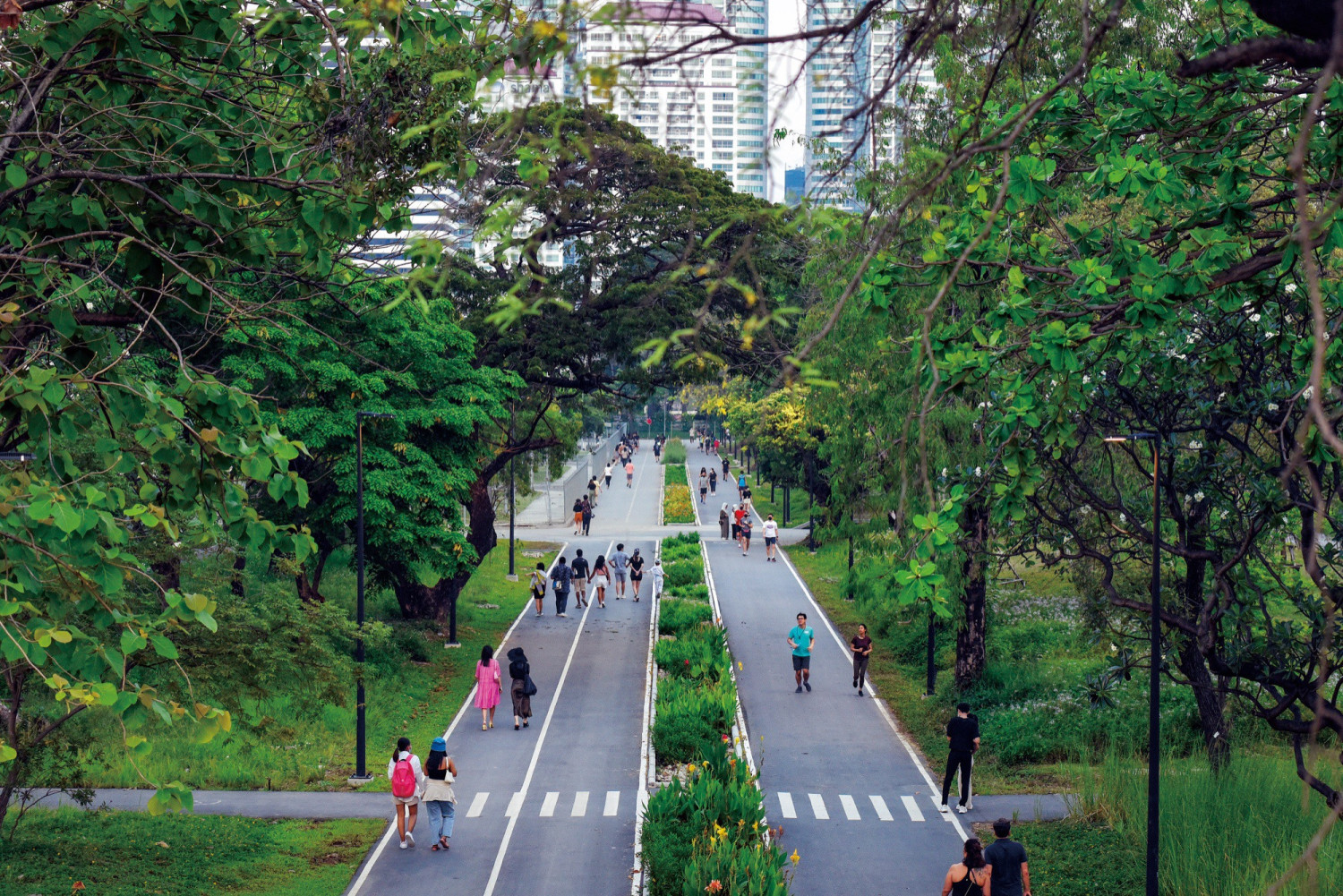
The park’s wetlands can now store hundreds of thousands of cubic meters of rainwater. The wetlands created along the northern and western borders also act as natural filters, slowly purifying polluted water through their plants and soil. The entire park functions as a single, living system. Where the deep and shallow waters meet, an array of life finds a home. Plants, insects and birds all coexist in this new ecosystem, and over 90 different species of birds have now been observed here. The park is more than a backdrop; it is a living, breathing natural environment. And where nature thrives, people are naturally drawn. Joggers, families on bicycles, couples in paddle boats, tourists taking photos — tens of thousands of people now visit this forest park every day. The old industrial buildings have been converted into a sports center and a museum, their roofs partially opened to allow in light and air. Buildings are no longer barriers but are now pathways that connect to the natural world.
© Valeria Mongelli / ZUMA Press Wire
How a City Can Coexist With Nature
The essence of Benjakitti Forest Park lies in its form as much as its function. It is based on the concept of a “sponge city” — a design that encourages the land to absorb and store rainwater rather than quickly draining it away. When rainfall is heavy, the park embraces the water, allowing it to slowly seep into the earth, thus alleviating the burden that would otherwise fall on the entire city.
The park stores water, purifies pollution and creates a haven for diverse life forms. It may not be immediately visible, but this park now serves as a crucial foundation for sustaining the city. Another key feature is the concept of “messy nature.” Unlike a typically manicured park, this one is designed to let nature grow freely. Rather than being confined to a planned form, plants are allowed to mature, finding their own places over time. It’s an approach that embraces the change instead of a static, finished landscape. At the same time, this park beautifully demonstrates a public space’s potential. People from all walks of life share the same space, each enjoying it in their own way. In a city rapidly becoming fragmented, such spaces are more critical than ever.
Travelers usually remember Bangkok as a fast-paced, dense metropolis — a whirlwind of temples, markets, traffic and heat. But the moment you step into this park, a different feeling is added to that familiar image. Here, rather than merely consuming the city, you observe it sustaining itself. And the park has a quiet lesson to offer: a city does not grow stronger by becoming harder and more impenetrable but by learning to breathe with nature.
Places to Explore Around Benjakitti Forest Park
Lumphini Park
Connected to Benjakitti Forest Park by a skywalk, Lumphini Park is one of Bangkok’s most beloved green spaces — a panorama of lakes, palm trees, joggers and the city skyline. If Benjakitti represents the city’s ecological future, Lumphini is the park where Bangkok has long come to live out its daily life.
- 192 Wireless Road Pathum Wan
Talat Noi
Nestled beside the Chao Phraya River, Talat Noi is the old port district of Bangkok, with old warehouses, narrow alleys and aging shophouses still intact. Alleys filled with signs, workshops and temples are remnants of a historic settlement for Chinese merchants. Vintage shops, cafés and vibrant street art moved in recently, turning it into a colorful Bangkok neighborhood.
- Samphanthawong
Yaowarat Chinatown
Yaowarat, Bangkok’s Chinatown, comes alive after dark. As the sun sets, the neon signs flicker on and street food stalls line the roads, turning the area into a massive, open-air restaurant. A chaotic, beautiful mix of old gold shops, Chinese herbal medicine pharmacies, bustling markets and temples, it’s a place to discover the city’s rich, multicultural history.
- Yaowarat Rd, Samphanthawong
Chatuchak Weekend Market
With over 10,000 stalls, this is one of the world’s largest weekend markets, a sprawling labyrinth where you can find everything, from clothing and crafts to pottery, plants, vintage goods and an incredible range of street food. As you wander through its maze-like alleys, you’re bound to uncover unexpected treasures.
- www.chatuchakmarket.org
Wat Benchamabophit
Built with Italian marble, this temple, known as the Marble Temple, has a strikingly bright, elegant vibe. Its beauty lies not in ornate decoration but in its perfect balance and proportion, giving it a very different mood than other Bangkok temples. As you walk among the Buddha statues lining its cloisters, you’ll experience the noise of the city seeming to quietly fade.
- 69 Rama V Rd, Dusit
- Gye Anna is a London-based architecture and design columnist. She runs acollective, a content agency bridging Europe and Asia, introducing design and cultural trends from both cultures to the media.
- Written by. Gye Anna
- Photography by. Turenscape, Arsomsilp Landscape Studio, Tourism Authority of Thailand
- Korean Air operates direct flights between Incheon and Bangkok 28 times a week.