The Paper Carrying a Millennium-Old Tradition Hanji
The traditional Korean paper known as hanji has lasted for over a millennium now, but the beauty of its slow, meticulous craftsmanship is gaining new appreciation today. Hanji from the Mungyeong region of Korea has been used by the Louvre in France as a material for restoring cultural artifacts, demonstrating that this time-tested paper remains as much a craft as it is a means of expression. On this distinctive paper, the future is being written in an unmistakably Korean manner.
A Paper Crafted with Patience and Devotion
ⓒ Korea Craft and Design Foundation
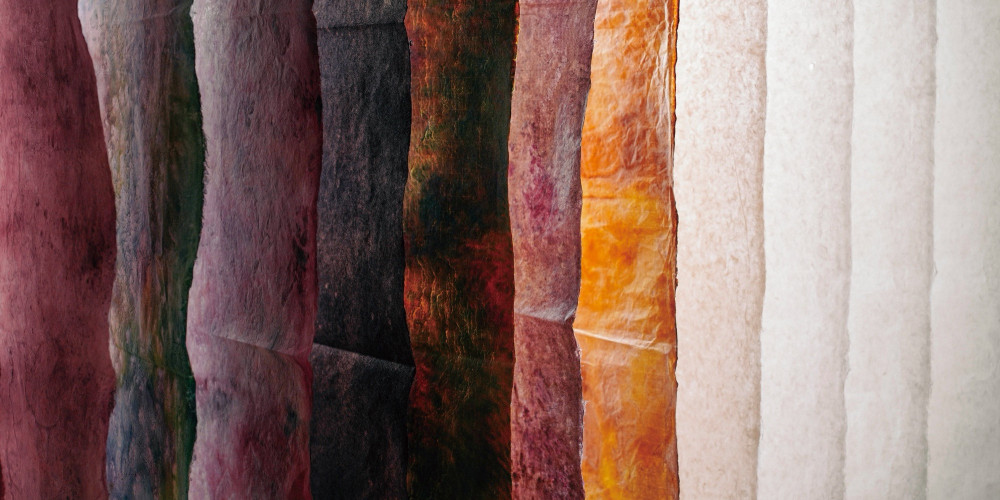
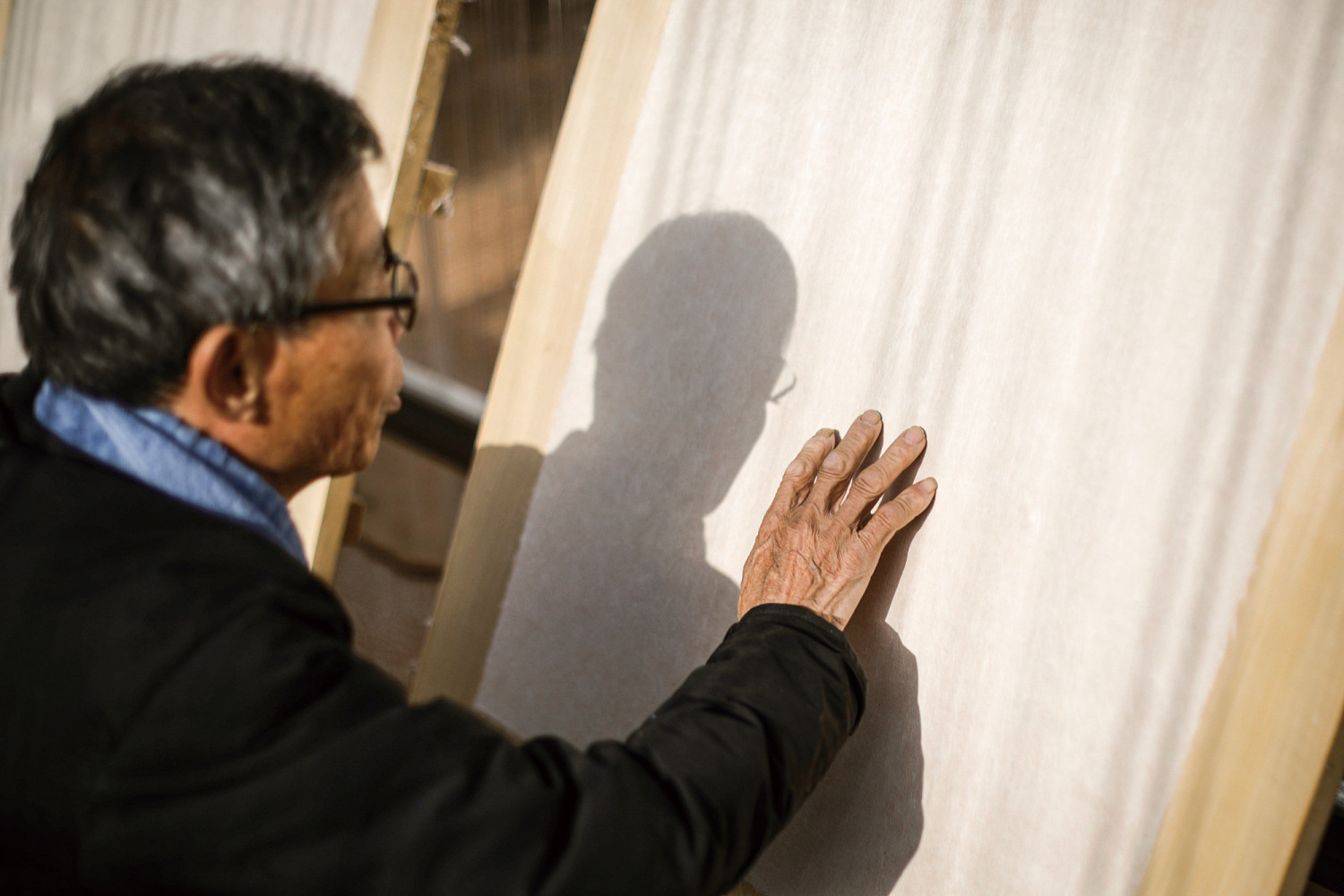
In the digital era, when speed defines life, why are we returning to hanji, a painstakingly time-intensive material? The fact is that hanji is not simply handmade paper. Each page displays the history of the Korean sense of time, attitude toward life and philosophy of nature. The process of growing the daknamu (paper mulberry tree), stripping its bark and bringing one sheet of paper into being is said to take one hundred delicate touches. It is an expression of a time-honored philosophy of patience and devotion, embodying the lifestyle of Koreans of ages past, who believed that perfection could not be rushed. And it’s thanks to the repetition of boiling in lye and baking in the sun, as well as the absence of industrial chemical processing, that hanji has the strength to last a millennium.
This strength is significant. A woodblock print of the Viśuddhaprabhā Dhāraṇī — regarded as one of the world’s oldest surviving Buddhist ritual texts — is a testament to hanji’s remarkable powers of preservation. Whereas Western paper is vulnerable to tearing and oxidization, hanji gains depth with the passage of time, allowing it to bear witness to history. That’s the advantage of making a material that is created with a respect of natural cycles and does not rebel against them.
Amid a flood of information that can simply be reduced to strings of ones and zeros in our modern world, hanji’s rich physicality and unchanging value gently invite us to reclaim the sensory world we’ve lost. Korea’s time-tested paper is fortified by flexibility, paralleling the Korean ancestors’ pursuit of a graceful coexistence with nature. In short, gazing upon hanji can be likened to deciphering the origins of Korean thought.
ⓒ Korea Craft and Design Foundation
ⓒ Korea Craft and Design Foundation
The Aestheticsof a Living Material
ⓒ Korea Craft and Design Foundation
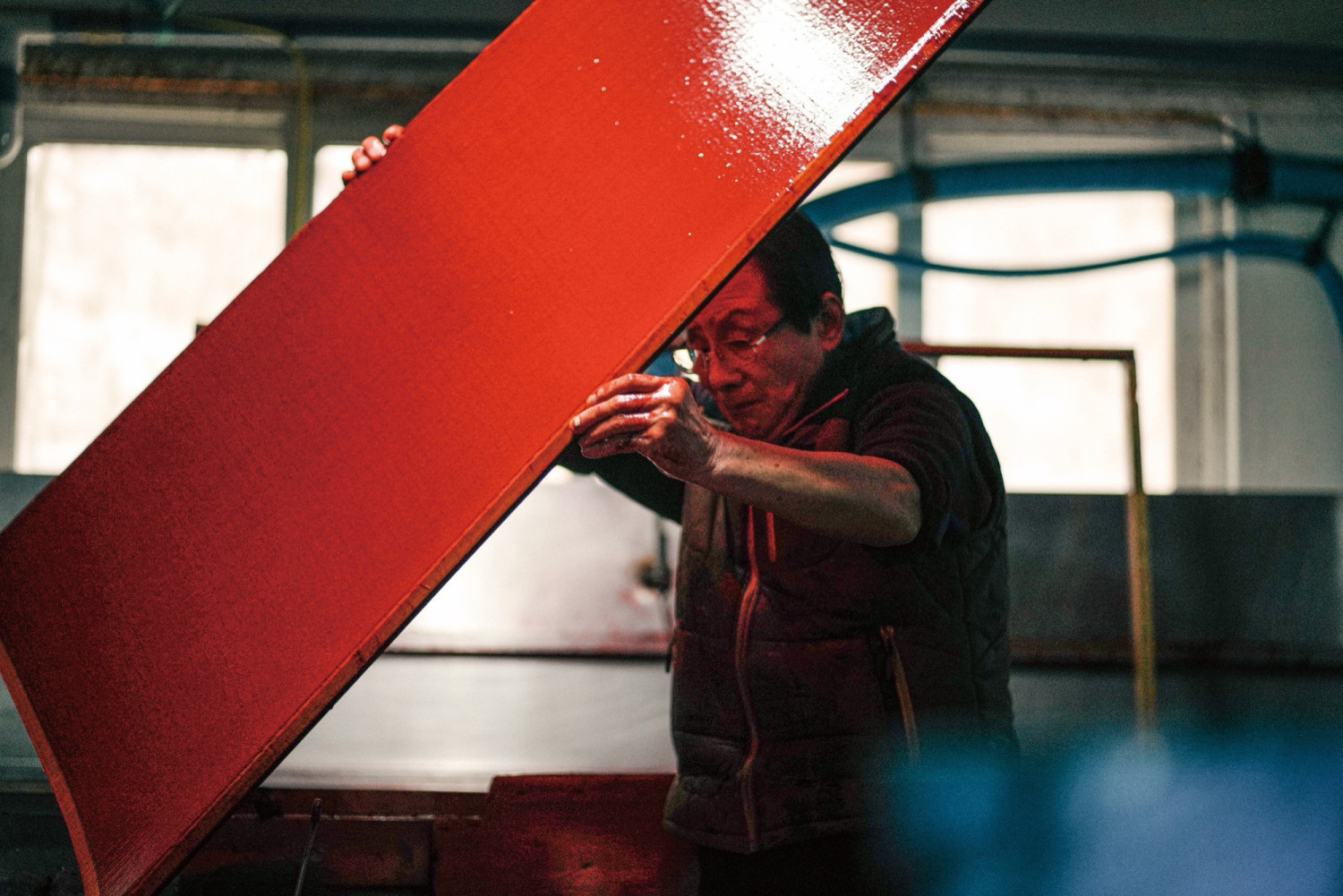
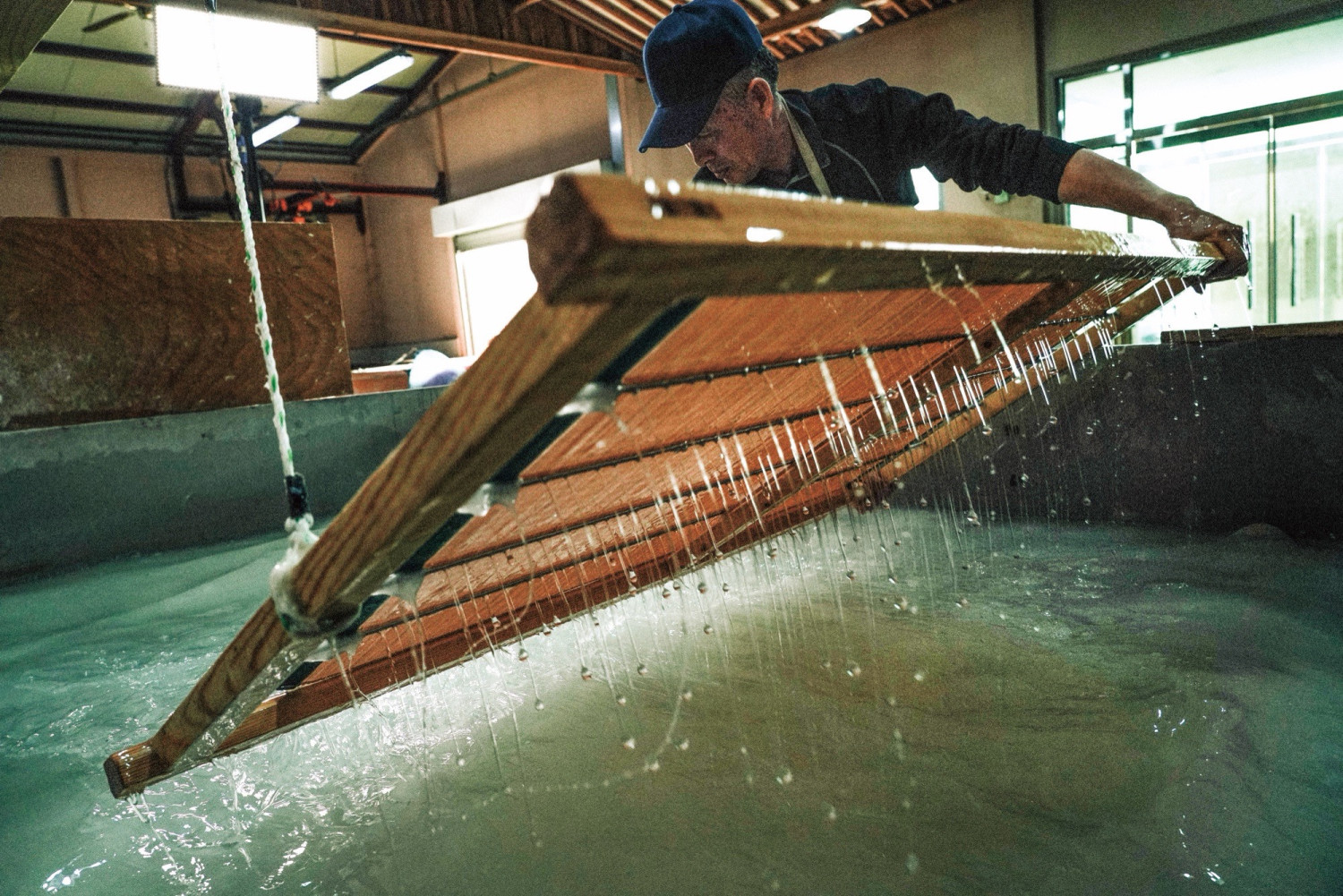
The remarkable resilience of hanji derives from two extraordinary aspects of its manufacturing process. First is gohae, where fibers of the paper mulberry tree are beaten with a wooden mallet to separate them. It’s a strenuous job determining the paper’s thickness and texture. The denser the fibers, the tougher the hanji. Only after this beating can the fibers take shape in a craftsperson’s hands. The second unique aspect of hanji manufacturing is the oebal-tteugi method of sheet formation. Here, the fiber mixture is poured into a bamboo frame and rocked from side to side and front to back, forcing the water out.
The process interlocks the fibers, giving the paper a tear-resistant elasticity. To master this technique, the craftsperson must artfully coordinate their movements with the water’s flow. The resulting hanji has a delicate coarseness with living qualities that are apparent to the touch.
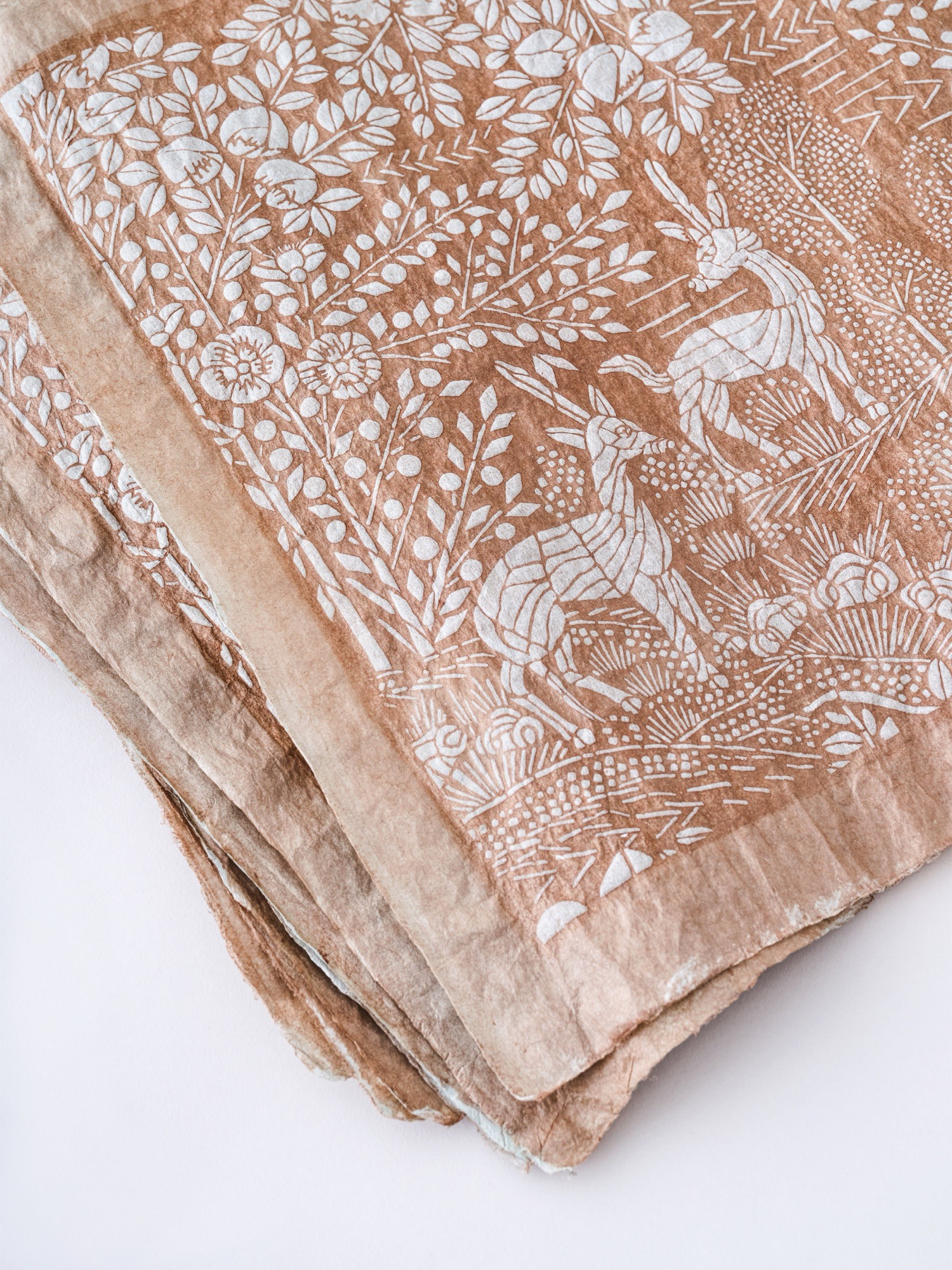
The warmth of sunlight filtered through the material and the circulation of air and humidity regulation enabled by its porous structure show that hanji is a breathable material of incredible vitality. When a calligraphy brush touches a piece of hanji, ink spreads between its fibers in an aesthetic referred to as balmuk — a serendipitous beauty created through the meeting of mind and matter.
ⓒ Korea Craft and Design Foundation
But hanji’s utility extends beyond calligraphy. Koreans of the past once wore coats known as jiui that were stuffed with hanji instead of cotton, helping them endure the bitter cold. They also wore a hanji-based armor called jigap that was strong enough to repel arrows, testifying to the material’s profound potential. Ironically, hanji’s true strength is found in its seemingly imperfect texture, an idea epitomizing the Korean ideal of finding perfection within the imperfections of nature.
Today, hanji’s unique durability and physical advantages are being appreciated beyond Korea, in the Louvre, the world’s premier art museum. While Japan’s washi paper long predominated the preservation of cultural artifacts, hanji is emerging as a new standard because of its flexibility and stability after restoration.
Experts at the Louvre praise the dimensional stability of hanji when joined to metal or organic materials; in other words, objects don’t warp over time. Notably, the value of hanji from Korea’s Mungyeong region has been demonstrated through its use in the restoration of an old print from the Edmond de Rothschild collection at the Louvre. Thus, hanji is making an impact on areas of culture and knowledge that are shared treasures of humanity.
A Sustainable FutureWritten in the Language of Tradition
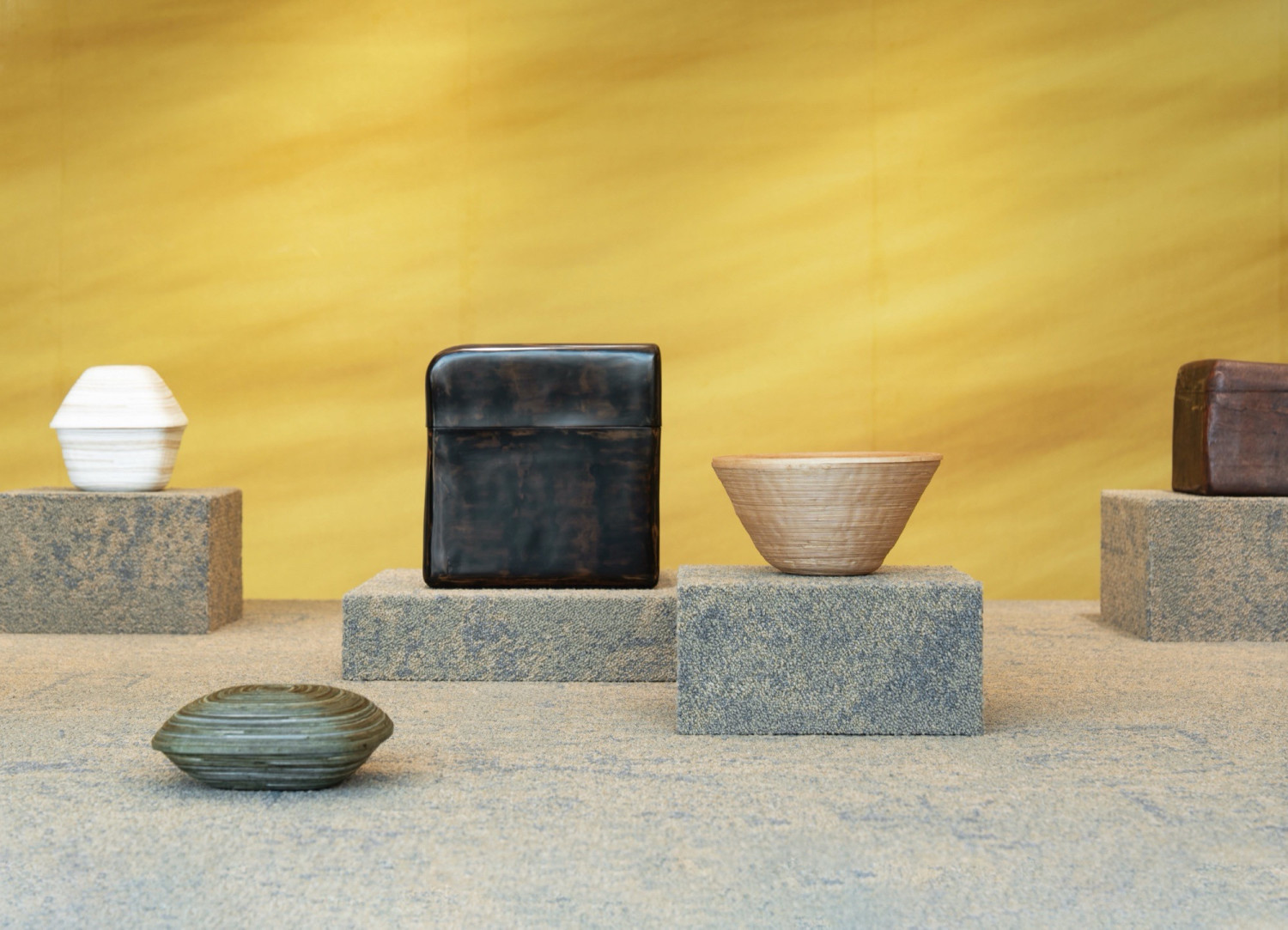
© Korea Craft and Design Foundation
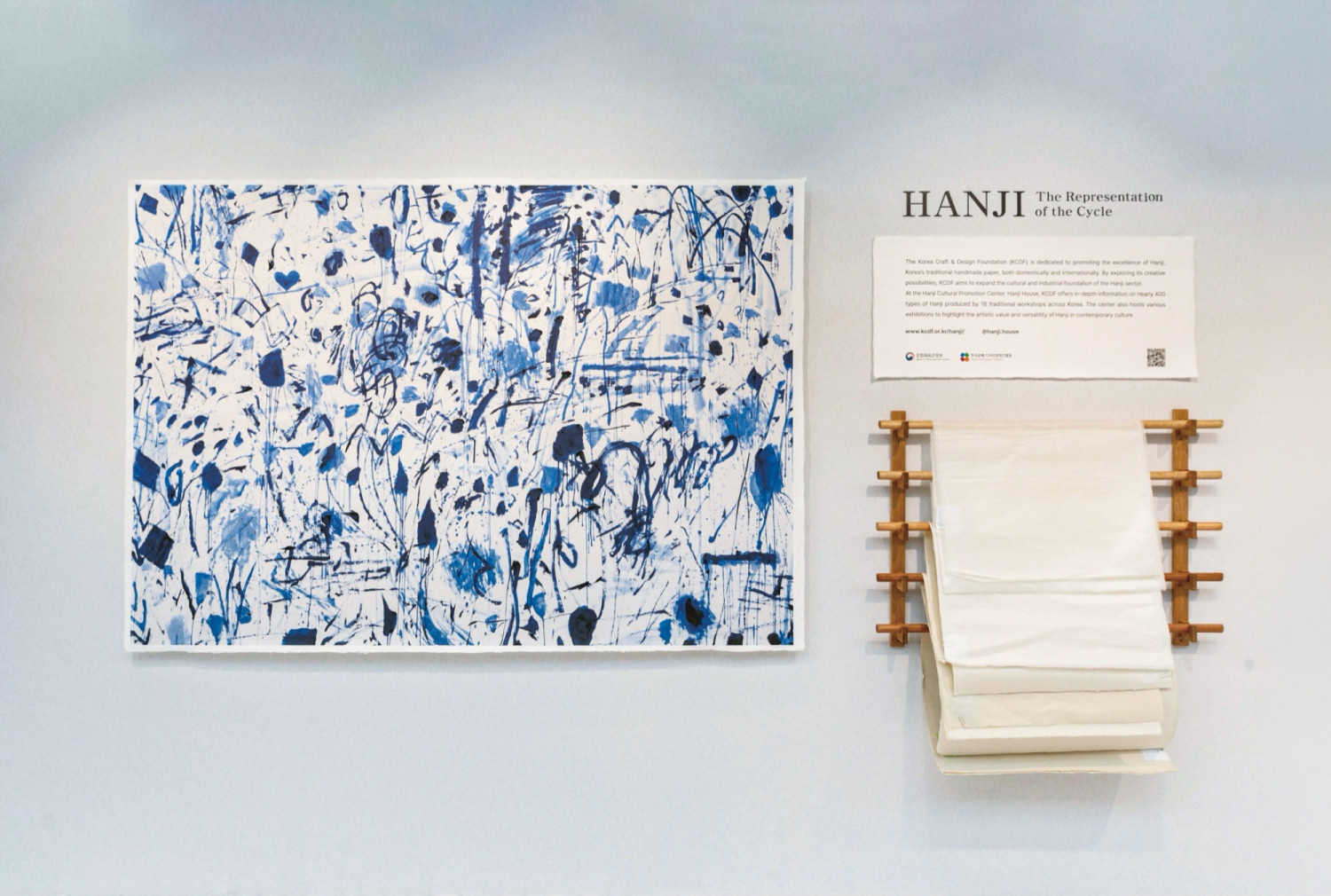
© Korea Craft and Design Foundation
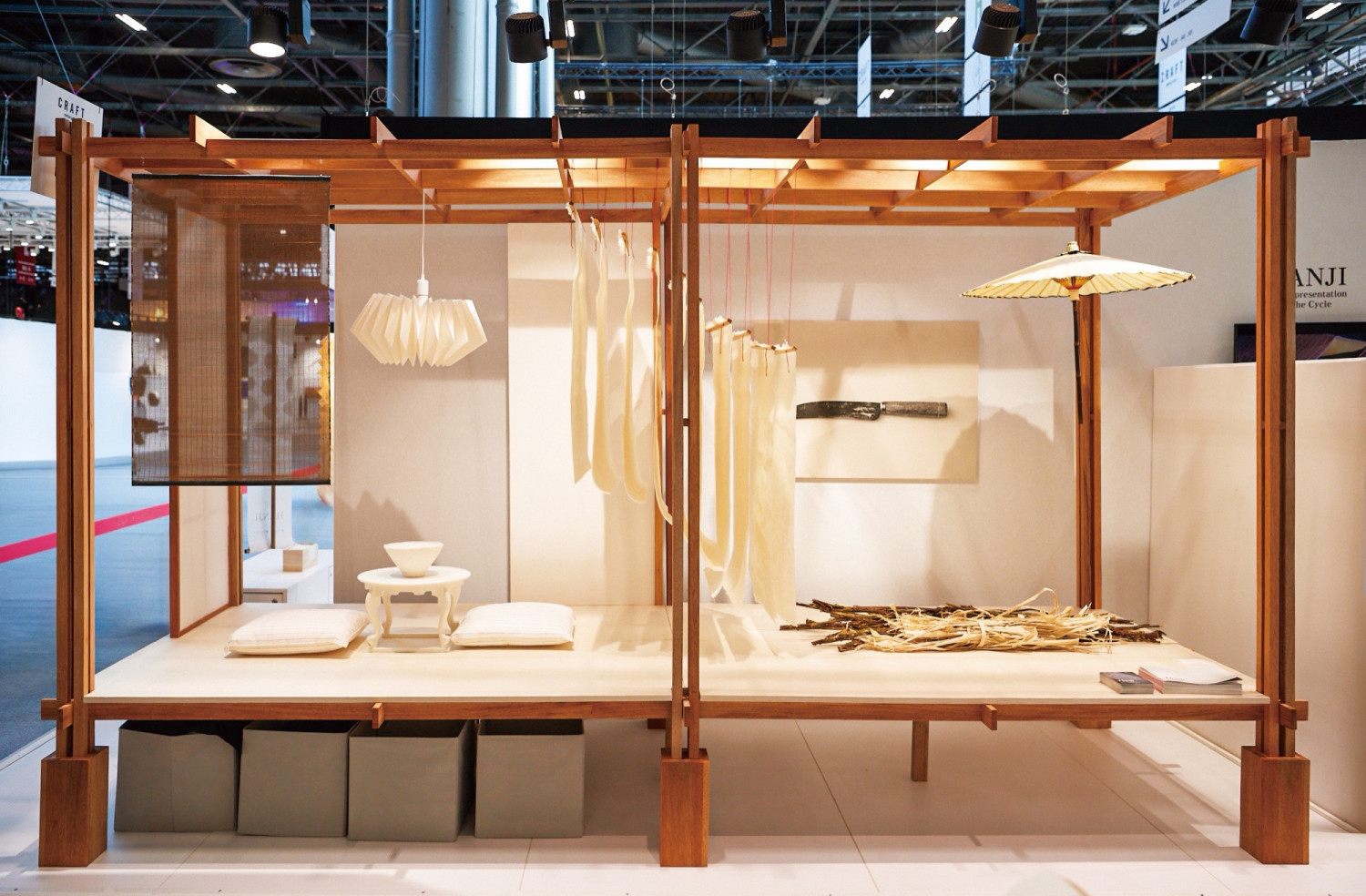
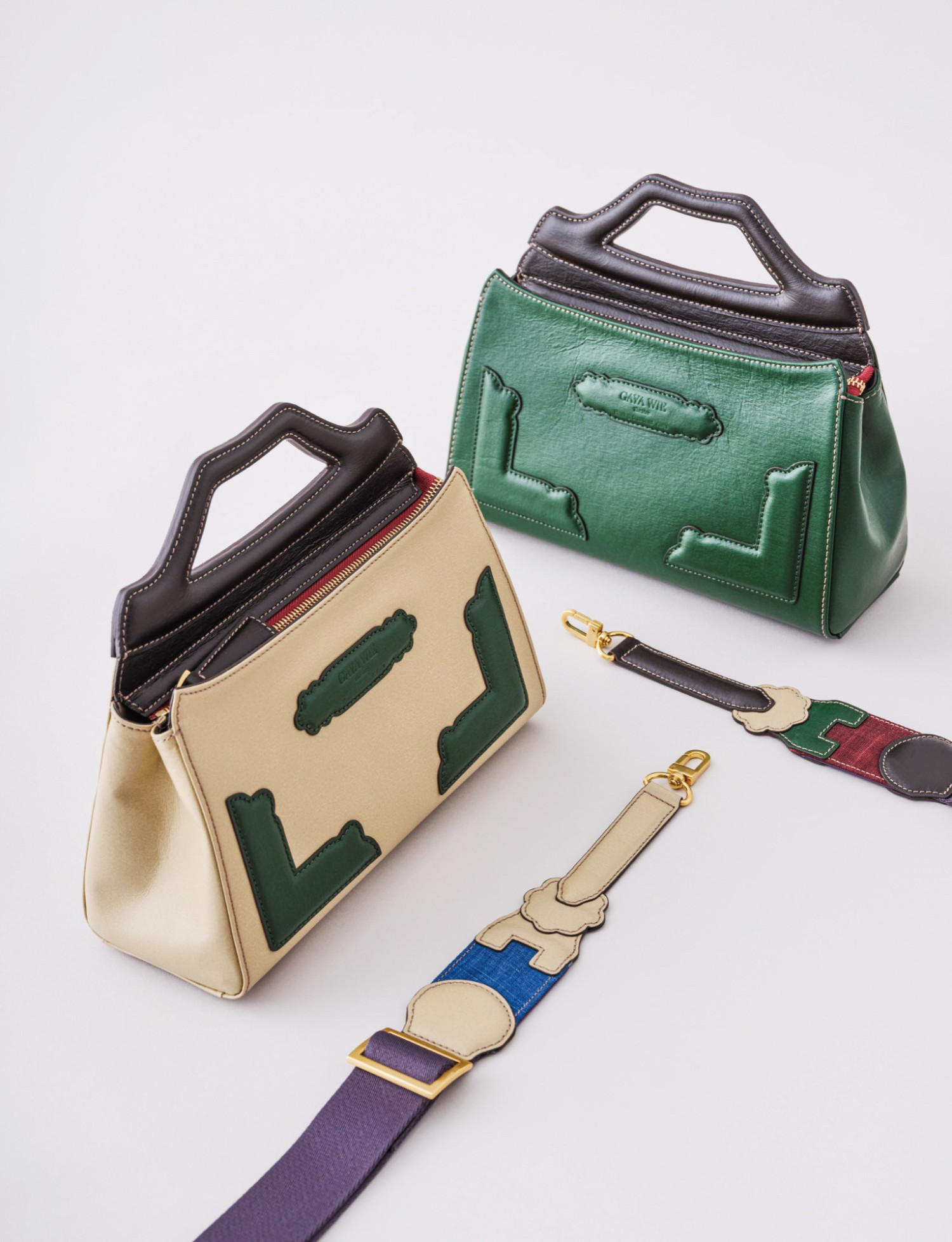
Even beyond the restoration of priceless cultural artifacts, hanji is inspiring young creators, intrigued by its unique physicality. They are discovering uses for the paper outside of calligraphy and painting, using it as a material for fashion, lighting fixtures and building interiors. The applications of hanji in sculpture and book art illustrate the potential of combining traditional values with industrial techniques.
It’s no coincidence that hanji is becoming a key material in implementing Environmental, Social and Governance (ESG) standards in the fashion world, with hanjisa (a yarn made from hanji) being recognized as an eco-friendly fiber. Made from the paper mulberry tree, the material is a renewable resource and highly biodegradable, making it one of the oldest solutions to the environmental issues facing humankind. Thus hanji, first created centuries ago by Koreans attuned to natural cycles, has become an eminently practical option as we move toward a sustainable civilization.
A hanji-centered approach to interior design — which brings the subtle comfort and tranquility of the paper-covered windows and doors in Korea’s traditional hanok homes to today’s living spaces — fills a human emotional realm that cutting-edge technology cannot reach. This is an attempt to restore the values of deliberation and mindfulness, as well as a quiet, methodical cultural practice seeking to revive a long-forgotten mindset.
These sheets of paper are produced through the paper mulberry tree’s resilience, the skill of the craftsperson and the rhythms of nature, reminding us of the importance of devotion over completion and persistence over speed. The hard-won intuition, preserved through the centuries in the artisan’s hands, is the compass that will guide us toward a better tomorrow. What better medium to chronicle messages of wisdom and beauty for future generations than on hanji that has endured for a thousand years?
- Written by. Lim Hyeona
- Lim Hyeona holds a doctorate in agriculture, with a focus in forest and paper engineering, and is a senior researcher at Jeonju Cultural Foundation’s Hanji Industry Support Center. Her work concentrates on conservation studies and the development of hanji manufacturing. Author of Hanji: Korea’s Traditional Paper, she is a pivotal figure in the hanji industry’s advancement.
- Edit by. Han Milim