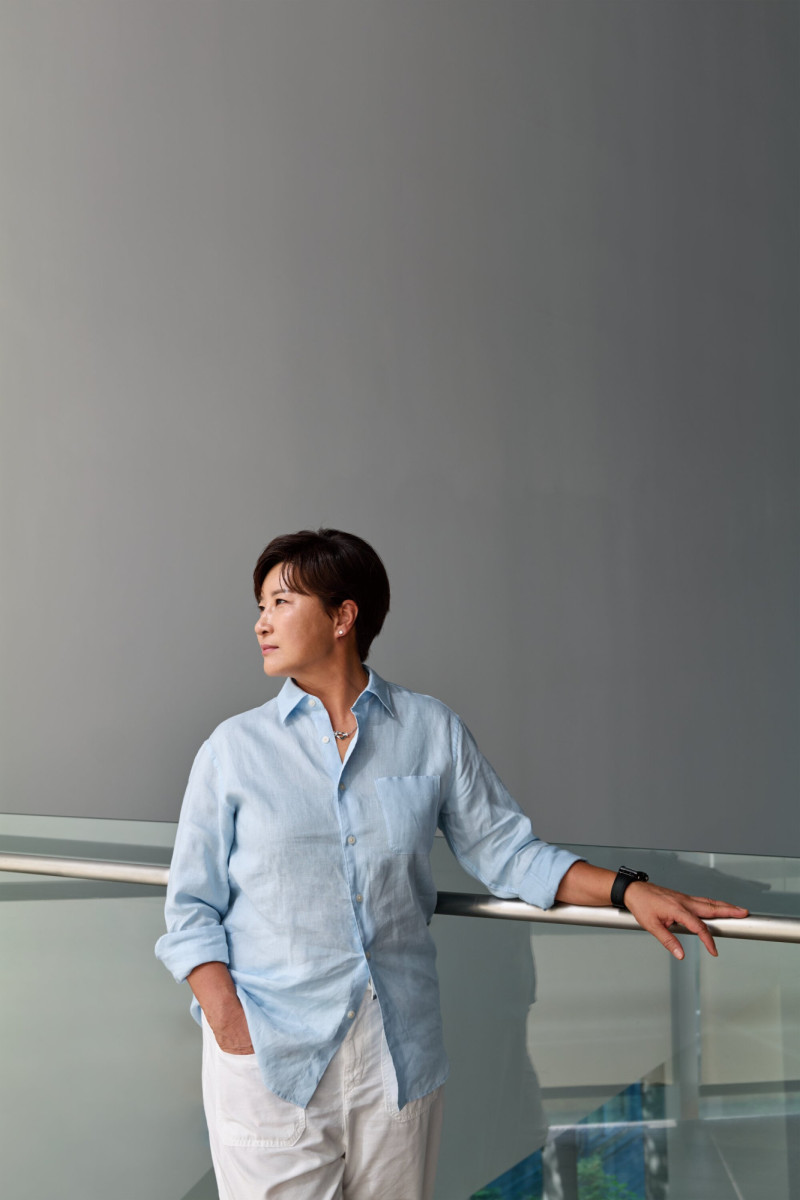
Jasu in Care Embroidered Every Stitch
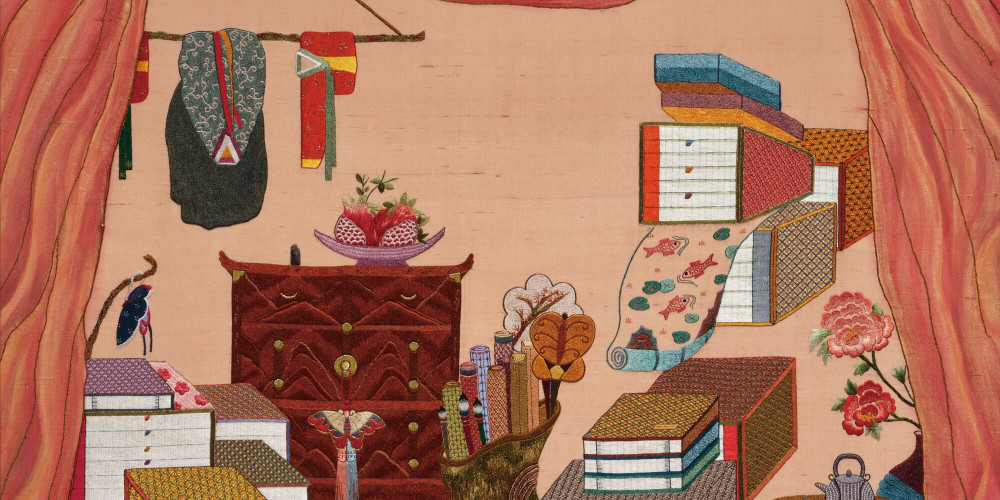
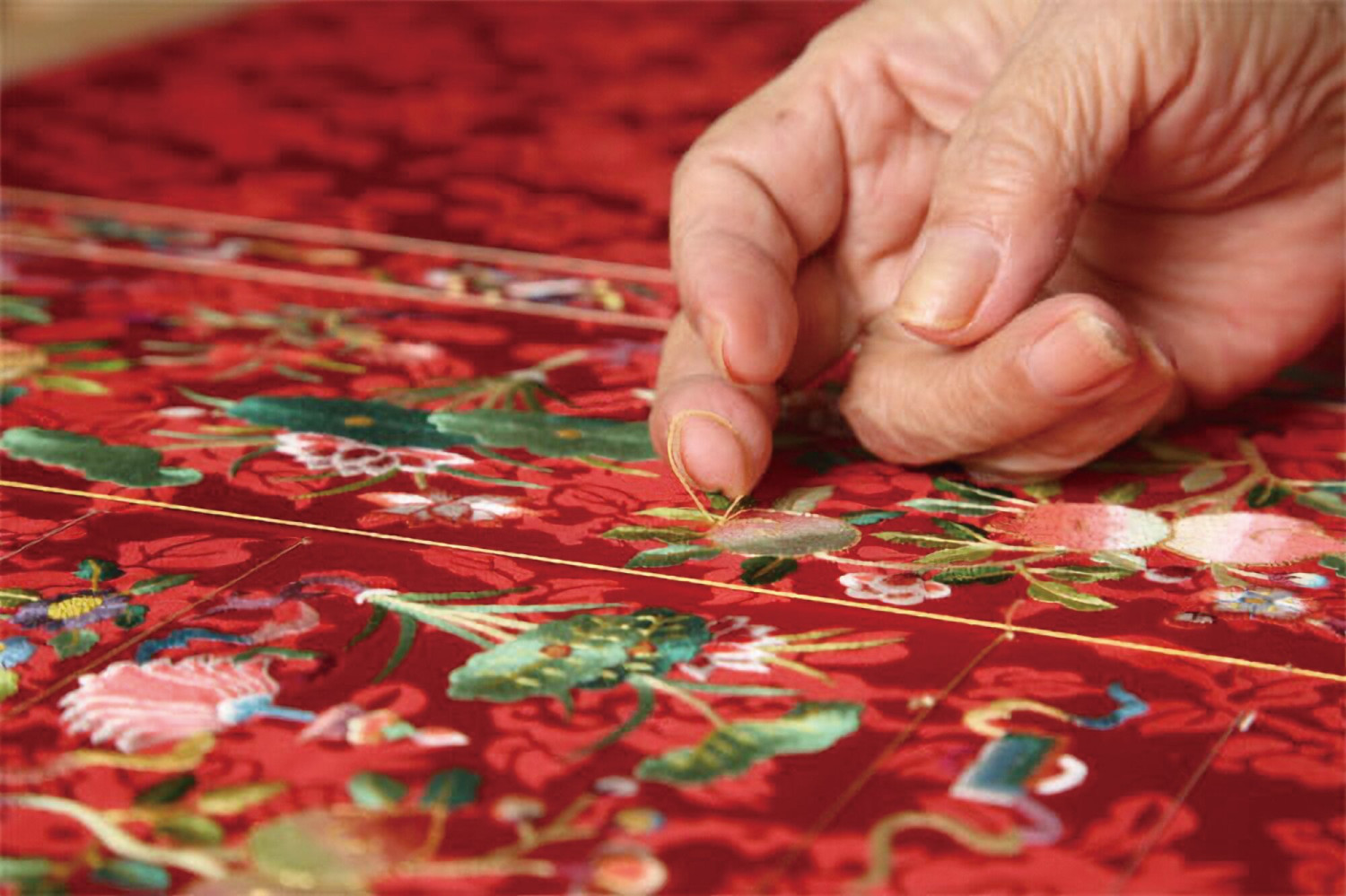
The process of stitching something thread by thread requires utmost care and devotion. With Korean embroidery, authority is etched onto a king’s shoulders, blessings are placed upon an infant’s bonnet and unexpected aesthetic brilliance is found in patchworks of gathered scraps known as jogakbo. Moving between craft and fine art, domestic life and sacred ceremony, this ancient visual tradition is being woven anew today in galleries and on runways and atop quiet laps.
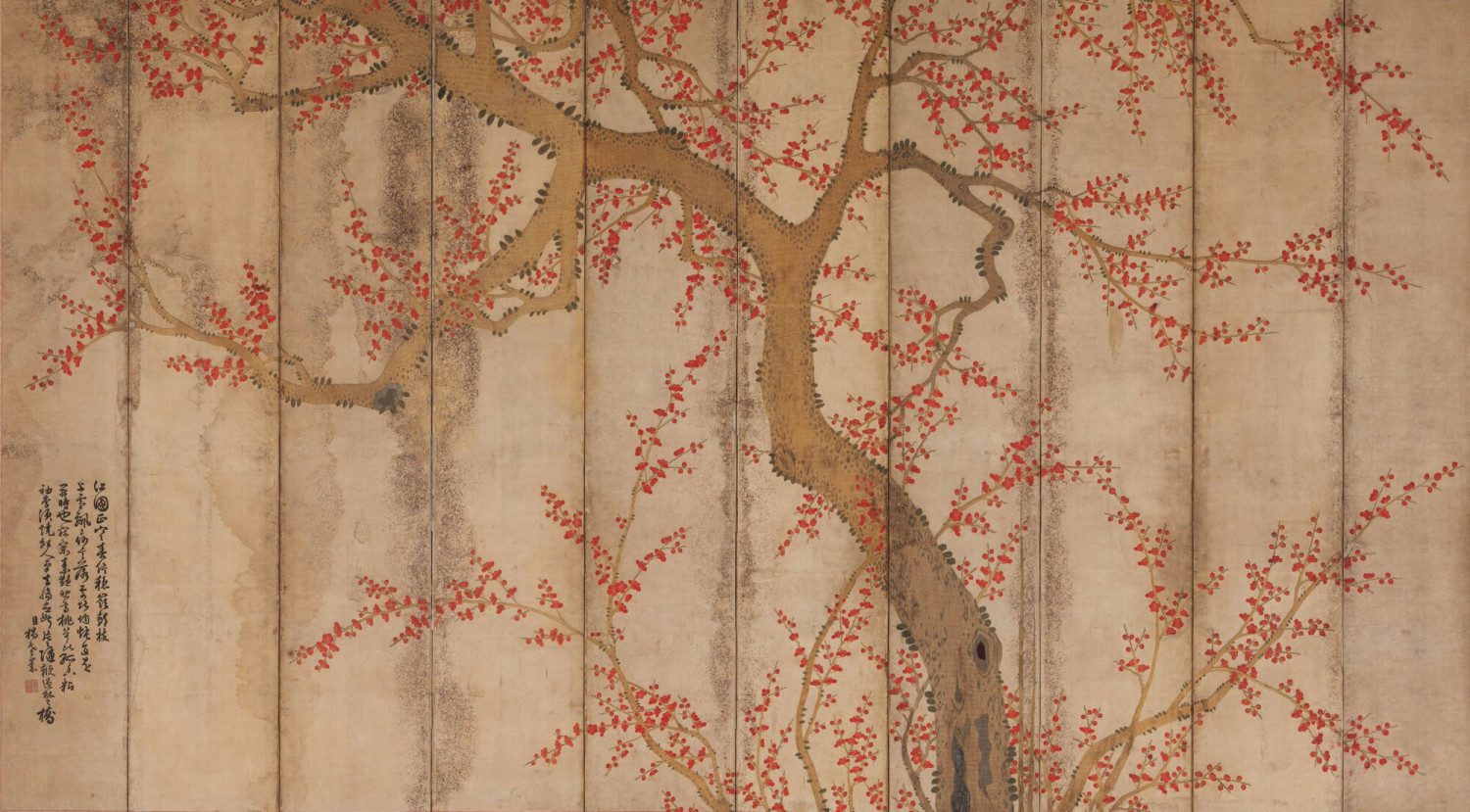
© National Palace Museum of Korea
Traditional Korean embroidery (jasu) was never fixed in a single place. It was a liberal art to cultivate character, an element of ordinary daily life, a ritual of religion and politics and, at times, fine art. Folk embroidery (minsu) was a domestic craft, a means of wishing familial happiness and shaping a life of beauty and comfort. A single lotus embroidered on the toe of a sock was a prayer for peaceful footsteps. Palace embroidery (gungsu) on the other hand, embodied royal authority using the finest techniques and precious materials.
Between craft and fine art, domestic life and formal ceremony, professional and amateur, authority and mindfulness, copyright and collaboration — the aesthetics of embroidery have always existed somewhere in these interstitial spaces. With the arrival of a Modernist “fine art” system, jasu faced new challenges, stepping out on a journey to cross, blur and expand those boundaries.
Drawing with Thread
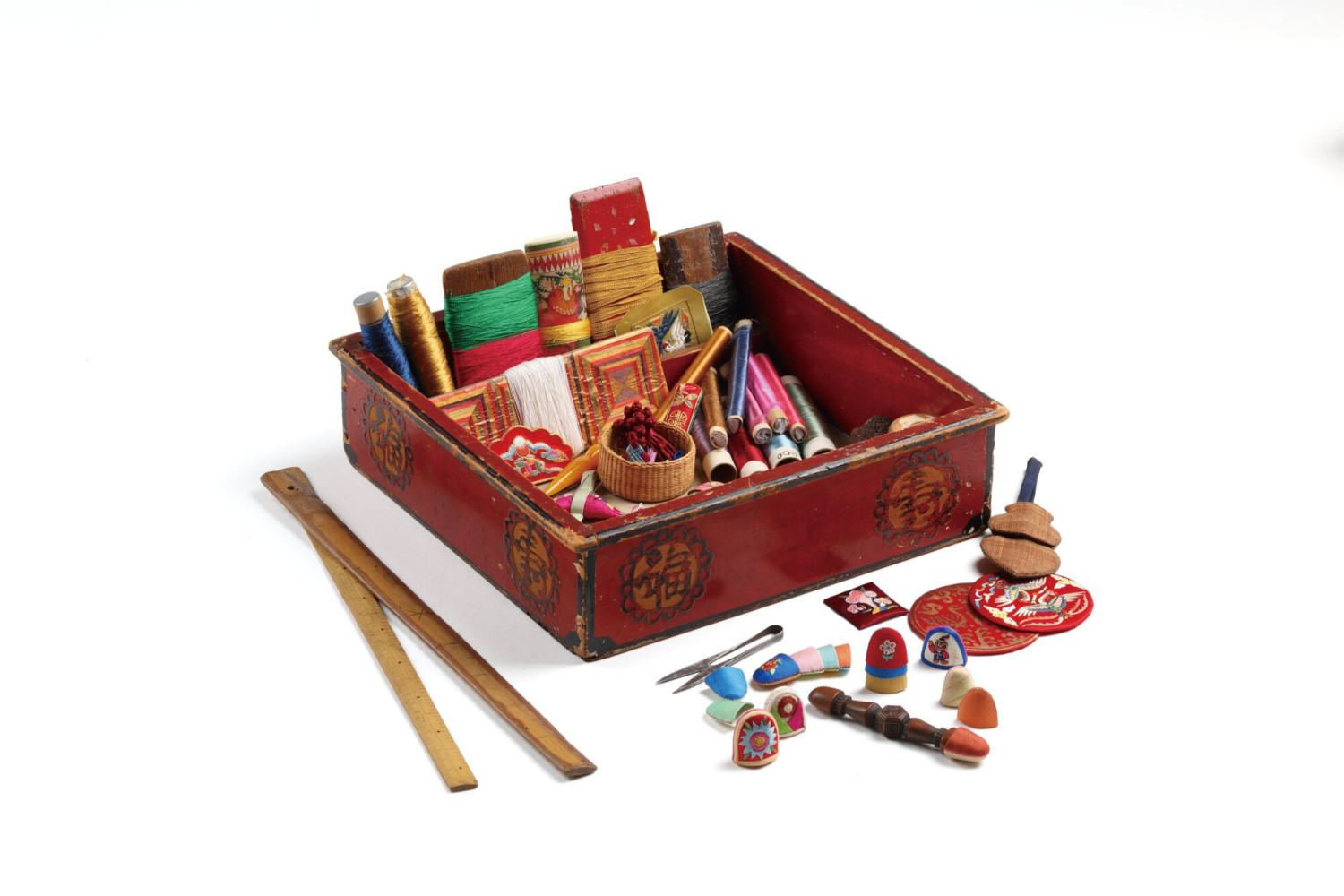
© The Han Sang Soo Embroidery Museum
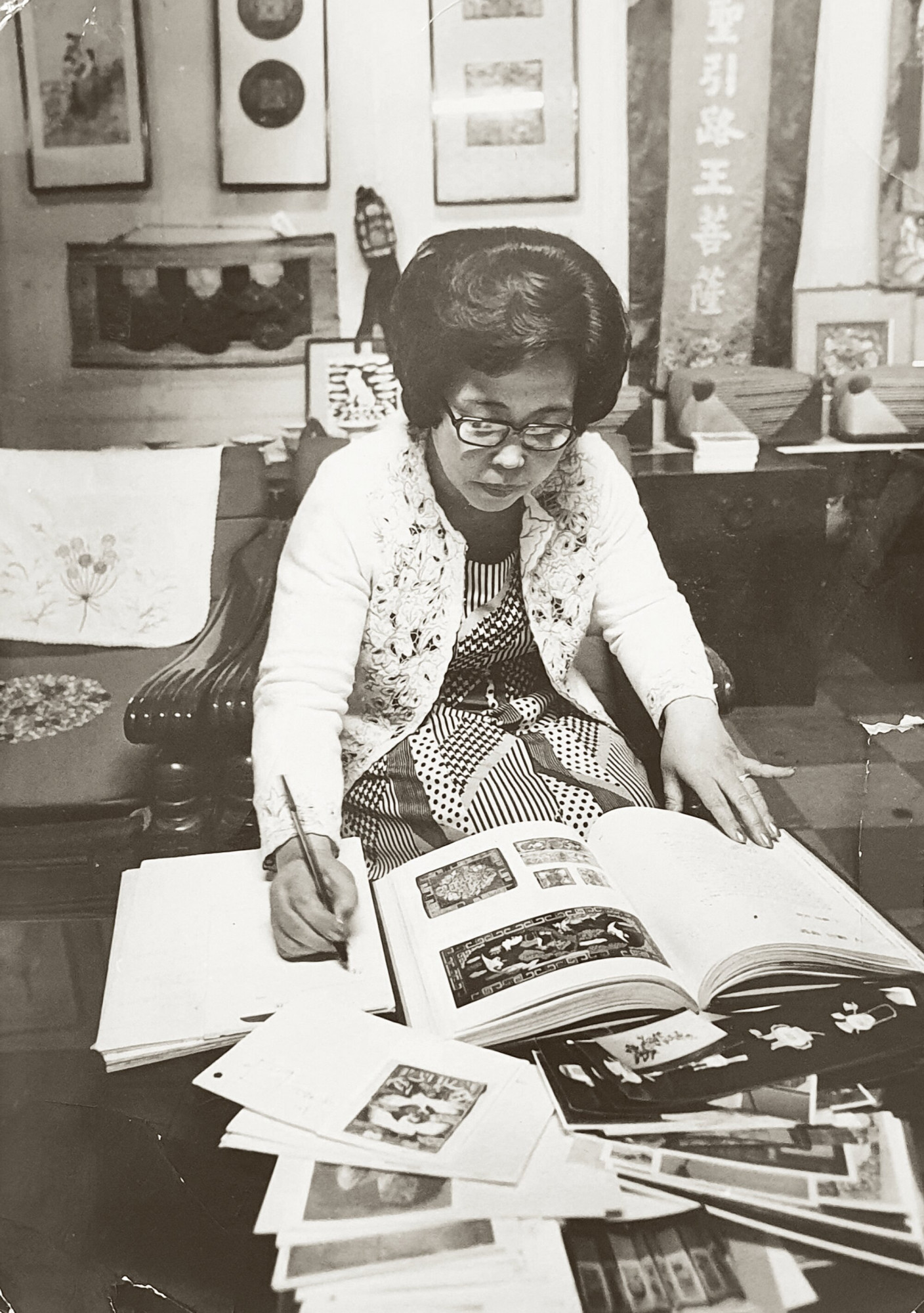
In Korea, jasu traces its roots to the Three Kingdoms period (57BC – AD668), a time when Buddhism arrived on the peninsula and ancient state structures took shape. While jasu was classified as a craft serving a function, needlework also fulfilled artistic purposes. Queen Jindeok of the Silla Kingdom (57BC – AD935) wove silk and embroidered the five-character poem Taepyeongsong (Ode to Peace), while Wonhae, a Buddhist nun of the Unified Silla period (676 – 935), “drew” a portrait of King Heongang with thread. In the Joseon Dynasty (1392 – 1910), artist Shin Saimdang rendered her own drawing of insects and flowers (Chochungdo) into embroidery, completing the eight-panel folding screen Jasu Chochungdo Byeongpung.
Where a brush might have touched, a needle rested instead; it was, beyond doubt, a drawing. Jasu was a craft of utility and an art for appreciation, but it was also a liberal art to shape character. In traditional society, female education focused on instilling virtue, with needlework as its central curriculum. Women were expected, and required, to handle a needle. Thus, the scene in the classical Joseon novel The Tale of Lady Park is deeply symbolic: the scorned Lady Park sews an official court robe (jobok) for her father-in-law overnight to win instant reverence. Exceptional needlework (bugong) was tangible proof of noble female virtue (budeok).
Of course, there were also professionals who made embroidery their life’s work. Jin Mojin, a court woman of the Baekje Kingdom (18BC – AD660), is known for spreading embroidery techniques in Japan, and palace embroidery was established as a formal system during the Unified Silla period. Court ladies and master embroiderers trained from early childhood. Interestingly, these masters were not exclusively female. Following the second Manchu invasion of Korea known as Byeongja Horan, male artisans specializing in Anju embroidery (anjusu) from Pyeongan Province worked alongside the court ladies in the royal quarters.
© The Han Sang Soo Embroidery Museum
© Han Jung Hye
Royal Embroidery and Everyday Embroidery
© The Han Sang Soo Embroidery Museum
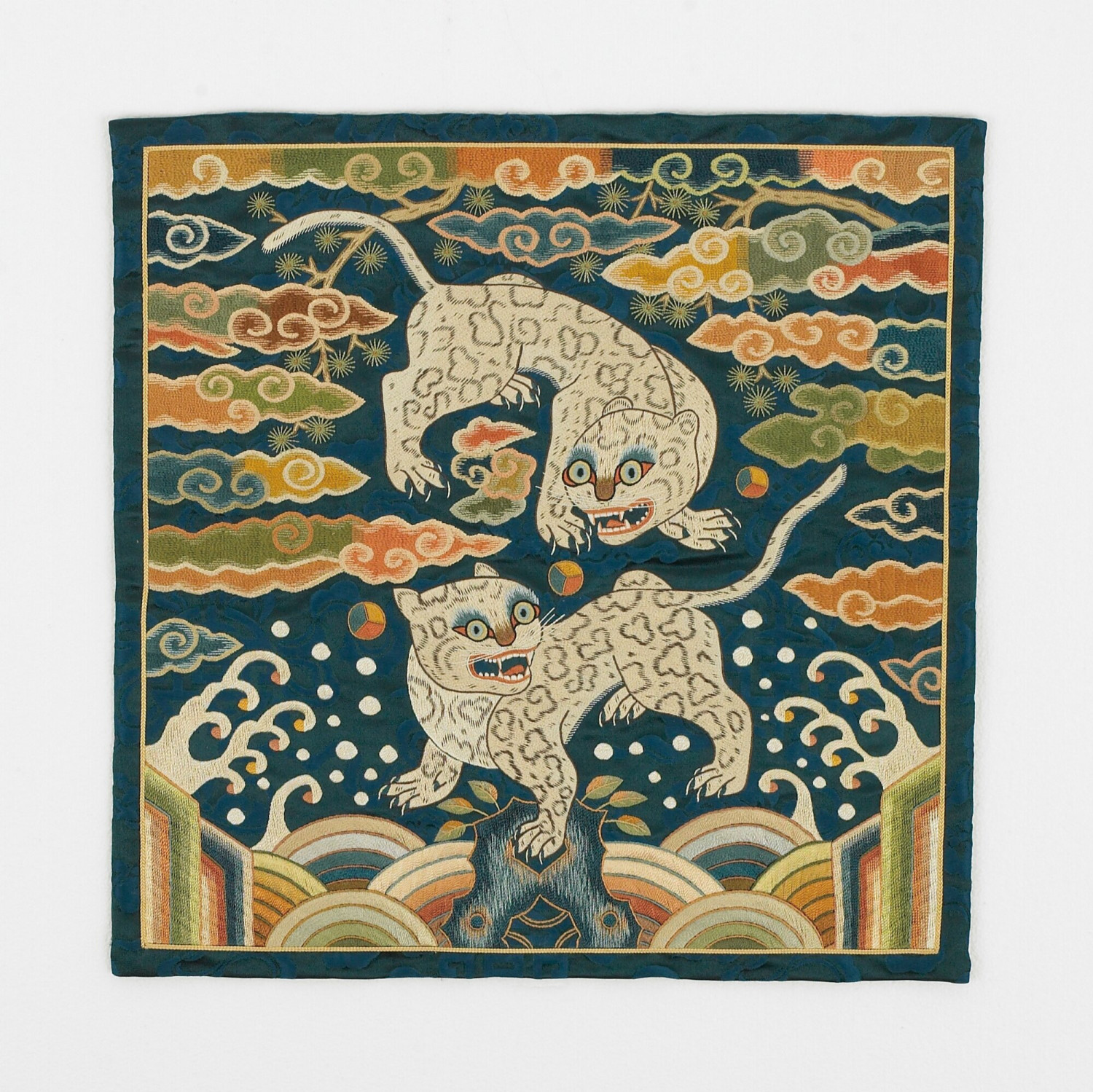
© The Han Sang Soo Embroidery Museum
Palace embroidery (gungsu) was a state-operated collaborative system. Artists from the royal court prepared underdrawings, with court artisans adding touches on the finest materials. To embroider a single garment, multiple quarters of the palace moved as one. The bridal robe (hwarot) was royal ceremonial attire, yet commoners were permitted to wear it once on their wedding day. Motifs such as waves, rocks and young boys embroidered on a commoner’s bridal robe symbolized longevity, conjugal harmony and family peace. By contrast, royal hwarot arranged flowers, fruits and treasures in bands with gold-leaf mandarin ducks.
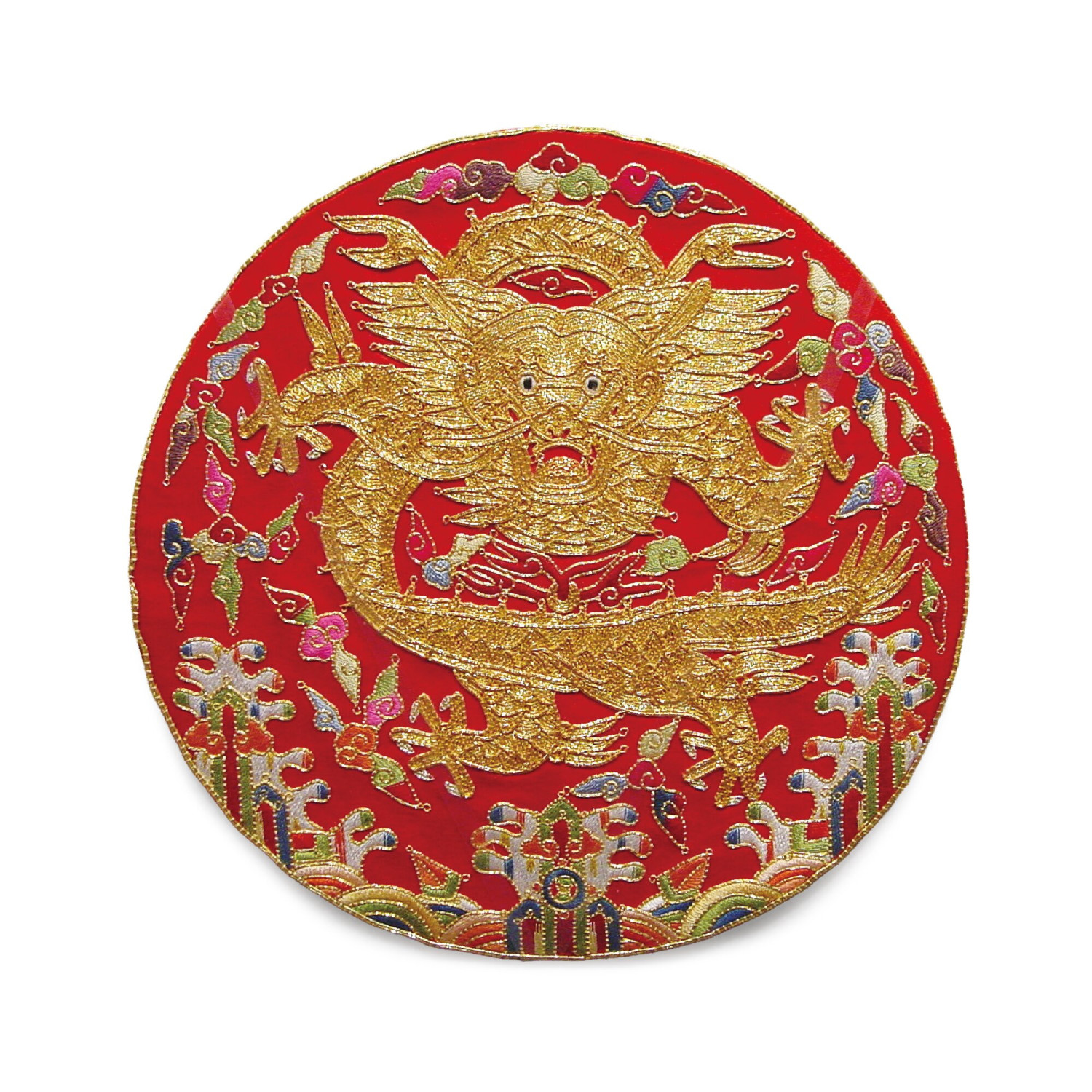
Joseon royalty and officials displayed rank through an official insignia called hyungbae. The royal badge, called a bo, was circular and attached to the shoulders, chest and back. A king’s bo was embroidered with a five-clawed dragon (ojoryong), while a queen’s bore an ojoryong or phoenix. Alongside royal jasu stood the embroidery of devotion. Everyday goods for ordinary people were stitched with prayers for wealth, longevity and beauty — like the infant’s bonnet (gulle), worn until age five or six. Five flower petals rested atop the bonnet, while three strips of fabric hung behind the head, emblazoned with lotuses, peonies, pear blossoms and characters for longevity and good fortune, a parent’s blessing placed gently atop a child’s head.
Traditional wrapping cloth (bojagi) was used to carry or store items, and patchwork cloths (jogakbo) were sewn together from leftover scraps of fabric. A product of frugality and devotion, the harmonious interplay of diverse textures and colors created by the irregular patches revealed a stunning geometric abstraction. Auspicious words, flowers, birds and butterflies rested at the center and four corners of the cloth. It was a serendipitous beauty realized by a desire not to waste a single thread.
Contemporary Embroidery
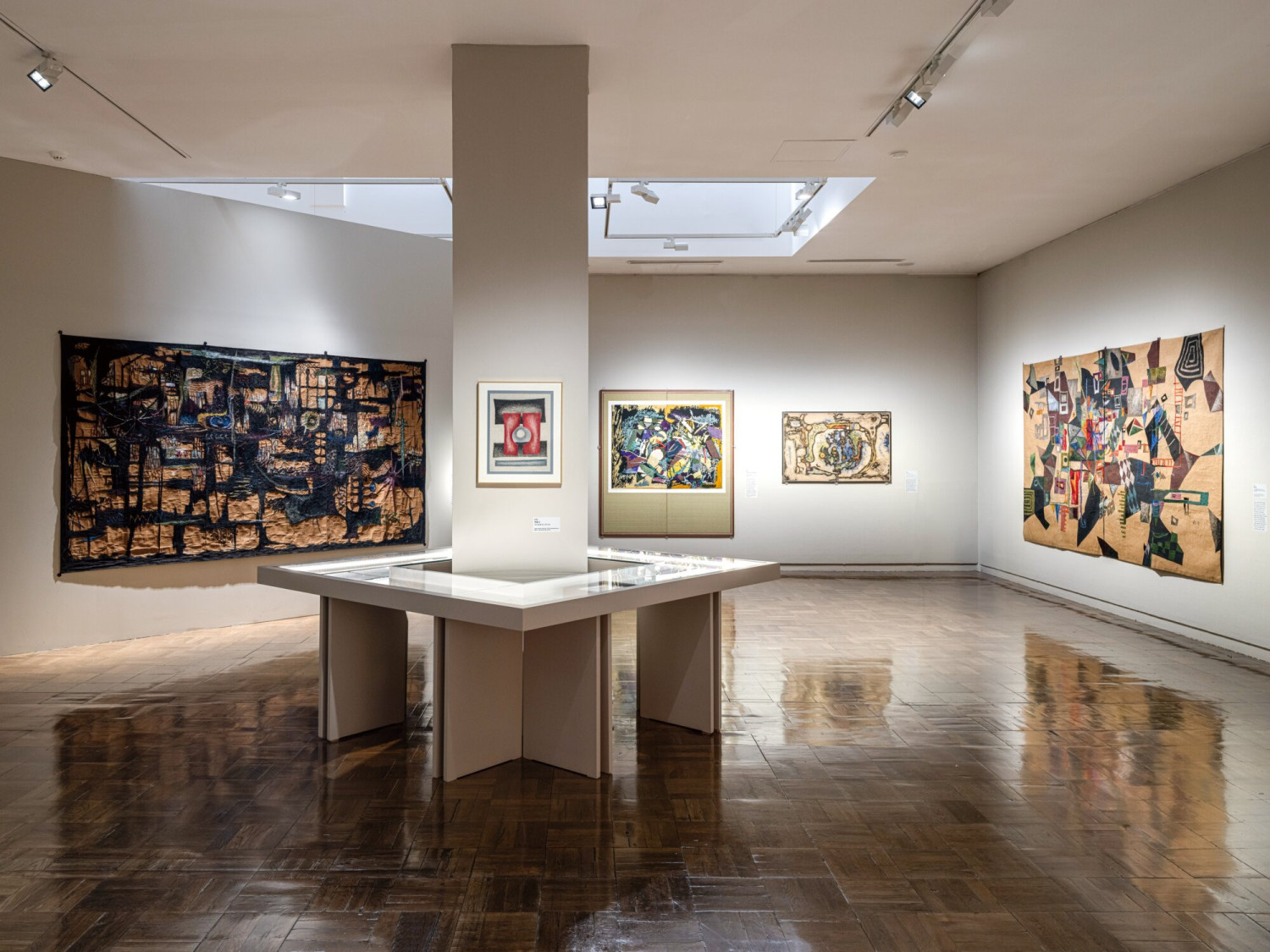
© MMCA
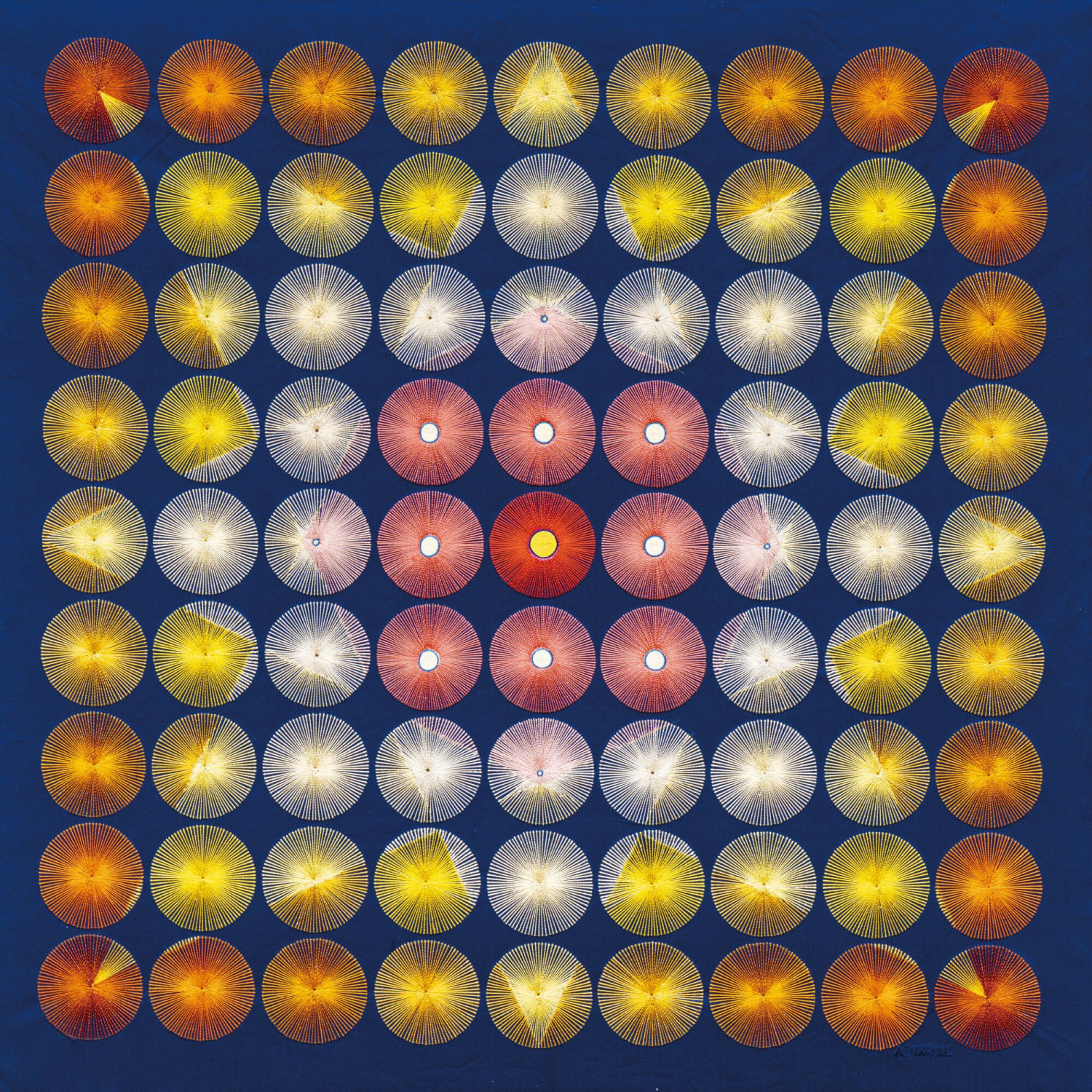
© Gyeongnam Art Museum
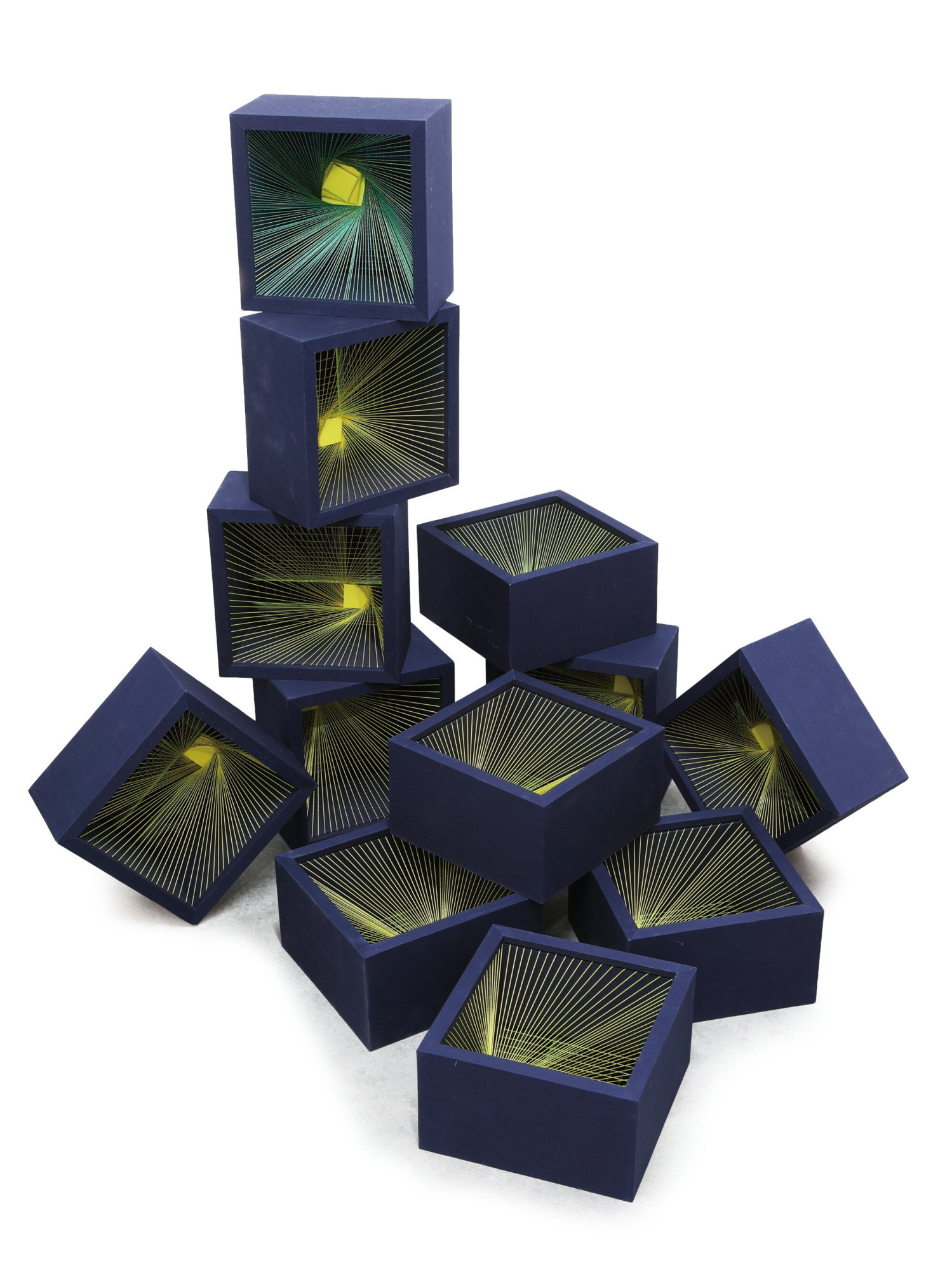
© Korean Embroidery Council, Insa Art Center
© RIU&VIU
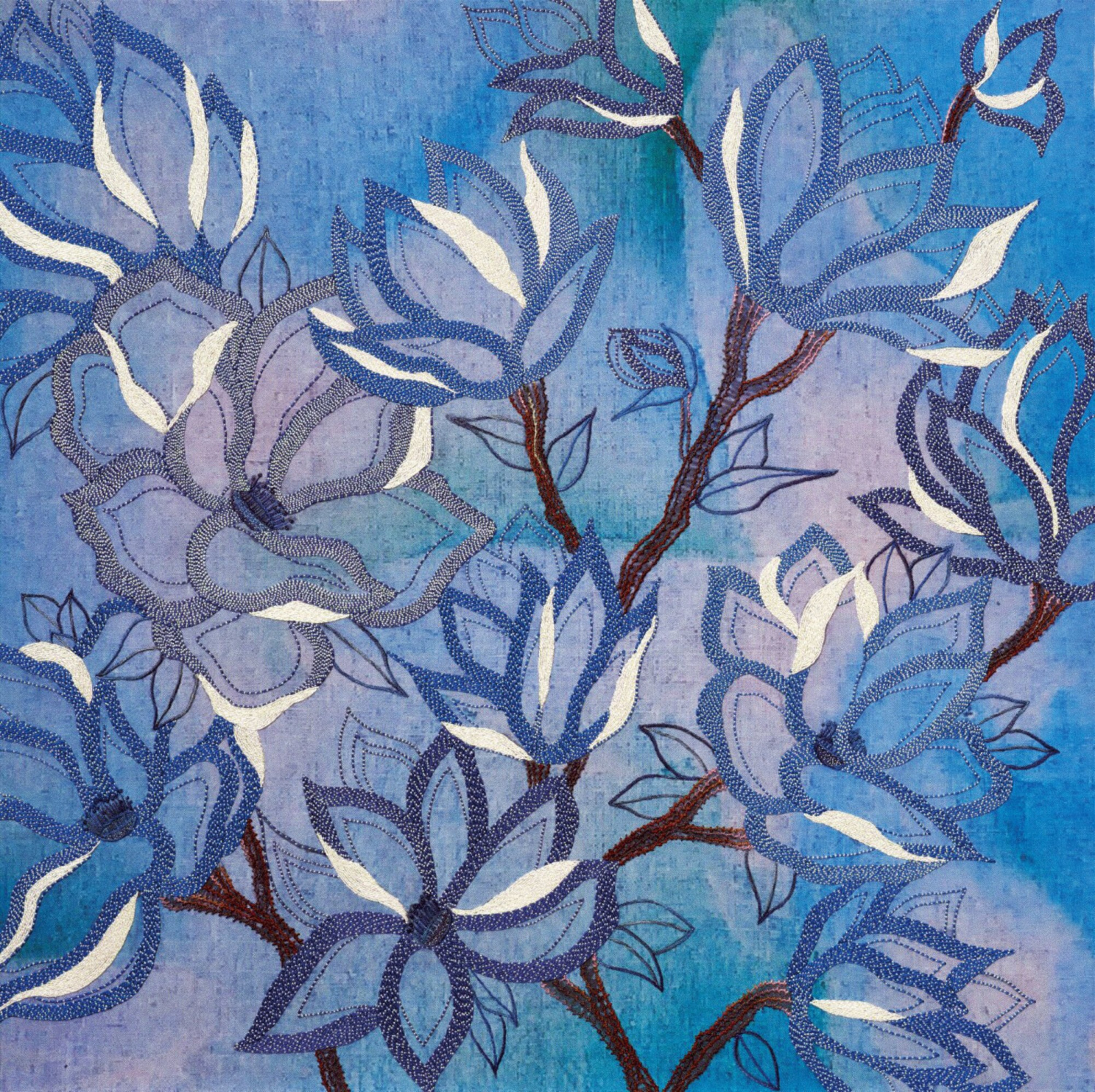
With the influx of modern Western art, the status of jasu came under scrutiny: Is it craft, design or fine art? At the intersection of these realms, no definitive answer was reached. Then, in 1945, a Korean art university established an embroidery department, and embroiderers began submitting works to the National Art Exhibition starting in 1949. By the 1980s, jasu expanded under the broader term of “fiber arts.” Fiber artists exhibited “drawings with needle and thread” in galleries as fine art.
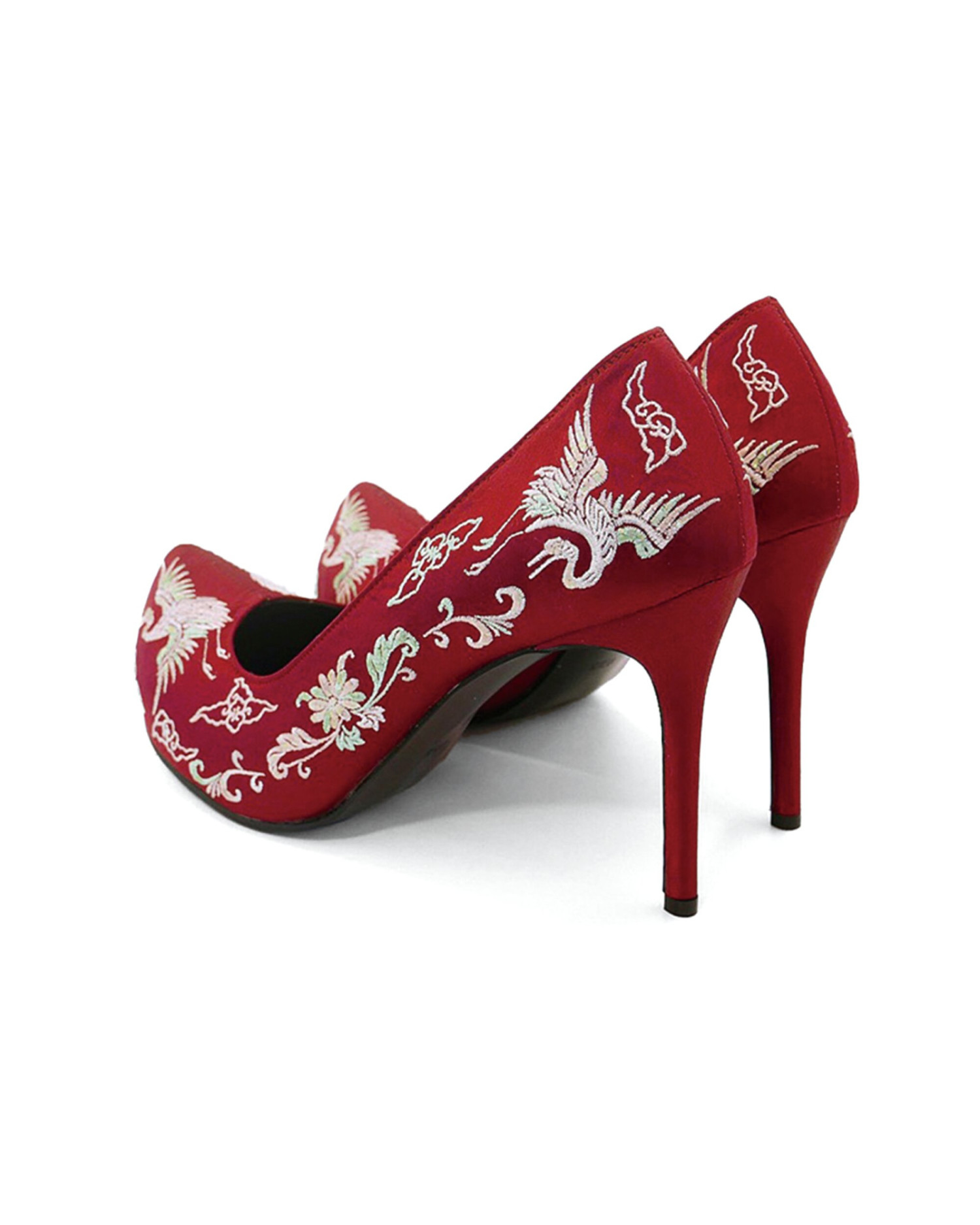
Following Queen Jindeok, Wonhae and Shin Saimdang, contemporary artists like Kim Hyekyung, Uhm Jungyoon, Song Jungin and Lee Shinja opened pathways for contemporary embroidered drawing, spanning figurative to abstract art. That legacy was carried forward by Ha Minsu, Kim Sooja and Lee Bul, becoming a vital language in contemporary art. A medium historically tied to women through quiet devotion stepped inside modern art galleries, breaking through fixed identities. Needlecraft has been summoned into fashion as well. André Kim created countless wedding gowns, dresses and daily wear from organza, jacquard and velvet, embroidered by hand. And contemporary designers like Choi Hwanseong, Jin Kim and Huh Yoonhwa inherit that thread in their own ways.
Today, what once cultivated character and tended to domestic life has turned into a form of self-care. Those seeking self-sufficiency, custom crafting, ethical consumption and digital detox are turning to this ancient act of handcrafting and tactile focus. Buying mass-produced items may be the easiest choice in a fast-paced world. Yet tailoring materials and stitching something thread by thread quietly reveals the beauty of caring for oneself. By devoting one’s hands to nurturing self and home, modern hands retrace the path forged by needles during the Three Kingdoms period. What embroidery has left us, perhaps, is not a mere pattern, but a lingering, contemplative gaze.
- Written by Kim Joo Hyoun
- Kim Joo Hyoun holds a Ph.D. in philosophy specializing in aesthetics. She served as a professor at Ewha Womans University and currently works as an art critic and exhibition planner.
- Edited by Han Milim