
Pixels & Poems, Seattle
Seattle is a city where high tech meets human touch. We explore the layers of a city that combines nature and future, experimentation and rejuvenation and romance and revolution.
Seattle is a hub of cuttingedge industry, with multinational firms like Amazon, Google, Microsoft and Expedia based or operating here. But embedded between the lines of code, a refined sensibility permeates, with art and music woven into the city’s fabric. The fog-blanketed harbor, the run-down music clubs downtown, and the dilapidated warehouses that inspired artwork all testify to the fact that Seattle was a creative city long before the tech boom. Romance rushes between the glass skyscrapers, and innovation absorbs a deeper meaning in harmony with nature.


Nature Meets Algorithms
Three glass domes rise in the middle of Seattle next to Day 1, the office building anchoring Amazon’s headquarters campus in Seattle. The Spheres, as they’re called, are lush conservatories of tropical plants.
Rather than an office that mimics a forest, these are like a forest engulfing an office. The Spheres are home to more than 40,000 kinds of plants, embodying the Amazon philosophy of “work-life harmony,” which holds that working in a natural setting makes people more creative and resilient. The Spheres are more than a recreational space — they function as a laboratory that tears down the boundaries between work and life, and as a restorative ecosystem that helps employees
activate their senses and regain their rhythm.
Incorporating biophilic design elements, the Spheres is also a place where nature is aided by cutting-edge technology. Plants thrive in a perfectly controlled environment where a consistent cycle of day and night is maintained, and a high-tech ventilation system ensures that fresh air continuously circulates through the spaces — a place where humans and algorithms share the work of managing this environment.
In line with such architecture trends in Seattle, tech giants such as Microsoft, Google and Expedia are exploring ways to integrate nature into technology by designing campuses that resemble forests.
Other spaces have found their own ways to reinterpret nature, such as Chihuly Garden and Glass at Seattle Center, one of Seattle’s top cultural destinations that captures the essence of glass art. Washington native Dale Chihuly heats glass to thousands of degrees to form organic structures inspired by flowers, glass and seaweed. If The Spheres is an ecosystem designed by algorithms, Chihuly’s glass art is nature flourishing through human fingertips. These two spaces depict a single world through the distinct languages of the artificial and the natural, of technology and art, symbolizing Seattle’s creativity and sensitivity. The city is cultivating a new kind of urban garden that stimulates the senses and revitalizes our imagination.


Hearts Pounding to Guitar Grooves
Before becoming a tech haven, Seattle was a city of rock and roll. The grunge movement of the 1990s, exemplified by such bands as Nirvana, Pearl Jam, Soundgarden and Alice in Chains, gained momentum in the back alleys of this foggy port city. Melodies expressing such emotions as resistance, angst and freedom are even now woven into the city’s fabric. The dimly lit exhibition rooms of the Museum of Pop Culture (MOPOP) encapsulate the mood of that era, alongside the well-used guitar and keepsakes of Kurt Cobain, lead singer of Nirvana.
But Seattle’s music scene is not just about nostalgia. Even today, new melodies are being crafted in shows held at The Crocodile, a music club in the Belltown neighborhood of Seattle. As the legendary venue where Nirvana and Pearl Jam performed early in their career, The Crocodile first opened in 1991. More than 30 years later, it continues to draw fans of rock and the various other genres performed at the iconic venue. These trends have fueled the revival of analog appreciation. Vinyl emporiums like Easy Street Records and Silver Platters are drawing music aficionados and becoming a hub for the younger generation embracing the trend. Even members of the digital generation are seeking the tactile experience of flipping through an album’s liner notes and positioning the turntable needle on a record.
An inextricable part of these trends is KEXP, a publicly owned independent radio station based in Seattle that broadcasts from 90.3 FM. Since 1972, the station has been with the listeners of Seattle, and thanks to digital technology it now reaches music lovers around the world.
Precisely because of that local identity, KEXP has become an icon of the analog sensibility. Artists and listeners come together in the open studio, and the music that defines contemporary Seattle is recorded and broadcast here every day.


A Literary Powerhouse
Seattle is universally recognized as a literary metropolis. The Pacific clime brings frequent showers, which are thought to have encouraged a dedicated culture of reading inside. Seattle cafés often have a book nook, and the streets are dotted with independent bookstores of all sizes. In 2017, UNESCO officially recognized Seattle as a City of Literature. Along with Iowa City, Seattle is one of just two American cities with that designation, suggesting just how much pride Seattle residents take in their literary pedigree. According to UNESCO, Seattle got the nod because of its vibrant literary community, its cultural diversity, its robust support for reading and writing and its educational spaces that welcome all participants.
Hugo House is a nonprofit that symbolizes Seattle’s literary identity. The organization began in a ramshackle house, but today occupies a modern building. Despite the new look, its spirit remains unchanged. From its establishment in the 1990s until today, Hugo House has played a central role in the community, giving opportunities to up-and-coming writers and providing literary programs for the local area.
Another part of Seattle’s literary legacy is the Elliott Bay Book Company, which opened in 1973. More than a mere bookstore, this is one of Seattle’s signature cultural institutions. The bookstore constantly holds cultural events including book readings, workshops, and lectures, which enrich the local literary ecosystem. It’s also the venue of yearly literary and artistic festivals such as Seattle Arts & Lectures, Lit Crawl Seattle and Short Run, which encourage literary output and expression throughout the city.
At the center of this literary landscape is the Seattle Public Library. This distinctive glassand-steel structure was named the “Best of Architecture” by Time magazine in 2004. Since then, it has become an icon of the city and an intellectual playground for its citizens. Designed by Rem Koolhaas, master of contemporary architecture, the library fosters equality of information access and achieves a pleasing harmony of digital technology and analog media.
In an era where cities are designed by technology and our routines are ruled by algorithms, Seattle hasn’t lost the human touch. As indicated by the plants growing in the glass spheres, human vocals in music halls and handwritten notes posted to old bookshelves, Seattle places human beings at the helm of its voyage into the future.
24 Hours in Seattle
If you are planning to visit Seattle, don’t miss the following five places.


Olympic Sculpture Park
This outdoor art park links the city to Elliott Bay, Seattle’s waterfront. Visitors can freely enjoy sculptures by world-famous artists such as Alexander Calder and Richard Serra that line the park’s lawns and walking paths. Named after the Olympic Mountains rising majestically across Puget Sound, the park is a huge outdoor gallery and a precious green space in the heart of the city.
- 2901 Western Avenue, Seattle, WA 98121


Pike Place Market
Operating since 1907, Pike Place Market is a living piece of city history. This traditional market embodies Seattle’s identity and the lifestyle of its residents. There’s plenty to see here, including fresh seafood and produce, handicrafts by local artists, and street performances. It’s also the site of the first Starbucks store.
- pikeplacemarket.org

Seattle Free Walking Tours
Seattle 101 is a free walking tour that covers the city’s highlights in about two hours. Cheerful local guides accompany you on a walk through the city’s history, architecture and culture while sharing some of its hidden treasures. This is an efficient way to gain a better understanding of Seattle. While the tours are nominally free, it’s courteous to prepare a modest tip.
- seattlefreetours.com

REI Seattle Flagship Store
This store exemplifies Seattle’s outdoorsy side, impressing visitors with an indoor climbing wall, eco-friendly design and experiential shopping. This is more than just a store; it’s a place where you can experience Seattle’s lifestyle philosophy of “opt outside,” as REI’s famous slogan goes. This brand has made the urge to head outside a cultural imperative in an infamously rainy city.
- 222 Yale Ave N, Seattle, WA 98109


Kerry Park
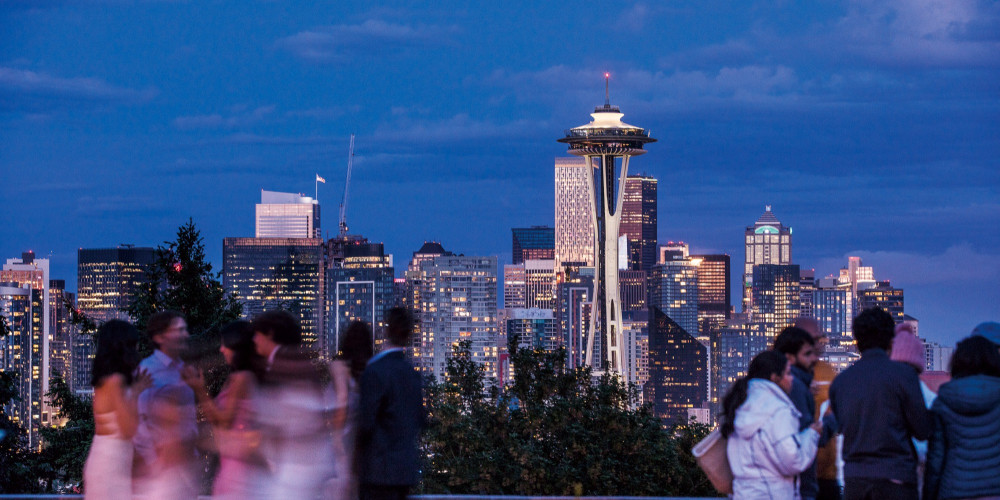
This is the preeminent spot for getting a panoramic view of the Seattle skyline. Drive up one of Seattle’s steep roads to get to the park, which is perched between mansions. This is your chance to fit the Space Needle, Mount Rainier and Elliott Bay into a single picture frame. This superb lookout spot is frequently visited not only by newcomers but also by longtime city residents.
- K211 W Highland Dr., Seattle, WA 98119
- Written by Choi Jini
- Photography by Shin Gyuchul
- Korean Air operates direct flights between Incheon and Seattle 7 times a week.


