The Young Artist, Kim Yun Shin
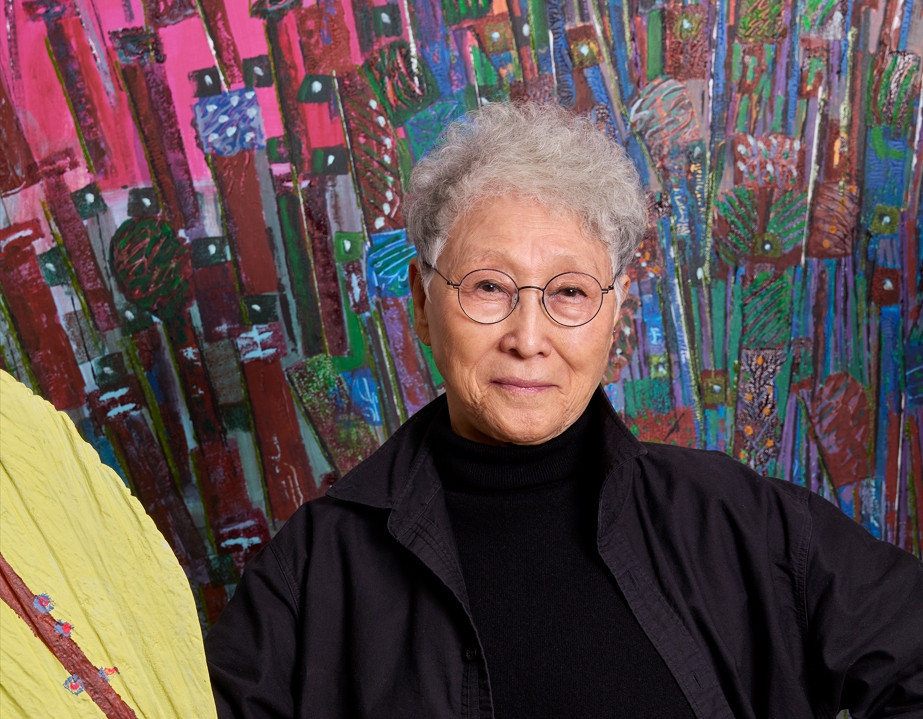
After nearly 70 years of work, Kim Yun Shin is finally being read in the language of “now.” Following the trajectory of her practice — one that has remained current rather than retrospective — we encounter the quiet resolve of an artist who has transformed time into art.
Kim Yun Shin in the Present
Though Kim Yun Shin has been creating art for nearly seven decades, it is only recently that her name has begun to be spoken in the parlance of contemporary art. Over the long course of her career — which has taken her between Korea, Europe and South America, including a forty-year sojourn in Argentina — she has maintained a distance from institutions and trends, patiently honing a language all her own. And now, her body of work is being read not as a retrospective of a completed career,but as a living, breathing practice that is still evolving.
This re-evaluation has led to a series of defining moments in recent years. Kim has been invited to major interna¬tional exhibitions, including the Venice Biennale 2024, her singular artistic world finally being summoned into the context of global contemporary art. In the presence of her work, the question “Why Kim Yun Shin and why now?” seems to answer itself. Kim’s world begins with sculpture. But she does not describe it as simply forming shapes.
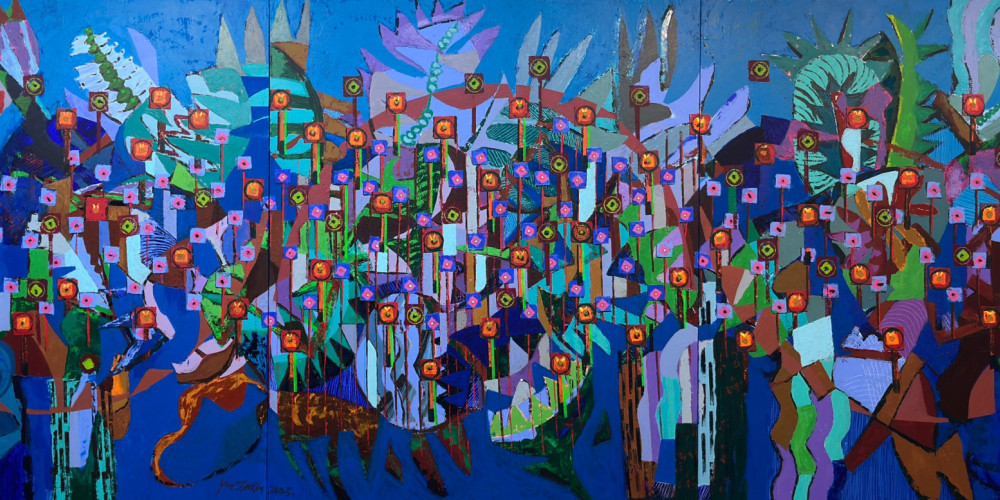
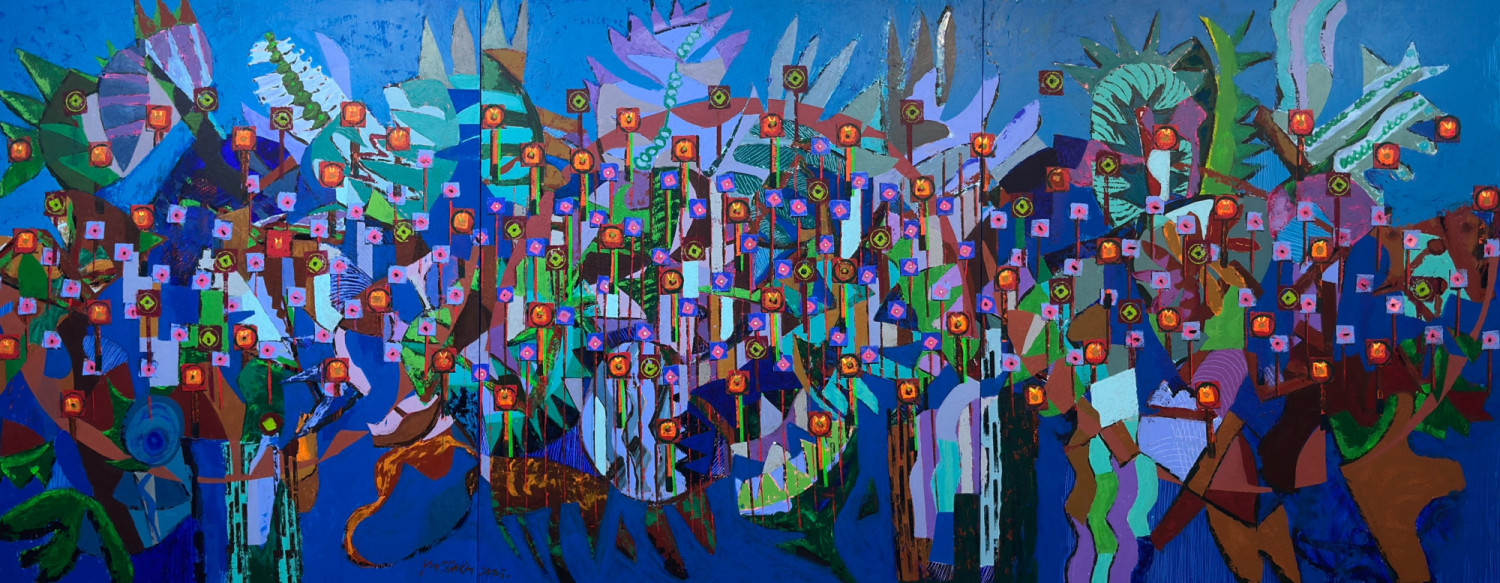
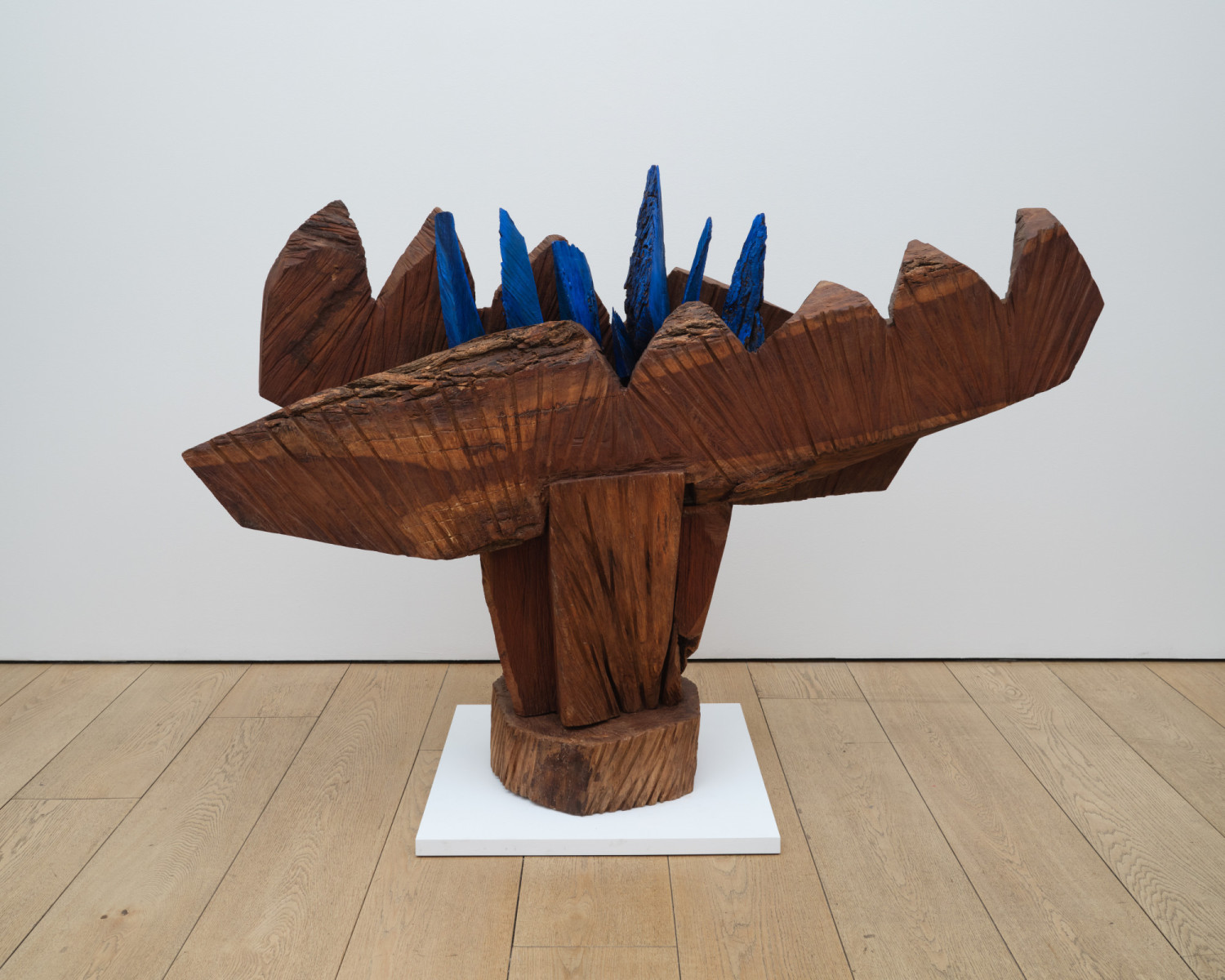
The concept she defines as hap-i-hap-il-bun-i-bun-il (Two Become One, One Divides into Two) — the idea that the self and material meet to become one, and then divide again to create new relationships — is embodied in the very act of carving away wood and carving away mass. More recently, Kim has found herself deeply immersed in painting. If sculpture is a work that moves out toward space, painting is closer to the act of capturing the density and trace of a single moment. For Kim, artistic creation is life itself, the lifeblood that sustains her. The message she leaves us with is simple and clear: Whatever you do, do it with your entire being. This is a story not just about art, but about an attitude toward living.
© Kim Yun Shin, Courtesy of the artist
Interview
Sculpture was the starting point for your work. How did the act of sculpting — of carving away wood and dividing mass — define your philosophical approach to art?
I first started with sculptures of the human body. I studied the human form with great intensity at school, and I gradually began to change the forms by altering their proportions. I found it so fascinating to change the shape of things, to elongate a neck or exaggerate an arm. I came to the realization that “abstraction” wasn’t something separate — that the act of transformation itself was creation.
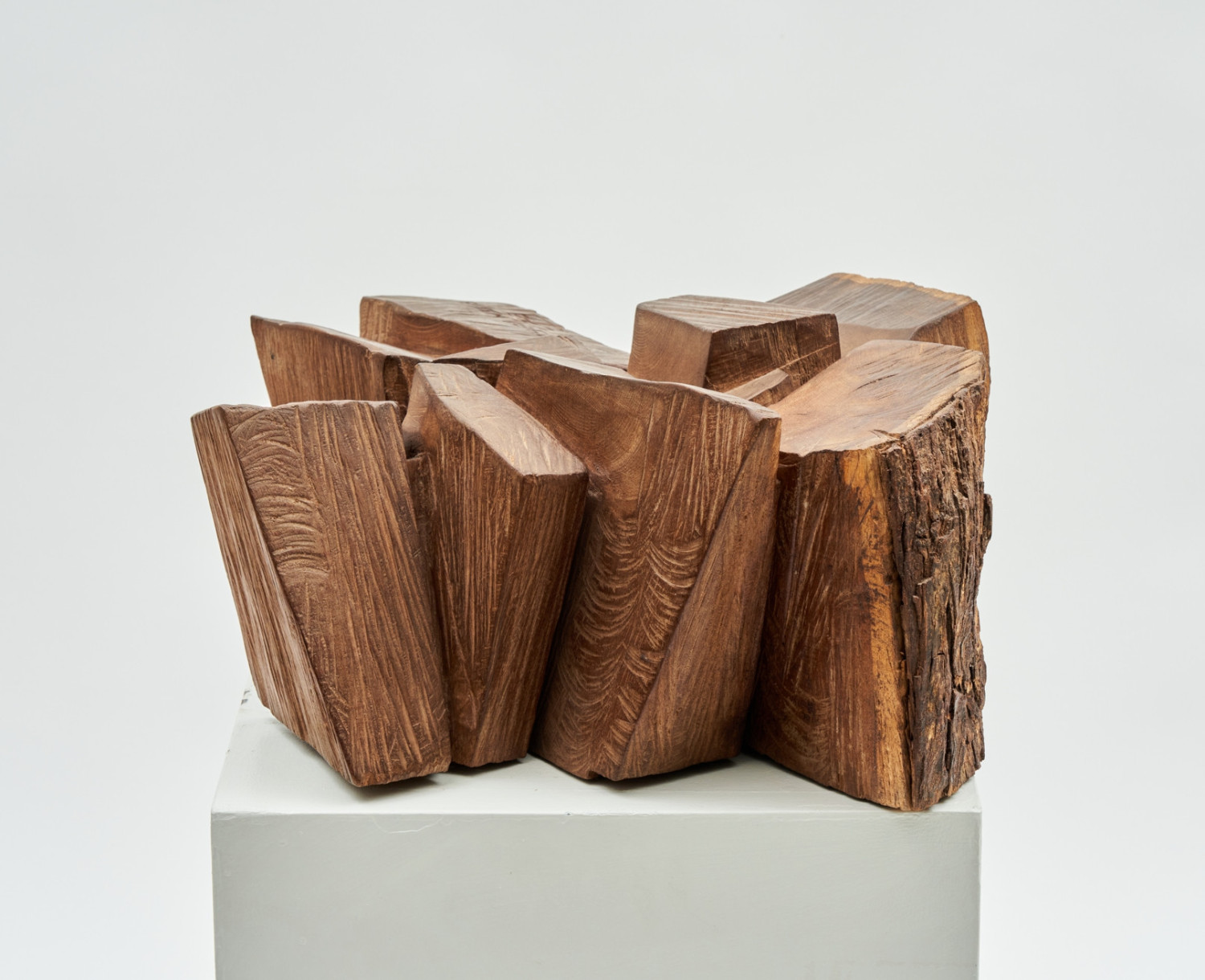
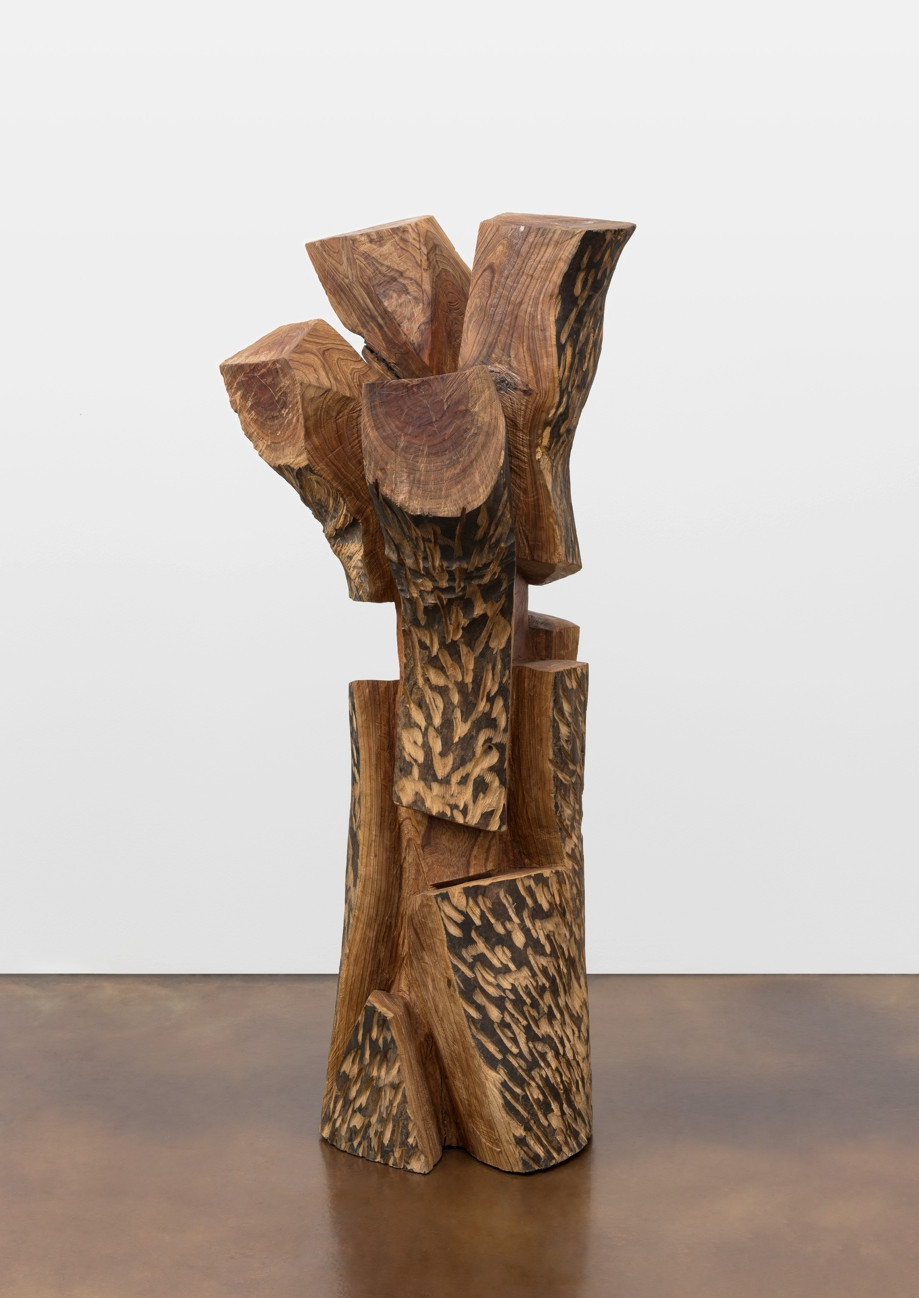
This approach became even clearer when I started working with wood. Sculpture isn’t about forming a shape; it’s a process where the temporal experience of living naturally accumulates and emerges. It’s not something that happens just because I intend it to. It’s only when my concentration reaches its absolute peak, whether I’m cutting into wood or applying paint, that my emotions and memories naturally settle, and a form is born. So, I don’t think of sculpture as having defined my approach, but rather as an act that reveals the way I have lived my life.
© Kim Yun Shin, Courtesy of the artist,
Photo by Choi Chul Lim
© Kim Yun Shin, Courtesy of the artist
Your “painting-sculptures,” where you configure each of the four sides in a different way, seem to be a way of looking at a single idea from multiple directions at once. How did this format change your approach or creative process?
This work is part of a discourse I want to leave behind in art history. I decided that I wanted the term “painting-sculpture” to be part of my legacy. A single idea never exists from just one angle. It reveals itself differently depending on which way you look at it and it always has multiple faces.
Rather than being consciously planned, this work began naturally during the pandemic when materials became scarce. Collecting discarded wood pieces to work with, those fragments became paintings again, then led to other sculptural forms. Sensations I’d imagined when playing alone in my childhood came alive again, and those memories become part of the work. The way a single thought expands across multiple surfaces is much like the way I’ve lived my life.
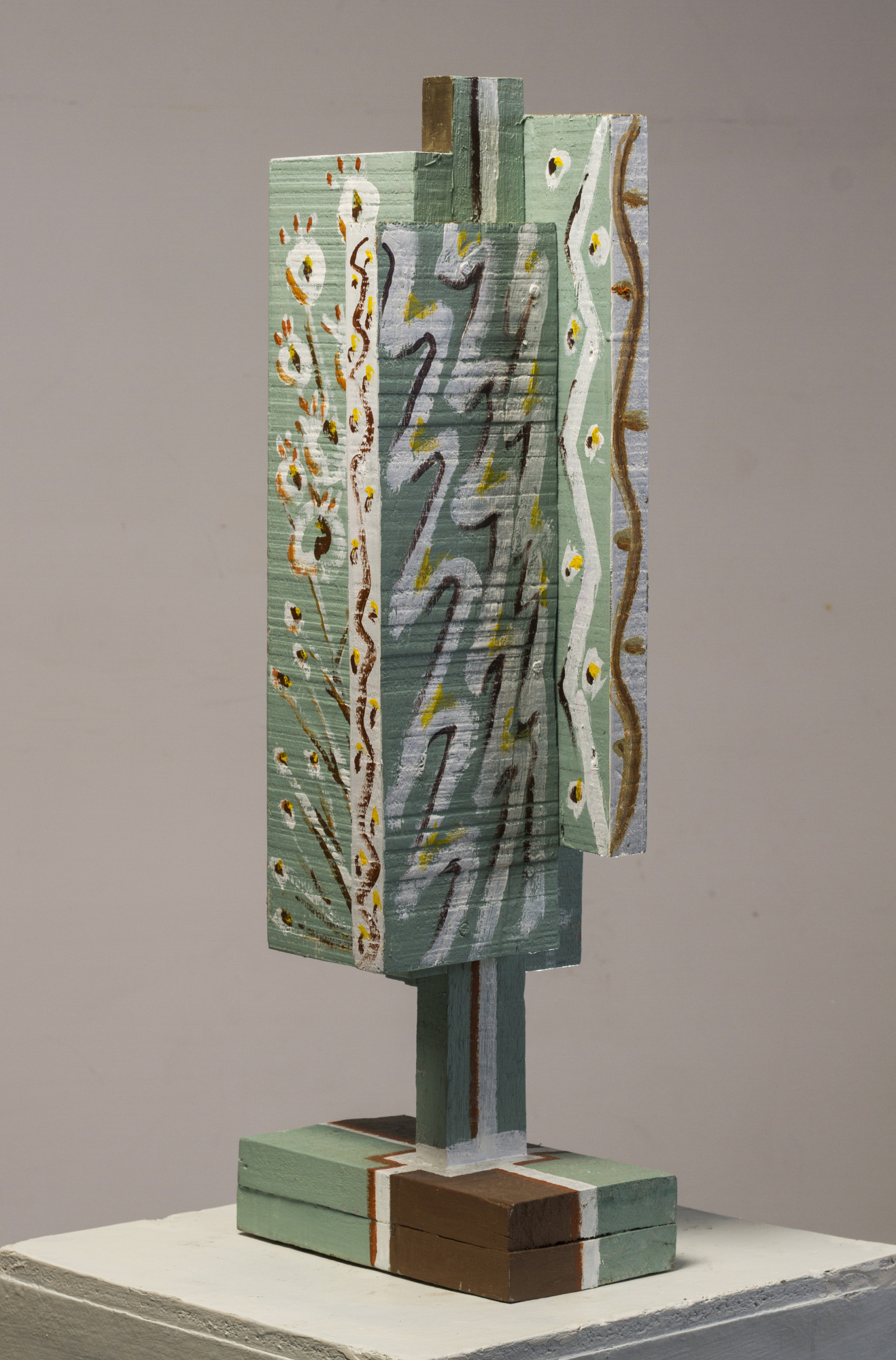
Acrylic on recycled wood, 64×23×20cm
© Kim Yun Shin, Courtesy of the artist
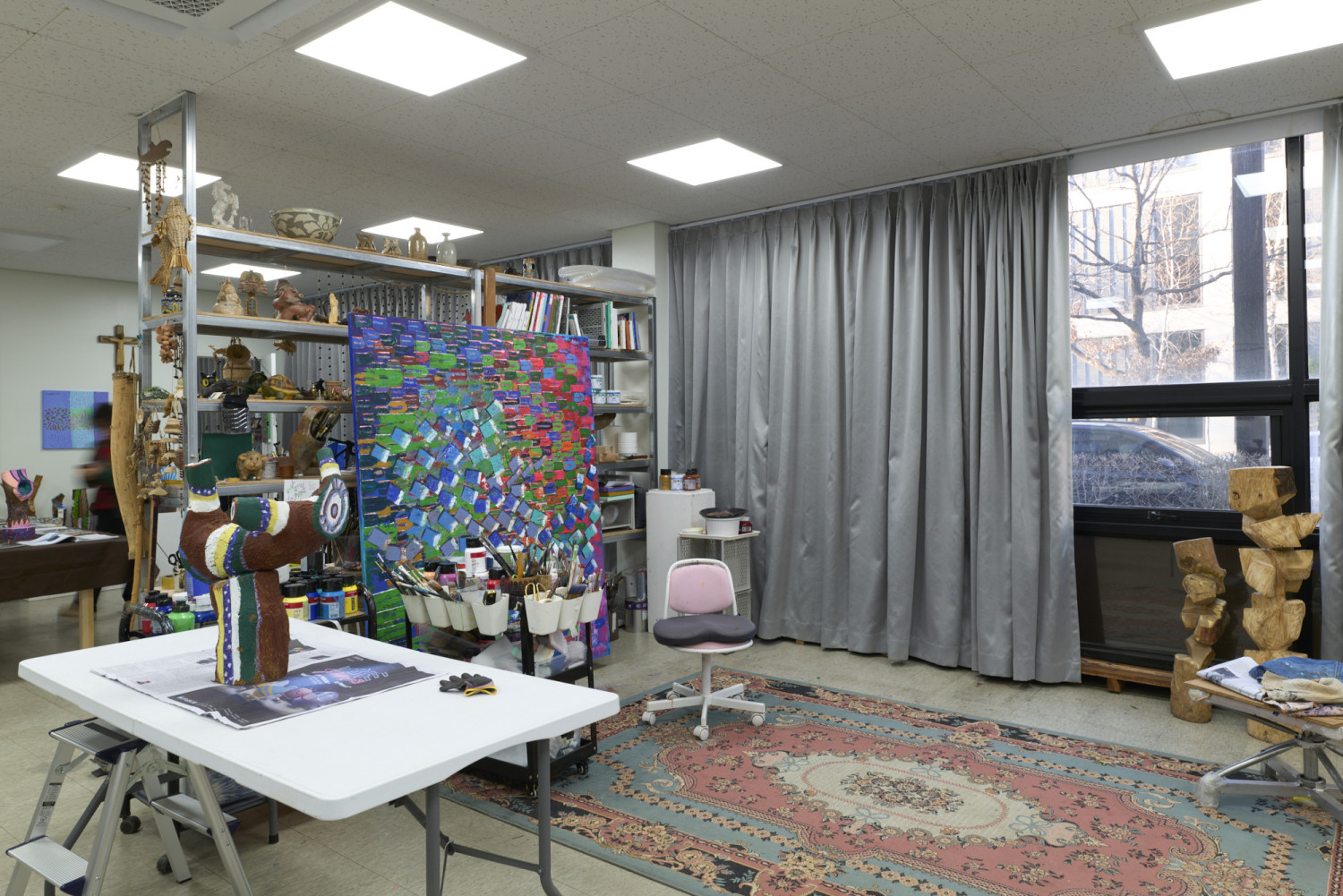
I’ve heard you’ve been even more immersed in painting recently. Are there approaches or expressions that are possible in painting that are not in sculpture?
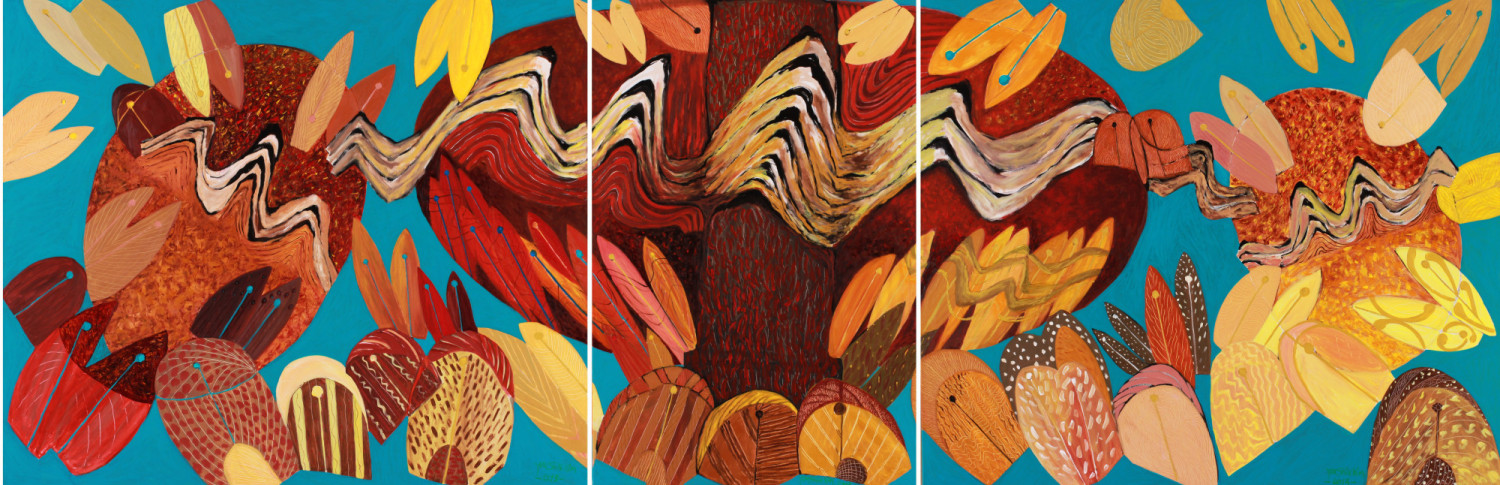
Painting is much more instinctual than sculpture. And because I have experience with printmaking, I place great importance on the inadvertent forms that arise from pressing and imprinting. Even if I repeat the same act, the result is always different. I press my finger into the form, but my fingerprint may not appear; the paint flows where it will, and a completely different shape emerges. Embracing the unplanned is the fun of painting. If sculpture is finding space, I think painting is closer to accepting the density and traces of a particular moment. These days, in my painting-sculptures, I am incorporating both in a single piece.
For you, is painting another language for sculpture, or is it a place where a different kind of approach emerges?
For 13 years, starting in 1984, I worked mainly with hard woods and onyx from South America. Around 1998, I began to draw again, and at that time, I started painting shapes of cut wood on canvas. My thought was that I was moving a part of the sculpture into the painting. But as I continued, I found that painting, in its own way, opened up another approach. In the end, sculpture and painting are not separate genres but expand upon each other. One leads to the other, and then comes back around.
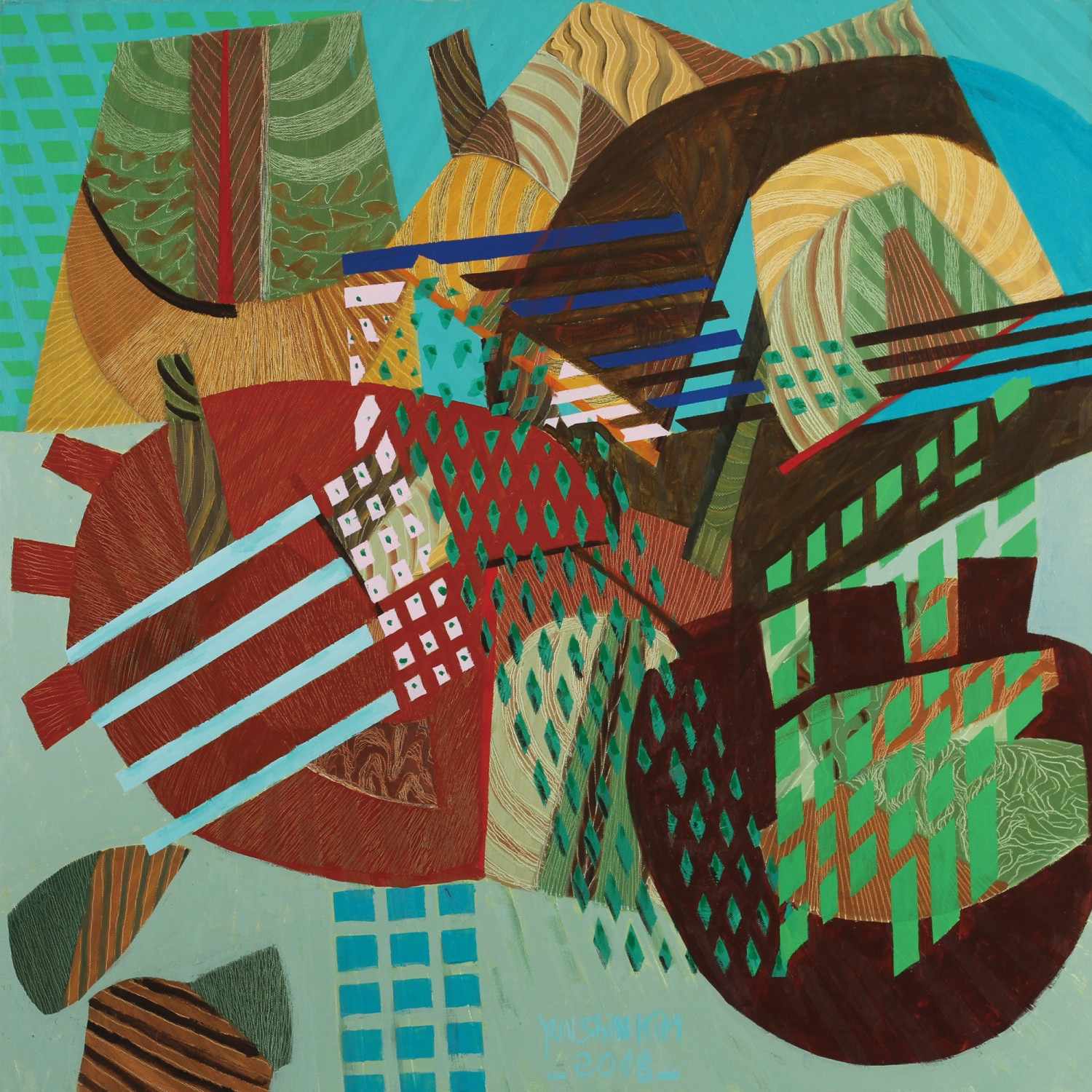
© Kim Yun Shin, Courtesy of the artist
Is nature an object of observation, or is it a presence you spend time with?
Nature was never an object of observation, but more like a companion to spend time with. I grew up at the foot of a mountain, and I played alone in nature all day long. During the war, I watched people dig up trees by the roots to use for fuel, and that was the first time I deeply felt the loss of a living entity. From that moment, nature was no longer an object but something to live alongside.
In your work, wood appears to be a partner that you have to constantly attend to. What is the first thing you consider when you face a piece of wood?
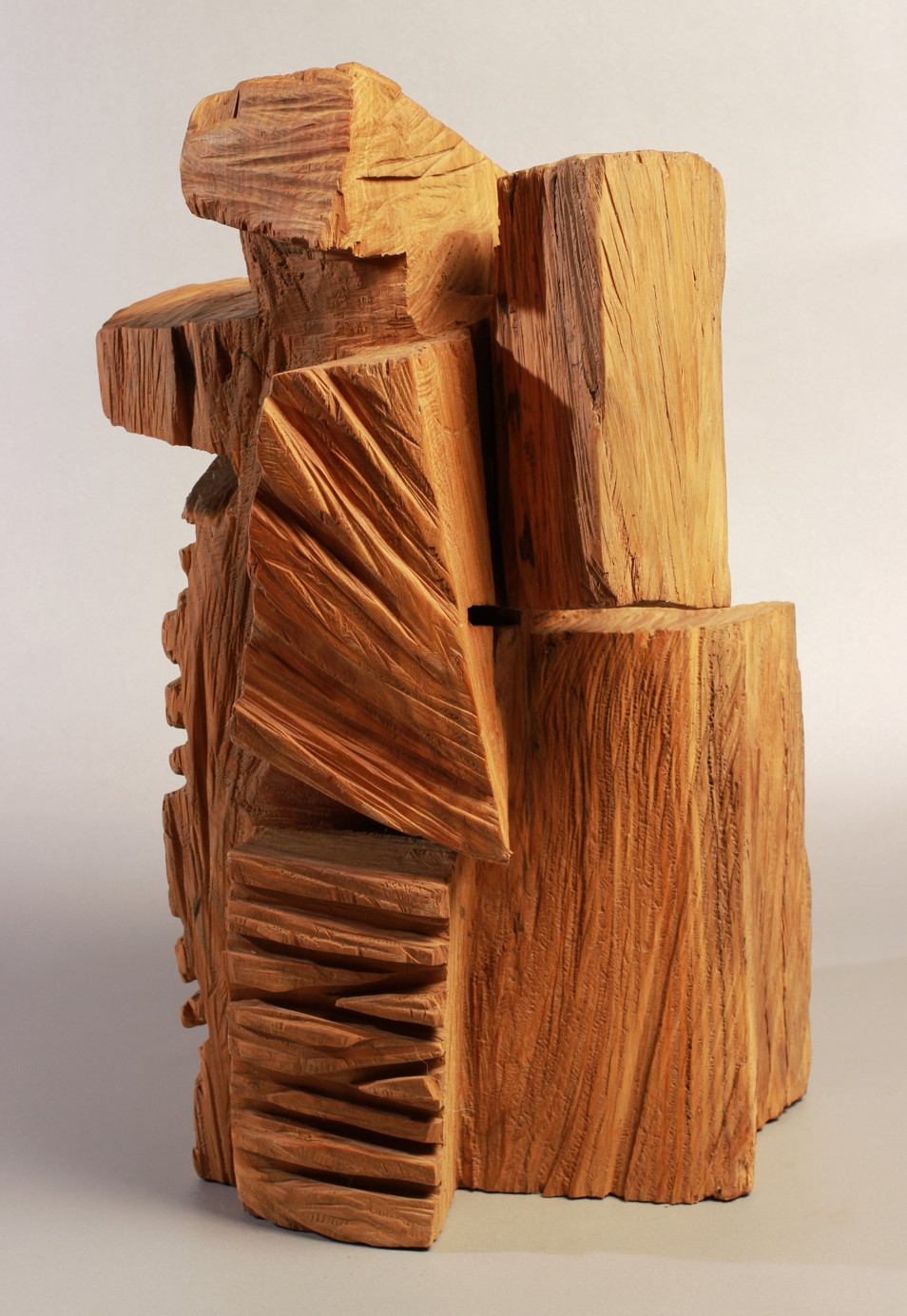
The state of the wood. My feelings and the wood’s emotional state have to align before I can begin to work. You can’t force it. If the moment when the wood and I become one never comes to pass, the creative process becomes perilous. This is especially true when I’m using a chainsaw. You can’t just press down with all your might; the wood, the machine and I all have to strike a perfect balance at the same time.
Chainsaws are often mentioned when describing your art, but in your actual work, the feeling of how to handle a tool is more important than the tool itself. What does “force” mean to you?
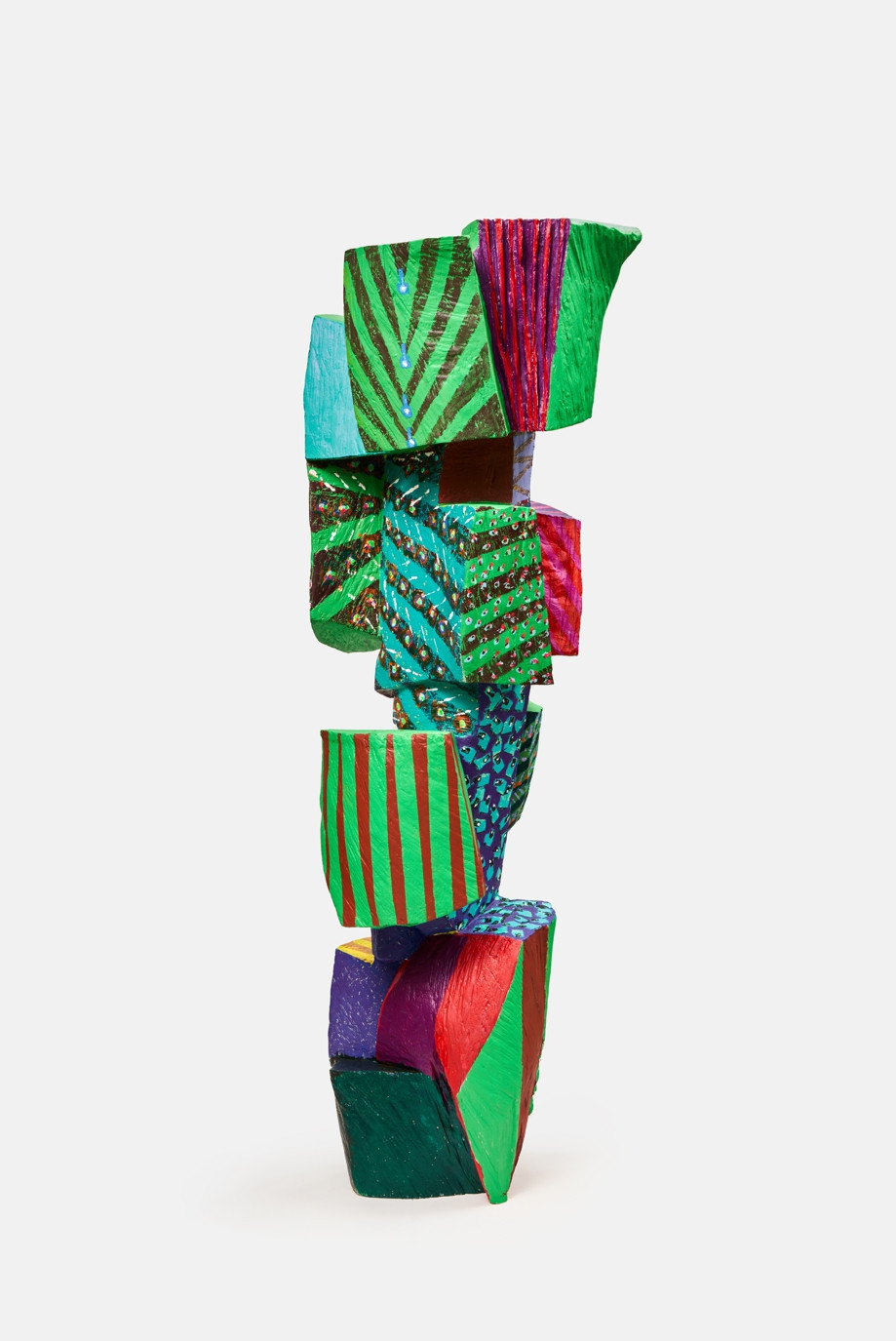
2025, Acrylic on aluminium, 158x63x55cm
© Kim Yun Shin, Courtesy of the artist
You can’t do it with just force. The important thing is balance. A chainsaw is a frightening and dangerous tool, so you actually have to have a greater sense of calm and ease. You have to become one with the wood. Sculpture is a spatial art. It’s a process of constantly thinking and adjusting, of knowing where to cut to make the space come alive. That is the work of sculpture, and the piece is completed with the feelings, thoughts and sensations that I pour into it with great concentration during the creative process.
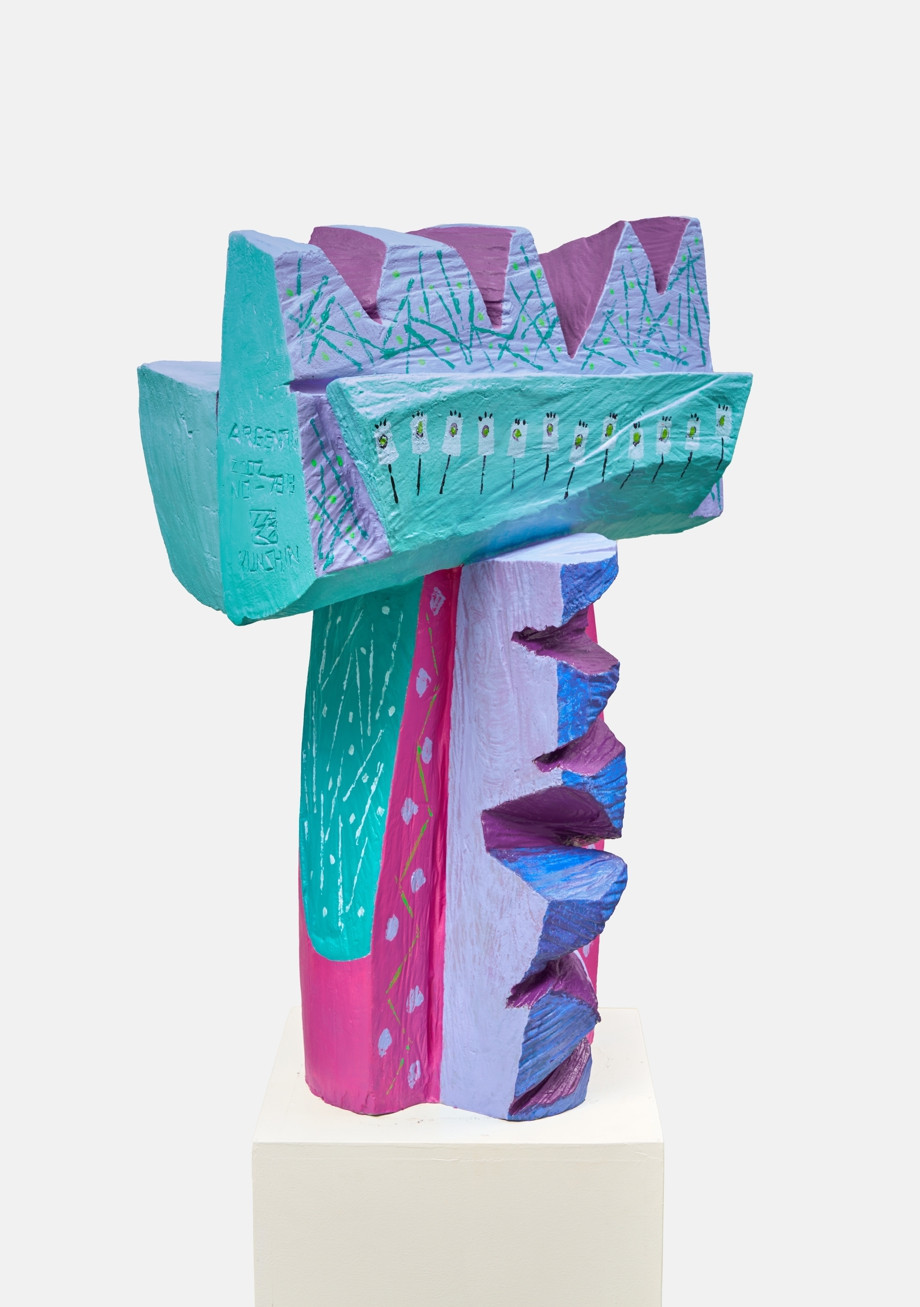
2025, Acrylic on aluminium, 91×70×35cm
© Kim Yun Shin, Courtesy of the artist, Photo by Choi Chul Lim
You’ve described your work as both “a form of exercise” and a “way of life.” What would it mean to stop working?
If I stopped working, I would lose my sense of self. It would be akin to death. I feel alive only when I’m moving. Even when I’m in pain, if I concentrate on my work, I forget the pain. So, the thought of stopping is very difficult to entertain.
Over your long career, which has taken you between Korea, Paris, and South America, how have you felt about your identity as a “Korean artist”?
Wherever I am, the place where I am working becomes my space. I’ve never been conscious of my identity while working. Of course, when I’m overseas, I’m naturally called a “Korean artist,” but when I’m immersed in the act of creation, that distinction has no meaning. Wherever I can do the work I want — that’s where I’ll be.
In all the years you’ve been working, have you ever wanted to stop?
Never. I had to survive. I lived through the war, and I came this far from a state of having nothing, so the only thought I ever had was that I had to live to the very end. That’s what kept me moving. And I’ve never once thought that I came to success late. I don’t believe there is such a thing as too fast or too slow in art. I did as much as I could then, and I am doing the same now. The creative process is always only possible in the present.
© Kim Yun Shin, Courtesy of the artist
When did the concept hap-i-hap-il-bun-i-bun-il become part of the language of your life?
This concept is the origin of my work. The self and the material meet, and another being is created. That being divides, and other relationships are created. Life is like that, and so is art. The entirety is in a constant process of dividing and coming back together. This is not just a creative approach; it is the very way I have lived my life.
What sense of responsibility did you take away from your experience of founding the Korean Women Sculptors Association in the 1970s?
At the time, it was less a sense of responsibility and more a simple thought that we had to get moving. I didn’t think of it as a specific “women’s” issue. In Paris, women artists were so active, but when I came back to Korea, it felt as though everyone was at a standstill. So, I naturally began to gather people, and that became a movement. Someone had to start it, and at that time, it felt like something I could do.
© Kim Yun Shin, Courtesy of the artist, Lehmann Maupin and Kukje Gallery
If you could share just one piece of advice about “attitude” with the young artists or viewers who are encountering your work for the first time, what would it be?
Concentration. Without pouring in your whole being, you can’t do anything. Do your work tirelessly, to the best of your ability. If you can maintain that attitude to the end, you’ll eventually find your path. And this isn’t just a story about art. Whatever you do in life, I think you need to have a time when you devote your entire spirit to it, at least once.
© Kim Yun Shin, Courtesy the artist, Lehmann Maupin and Kukje Gallery / Photo by Studio Kukla
Where to Experience the Art of Kim Yun Shin
Hoam Museum of Art
Kim Yun Shin Retrospective
March 17 – June 28
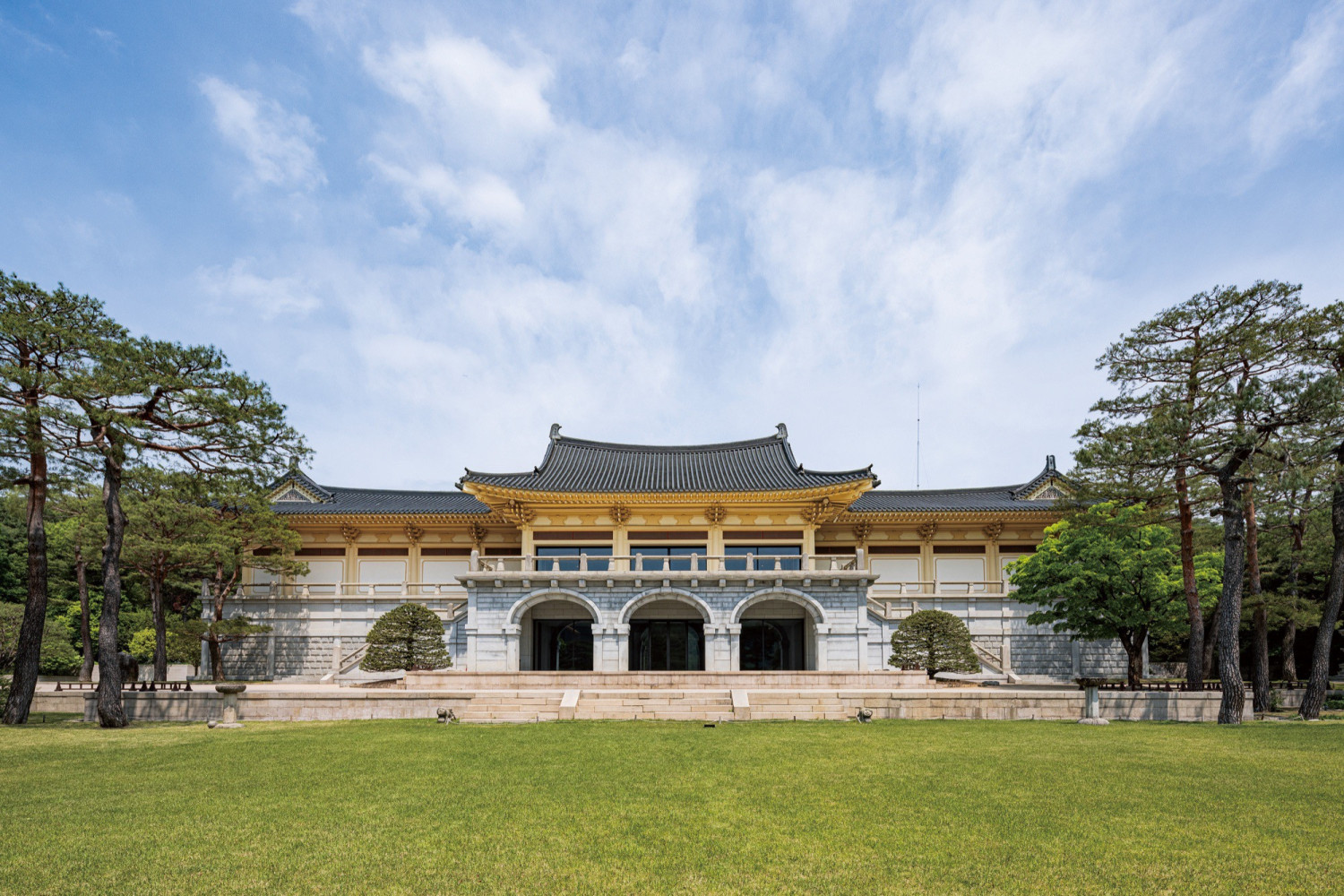
The Hoam Museum of Art, a leading private institution that has consistently illuminated the currents of international art through its focus on traditional and modern Korean art, has long played a vital role in reinterpreting key moments in Korean art history. This exhibition, the first large-scale retrospective of Kim Yun Shin, a pioneering figure among Korea’s first generation of women sculptors, takes a comprehensive look at her 70-year artistic journey. Featuring not only her wood sculptures but also her printmaking and painting, it offers an opportunity to delve into her unique visual language, forged through her time in Korea, France and Argentina, in the new contexts of Asian modernism and global contemporary art.
- leeumhoam.org/hoam
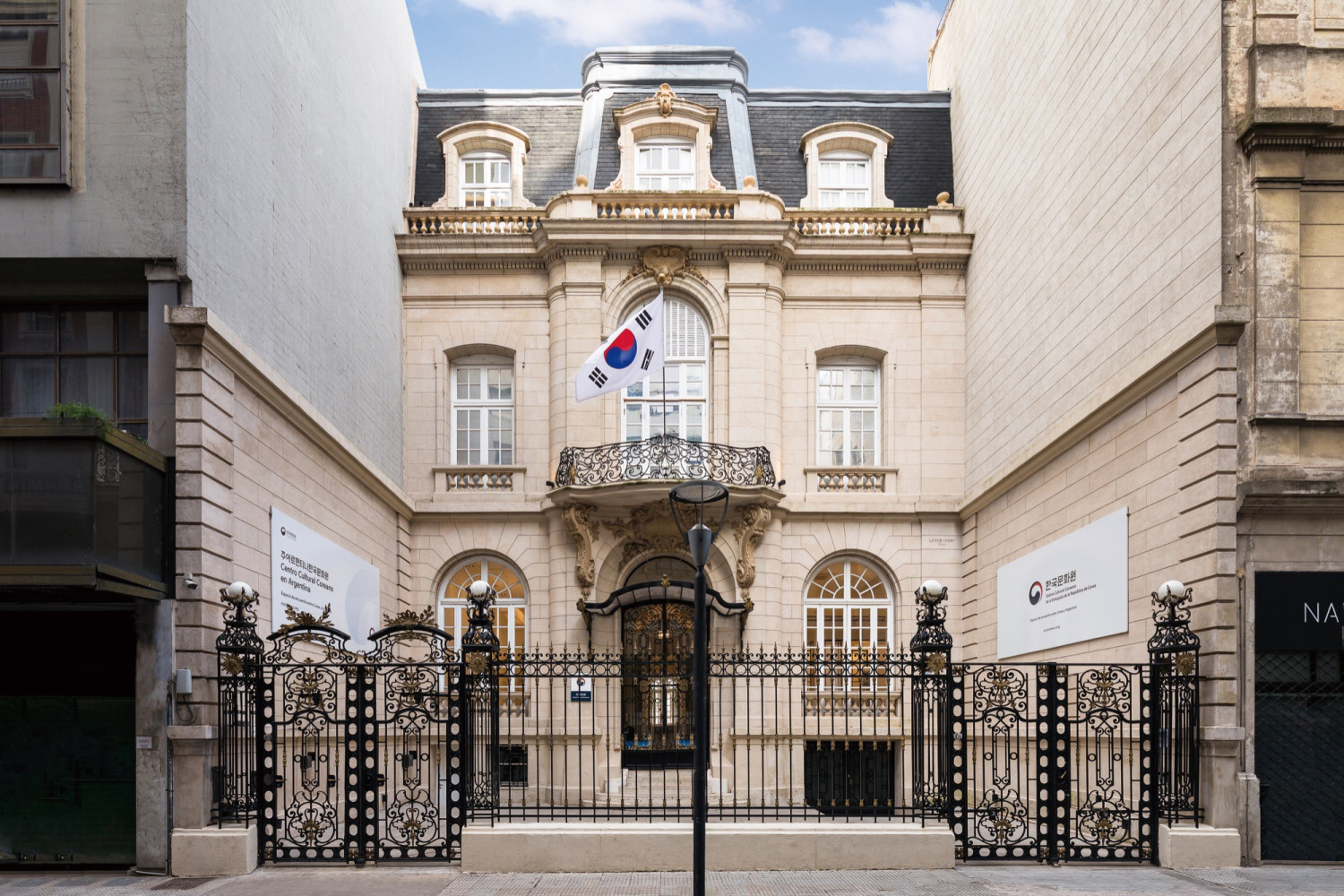
Korean Cultural Center Argentina
Kim Yun Shin Exhibition Hall
Permanent Exhibition
The Korean Cultural Center in Argentina, a key institution for introducing Korean culture and art to Central and South America, has long highlighted the work of contemporary Korean artists. The Kim Yun Shin Exhibition Hall, a permanent space within the Cultural Center, is dedicated to showcasing the work the artist created during her long residence in Argentina. With a focus on her sculptures, alongside major works of painting and printmaking, it offers a look at her artistic trajectory in the context of her international career.
- argentina.korean-culture.org
- Korean Air operates direct flights between Incheon and Atlanta / Dallas 11 times a week. Take a connecting flight to Argentina from one of these cities.
- Written by Choi Jini
- Images Courtesy of the Artist and Hoam Museum of Art