A Life Lived On the Grill, Samgyeopsal
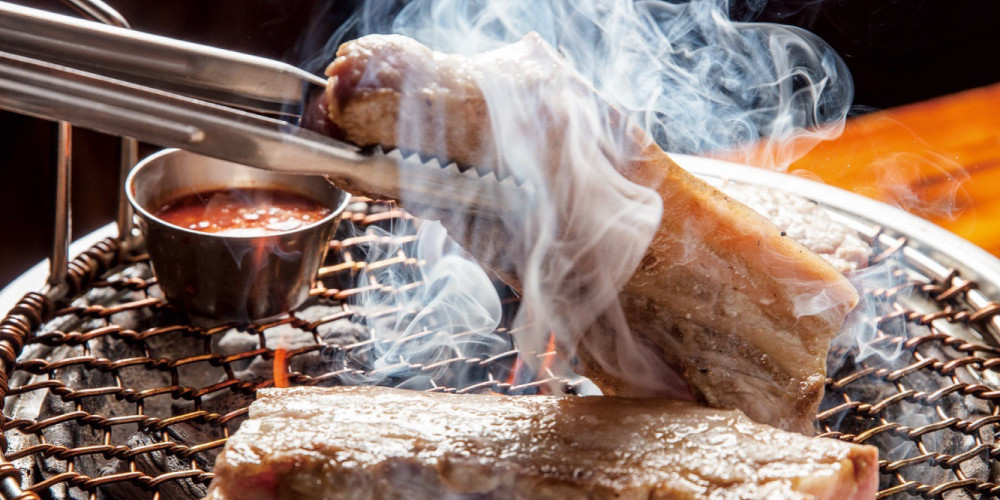
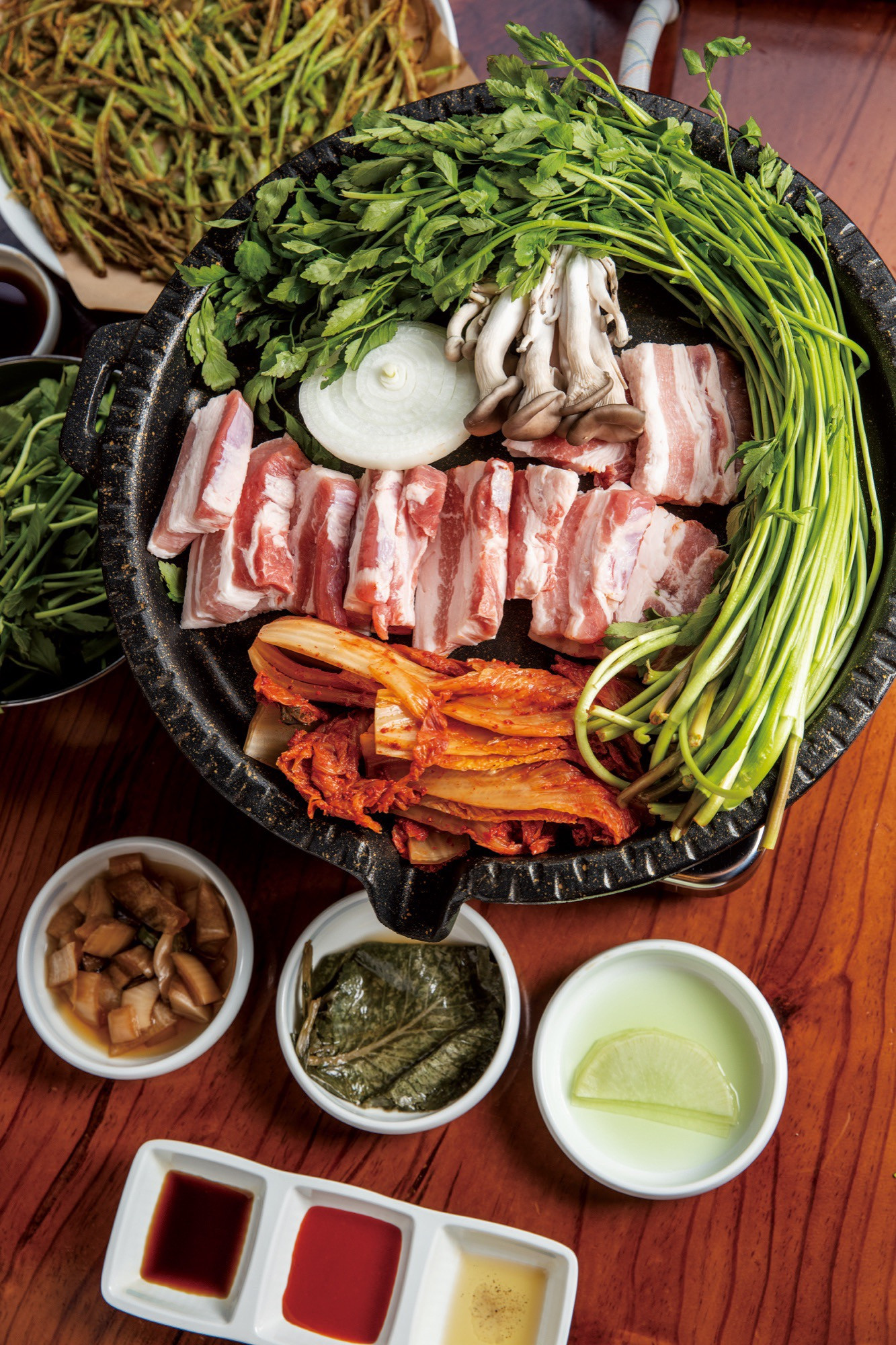
In every sizzling slice of samgyeopsal (pork belly) resting on a hot iron grill lies something far greater than a simple meal. Drifting smoke, savory aromas and the ritual of wrapping meat in a single leafy bite — folded into that moment is Korean daily life and modern history.
In September 2021, the Oxford English Dictionary (OED) announced the addition of eight globally popular K-food terms, following a path that began with kimchi’s entry in 1976. Since that addition, a string of Korean culinary staples such as bibimbap, gochujang and doenjang (fermented soybean paste) have been included. With the 2021 update, samgyeopsal (pork belly) joined their ranks. The particularly intriguing point is that the term samgyeopsal is not, strictly speaking, the name of a dish.
It is a cut of meat. Korean dictionaries define it as “the flesh attached to a pig’s ribs, where fat and lean meat appear to form three distinct layers.” So vivid are those alternating strips of muscle and marbling that the cut earned the name samgyeopsal, or “triple-layered pork.” Trace the chronicles of samgyeopsal sizzling on the grill, and you will find within them the twists and turns as well as the evolution of modern Korean history.
The 1970s: When Koreans Avoided Samgyeopsal
In Korean, “sam” and “se” both mean three. Koreans find
samgyeopsal phonetically easier to say than segyeopsal, yet the latter appeared first in the press. On November 3, 1934, the Dong-A Ilbo newspaper article “How to Distinguish Between Good and Bad Meat,” read: “The segyeopsal found between the hind leg and the belly of a pig is the most delicious.” However, pork was a less common fixture on the Korean table at the time. The word samgyeopsal in its modern sense first appeared on January 3, 1959, in a Chosun Ilbo newspaper recipe for a Seollal (Lunar New Year) dish. Even then, samgyeopsal was not used for grilling but as an ingredient for broth or for pyeonyuk, a boiled meat dish traditionally made with beef.
Change began in the late 1960s. As the Korean government’s economic policies raised household incomes, demand for beef surged and prices soared. Ordinary people turned to pork as a cheaper alternative, and pyeonyuk made from samgyeopsal appeared on tables as a popular accompaniment to drinks. But the pork of that era bore little resemblance to what Koreans enjoy today.
The animals were not breeds raised for consumption; fed on kitchen scraps at small family farms, they produced meat with a rank, gamey odor. The wealthier classes wanted nothing to do with it. Outbreaks of food poisoning from pyeonyuk sold unrefrigerated in the summer heat only deepened that aversion.
Improved Breeds and the Birth of Grilled Samgyeopsal
In the early 1970s, samgyeopsal’s fortunes began to turn. Early attempts to export pork to Hong Kong and Japan had largely failed due to inconsistent quality control. To modernize and scale the livestock industry, the government encouraged large conglomerates to enter the sector. In 1976, Samsung Group’s CheilJedang (now CJ)
established a large-scale commercial pig farm in Yongin, Gyeonggi-do Province in what became a pivotal moment in Korean culinary history.
By the mid-1980s, the Korean pork industry had laid the foundations of a thoroughly modern enterprise. The introduction of improved breeds suited to food production, combined with scientifically formulated feed, dramatically elevated meat quality. Lean, low-fat cuts like tenderloin and sirloin were now being exported to Japan in large quantities. The fattier samgyeopsal, however, was ill-suited to the Japanese meat market and remained in Korea, thereby flooding the domestic market at bargain prices.
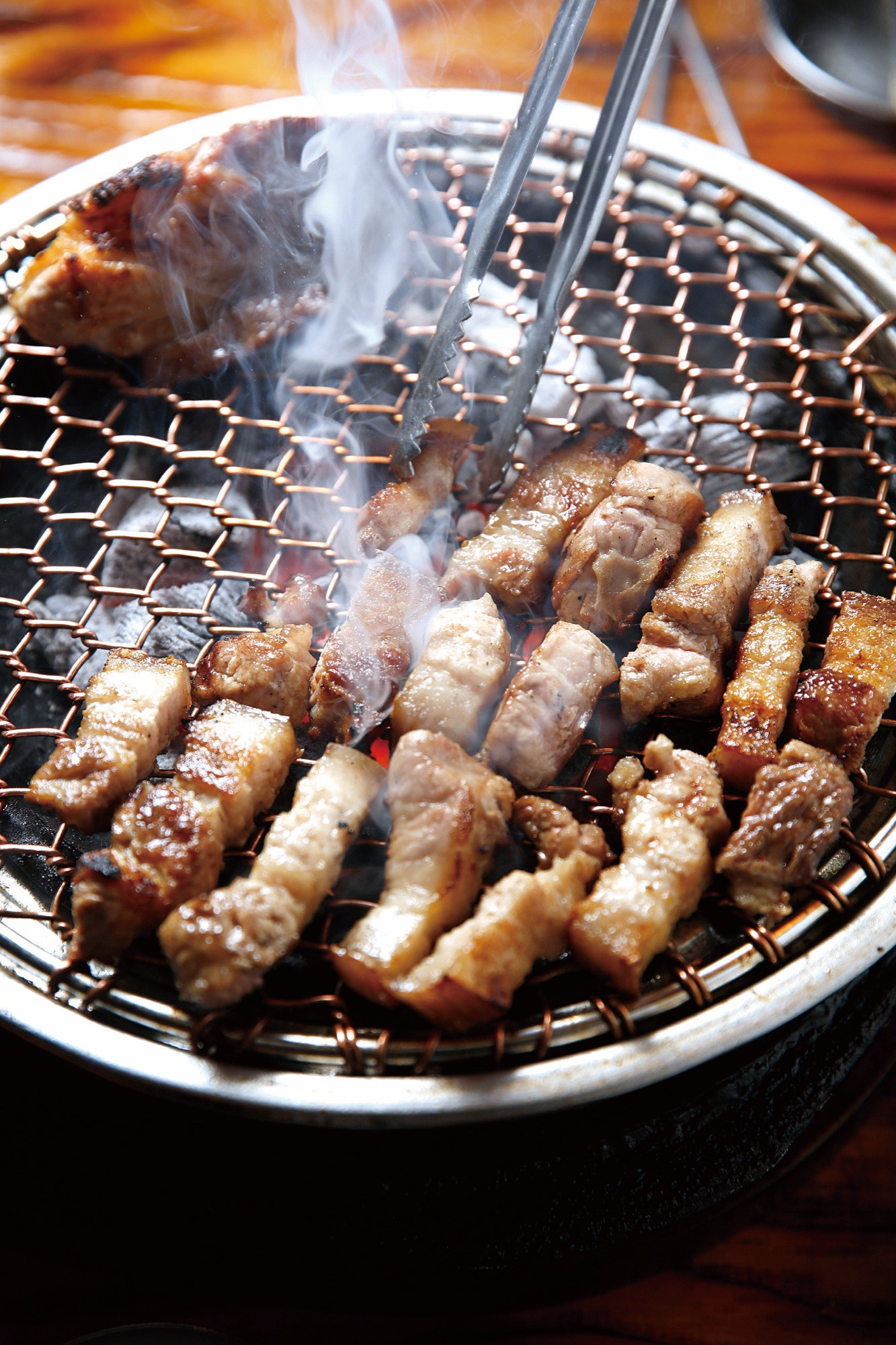
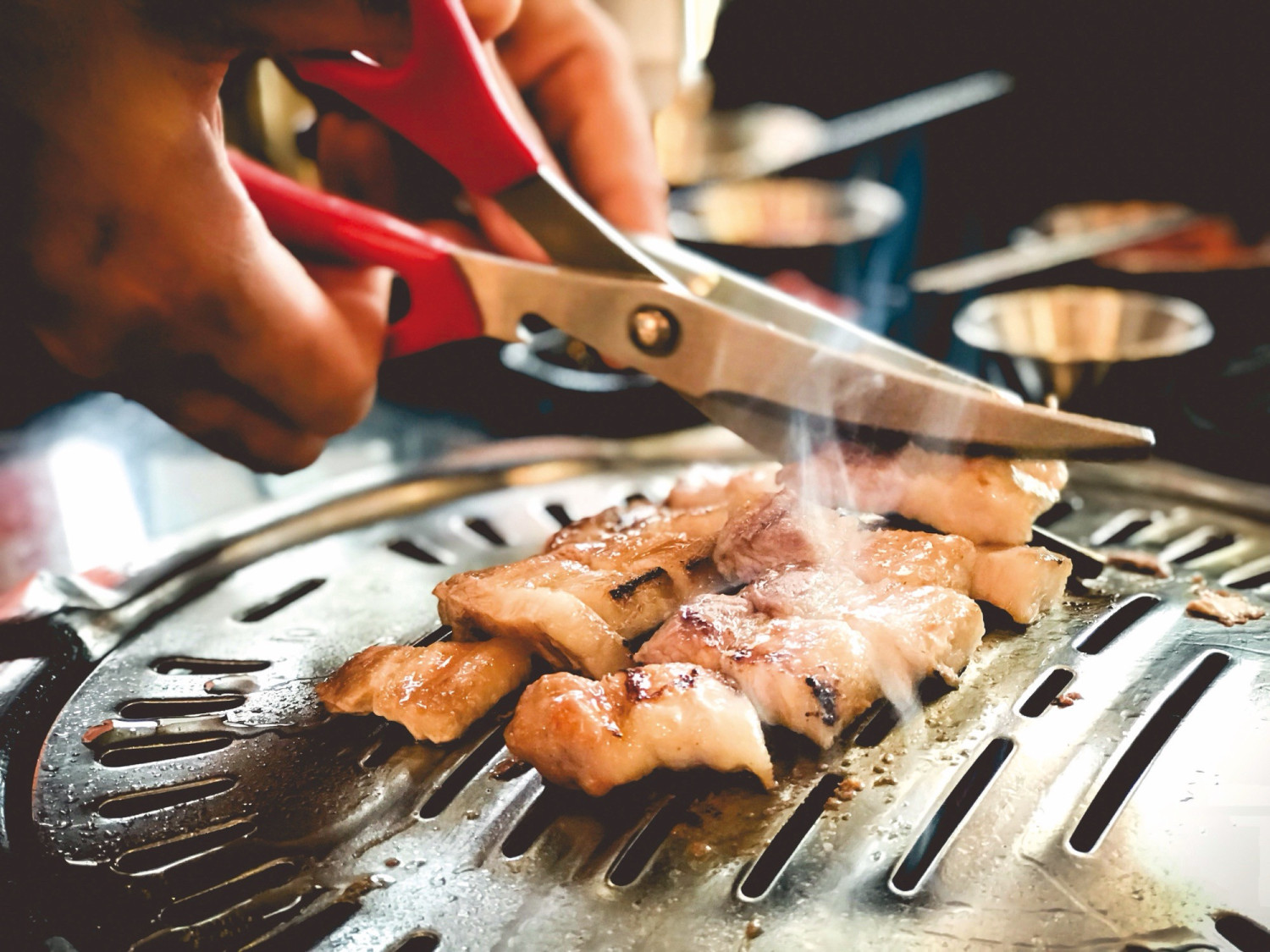
Around the same time, a small device helped ignite a cultural phenomenon. The portable gas burner, launched in 1980 alongside disposable butane canisters, made open-flame cooking possible virtually anywhere. As rising incomes fueled a boom in leisure activities, Koreans flocked to mountains and coastlines for outdoor outings,and grilling samgyeopsal became synonymous with the Korean group picnic. The OED’s definition of samgyeopsal as a “dish of thinly sliced pork belly, usually served raw to be cooked by the diner on a tabletop grill” captures the cultural scene that crystallized during this period.
A Thousand Years of Ssam CultureMeets Samgyeopsal
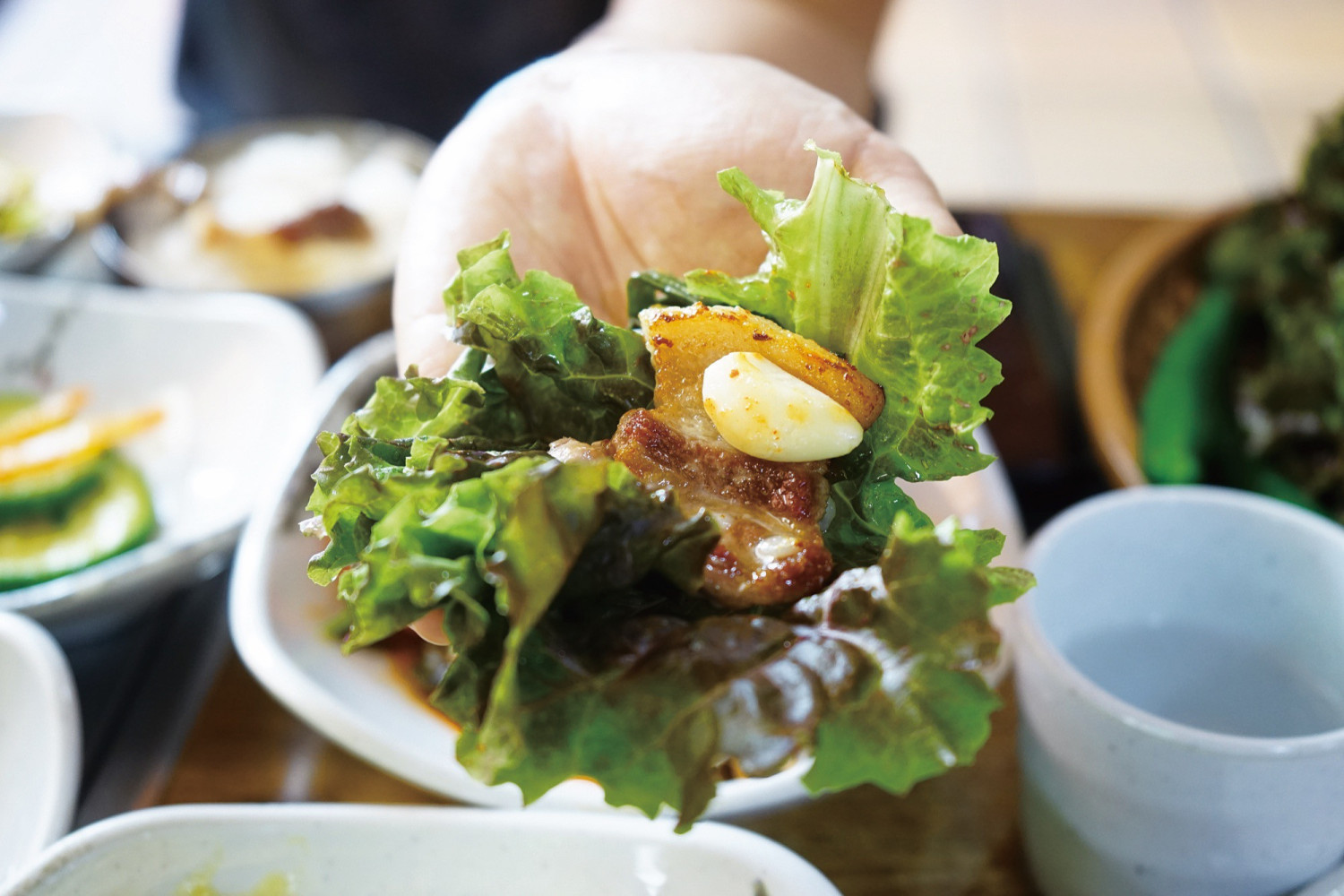
The Korean way of eating samgyeopsal is distinctive. Rather than dipping the meat in salt, Koreans wrap it with rice and an assortment of vegetables and condiments inside a leaf of lettuce or perilla leaf, folding it into a single, generous mouthful. This is ssam, a practice with roots stretching back over a thousand years, now gloriously tied to grilled pork.
Though samgyeopsal was not yet part of the picture, the Joseon-era custom of ssam eating is vividly captured in the writings of Yi Ok (李鈺, 1760 – 1815), a scholar and official of the late Joseon Dynasty: “Spread your left hand wide open like a copper tray. With your right hand, select two thick, large lettuce leaves and lay them face-down across your palm. First, scoop a generous spoonful of white rice and form it into a round shape, like a goose egg; then place it on the leaves. Flatten the top slightly. With hopsticks, pick up a thin slice of large-eyed herring, dip it once into a dab of yellow mustard sauce and lay it over the rice. Place water parsley and young spinach alongside the herring — not too much, not too little. Press several thin strips of green onion and a few fresh mustard stems across the top. Spread on a touch of freshly stir-fried gochujang. Then, with your right hand, fold both sides of the lettuce leaf inward and press them firmly shut, shaping the whole into a round like a lotus seed head. Now open your mouth wide, lips drawn back like a bow with the gums showing. Push the ssam into your mouth with your right hand while your left hand steadies the right.”
Yi Ok pronounced the taste “sweet and refreshing … leaving nothing more to be desired.” Today, Koreans carry on that tradition, swapping herring for a golden-seared slice of samgyeopsal.
Comfort Food in Perpetual Evolution
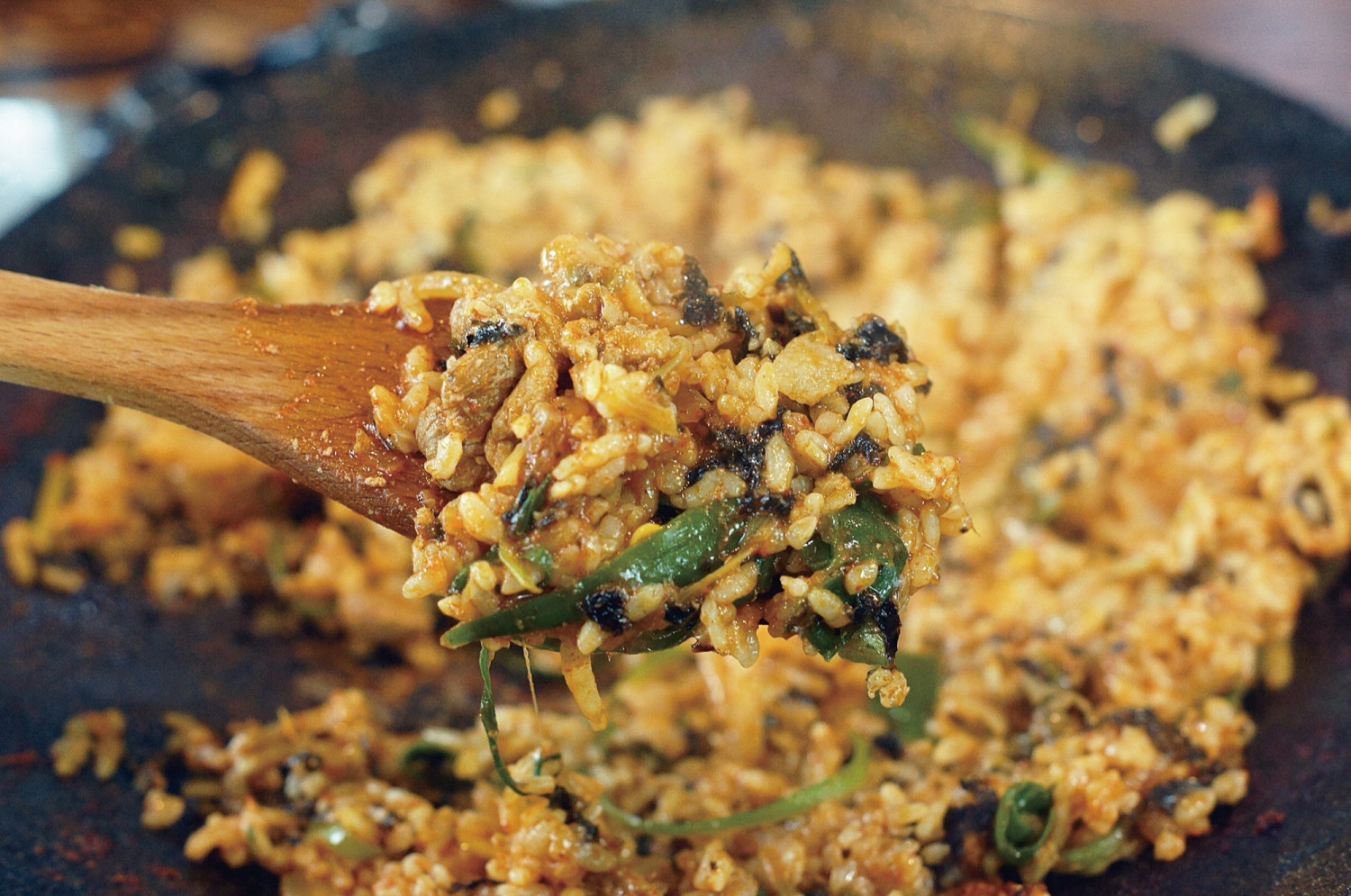
Since the 1990s, samgyeopsal has never stopped evolving. After finishing the grilled meat, diners began adding finely chopped pork, napa cabbage kimchi and leftover rice to the fat remaining on the grill, tossing in dried seaweed and sesame oil to make bokkeumbap, the stir-fried rice finale that has since become an indispensable part of the samgyeopsal experience. Another favorite is daepae samgyeopsal — pork belly shaved into paper-thin slices that purportedly traces its origins to budget-friendly pork joints in the southern port city of Busan in the 1980s, where it was a staple for young people with thin wallets. Sot-ttukgeong samgyeopsal, grilled on an upturned iron cauldron lid that drains away the fat, also won an enormous following.
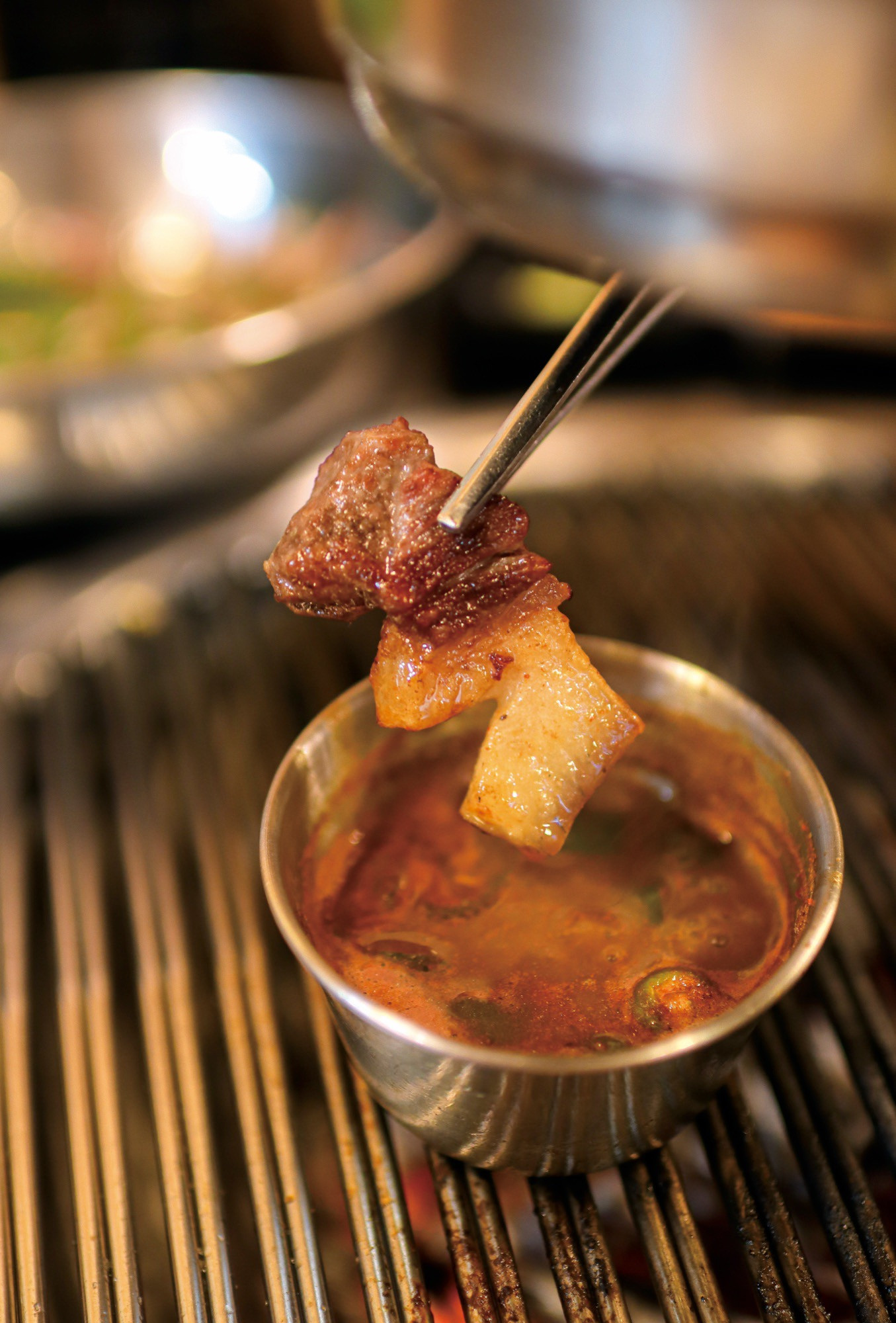
During the COVID-19 pandemic, when domestic travel surged and Koreans discovered Jeju Island anew, many encountered the island tradition of dipping grilled black pork belly into Jeju-style fermented anchovy sauce. The trend spread across the country almost overnight.
The OED’s entry on samgyeopsal notes one usage of the term as “one of the most common dishes found in Korean restaurants throughout the world.” And, despite the samgyeopsal craze being only 40 years old, the dish contains multitudes: the Korean hunger for grilled meat, the aesthetics of ssam and bibim (mixing) as well as the communal spirit of gathering closely around a shared table. The fragrant smoke curling upward, the insistent sizzle on the grill and the careful craft of folding a perfect ssam. The journey of Korea’s ultimate comfort food continues to captivate all five senses of people the world over.
- Written by. Joo Youngha
- Joo Youngha is a leading food anthropologist specializing in the history and culture of East Asian cuisine. Over the past 30 years, he has published more than 30 books on the food cultures of East Asia and Korea. He is currently a professor at the Graduate School of Korean Studies within the Academy of Korean Studies.