A Basilica Designed Through Time, The Sagrada Família
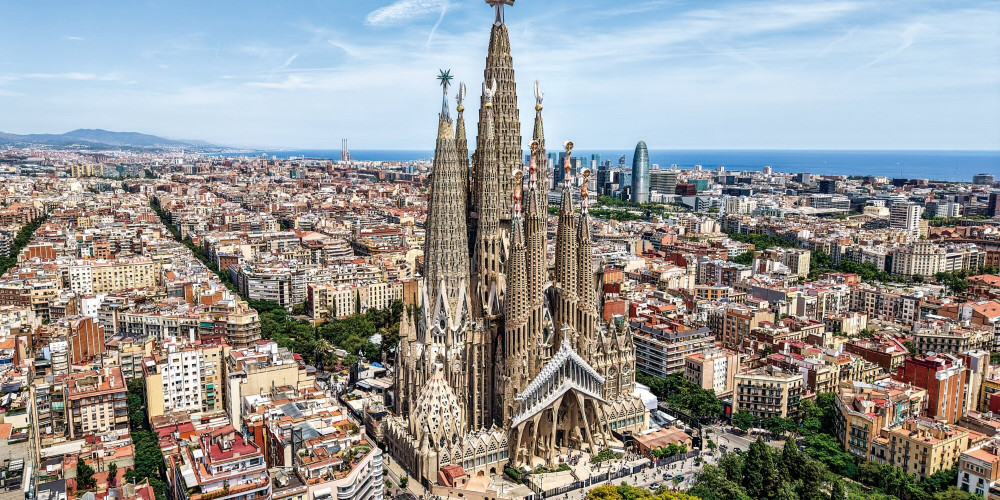
Since breaking ground in 1882, Barcelona’s Sagrada Família has been under construction for more than 140 years — a rare piece of architecture that treats time itself, rather than completion, as its primary medium.
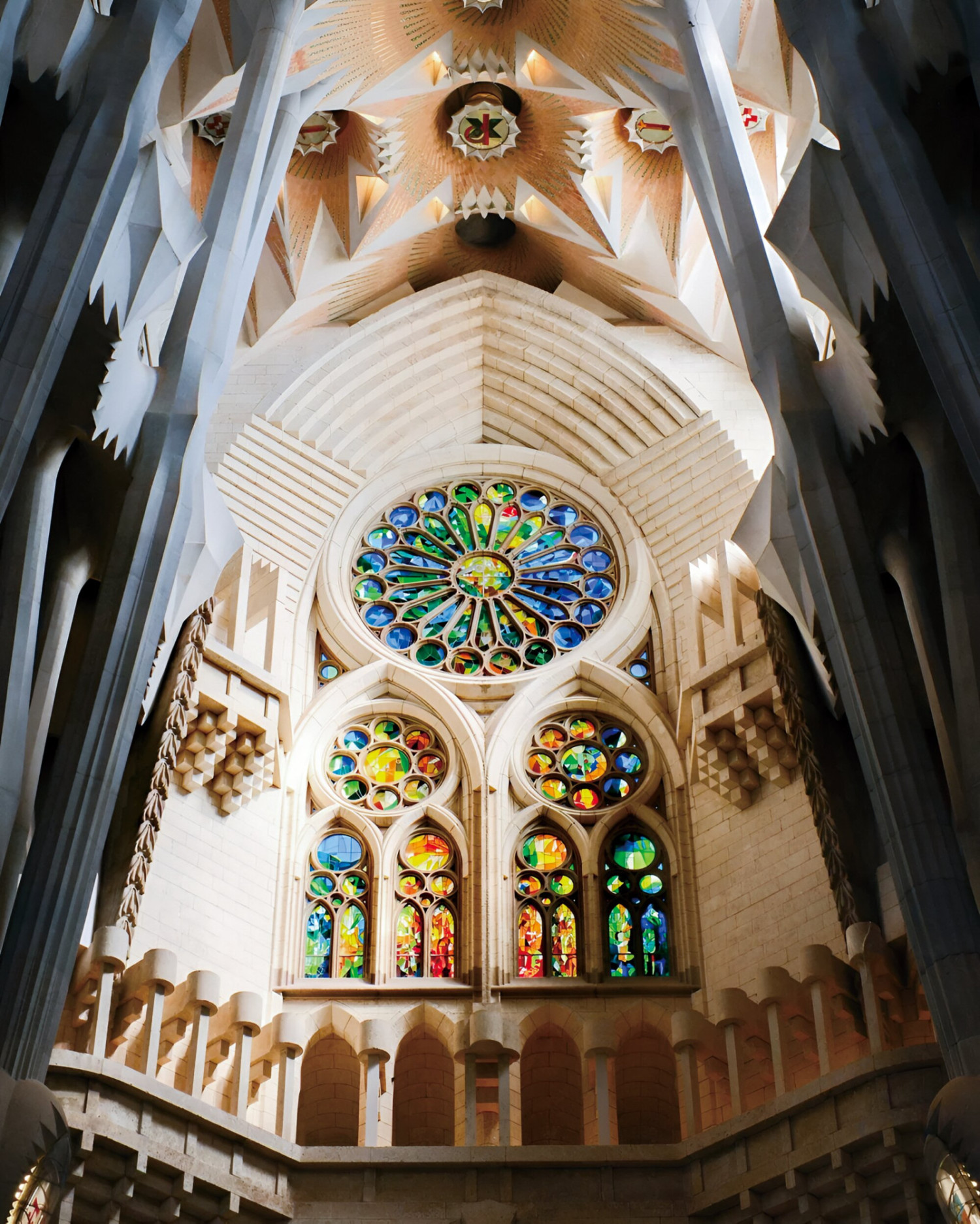
© William Rudolph
Inspired by Nature, the Most Perfect Design
That a basilica whose construction began in 1882 remains a work in progress more than 140 years later is an architectural rarity. Though the Sagrada Família may be finished on paper thanks to the completion of its tallest tower, the structure remains under construction. For the church, however, enduring through time has become part of the architecture itself. When discussing Antoni Gaudí, the most frequently invoked word is “nature.” Yet understanding his work merely as forms mimicking nature is only half the story. Moving beyond the natural world’s superficial beauty, he examined the underlying principles through which nature achieves balance.
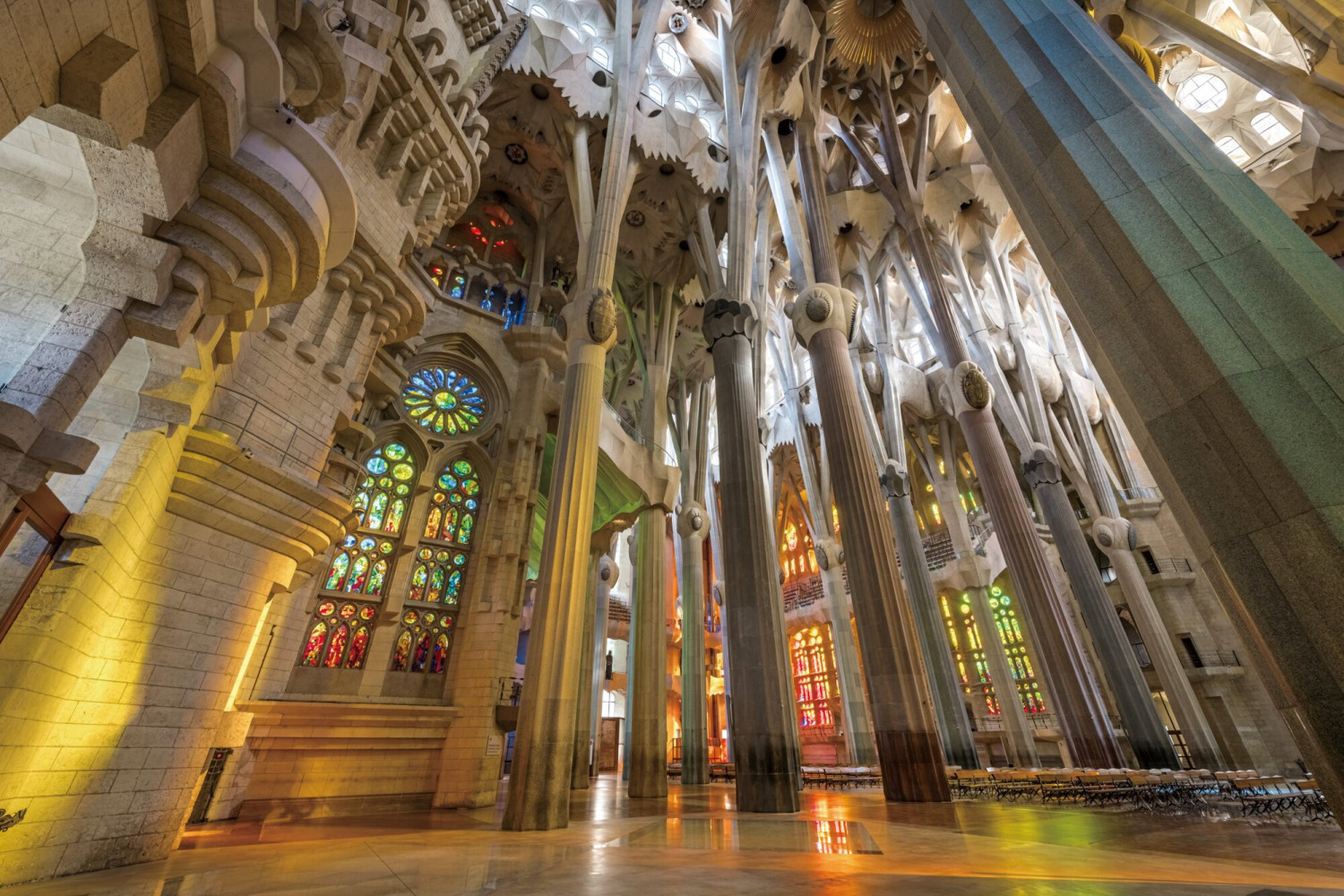
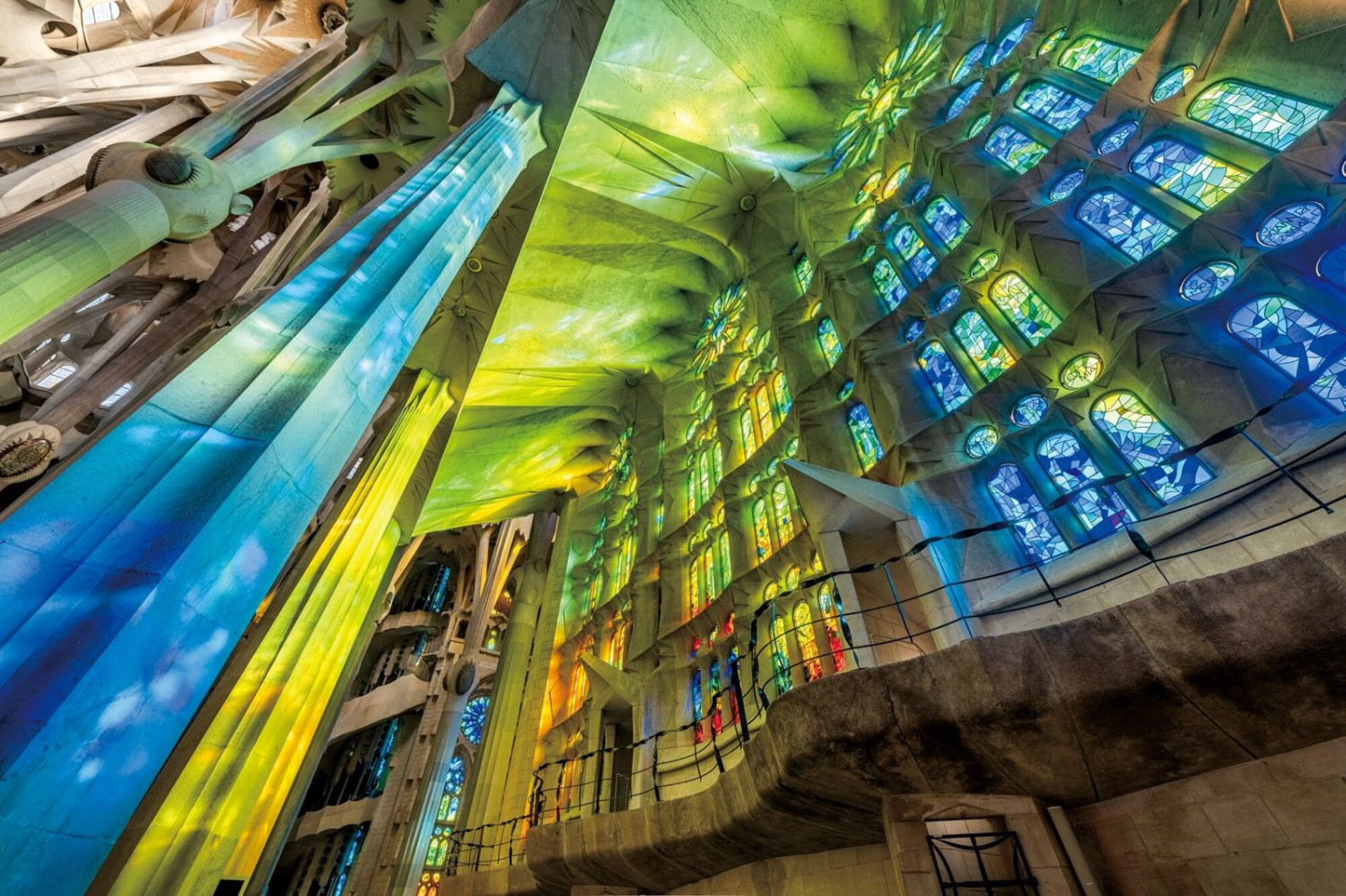
This perspective reveals itself most clearly inside the Sagrada Família. The interior columns branch out as they ascend, the ceiling spreading above like a wooded canopy, leading people to describe this space as a stone forest. And much like a real forest, structural loads are naturally distributed, each element supporting the next in a harmonious order. Gaudí looked past imitation, translating nature’s principles into spatial form. Light, too, serves as a key building material. Morning light filters through the cool blue stained glass of the eastern facade and diffuses between the soaring columns. As the sun tilts westward, warm red hues imbue the exact same space with a different mood. Gaudí understood better than anyone that architecture extends past mere form: it creates an experience that evolves with time.
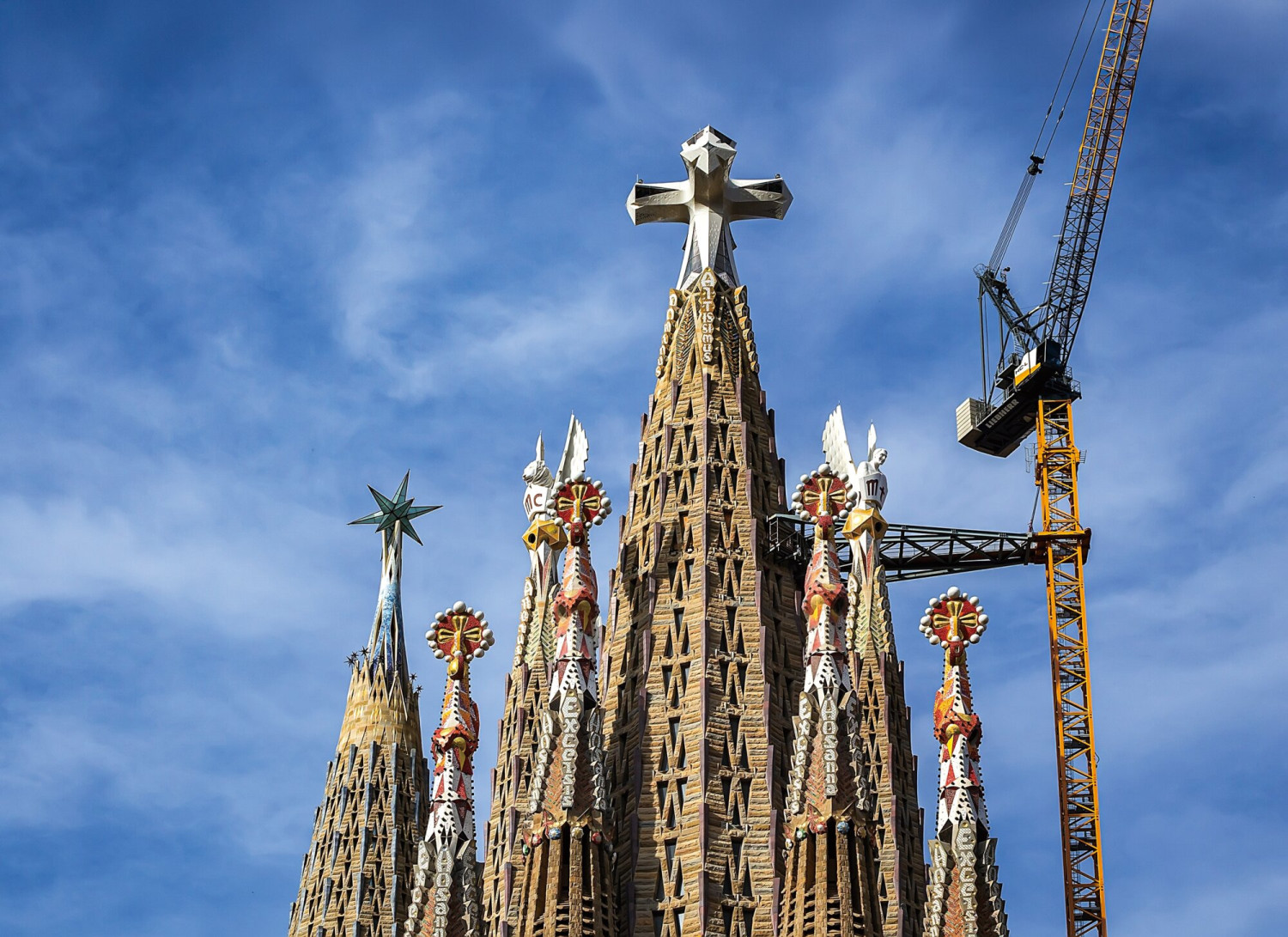
© Kiev.Victo
From One Man’s Vision to Architecture for All
Gaudí passed away in 1926 without seeing his masterpiece completed. Not long after, the Spanish Civil War halted construction, and a workshop fire destroyed most of his remaining drawings and plaster models. The loss of the master architect and his designs was a devastating setback. At the time, many predicted the Sagrada Família would forever remain unfinished. Yet the story took an unexpected turn. Rather than attempting to copy exact forms from surviving model fragments and records, subsequent generations of architects sought to understand what Gaudí was envisioning. In place of a finished set of plans, he left behind a way of thinking. His commitment to translating natural principles into structural form and his philosophy of refusing to separate ornament from structure became a guiding compass for all future construction.
Today, digital modeling and 3D printing technologies are deployed on-site, but they do not replace Gaudí’s sense of style; they serve as modern tools to realize his artistic vision. Thus, the Sagrada Família poses a unique question to the world of architecture: Whose work is it? Its origin undeniably belongs to Gaudí, yet as it stands, it has been shaped by the hands of countless architects, artisans and engineers. Unlike most buildings attributed to a single architect or studio, here, one creator’s original design stands alongside those of generations of visionaries, each with their own interpretations. Perhaps the true creator of this basilica is not an individual but the countless people who have worked on it over time.
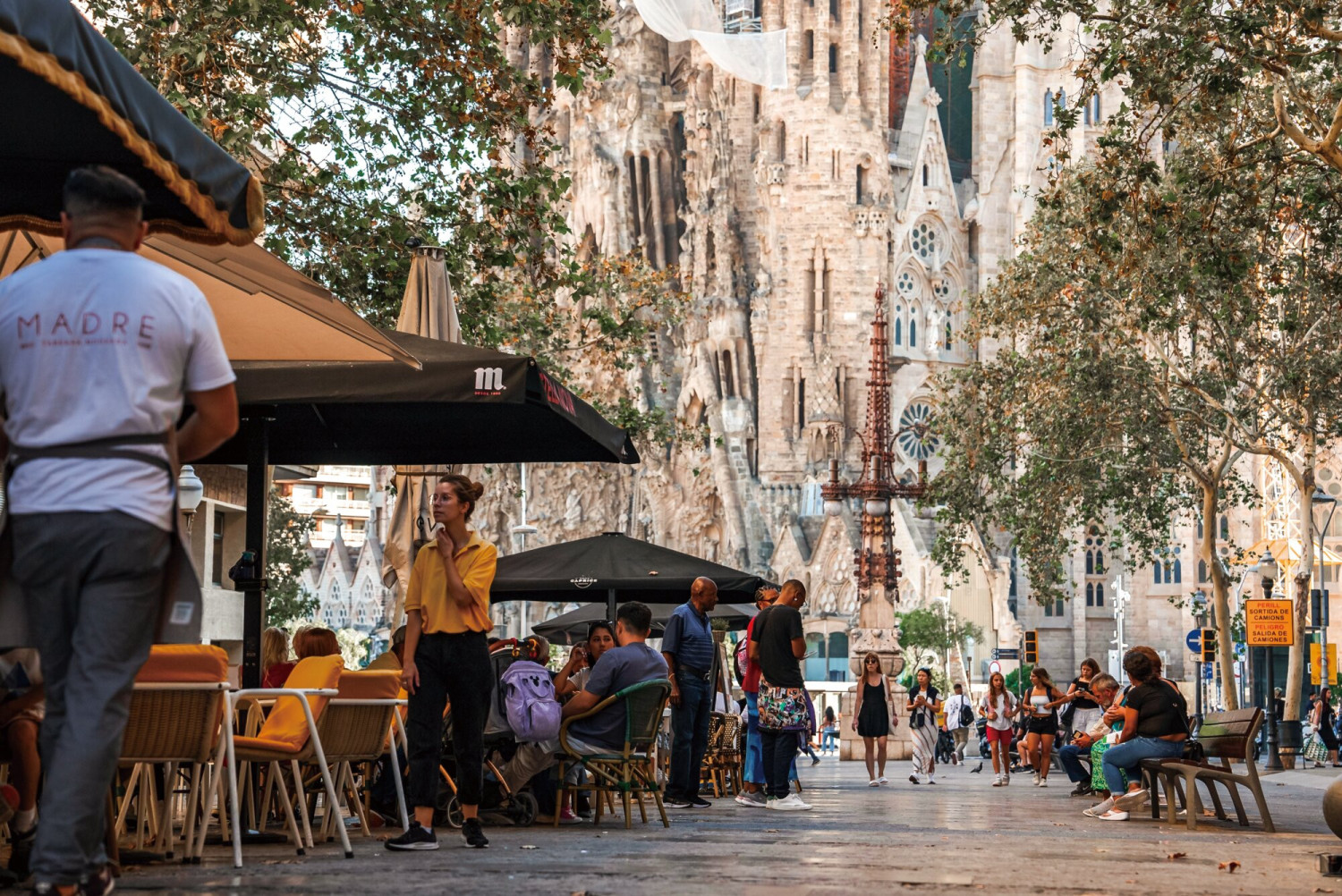
© NorthSky Films
Architecture That Reflects a City
What makes the Sagrada Família so extraordinary is its prolonged construction, rendering the basilica inseparable from Barcelona itself. Situated in the Eixample district — renowned for its uniform grid plan — the basilica’s sweeping, organic curves might initially seem to disrupt the urban rhythm. However, that contrast completes Barcelona’s distinct landscape, juxtaposing order and freedom, reason and imagination, within a single frame. Above all, the citizens of Barcelona regard this basilica as an evolving presence.
Construction cranes have been part of the city’s skyline for generations, and rising spires have become as familiar as the changing seasons. People who once looked up at the unfinished church while holding their parents’ hands now walk the same path with their own children. The Sagrada Família is now approaching its final threshold. Negotiations continue regarding the demolition of the adjacent block for the Glory Facade and grand staircase. But even with completion drawing near, future generations face new tasks.
Ultimately, the true value of this basilica rests in the reality that
one man’s vision passed through generations, becoming an integral part of the architecture itself. Standing beneath the spires and considering those who have shaped this space over the past 140 years, one realizes that where most buildings merely endure time, this basilica embraces it. That passage of time endures longer than stone, quietly completing the city of Barcelona, piece by piece.
- Written by Kim Seondong. Kim Seondong studied architectural engineering at Yonsei University and currently leads Open Studio Architecture. A “writing architect” chronicling cities and spaces, he authored The Architect’s Habit.
Places to Explore Around the Sagrada Família
Recinte Modernista de Sant Pau
This UNESCO World Heritage site is located just a short walk from the Sagrada Família. Featuring breathtaking Modernisme architecture and lush gardens, this former hospital complex redefines how a medical space can be experienced.
- santpaubarcelona.org
Casa Batlló
Here, Gaudí’s imaginative vision is realized in its most vivid form. The reptilian-scale roof, undulating facade and colorful mosaic tiles showcase his singular ability to translate the natural world into architecture.
- academymuseum.org
Casa Milà
This iconic residential building is cele brated for its preference for fluid curves over straight lines and its sculpted rooftop. Due to its rugged, stone facade, it is famously nicknamed La Pedrera (The Stone Quarry). It offers a quintessential look into Gaudí’s architecture, revealing new perspectives with every glance.
- la-pedrera.barcelona
Passeig de Gràcia
One of Barcelona’s premier avenues, this street is lined with celebrated Modernisme landmarks including Casa Batlló and Casa Milà. Luxury boutiques, bustling cafes and historic architecture merge to create a refined urban atmosphere.
- barcelonapaseodegracia.com
Mercat de la Concepció
Dating back to 1888, this traditional market is brimming with fresh local ingredients, vibrant flower stalls and cozy tapas bars. It offers an authentic slice of everyday life away from the typical tourist centers of the city of Barcelona.
- laconcepcio.cat
- Korean Air operates 4 nonstop flights per week from Incheon to Madrid, with a connecting flight to Barcelona taking approximately 1 hour and 15 minutes.