A Space Stripped of Context, Backrooms
Ever since high-speed internet and smartphones became ubiquitous in the early 2000s, a sense of curious dread began to take root within society. How would the world change when children raised within arm’s reach of digital devices grew into adults? The way Gen Z — the so-called “Zoomers” — creators perceive the world is bound to differ from other generations. Their take on cinema is no exception. You can now explore a film created by one of these novel filmmakers right here on your in-flight entertainment screen.
Backrooms is the feature directorial debut of Kane Parsons, a filmmaker born in 2005, the very same year YouTube launched. Conceived as a true internet original, the story traces its origin back to 2019, when a photo of an empty, liminal retail space in Wisconsin was uploaded to the online forum 4chan. Internet users responded by posting similar images, and through relentless copying and pasting, the thread grew into a digital urban legend known as a “creepypasta.” Parsons no doubt encountered these images. During the COVID-19 lockdowns, when schools were shuttered, he used the 3D software Blender to create a first-person POV horror video series depicting uncanny events in eerie, deserted spaces, posting them to his YouTube channel. Amassing over 20 million views in two weeks, his vision is now being brought to life courtesy of A24, the production company renowned for its distinctively visionary horror films.
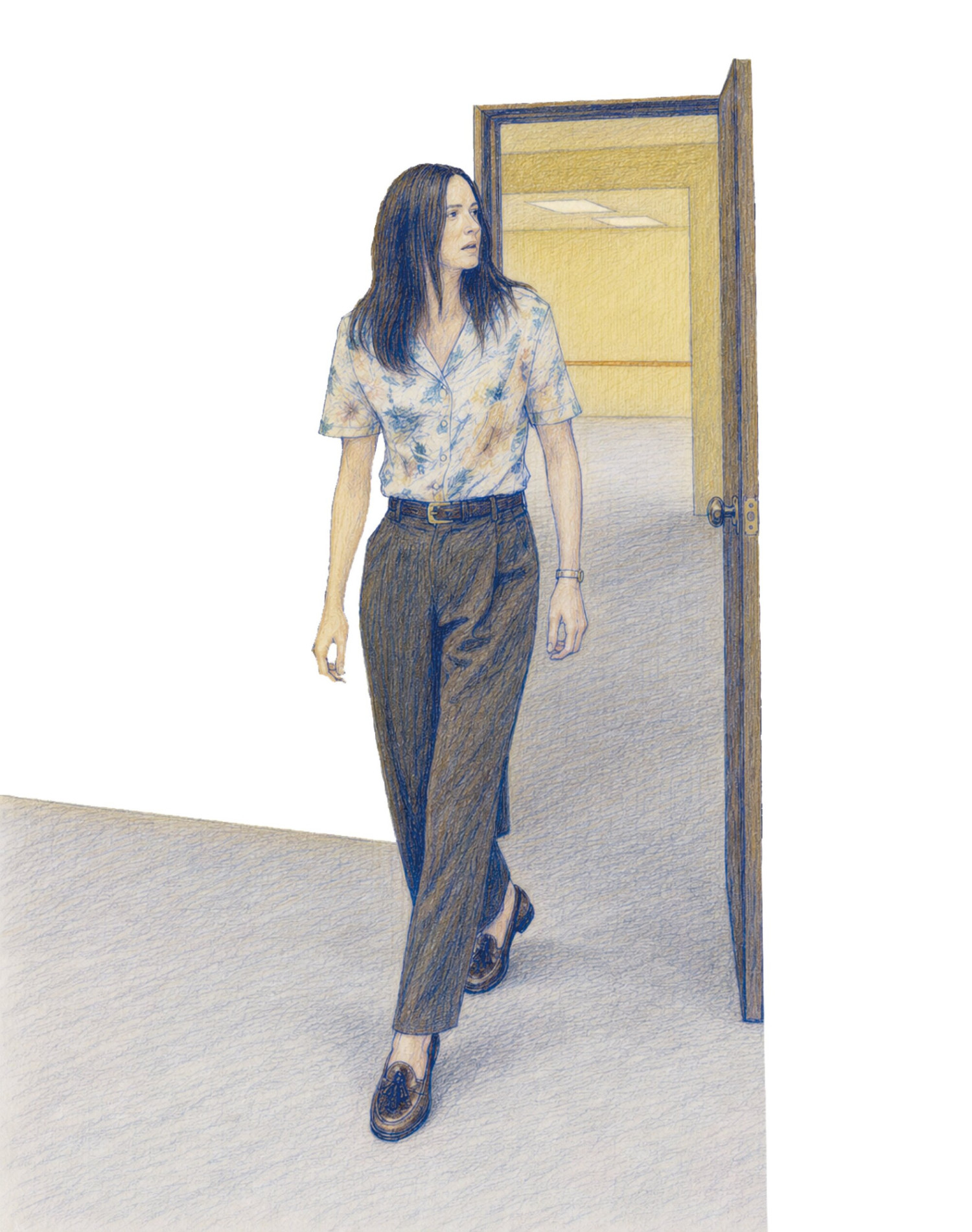
The protagonist of Backrooms, Clark (Chiwetel Ejiofor), is a frustrated architect operating a discount furniture store called “Cap’n Clark’s Ottoman Empire.” Desperate to promote his business, he goes so far as to film absurd TV commercials dressed as a pirate captain. His efforts do little to improve business and, having been cast out by his wife due to alcoholism, he takes up residence inside the store. Nursing an unresolved bitterness, Clark regularly holds sessions with a therapist named Mary (Renate Reinsve). Mary, too, harbors her own internal abyss and trauma; the psychological abuse inflicted by her mother, who covered every window and trapped her young daughter indoors, remains an enduring nightmare.
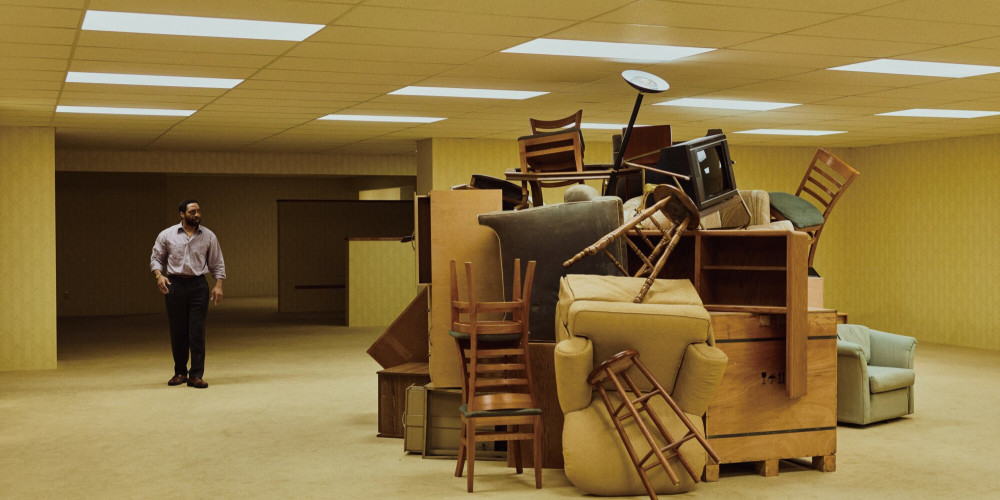
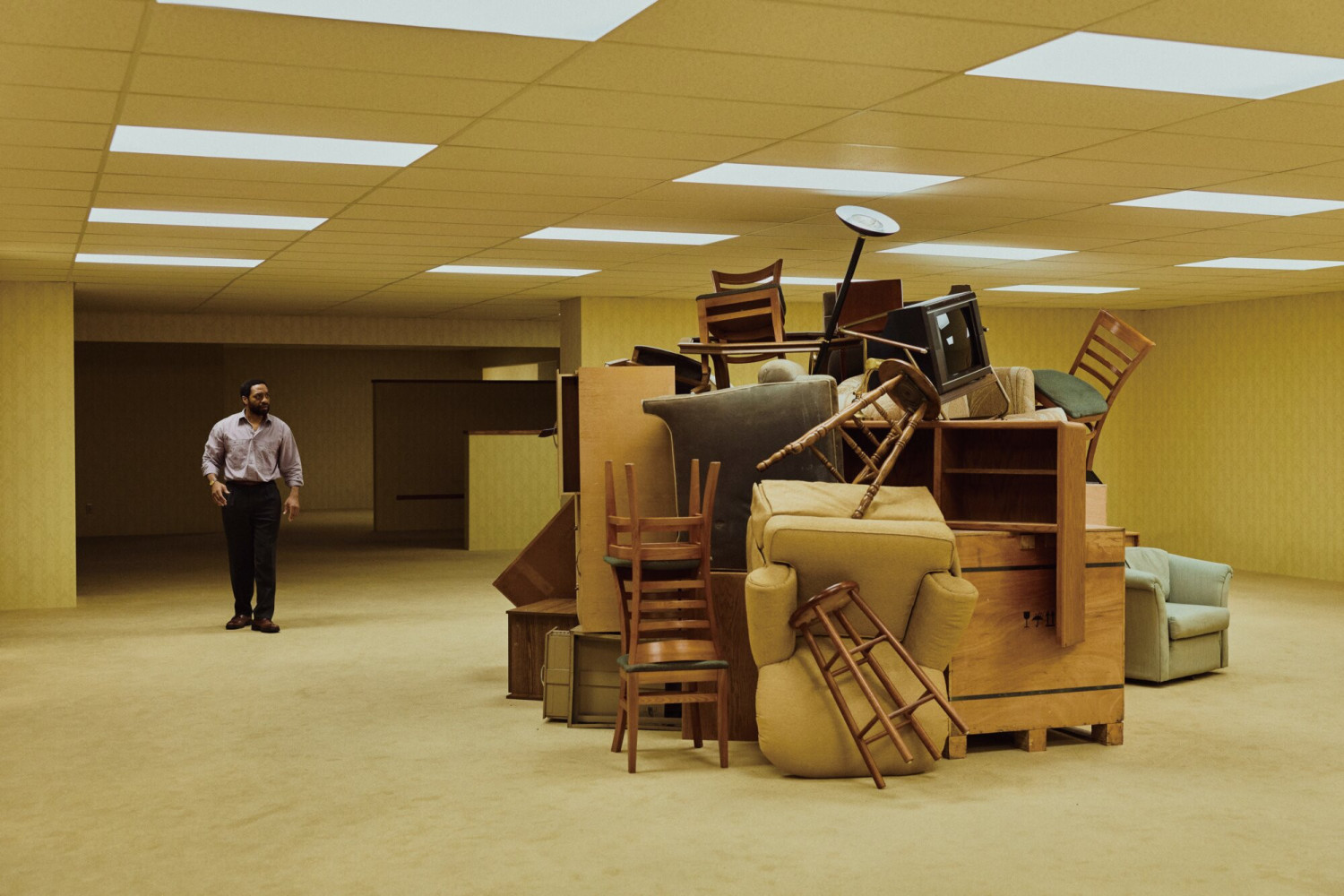
One night, while attempting to drink himself to sleep, Clark finds a gap in the basement wall of his shop and peers inside to find an infinite, labyrinthine expanse of interconnected rooms. In this surreal space proportions, scale and the placement of doors and corridors seem distorted as if designed by a mad architect. Heaps of abandoned furniture lie scattered, the subtle presence of unknown entities flickering in the shadows. Night after night, Clark wanders these titular “backrooms,” becoming entranced by their geometry. When Mary dismisses his story as delusion, he marches into the rooms with his store employees and a video camera to secure proof. Soon after, Clark leaves Mary a chilling answering machine message stating that he will not be returning from the backrooms, prompting her to pay a visit to the furniture store.
Commercial spaces strewn with abandoned junk are common enough landscapes in a late-stage capitalist, urban society. Why, then, do the empty rooms and corridors of Backrooms feel so deeply unsettling? Consider the empty urban rooms painted by Edward Hopper; though solitary, they evoke the presence of someone who once stayed there before stepping outside. Hopper’s vacant rooms retain a faint human warmth, fitted with windows that invite the wind and sunlight inside. Similarly, the final panels of Hidenori Hara’s manga Come on-a My House, a tale of lovers who share a home until their love expires, quietly traverse every corner of an empty room without its occupants. Though vacant, those spaces still contain the echoes of shared conversations. Why then does one empty space evoke melancholy, while another summons horror?
What the vast, empty rooms of Backrooms lack is context. The endlessly repeating yellow rooms and the objects within them are the afterimages of a reality that grows warped and blurred each time it is recalled. As the mounds of unsold furniture might suggest, this space functions as a testament to one man’s failures and unexpressed rage. The human-like “Still Lifes” Mary encounters upon entering to look for Clark are no different: his wife and others who once played pivotal roles in Clark’s life have all been reduced to failed human replications within the backrooms. Surrounded by these uncanny duplicates, which he can tear apart or even consume at will, Clark refuses to acknowledge his own flaws. In this way, he builds a literal echo chamber to reinforce his own distorted beliefs. A man consumed by confirmation bias does more than imprison himself; he poses a threat to everyone around him.
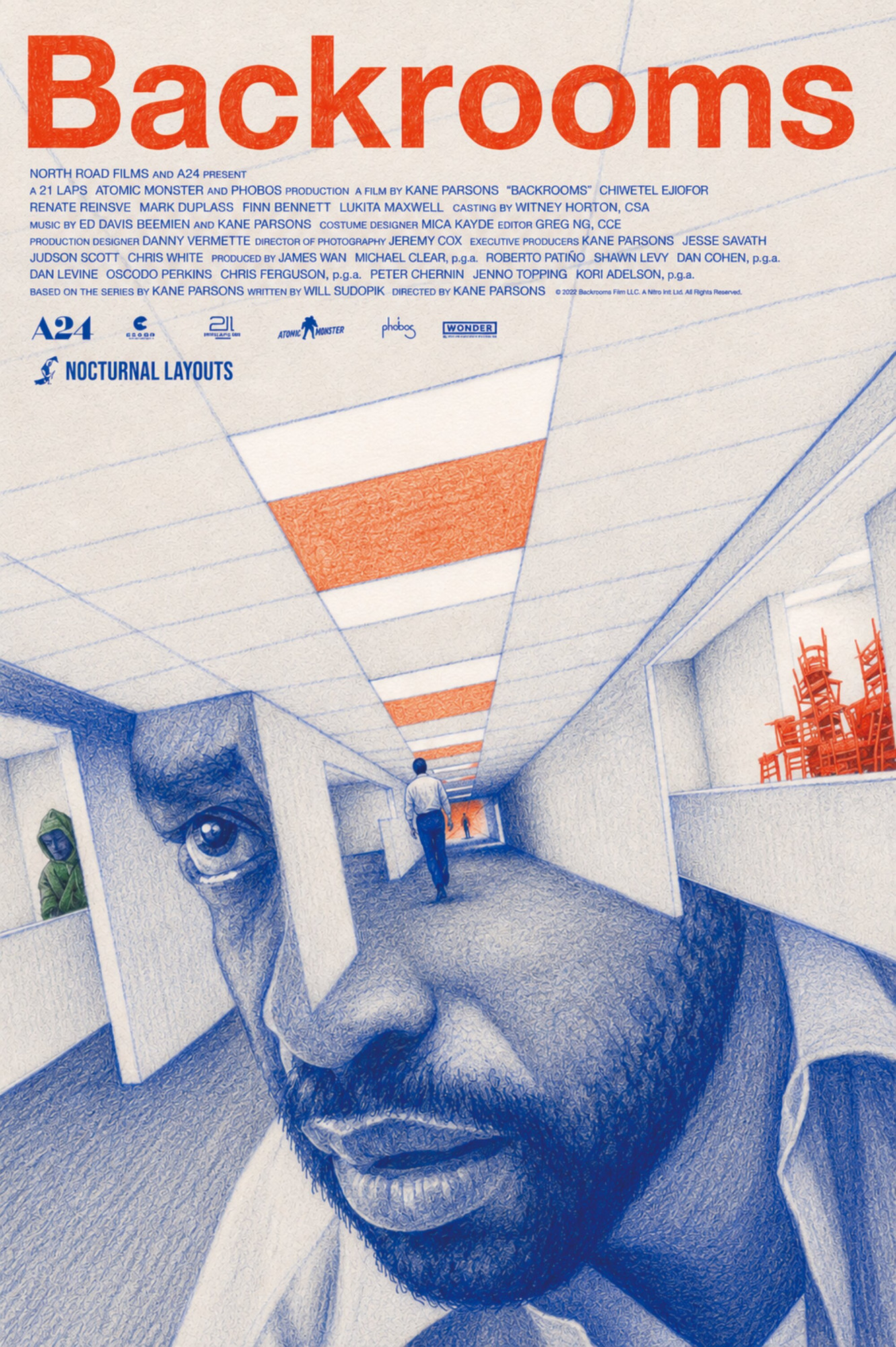
The connection between Backrooms and Gen Z extends far beyond the director’s age. The sets created by the director and production designer resemble dilapidated office buildings and vast retail complexes. Much like how sprawling shopping malls — once the vibrant hubs of youth consumption and social connection in 1990s cinema — have been turned into cultural ruins by 21st-century e-commerce, the backrooms in the film feel simultaneously familiar and deeply alien. The narrative structure operates on a similar logic. The protagonist, Clark, shifts from an observer caught up in a mysterious phenomenon to the story’s central villain, yet the film skips this crucial transformation entirely, abruptly pivoting to Mary’s perspective. It feels as though the entire second act of a classic three-act structure was eliminated. While one could dismiss this as the clumsiness of a novice director, it also aligns with the storytelling habits of an internet generation accustomed to expanding narratives in every direction through comment threads and data aggregators rather than following a linear, feature-length arc. Though the film’s narrative cohesion may leave something to be desired, the ending of Backrooms, which reaches its denouement like a book with its final pages ripped out, leaves a distinct impression, one that is quite different from a commercial open ending designed to set up a sequel. It embodies the nonchalance of a generation comfortable with leaving things incomplete and unfulfilled, secure in the belief that with an endless reservoir of digital information at the ready, any story can be rewritten at any time. Despite his sudden fame, the young director remains unruffled: “I pretty much entirely want to focus on original projects. I do this because it’s my way of processing life, as is art.”
#Companion Films for Backrooms
The Shining (1980)
A seminal classic of spatial horror in which a character’s psychology is mapped onto a physical space. An author suffering from creative block is snowbound in an isolated hotel, gradually succumbing to madness until he turns on his family violently. Featuring iconic moments such as the haunting twin girls and the ax-wielding door breach scene, it remains one of the most frequently referenced horror film masterpieces in cinema history.
Severance (2022–present)
An Apple TV+ original series in which a sinister mega-corporation performs a surgical procedure dubbed “severance” to split its employees’ work memories from their personal ones. Grieving the loss of his wife, the protagonist volunteers for the program, coming to live a life divided into two distinct personas. The endlessly repeating, stark white corridors and windowless offices visually embody the alienation and control born of uniform, repetitive labor, offering a sharp critique of modern corporate culture and the dehumanization of work.
Exit 8 (2025)
Based on the hit indie video game, this film follows a young man attempting to find Exit 8 in a Tokyo subway station only to discover a liminal corridor turning endlessly onto itself. Adopting the distinct logic of gaming, the protagonist must decode the spatial protocols of the repeating maze and detect subtle anomalies to escape the psychological apprehension. The film offers a gripping view of anxiety in the modern age, where running from fear only invites an even greater dread.
Obsession (2025)
A Gen Z horror film directed by Curry Barker, a filmmaker born in 1999 who began his career on YouTube. A timid young man uses dark magic to make his unrequited crush fall in love with him, but her spellbound affection quickly devolves into terrifying stalking and violence. Actress Inde Navarrette delivers a mesmerizing performance — shattering her character between her trapped inner self and spellinduced actions — that rivals Betty Gabriel’s unforgettable performance in Get Out (2017).
MOVIE PREVIEW
#The_Irony_of_Life
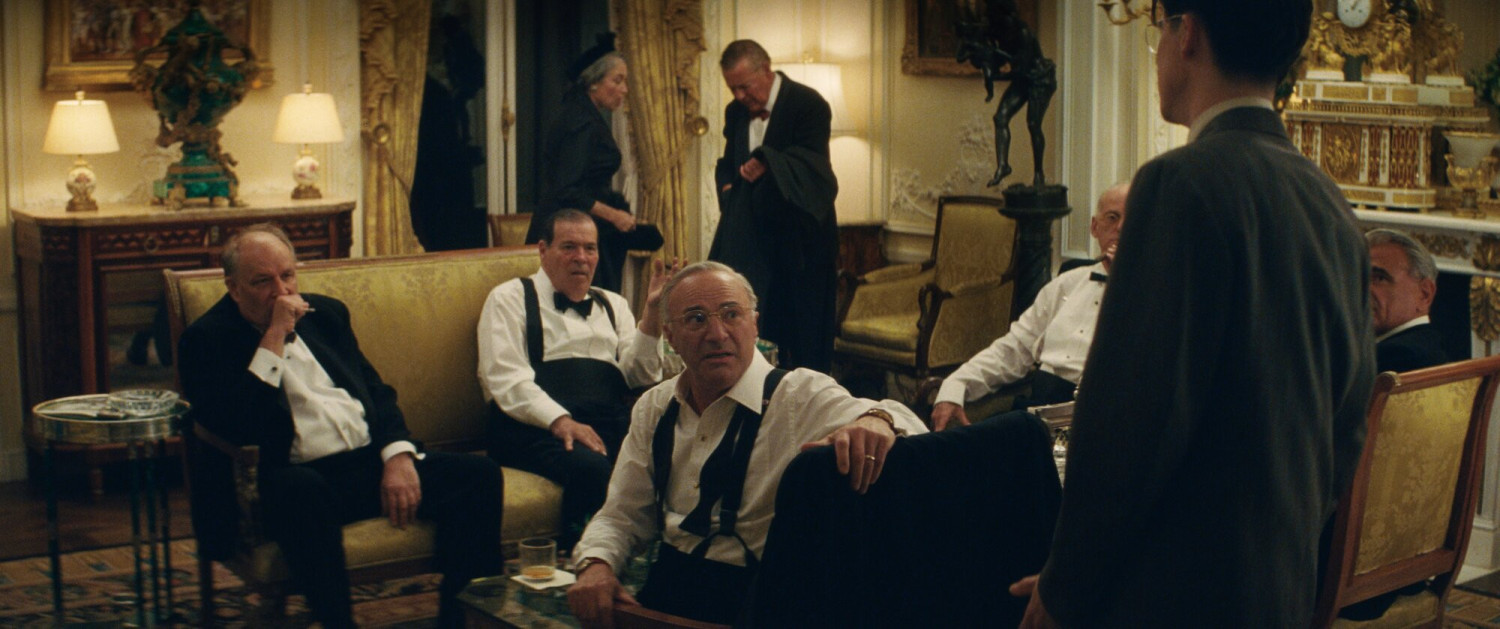
Marty Supreme
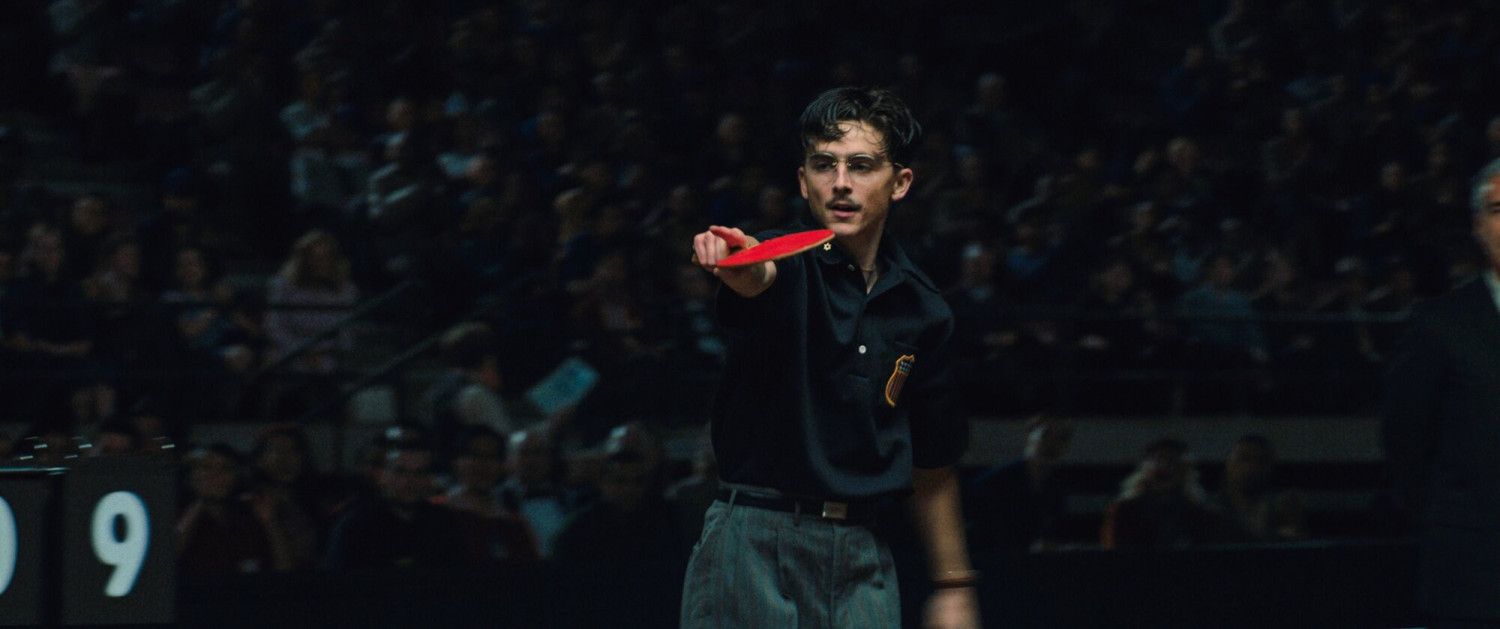
Marty (Timothée Chalamet) is a man whose dream of becoming a champion is bigger than anyone else’s. The stage on which he chooses to change his life is the table tennis arena. As his drive evolves from desire to obsession, Marty makes a series of self-destructive choices. Josh Safdie’s frantic, visceral direction and the synth-driven score of Oneohtrix Point Never (Daniel Lopatin) propel Marty’s journey at a breathless pace.
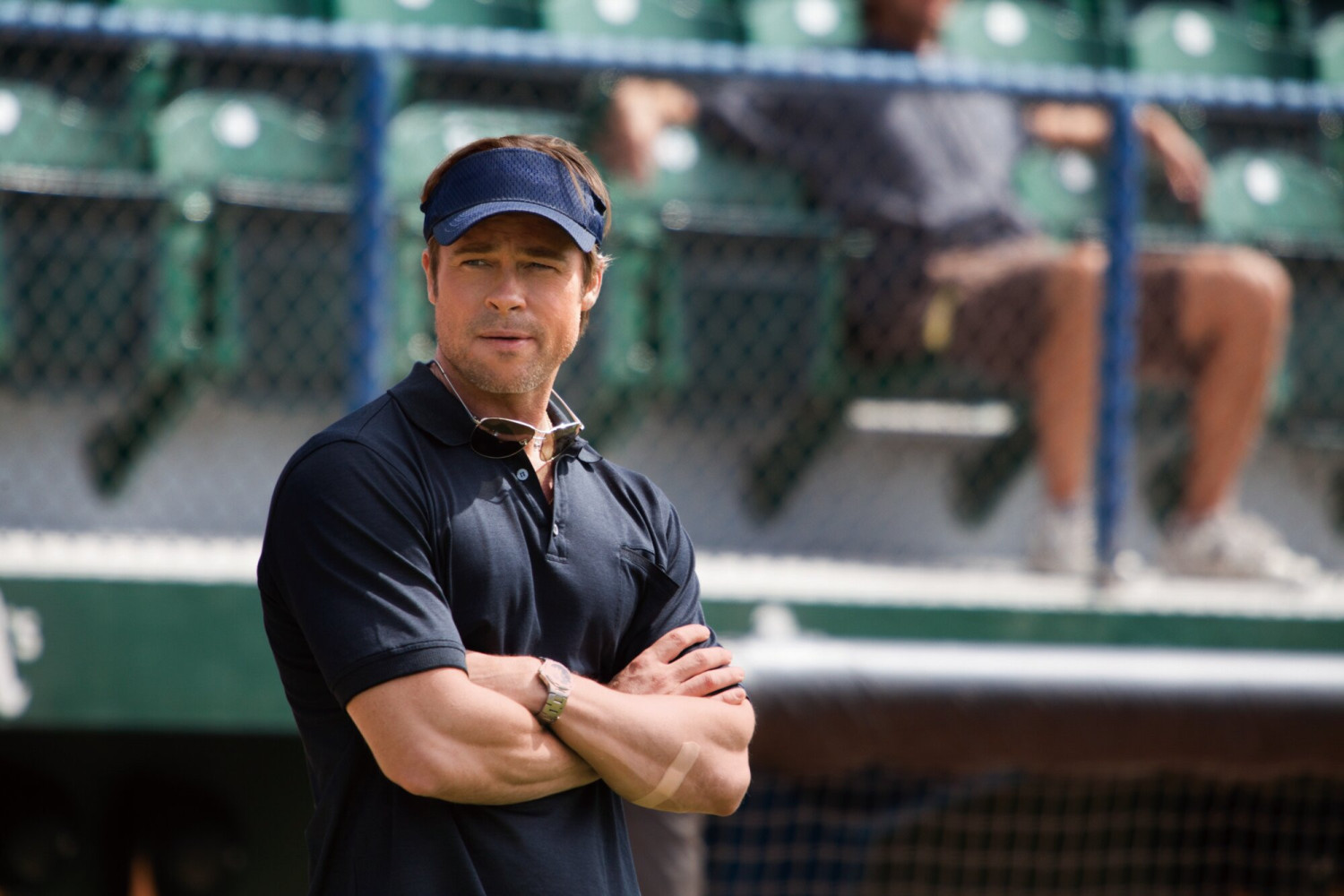
Moneyball
Facing a tight budget and missing star players, Oakland Athletics general manager Billy Beane (Brad Pitt) forgoes conventional criteria to bet everything on a strategy of selecting players based on their on-base percentage. This real-life story of innovation offers a look at sticking with a brilliant idea when everyone says you’re wrong.
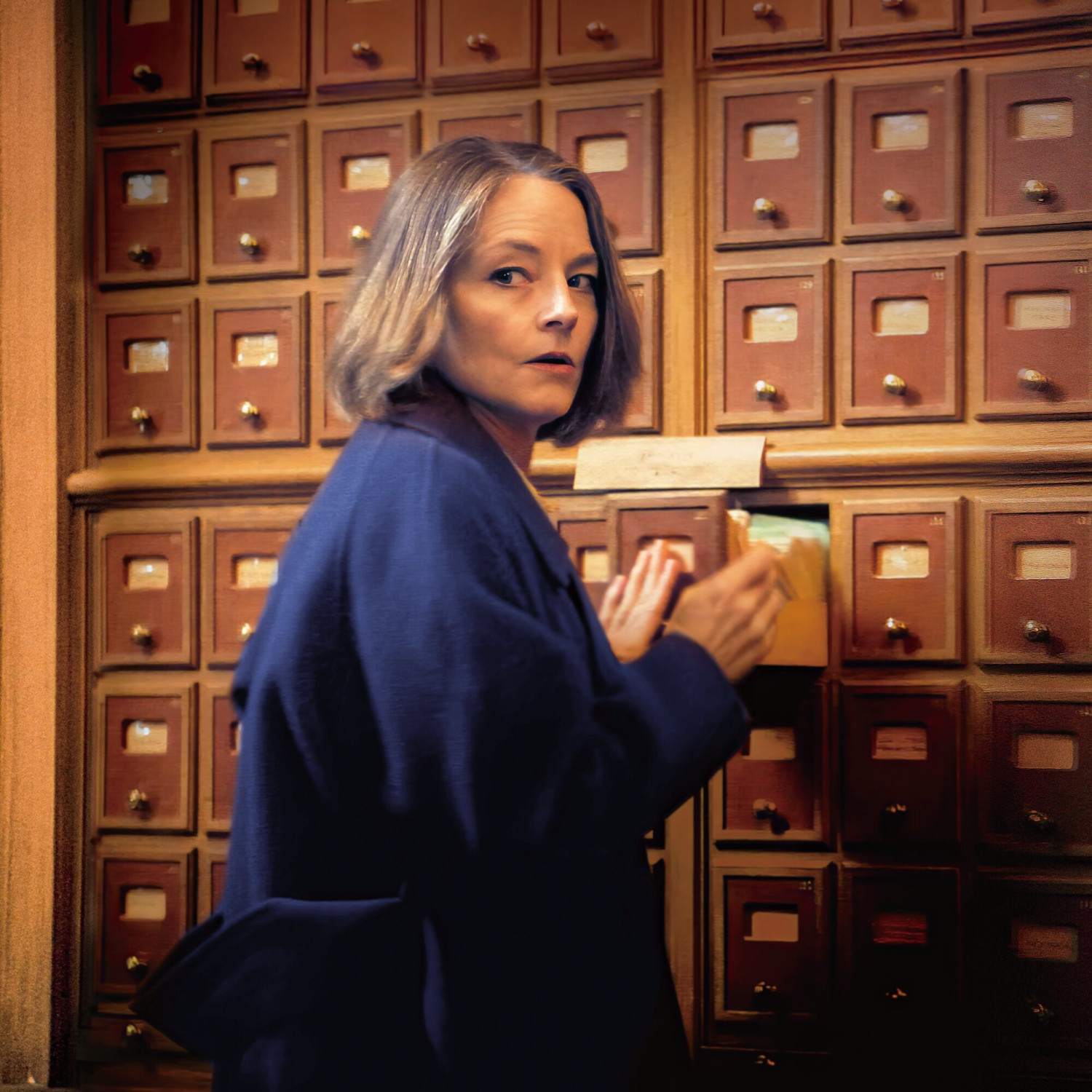
A Private Life
Lilian (Jodie Foster) is a psychiatrist who can read other people but has never truly examined her own life. Suspecting foul play behind the sudden death of a long-time patient, she gets her ex-husband to play amateur detective. The deeper she digs into the case, the more she uncovers not just her late patient’s secrets but her own long-buried personal history. Another highlight is Jodie Foster’s performance in French, which makes the film oscillate between a chilling mystery and a wry dark comedy.
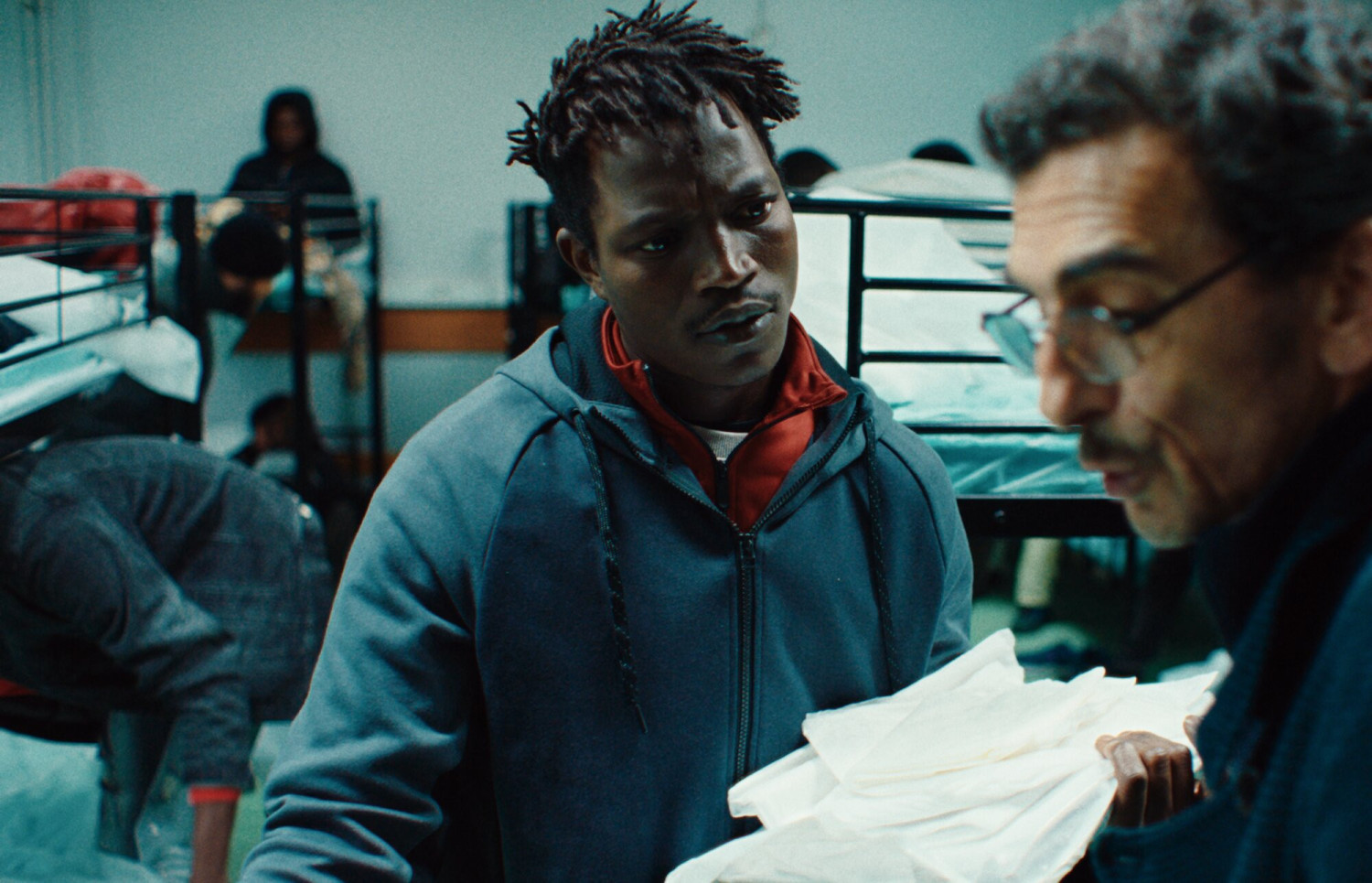
Souleymane’s Story
With only two days left until his asylum hearing, Guinean immigrant Souleymane (Abou Sangaré) races through the streets of Paris on his bicycle delivering food; between deliveries, he prepares for the interview that will decide his fate. The plot closely follows the 48 hectic hours he uses to memorize a fabricated story for his interview, showing what a person must endure to grab a chance at a new life. This film provokes profound reflection on human dignity without resorting to sensationalized plot devices.

Kokuho
Kikuo (Soya Kurokawa), a boy who loses his yakuza-boss father, enters the world of kabuki as if willed by fate. Adopted by a famous master of the art, he undergoes rigorous training and fierce competition, eventually growing into an era-defining actor (Ryo Yoshizawa). The film portrays the desire and jealousy hidden behind the glamorous stage alongside a bond between mentor and disciple that transcends blood ties. Viewers will be left as spellbound as if watching a live kabuki performance from the audience.
#Romance_and_Heartbreak
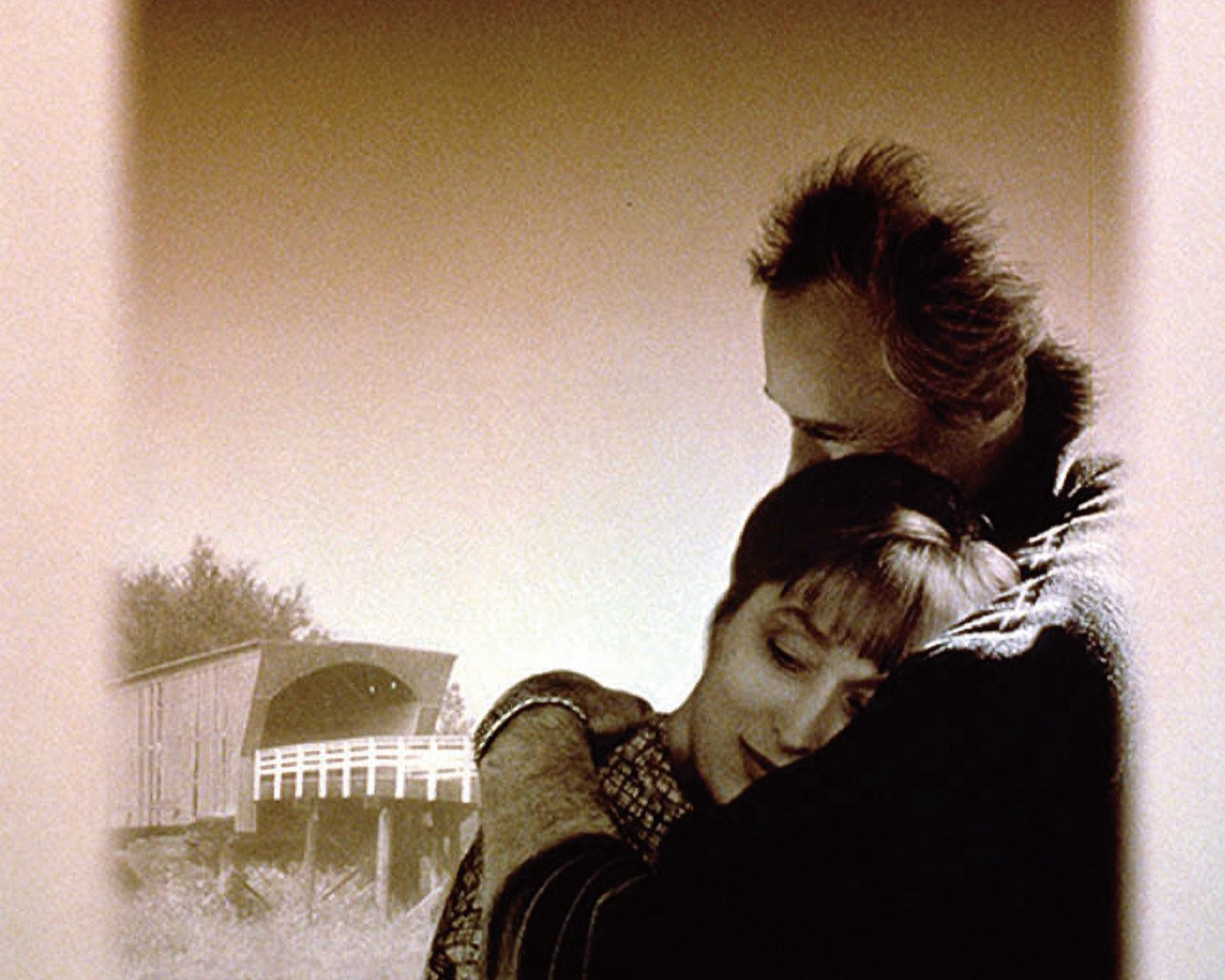
The Bridges of Madison County
Francesca (Meryl Streep), an Italian immigrant in 1965 living as a housewife in the U.S., falls in love with Robert (Clint Eastwood), a photojournalist who arrives to capture her area’s bridges for a magazine. Their encounter lasts only four days but changes their lives forever, ultimately leaving them longing for the life they never chose. This classic romance leaves a lasting impression through its framing device of Francesca’s children reading her diary and reflecting on the past after their mother’s death.
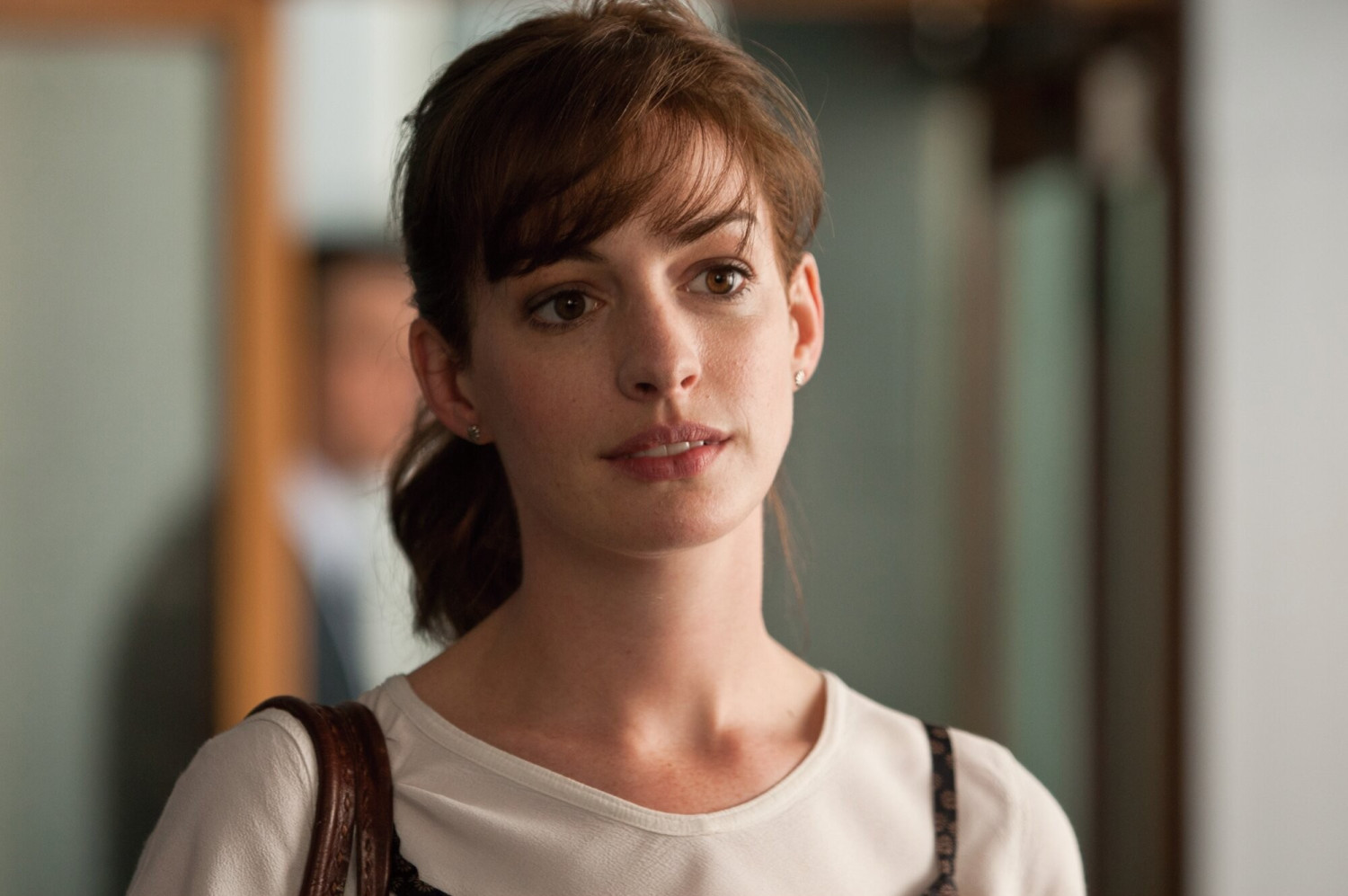
One Day
A day you let slip by becomes one you’ll never forget. Emma (Anne Hathaway) and Dexter (Jim Sturgess) first meet on July 15, the night of their college graduation. They reconnect years later, but their happiness is short-lived as fate snatches time away from them. Using a unique narrative structure that shows both characters on just one symbolic date each year, this film is a poignant expression of the passage of time and priceless connections.
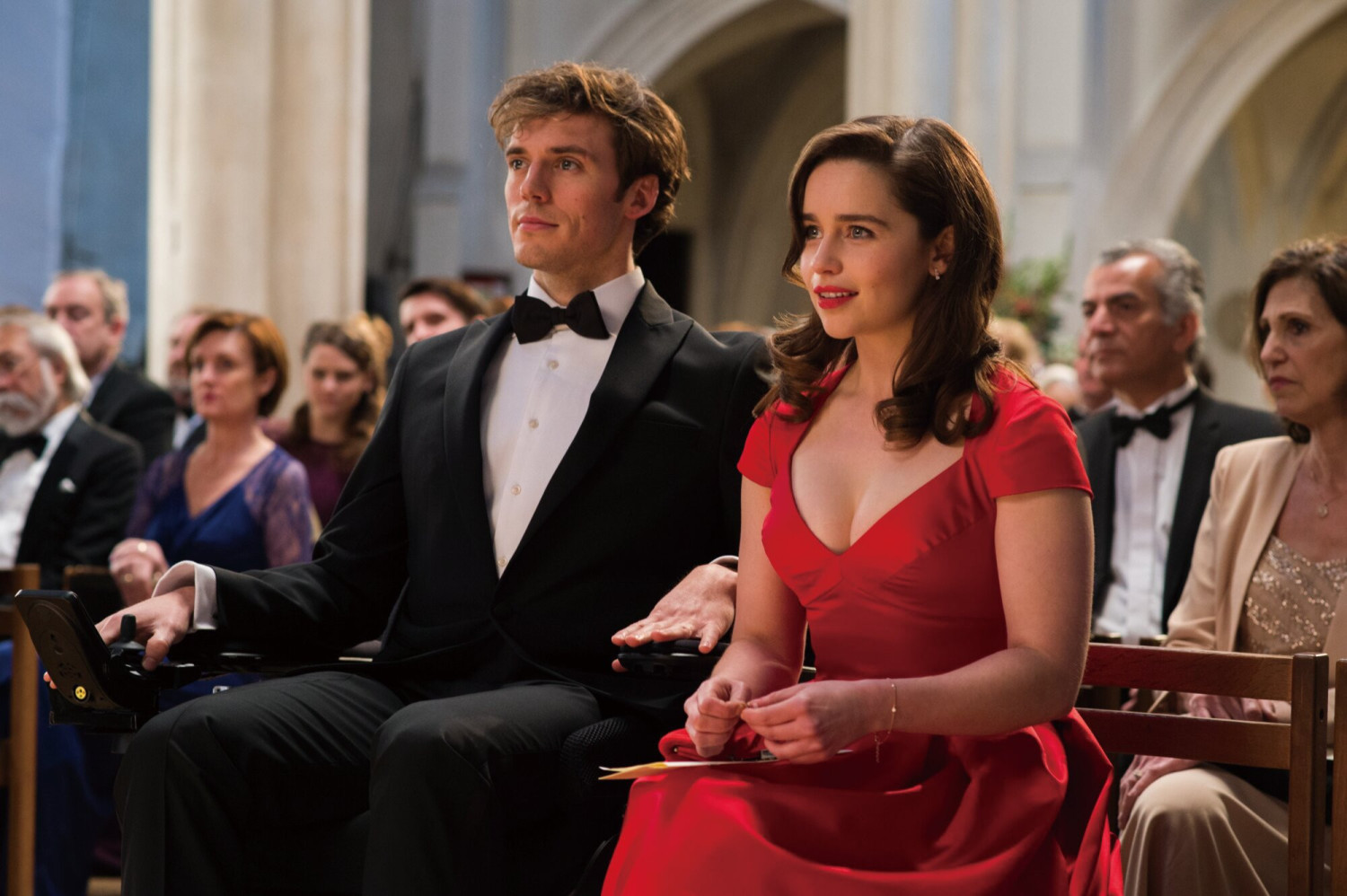
Me Before You
Will (Sam Claflin), once a financier and extreme sports enthusiast, is left paralyzed after an accident. Lacking the will to live, he meets Louisa (Emilia Clarke), a caregiver with a bright and cheerful spirit. As he opens up to her, the two transform each other. This movie poses questions about love’s power to change lives. While Will’s decision breaks with romance formulas, it inspires a deeper reflection on dignity and choice.
#A_Standout_Korean_Film
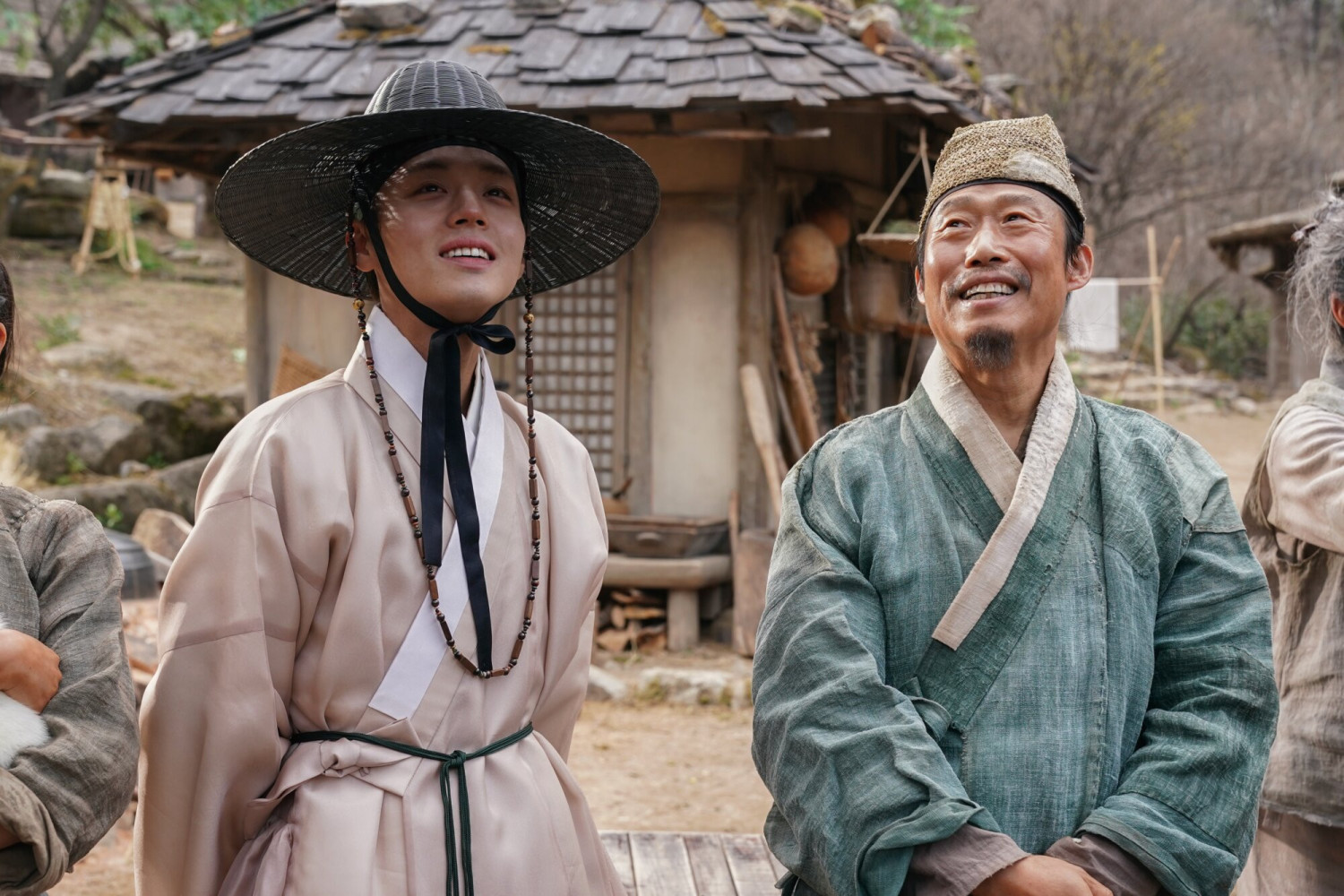
The King’s Warden
This historical drama is about King Danjong (Park Jihoon), the sixth monarch of the Joseon Dynasty (1392 – 1910) who lost the throne as a teen. During his exile in a mountain town, the village chief Eom Heungdo (Yoo Haejin) stands by the king’s side until the very end. The movie breathes life into figures lost to history through a warm depiction of the bond and compassion that blossomed between the two men. As a human drama that resonates despite its tragic ending, it hit Korea’s blockbuster benchmark of 10 million tickets sold within a month of its release.
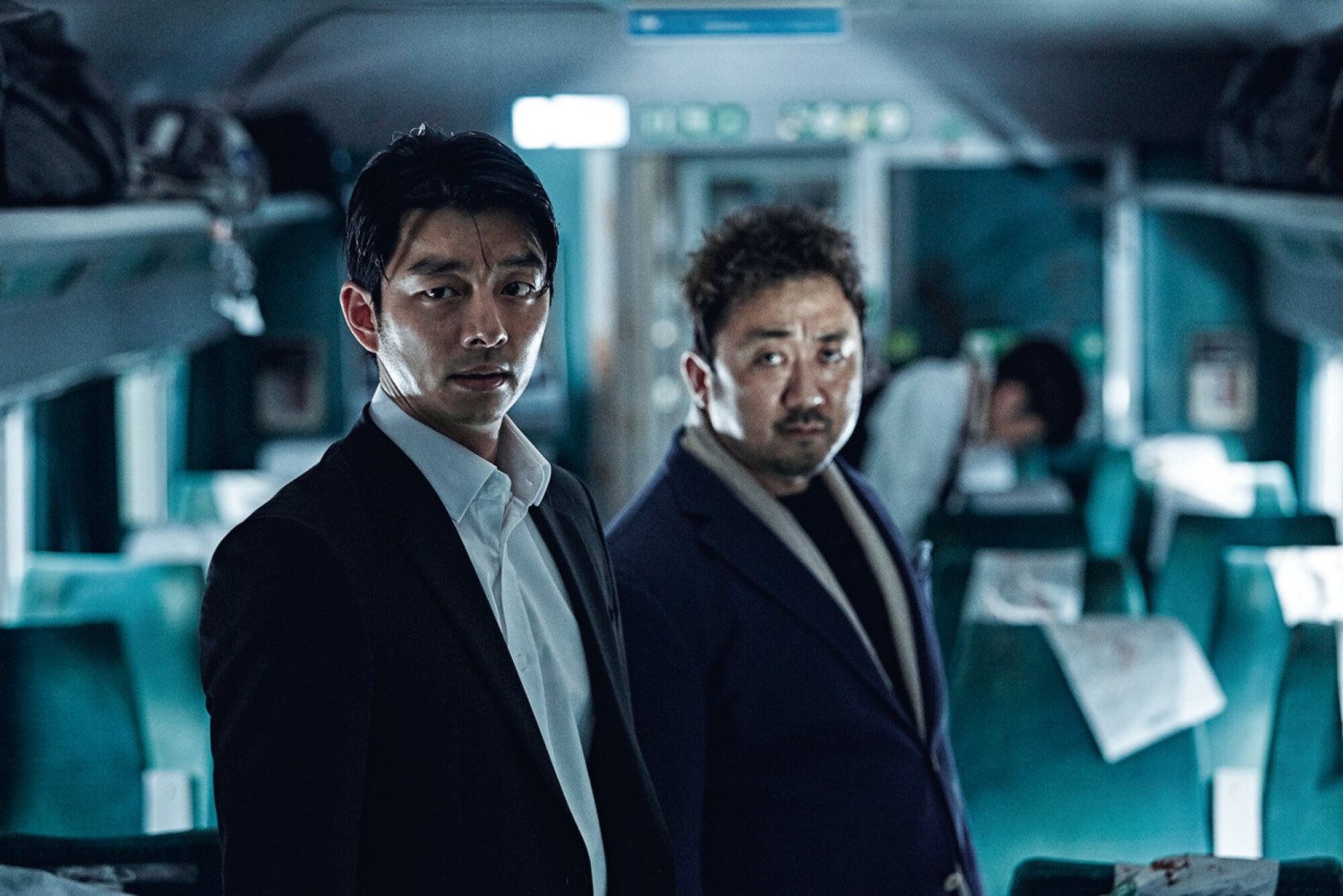
Train to Busan
Seokwoo (Gong Yoo), a work-obsessed fund manager, boards a train bound for Busan with his estranged daughter Suan (Kim Suan) to visit his ex-wife. The outbreak of a mysterious infection triggers a struggle for survival among the passengers. This Korean zombie blockbuster suggests a chilling realization: the only thing more terrifying than the undead is human nature under extreme pressure.

Confidential Assignment
Lim Cheolryung (Hyun Bin) is a special forces detective from North Korea whose wife is killed when a colleague steals banknote plates, and Kang Jintae (Yoo Haejin) is a struggling South Korean detective. When Lim heads to Seoul, he forms an unexpected partnership with Kang. The detectives’ mutual distrust produces humorous moments while fast-paced action sequences heighten the tension.
#Imaginative_Visuals
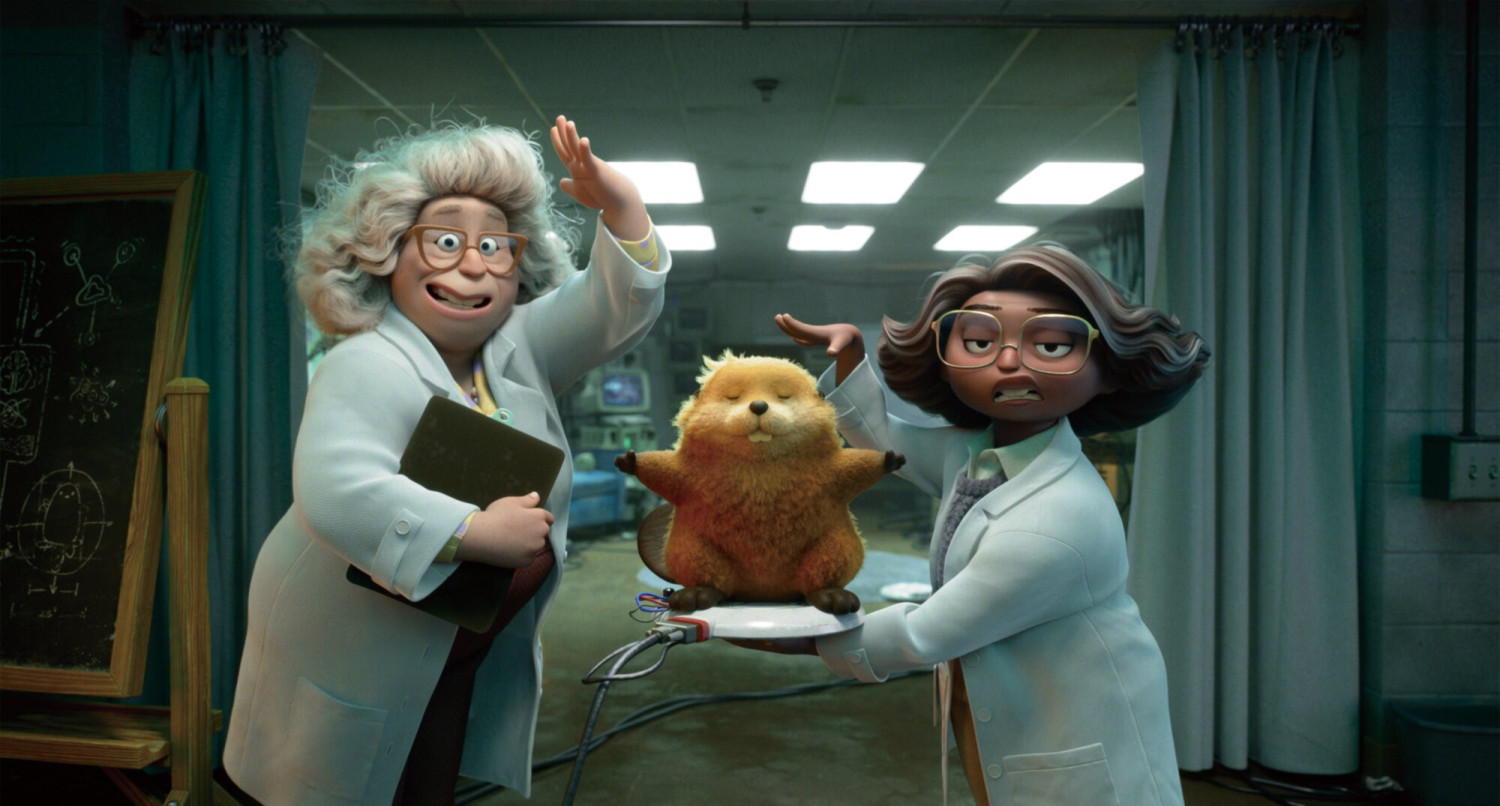

Hoppers
Does protecting animals require becoming one? Mabel,
an animal lover, joins a secret project to save threatened wildlife. Using technology linking human and animal minds, she transfers her consciousness into a beaver robot. This Disney-Pixar animated original film offers an imaginative perspective on coexistence.
The Secret Life of Pets 2
Inseparable in their early years, a young couple drifts apart with the passage of time. From a vow made on a snowy night to unvoiced feelings and seasons that slip away, the unforgettable experience of young love is depicted with quiet beauty in this film.
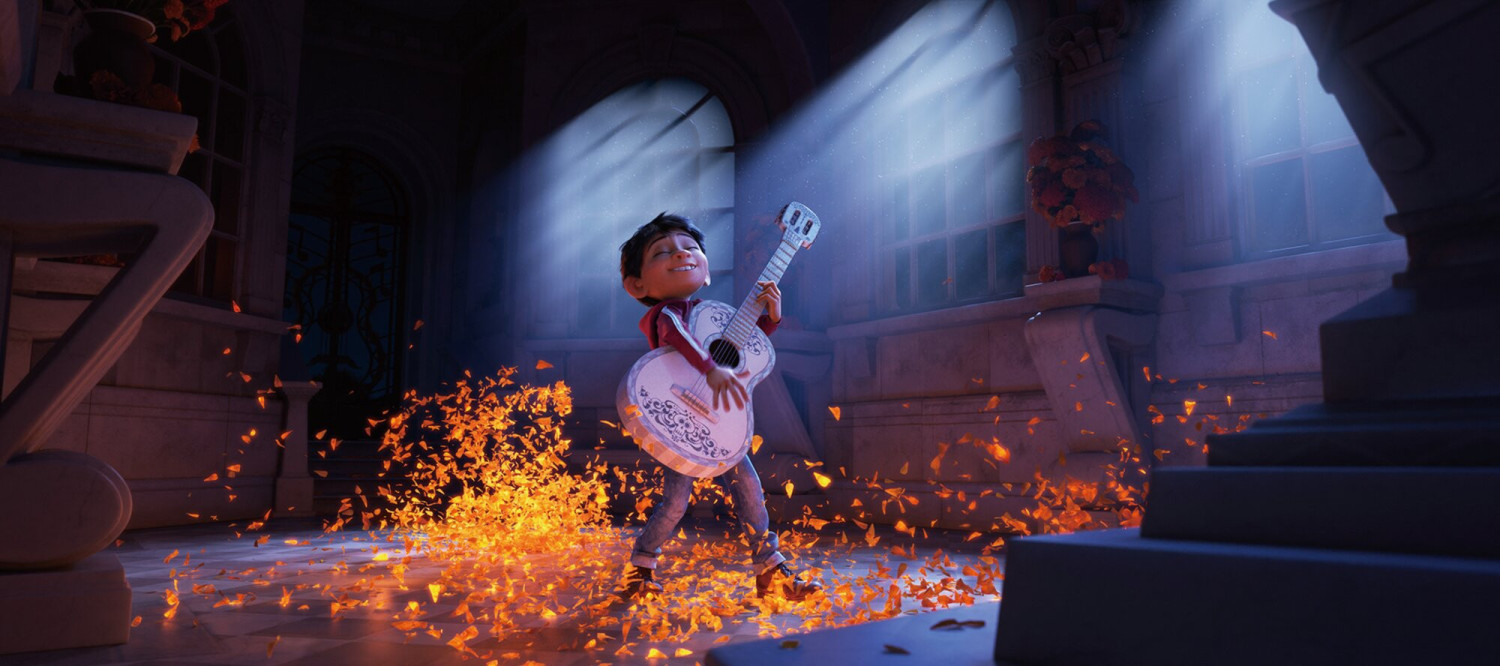
Coco
Miguel loves music yet grows up in a family that has
forbidden it for generations. After taking a legendary singer’s guitar, he stumbles into the Land of the Dead, seeking to uncover a hidden family secret alongside a mysterious skeleton named Héctor. Inspired by Mexico’s Day of the Dead celebration, when families and friends come together to honor the departed, the film dazzles with vibrant visuals.
- Available content may vary depending on your flight.